Giant 2,000-Year-Old Roman Pool Unearthed in Turkey Could Hold 300 Swimmers
Archaeologists discover massive ancient Turkish pool, revealing unexpected 2,000‑year‑old artifacts that astonish researchers.
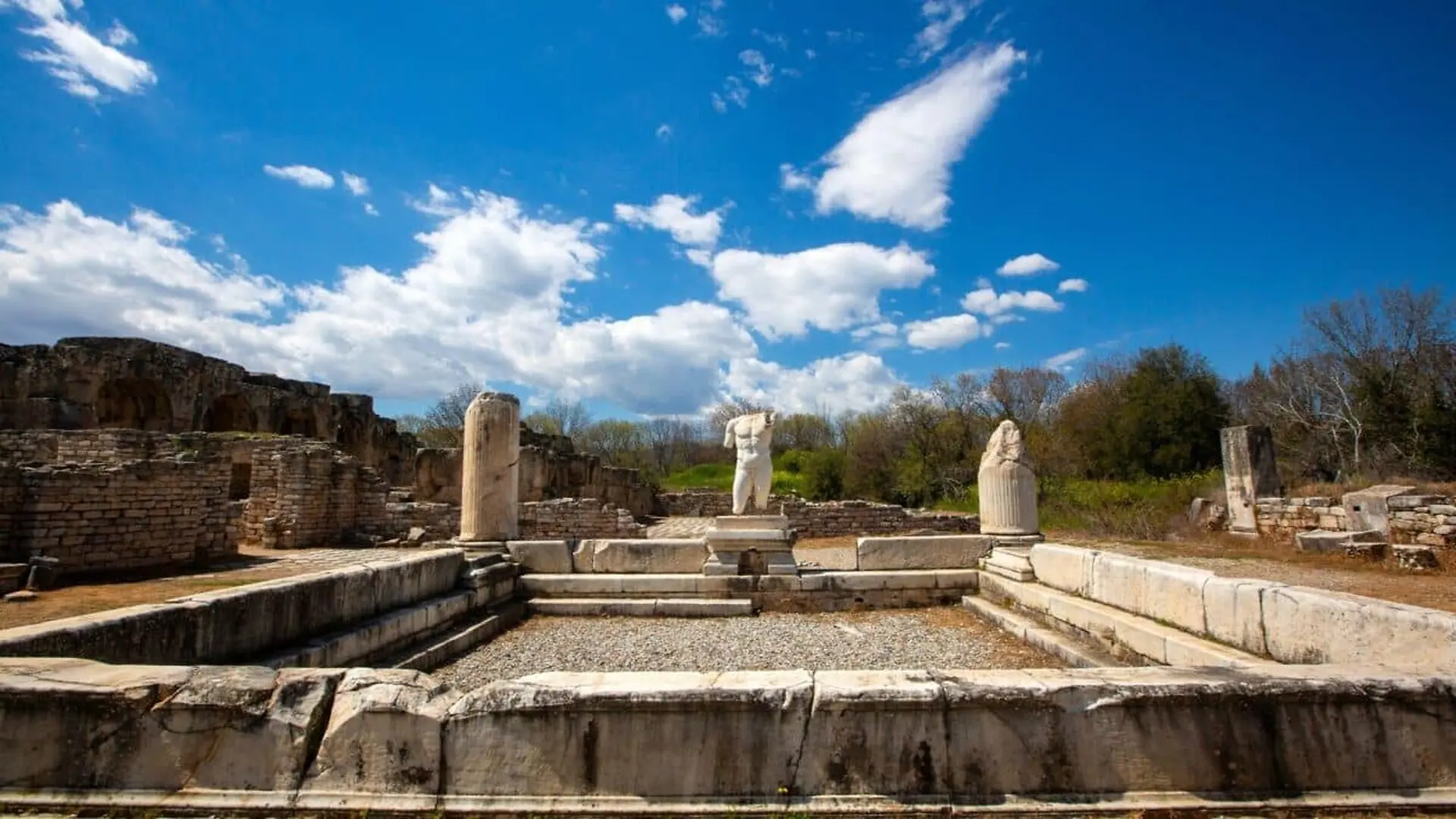
Archaeologists working near the modern town of Aydın have uncovered a sprawling Roman swimming basin that offers a vivid picture of leisure, sport, and communal life almost two millennia ago. The water‑filled arena, capable of holding hundreds of bathers simultaneously, formed part of an extensive civic complex.
Roman Aquatic Center Unearthed in Tralleis
The find emerged from the ancient settlement of Tralleis, where a team from Adnan Menderes University completed fieldwork in 2026. While many sites preserve temples, theatres or indoor baths, intact open‑air swimming facilities are exceptionally rare, making this discovery especially valuable.
The basin belonged to a larger thermal and athletic precinct where locals could train, cool off, and gather socially. Its size underscores the importance of water‑based recreation in daily Roman routine.
A Natatio of Monumental Scale
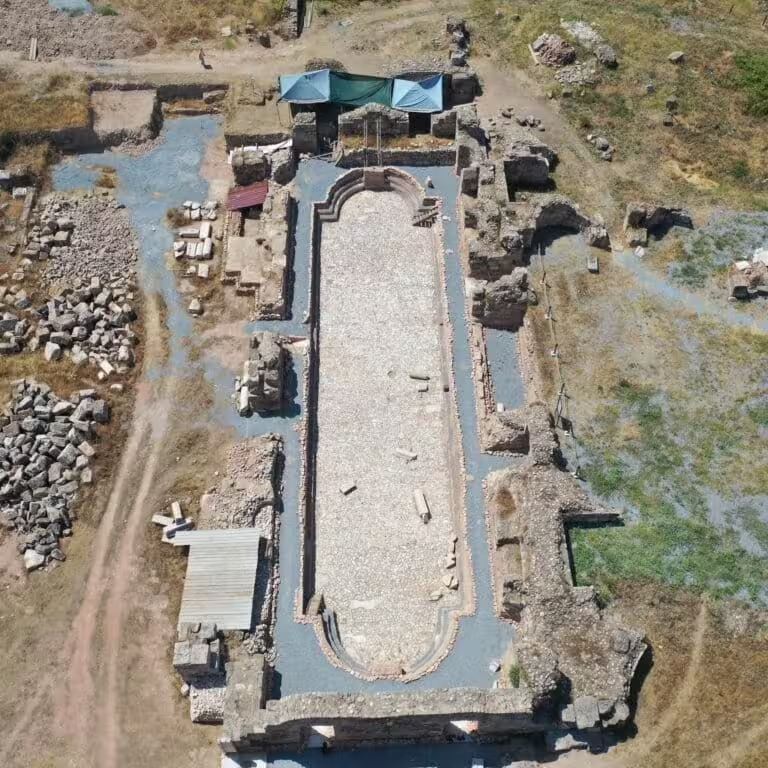
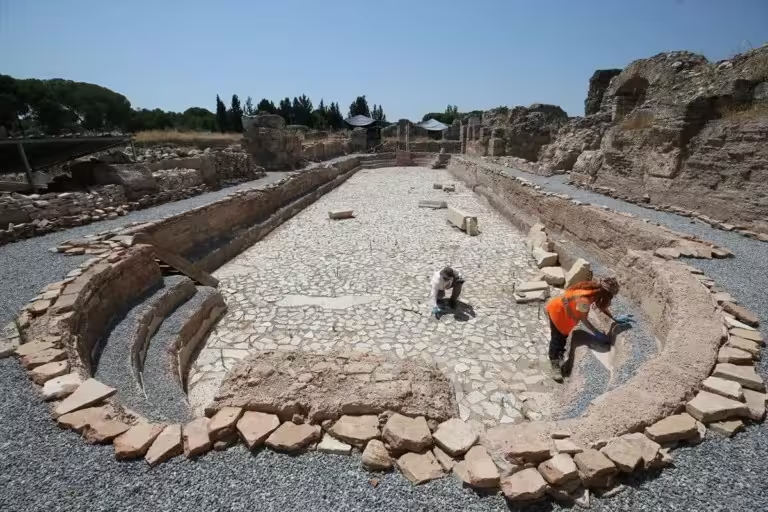
Measuring roughly 37 meters in length, 12 meters in width, and about 1.5 meters deep, the pool matches the Roman “natatio” typology. According to Arkeonews, its capacity approached three hundred swimmers at once, and it sat within a sprawling 40,000‑square‑meter campus that included dressing rooms and exercise spaces.
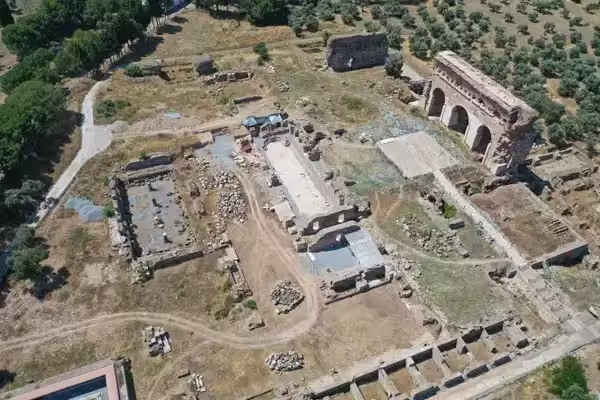
Researchers estimate that the entire complex attracted between three and five thousand visitors daily, drawing both weary citizens seeking relief from the heat and young athletes honing their skills.
A 56‑Kilometre Aqueduct Sustained the Pool
Supplying such a voluminous basin required a sophisticated hydraulic network. Spring water was channelled from mountains north of the city along a roughly 56‑kilometre aqueduct, while integrated drainage channels allowed rapid flushing and refilling.
“Here, spring water was in use. The aqueduct system runs about 56 kilometers, bringing water from the northern mountains. We also found a sewer system during our digs, built for quick water flushing. It would fill up fast, and when it got dirty, they would drain it and clean it out,” stated archaeologist Murat Çekilmez.
Located in the Meander Valley, where summer temperatures often soar, the open‑air pool provided a communal cooling station, reflecting the Romans’ commitment to comfortable urban amenities.
Post‑Quake Reconstruction Under Augustus
Historical records indicate that an earthquake in 26 BC damaged Tralleis’s bathing district. Subsequent rebuilding, financed by Emperor Augustus, revived the site, which briefly bore the name Caesarea before reverting to its original designation.
The newly fashioned basin emerged during this revival, positioning Tralleis as a leading hub within the Roman province of Asia. Çekilmez has likened its dimensions to an “Olympic‑scale” pool for its era, emphasizing the ambitious engineering involved.
Ongoing Exploration of the Complex
Future digs will focus on adjacent chambers and surrounding structures to clarify the layout, water‑management techniques, and everyday use of the facility nearly two thousand years ago.
This article has been fact checked for accuracy, with information verified against reputable sources. Learn more about us and our editorial process.
Last reviewed on .
Article history
- Latest version
Reference(s)
- Buyukyildirim, Oguz. “2,000-Year-Old ‘Olympic-Scale’ Swimming Pool Fully Unearthed at Tralleis in Türkiye.”, July 16, 2026 arkeonews.net <https://arkeonews.net/2000-year-old-olympic-scale-swimming-pool-fully-unearthed-at-tralleis-in-turkiye/>.
- <https://adnanmenderes.academia.edu/murat%C3%A7ekilmez>.
Cite this page:
- Posted by Vikram Desai