Over 50% Of US Historic Sites Face Wildfire Danger Landmark Study Reveals
Explore why historic landmarks, not homes, are irreplaceable anchors of community identity, memory, and national heritage.
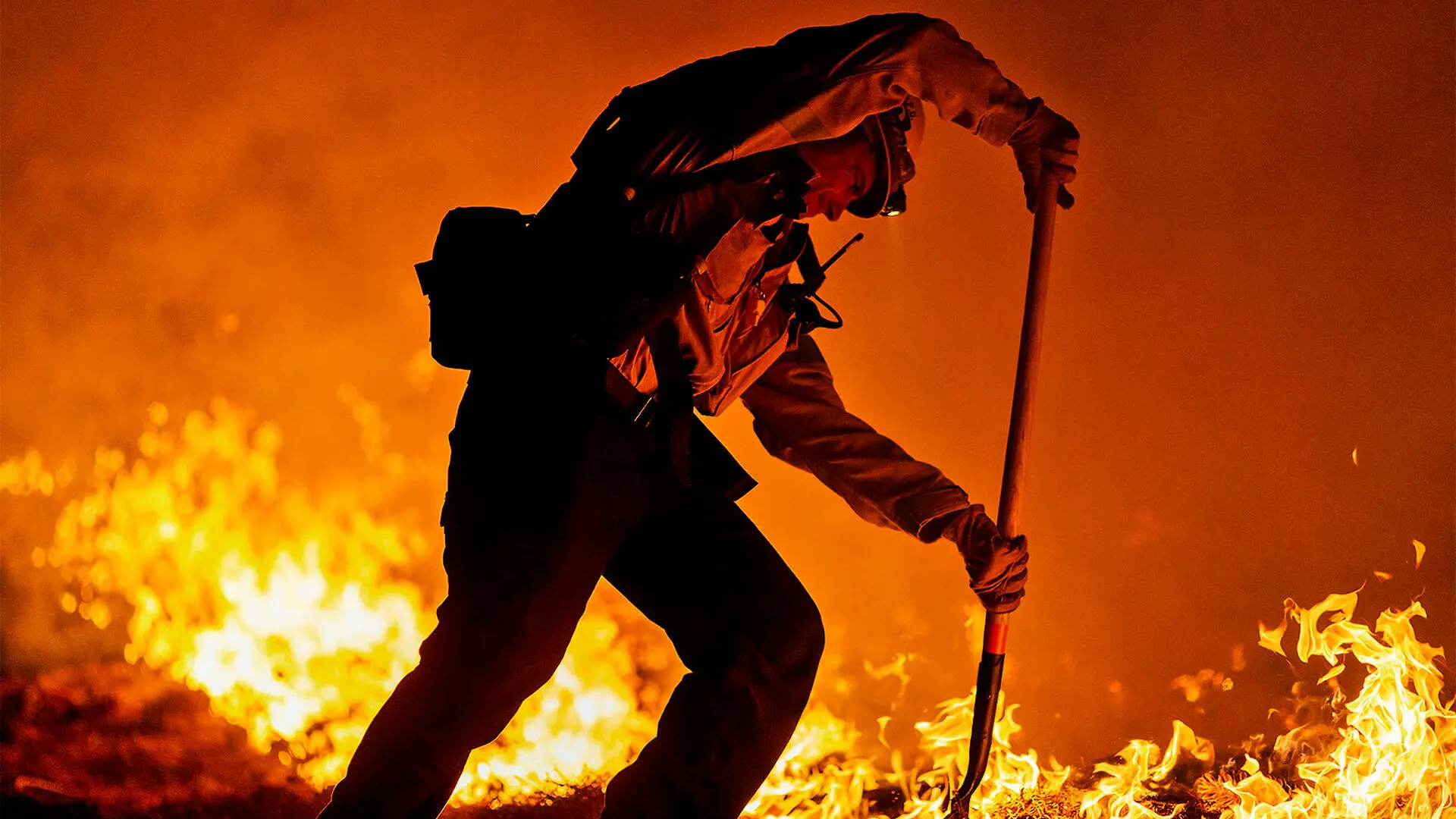
Wildfire Hazard Poses Immediate Risk to America’s Historic Landmarks
Recent blazes such as the January 2025 Palisades Fire in Los Angeles, which razed the iconic Will Rogers Ranch House, and the Dragon Bravo wildfire that consumed the Grand Canyon Lodge in 2025, underscore a growing vulnerability of cultural treasures to fire. A new analysis published in Nature Scientific Reports warns that these incidents are not isolated accidents but early signals of a broader, systemic threat.
National‑scale Survey Reveals Widespread Exposure
Scientists from the University of California, Santa Barbara’s National Center for Ecological Analysis and Synthesis (NCEAS) examined every geocodable entry on the National Register of Historic Places—totaling 100,117 locations—to gauge wildfire probability using high‑resolution burn‑risk models. The assessment shows that more than half of the cataloged sites encounter measurable fire exposure, and 3,446 of them fall into a severe‑risk category.
Geographic Concentrations and Category‑Specific Risks
Risk clusters are most intense across the western United States, with secondary hotspots identified in Oklahoma, Arkansas, and along the southeastern coastline. Structures classified as individual buildings or historic districts, which represent roughly 90 % of registered resources, face heightened danger because their heritage value is intrinsically linked to the physical fabric of the architecture. The analysis also indicates that sites of national significance experience disproportionate exposure compared with state‑ or locally designated landmarks.
States such as California, New Mexico, Colorado and Oklahoma exhibit especially dense pockets of vulnerable properties, while climate‑change projections suggest that fire‑prone zones will expand, bringing additional regions into jeopardy.
Economic and Emotional Costs of Loss
Reconstruction estimates for the Will Rogers Ranch House exceed $5.1 million, with preserved elements guiding the rebuilding effort. The Grand Canyon Lodge, which survived a 1932 fire only to be destroyed again, remains without a definitive restoration plan. Beyond monetary considerations, researchers emphasize that historic sites embody community identity and collective memory; their destruction erodes a “sense of place” that is rarely accounted for in conventional hazard assessments.
Gaps in Existing Fire‑Management Frameworks
Most state emergency plans lack dedicated provisions for cultural resources, leaving heritage sites to compete for attention within broader all‑hazard strategies. California’s CAL FIRE Cultural Resources Management Program stands out as a rare example of targeted protection, but similar initiatives are scarce elsewhere.
Preservation‑Friendly Mitigation Options
The authors propose several interventions compatible with preservation standards, including strategic vegetation control, reinforcement of structures with fire‑resistant materials, and installation of concealed fire‑suppression systems that safeguard buildings without altering historic appearances.
Open Data Enables Proactive Decision‑Making
By releasing a comprehensive, open‑source dataset, the study equips federal, state, and local agencies with a consistent baseline for prioritizing protective actions before another wildfire dictates the outcome. Lead author Mona Farnisa notes that identifying the most at‑risk locations lays the groundwork for forward‑looking planning aimed at conserving the physical embodiments of America’s cultural narrative.
Funding for the research was provided by the Gordon and Betty Moore Foundation, and all data and methodological details are publicly accessible.
This article has been fact checked for accuracy, with information verified against reputable sources. Learn more about us and our editorial process.
Last reviewed on .
Article history
- Latest version
Reference(s)
- Farnisa, Mona M.., et al. “Wildfire risk to United States cultural resources.” Scientific Reports, vol. 16, no. 1, May 12, 2026 Springer Science and Business Media LLC, doi: 10.1038/s41598-026-52407-9. <https://doi.org/10.1038/s41598-026-52407-9>.
Cite this page:
- Posted by Vikram Desai