Roman Soldiers’ Hidden Camp Unearthed In Slovakia After 1,850 Years During Industrial Park Build
Construction in Šurany, Slovakia reveals a Roman marching camp, confirming long‑suspected Roman military presence north of the Danube.
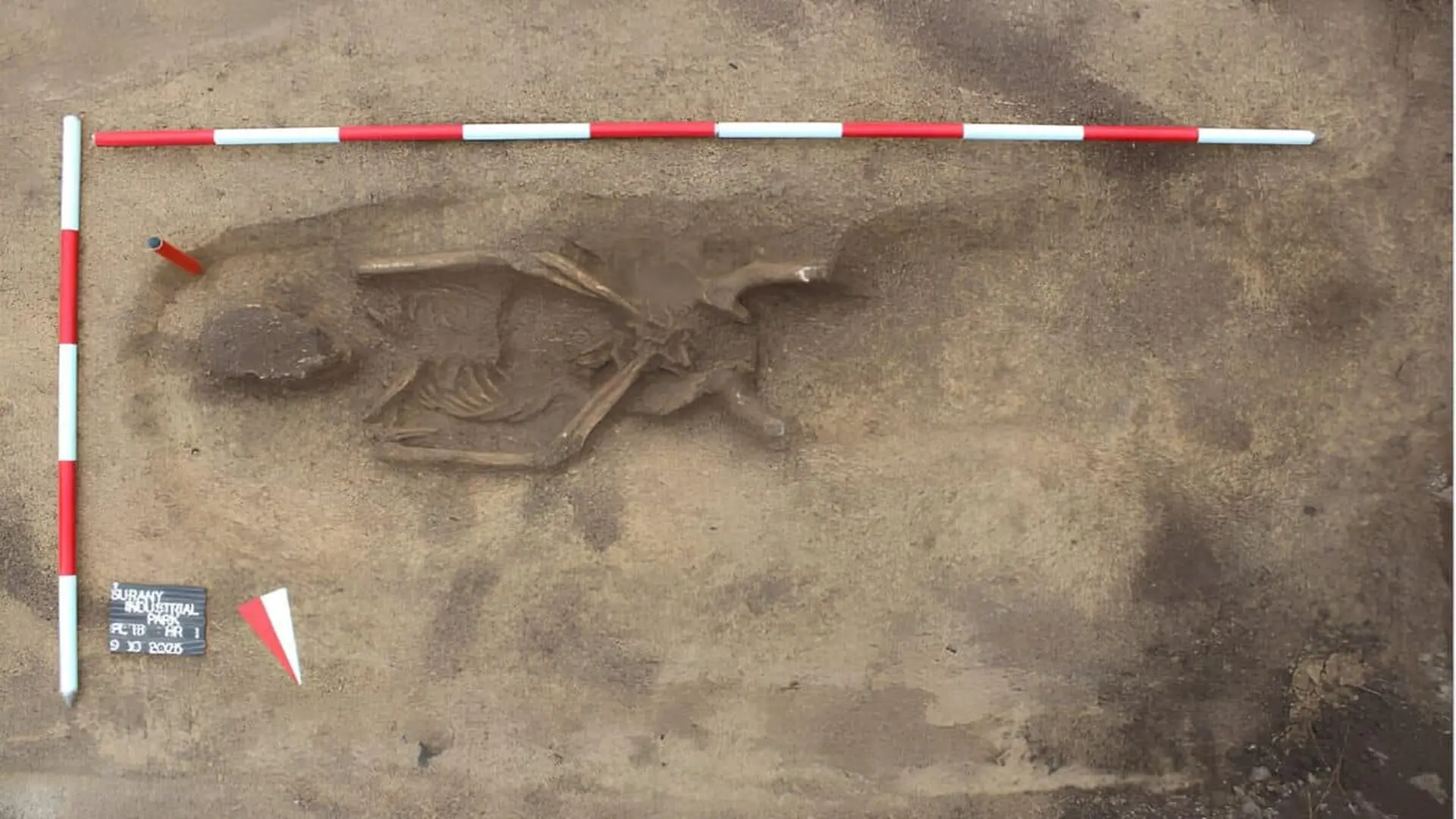
Archaeologists have uncovered a sprawling Roman encampment covering roughly 18 acres (7.4 hectares) near Šurany, complete with weaponry, military gear, personal items and numerous human remains that appear to belong chiefly to legionaries. The team believes the site was deserted almost instantly after a clash with Germanic tribes.
For many years scholars only suspected that Roman forces moved through the Šurany corridor during the Marcomannic Wars of 166‑180 CE, with scant material evidence to confirm the theory. The newly revealed camp now bridges a critical void in the record of Rome’s northern frontier.
The discovery emerged from excavations linked to the construction of an industrial park. In addition to the Roman installation, investigators also identified a seventh‑century medieval village, a densely built Bronze‑Age settlement, and two substantial burial complexes.
Unique Defensive Layout Highlights Roman Military Engineering
Unlike the textbook rectangular plan of many Roman marching camps, the Šurany site features a more irregular footprint, five gateways, fortified walls and a rare “clavicula” – a protected entryway surrounded by a semicircular ditch and rampart.
The Institute of Archaeology of the Slovak Academy of Sciences notes that this is the first clavicula of its kind documented within Slovak borders.
“The context of the find itself is also unique,” said Matej Ruttkay, director of the Institute of Archaeology of the Slovak Academy of Sciences. “We are clearly investigating a site that ceased to exist immediately following a military conflict between the Romans and the Germanic tribes—a fact corroborated by numerous artifacts.”
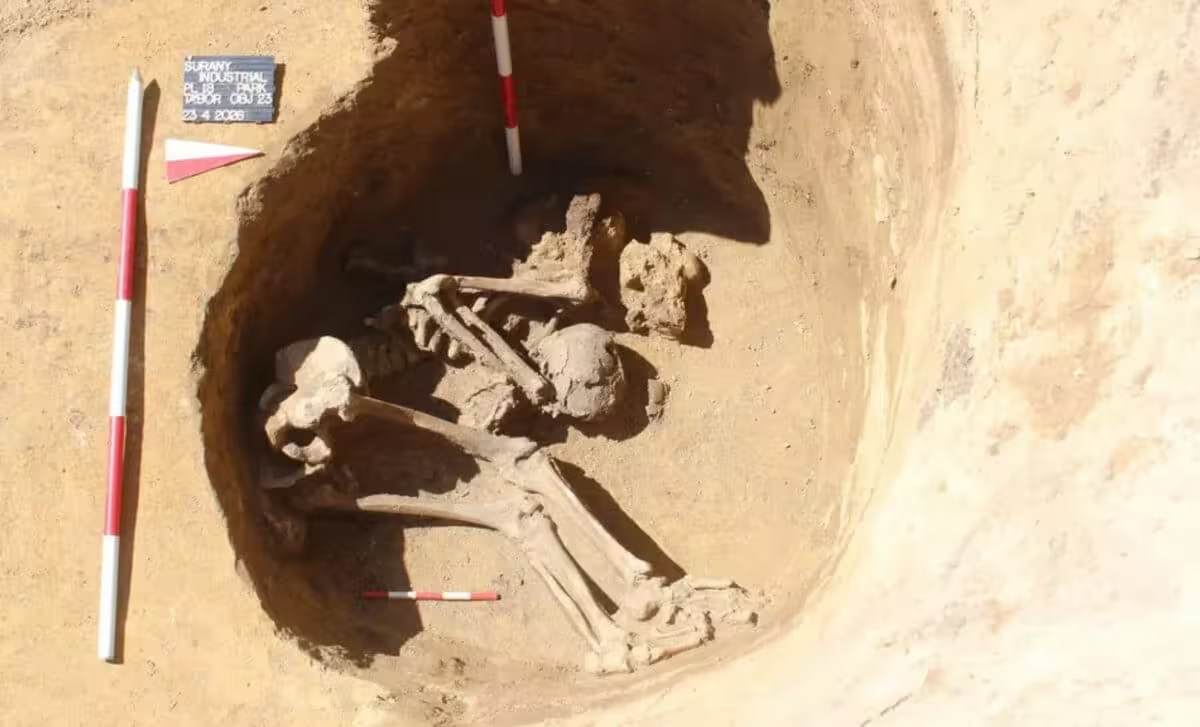
Grave Finds and Weaponry Provide a Snapshot of a Roman Garrison
Excavators recovered dozens of human remains, some complete and others fragmented, laid in ditches and shallow graves. Initial assessments suggest the majority were members of the Roman army.
Marek Vojtecek, a lead researcher on the project, highlighted that many of the bodies were accompanied by military gear. Items recovered include spears, arrowheads, helmet fragments, segmented and scale armor, legionary buckles, coins and hobnail‑studied sandals. Everyday objects such as an axe, a cutting tool and a gaming die were also present.
Ruttkay emphasized that the find extends the known footprint of Roman activity beyond Slovakia, shedding light on how the empire projected force north of the Danube in the late second century.
Earlier evidence of a Roman presence in the area comes from a 179 CE inscription carved into the rock beneath present‑day Trenčín Castle, commemorating a Roman victory and confirming military operations during the Marcomannic conflict.
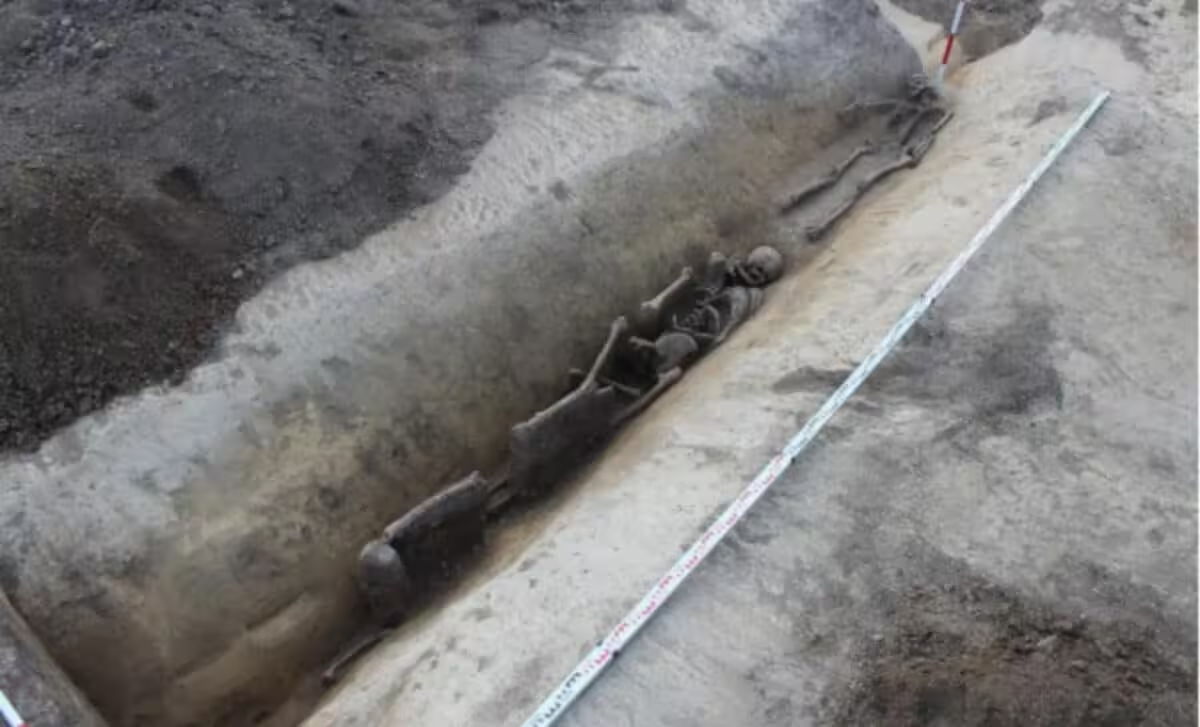
Ongoing International Study Seeks Answers to Lingering Mysteries
Despite the richness of the find, many questions remain unanswered.
“Who were the people buried here? What was the cause of their death? Why were the bodies often cast into deep features like storage pits or wells? What role did disease play, and what role did combat injuries? Why did we find so many objects that were rare for that era? Why were they not looted at the time?” said Michal Cheben, another lead member of the research team.
The artifacts have been moved to climate‑controlled storage at the Institute of Archaeology and are now being examined by a network of specialists. Radiocarbon dating is underway in Poland, sedimentology in the Czech Republic, archaeogenetic analysis at the University of Vienna, and isotope studies across Germany, Poland and South Africa, with additional institutions slated to join.
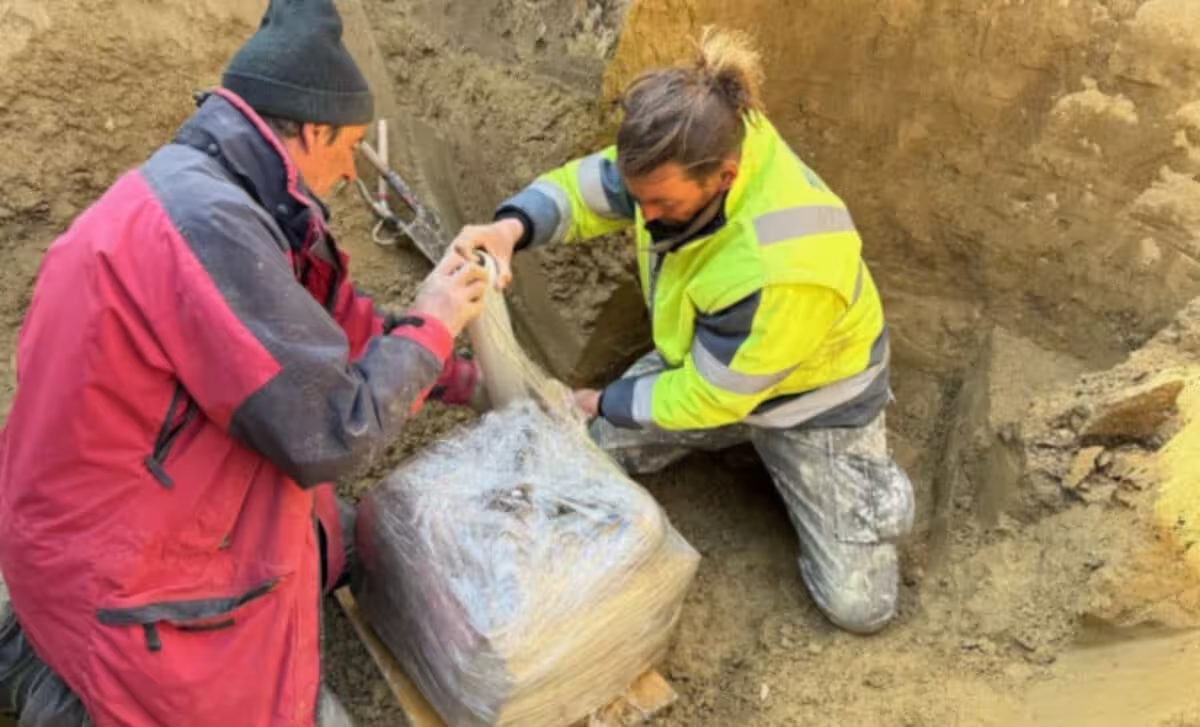
Prior to storage, several soil blocks were X‑rayed, allowing researchers to view the artifacts inside without disturbance. Cheben described the ability to see a Roman soldier’s original footwear and even determine its size as “truly remarkable,” especially when linked to a broader investigation of the site’s occupational history.
This article has been fact checked for accuracy, with information verified against reputable sources. Learn more about us and our editorial process.
Last reviewed on .
Article history
- Latest version
Reference(s)
- “Archeológovia objavili pri Šuranoch pozostatky rímskeho vojenského tábora z čias Marka Aurélia.”, July 17, 2026 MH Invest <https://www.mhinvest.sk/clanky/tlacove-spravy/archeologovia-objavili-pri-suranoch-pozostatky-rimskeho-vojenskeho-tabora-z-cias-marka-aurelia>.
Cite this page:
- Posted by Vikram Desai