This Teenager Invented a Flashlight That Runs Entirely on the Heat of Your Hand
A Canadian teenager invented a flashlight that runs on body heat, sparking a scientific innovation that continues to be explored by researchers today.
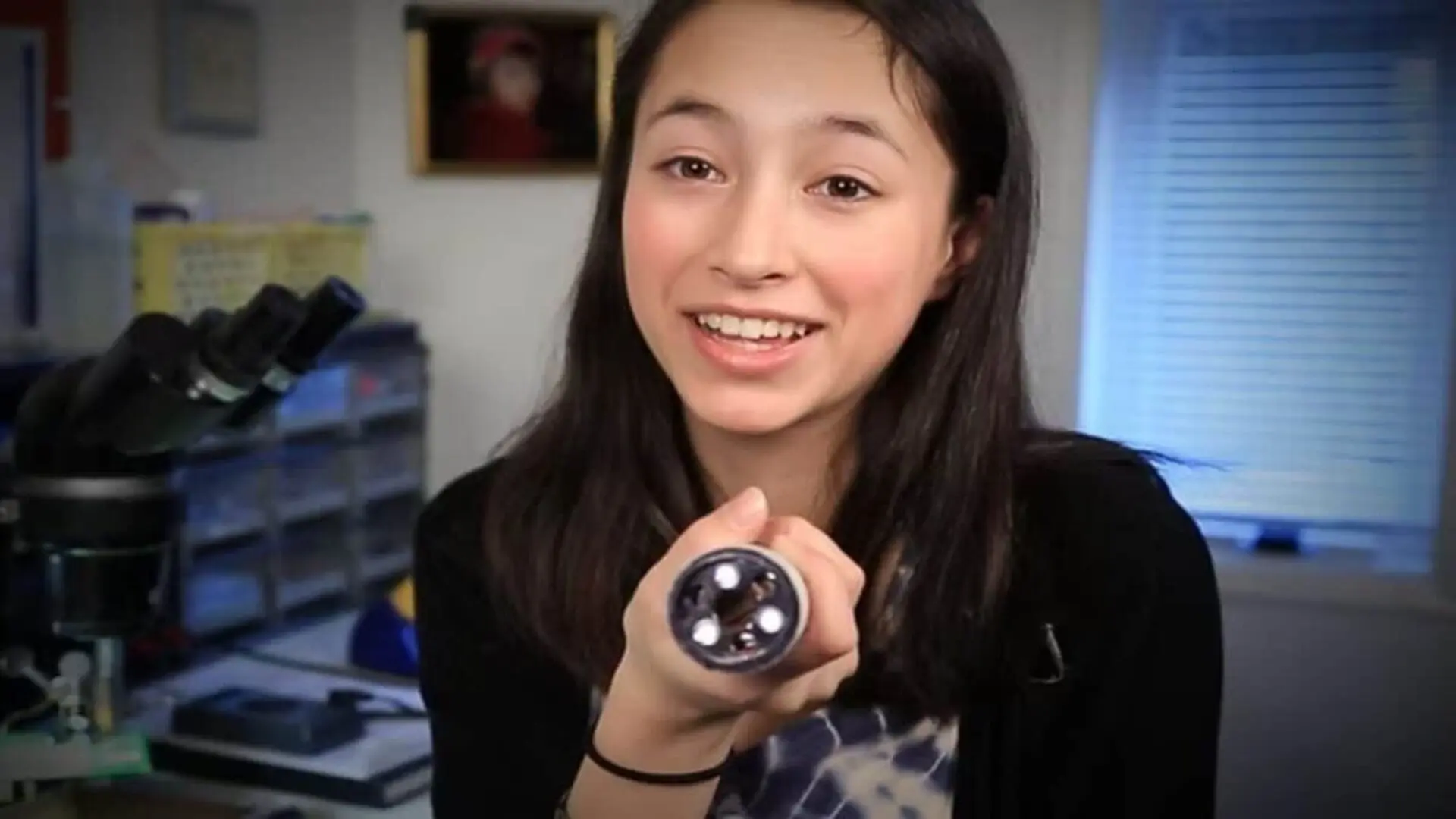
Could the human body serve as a sustainable power source for our everyday electronics? More than a decade ago, Canadian student Ann Makosinski captured global attention by demonstrating that it could. She developed a functional flashlight that required neither batteries nor external charging, operating entirely on the thermal energy harvested from the palm of a hand.
Harnessing Thermal Gradients
The core of Makosinski’s innovation relies on thermoelectric generation, a physical process that converts temperature differentials directly into electrical current. The device functions by placing thermoelectric tiles between two surfaces: the user’s warm hand and the cooler ambient air. This thermal gradient creates a flow of electrons, providing just enough power to illuminate an LED.
As noted by NBC News, the brilliance of the project lay in the practical application of existing science. By selecting an LED—a component known for its high efficiency and low power requirements—Makosinski successfully matched the electrical output of her thermoelectric system to a real-world use case.
“The flashlight I have made is more of a prototype then a final product, but the components in my device are quite strong,” she stated during the project’s development. She noted that future iterations would require sealed, ruggedized casings to protect sensitive electronic components from environmental damage, such as moisture.
The Limitations of Body-Heat Power
While the concept is elegant, it faces significant thermodynamic challenges. The efficacy of a thermoelectric generator is strictly bound by the delta between the heat source and the surrounding environment. As ambient temperatures rise toward body temperature, the potential for power generation diminishes, leading to an inconsistent energy supply.
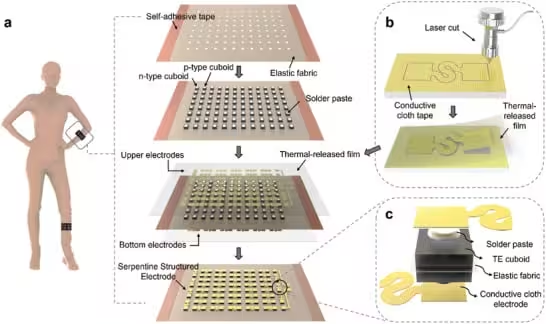
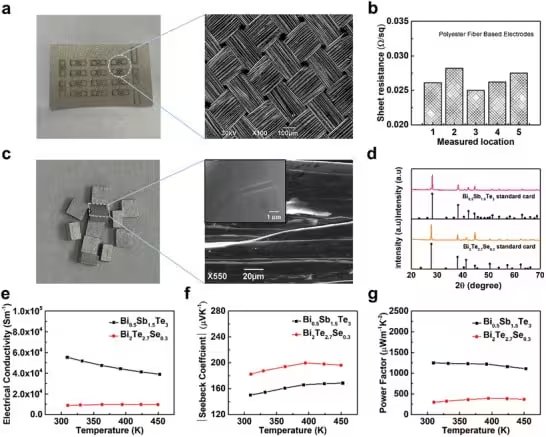
Research published in PubMed Central (PMC) highlights that wearable thermoelectric generators typically operate in the microwatt range. Consequently, the technology remains limited to low-energy applications. Designers must balance the heat flow required to sustain the current with the inherent energy demands of the circuit itself to prevent the device from consuming more power than it produces.
The Future of Wearable Energy
Despite these constraints, the field of wearable electronics continues to evolve. Modern research is currently focused on flexible, thin-film thermoelectric materials that can comfortably adhere to the skin, potentially powering small sensors or Bluetooth connectivity modules.
According to reports from The Times of India, current developments integrate these materials with advanced energy-management systems designed to optimize output from fluctuating thermal sources. While the challenge of limited power density persists, the foundational principle championed by early prototypes remains a key focus for researchers aiming to create self-sustaining, wearable technology that operates without the need for traditional battery replacements.
This article has been fact checked for accuracy, with information verified against reputable sources. Learn more about us and our editorial process.
Last reviewed on .
Article history
- Latest version
Reference(s)
- “HOME.” HOME <https://www.annmakosinski.com/>.
- Coldewey, Devin. “Teenager invents flashlight powered by the warmth of your hand.”, June 30, 2013 NBC News, doi: PropertyValue. <https://www.nbcnews.com/technolog/teenager-invents-flashlight-powered-warmth-your-hand-6c10485762>.
- Hou, Yue. “Whole Fabric‐Assisted Thermoelectric Devices for Wearable Electronics.”, vol. 9, no. 1, pp. 2103574 PubMed Central (PMC), doi: 10.1002/advs.202103574. <https://pmc.ncbi.nlm.nih.gov/articles/PMC8728843/?utm_source=chatgpt.com>.
Cite this page:
- Posted by Zara Tariq