The Elusive Te Lapa Underwater Flashes That Guided Ancient Voyagers Still Puzzle Scientists
Ancient Polynesian navigators relied on te lapa, mysterious underwater flashes that still baffle scientists.
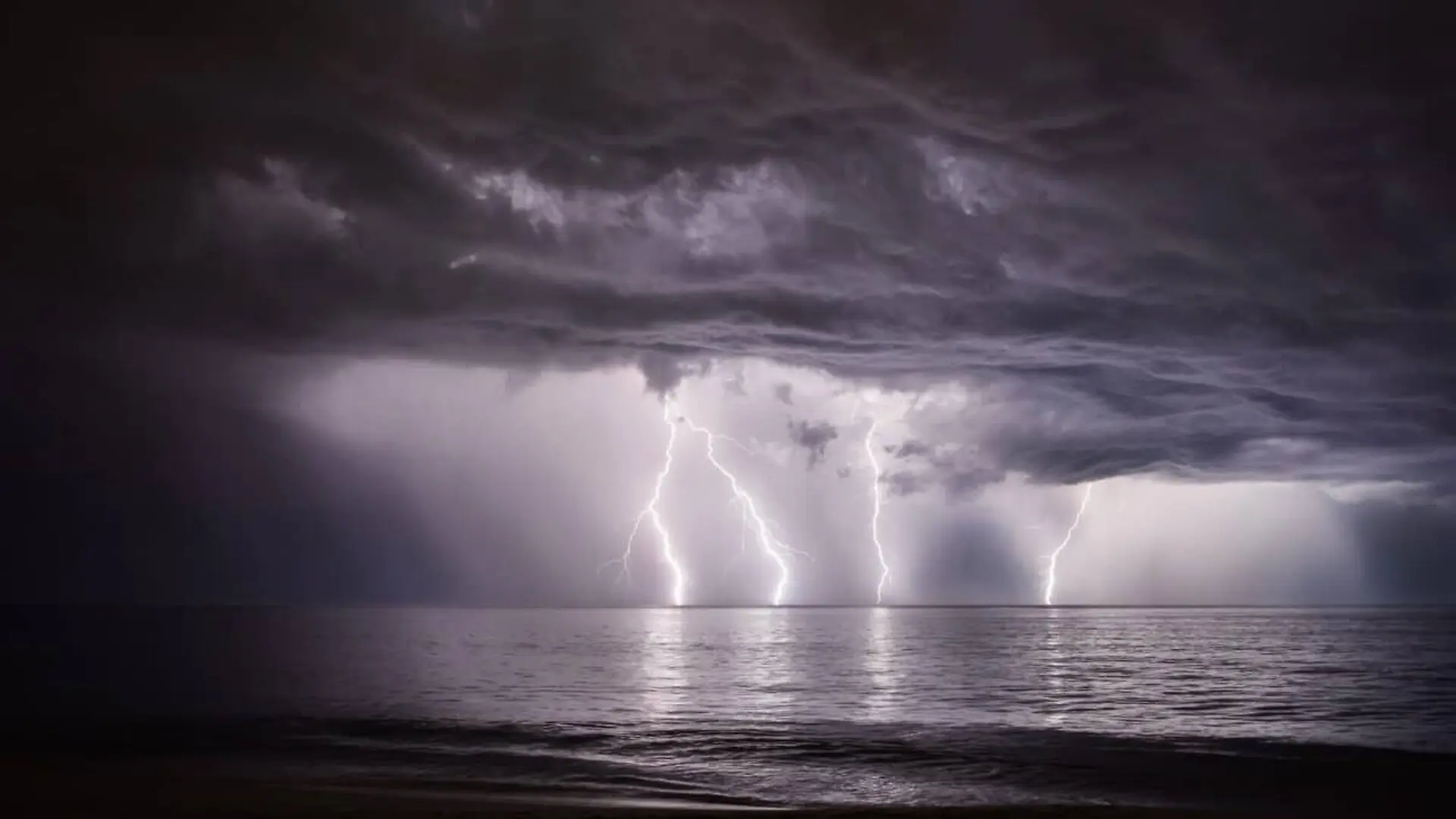
A faint, rapid flash that lights the ocean’s surface without any storm overhead has been reported by coastal communities throughout the Pacific Ring of Fire. The brief illumination, sometimes described as a “torch that was lit and instantly blown out,” appears to emerge from beneath the water and vanishes in an instant, defying conventional explanations such as lightning or atmospheric phenomena.
Traditional Wayfinders Cite the Glimmer as a Land‑Finding Signal
Polynesian navigators have long spoken of “te lapa,” a term that translates to “the flashing.” Oral histories place the phenomenon from the waters off Sumatra and Java to the eastern Pacific near Chile, noting that the flashes often precede the sighting of nearby islands during night voyages.
One of the most respected custodians of this knowledge was the late Aliki Koloko Kaveia, chief of the Taumako people in the Solomon Islands and a descendant of the legendary voyager Lata. Kaveia learned navigation from his father and elders before helping to document the practice through the Vaka Taumako Project.
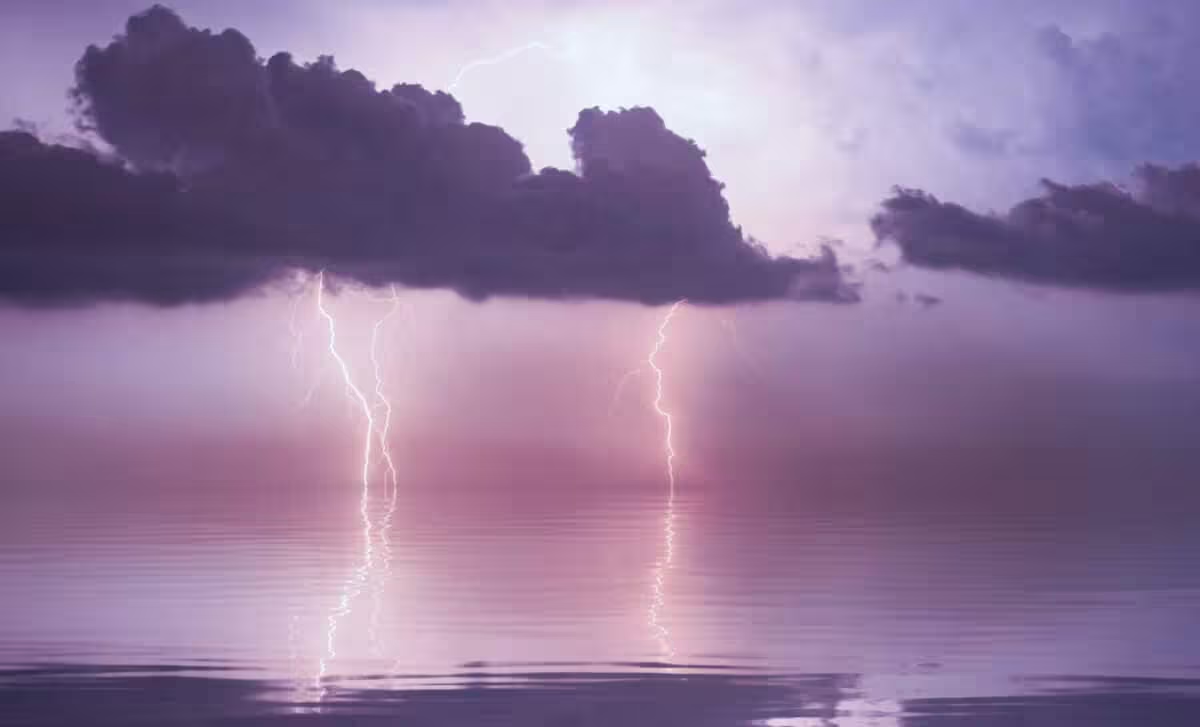
When cultural anthropologist Marianne George first met Kaveia in 1993, she witnessed a flash that moved through the water rather than descending from the sky. George later recorded Kaveia’s description: “a torch that was lit and instantly blown out.” She also observed that the illumination seemed to originate from submerged landforms, leading navigators to treat it as a cue for nearby islands.
The practice was earlier noted by New Zealand physician‑sailor David Lewis, who described it in his 1972 volume We, the Navigators. Lewis focused on the cultural techniques rather than the physical cause, a gap that continues to intrigue researchers.
Scientific Surveys Discount Common Explanations
George returned repeatedly to Taumako to test hypotheses ranging from bioluminescent organisms to electromagnetic disturbances. In a 2013 article in Time and Mind, she concluded that none of the prevailing models could fully account for the observed characteristics.
“Various scientific facts and theories about bioluminescence and electromagnetic phenomena are noted for the study of te lapa, as are possible limitations of modern technology, or lack of practical access to it,” George wrote.
Kaveia suggested that the interaction of opposing ocean swells—especially where waves converge around islands—might concentrate light in a lens‑like fashion. George also explored the idea that the Pacific’s relentless tectonic activity could generate localized electromagnetic emissions capable of producing the fleeting flashes.
Other common candidates have been ruled out. Star or satellite reflections lack sufficient intensity, and St. Elmo’s Fire cannot occur underwater because it is an atmospheric plasma phenomenon.
Emerging Research on Deep‑Sea Electrical Discharges and Bioluminescence
Recent deep‑sea expeditions have recorded voltage spikes near hydrothermal vents and submarine volcanoes within the most active segments of the Ring of Fire. Although seawater typically disperses electrical charge, researchers found that under certain conditions—such as insulating gas bubbles, rapid temperature shifts, or mineral‑laden vent plumes—discharges can travel several hundred feet before dissipating.
These electric events might split water molecules and spark chemical reactions, potentially creating brief luminous displays. Parallel laboratory work by Harvard researcher John Huth, part of the Underwater Lightning Project, demonstrated that pressure waves generated by moving fish decoys can trigger pale‑blue flashes in cultures of bioluminescent dinoflagellates.
In a 2016 paper in Structure and Dynamics, Huth acknowledged the uncertainty: “There is currently no definitive explanation of the origin of te lapa.” He noted that while fish‑induced turbulence could activate dinoflagellates, confirming this hypothesis would require imaging systems capable of capturing extremely faint light emissions.
This article has been fact checked for accuracy, with information verified against reputable sources. Learn more about us and our editorial process.
Last reviewed on .
Article history
- Latest version
Reference(s)
- “Holau Vaka Taumako.”, January 5, 2023 UNESCO <https://www.unesco.org/en/articles/holau-vaka-taumako>.
- “We, the Navigators: The Ancient Art of Landfinding in the Pacific (Second Edition).”, June 25, 2020 UH Press <https://uhpress.hawaii.edu/title/we-the-navigators-the-ancient-art-of-landfinding-in-the-pacific/>.
- George, Marianne. “Polynesian Navigation andTe Lapa—“The Flashing”.” Time and Mind, vol. 5, no. 2, November 28, 2013, pp. 135-173. Informa UK Limited, doi: 10.2752/175169712X13294910382900. <https://www.tandfonline.com/doi/abs/10.2752/175169712X13294910382900>.
- “Qt64r1r4qg.” <https://escholarship.org/content/qt64r1r4qg/qt64r1r4qg.pdf>.
Cite this page:
- Posted by Vikram Desai