Two Intact Alamo Cannonballs Discovered After 190 Years, One Mexican One Texan
Archaeologists discover rare, centuries‑old artifacts beneath the Alamo, preserved in place for nearly 200 years, offering a unique glimpse into history.
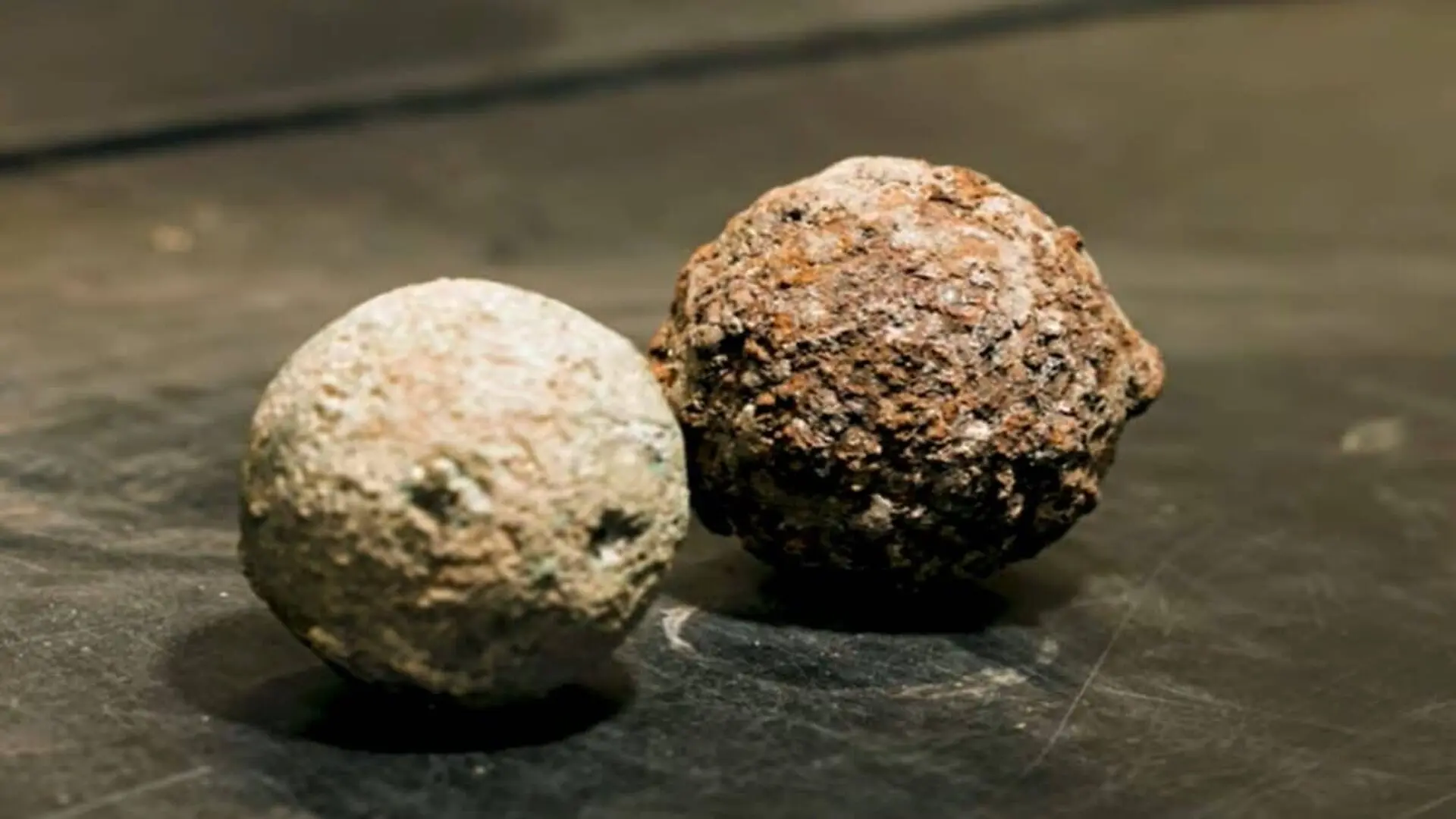
Archaeologists working at the Alamo Church have uncovered two fully preserved cannonballs near its northeast corner, a find that may have remained untouched since the 1836 siege. The pair, located only a few feet apart, appear to represent the opposing forces: one linked to the Mexican army and the other to the Texan defenders.
The bronze projectile was unearthed on March 5, just ahead of the 190th anniversary of the battle’s final day. A second, iron‑capped ball was recovered on June 2, in an adjacent trench. Both were retrieved at essentially the same depth in soil that shows no signs of modern disturbance.
These intact solid‑shot pieces are exceptionally rare for the Alamo era. Prior excavations have produced only fragmented shrapnel, whereas these two complete munitions offer a direct, tangible link to the thirteen‑day assault that unfolded in present‑day downtown San Antonio.
Surprise Discovery Defies Expectations
Kolby Lanham, senior researcher and historian for the Alamo, described the first find as almost unbelievable in a press release. He said the team was stunned when the object emerged from the earth.
“There’s no way in the world we just found a cannonball from 190 years ago,” he recalled.
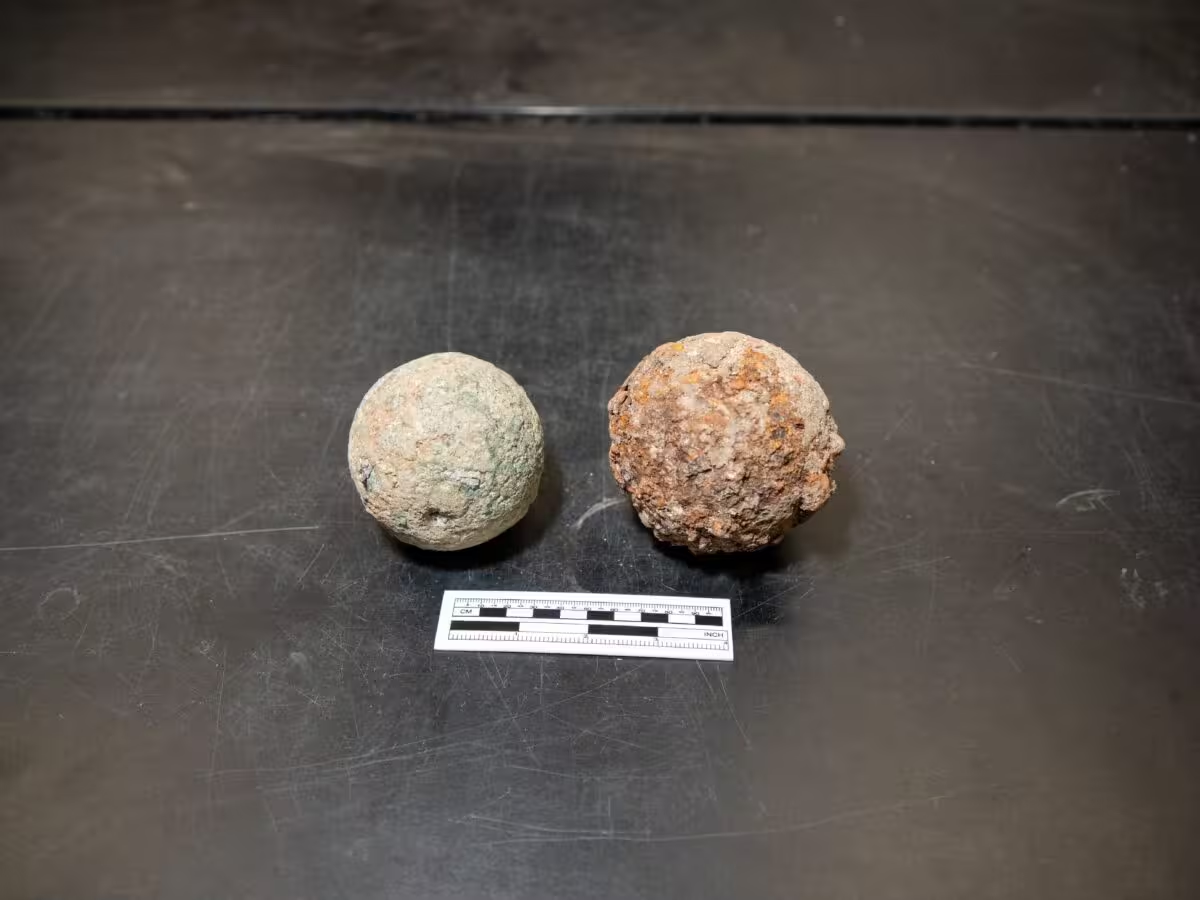
The first ball, cast in solid bronze, is thought to have originated from the Mexican forces. Its timing added drama, as it surfaced one day before the anniversary of the Alamo’s climactic assault. The 1836 battle resulted in the death of roughly 180 Texan rebels, including the famed frontiersman Davy Crockett, as they fought for independence from Mexico. The church itself began as a Spanish mission and was rebuilt in 1755.
Second Shot Sheds Light on the Texan Side
A few months later, a second intact cannonball emerged nearby. This larger piece, forged from iron, is believed to have been fired by the defenders trapped inside the Alamo. In a video released by the Alamo Trust, Tiffany Lindley, the site’s director of archaeology, emphasized the find’s rarity.
“We have a lot of fragments of shrapnel, but a solid shot, we haven’t found that before, and this is the second one,” she said.
Lindley was off‑site when the iron ball was uncovered. An archaeologist sent her a bomb emoji, prompting her immediate return to the dig site—a small gesture that underscored the excitement of the discovery.
Undisturbed Context Strengthens Dating
Both projectiles were recovered side by side near the church’s northeast corner, at a comparable depth, and in a “clean context,” meaning no modern intrusion surrounds their original positions. Lindley explained that such preservation suggests the balls have likely remained where they fell in 1836.
“A cannonball is maybe a once‑in‑a‑lifetime – or in my case, a twice‑in‑a‑lifetime – discovery. It’s really exciting,” she said. “What that tells us is that they were in likely their original deposition,” she said. “So whenever they were dropped the very first time—possibly in 1836, probably—they haven’t been touched since.”
The Alamo site has already yielded artifacts from multiple eras—including pre‑Alamo settlement, the mission period, 19th‑century conflicts, and later industrial activity. These two cannonballs stand out because they may preserve a direct snapshot of the 1836 siege itself.
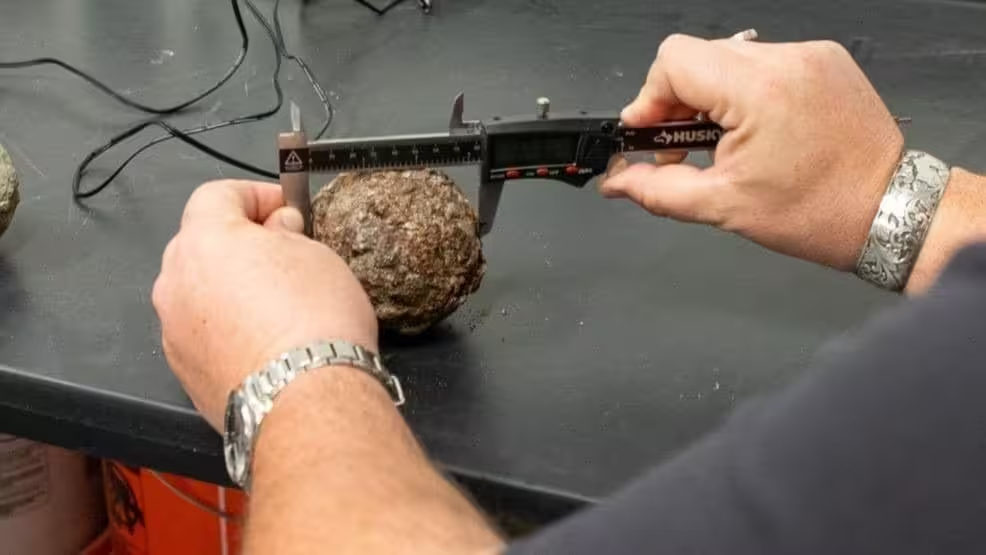
Researchers plan to conduct detailed analyses of the balls’ dimensions, metallurgical composition, and provenance, reinforcing the notion that even well‑studied battlefields can still reveal fresh evidence.
This article has been fact checked for accuracy, with information verified against reputable sources. Learn more about us and our editorial process.
Last reviewed on .
Article history
- Latest version
Reference(s)
- “Kolby Lanham.” <https://www.thealamo.org/support/preservation/our-experts/kolby-lanham>.
- “The Alamo's Archaeology Team Discovers Second Battle-Era Cannonball In Three Months.” <https://www.thealamo.org/alamo-trust/pressroom/the-alamos-archaeology-team-discovers-second-battle-era-cannonball-in-three-months>.
- “Alamo Trust, Inc..” <https://www.thealamo.org/alamo-trust>.
- “Tiffany M. Lindley, PhD, RPA.” <https://www.thealamo.org/support/preservation/our-experts/tiffany-lindley-phd>.
Cite this page:
- Posted by Vikram Desai