Rubin Observatory Detects Ancient Dark Matter Galaxy Hiding On The Edge Of The Milky Way
The Vera C. Rubin Observatory has discovered Aquarius IV, one of the faintest satellite galaxies ever observed orbiting our Milky Way.
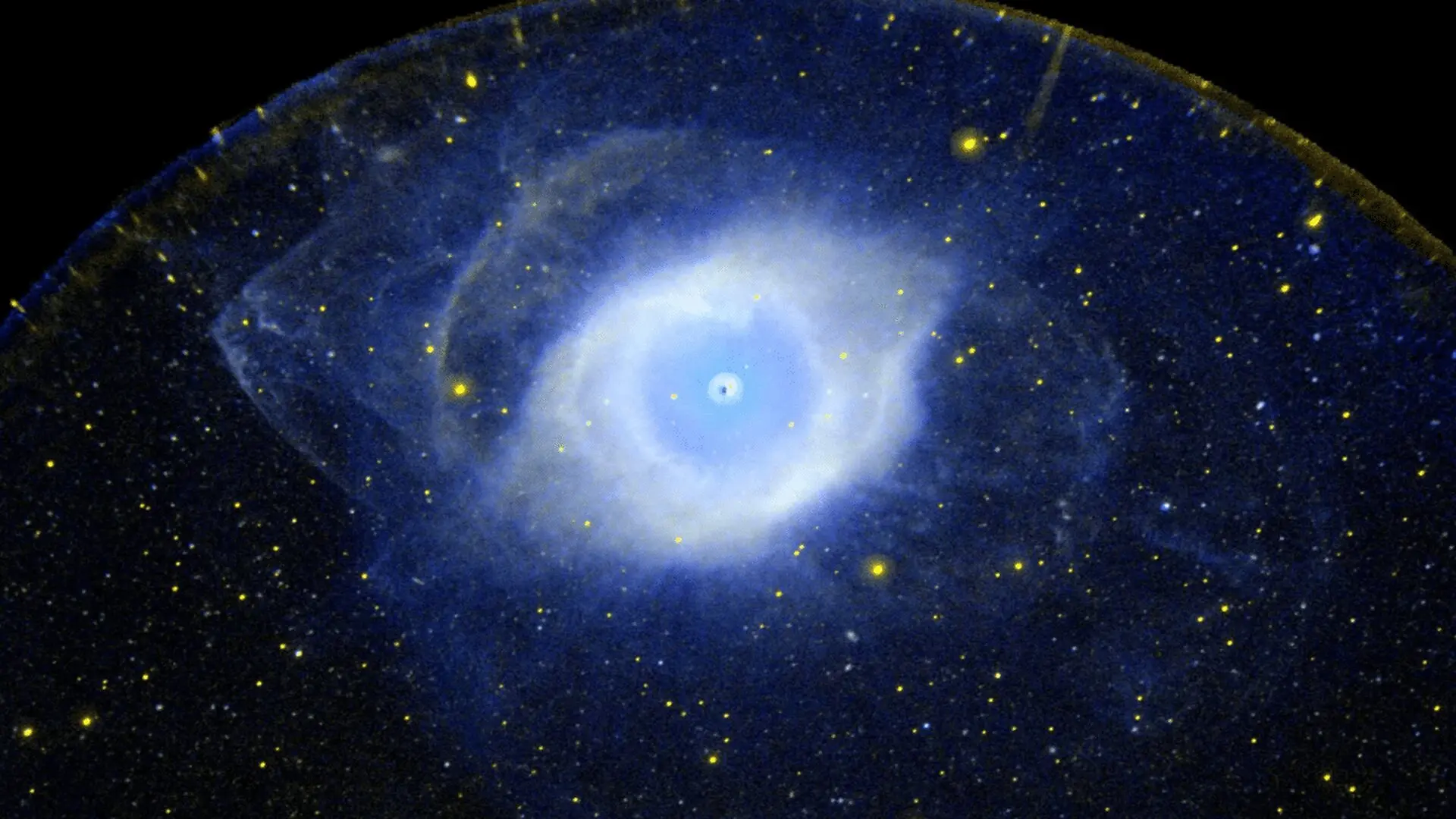
The Vera C. Rubin Observatory has officially logged its first major success, identifying an elusive satellite galaxy known as Aquarius IV. Located roughly 359,000 light-years from the center of the Milky Way, this ancient system is one of the faintest ever detected, offering a pristine, dark-matter-dominated window into the earliest chapters of cosmic history.
The discovery, detailed in the Research Notes of the AAS, classifies Aquarius IV as an ultra-faint dwarf galaxy (UFDG). These systems are among the most sparse stellar structures in the universe, containing only a fraction of the stars found in typical galaxies. While the Milky Way boasts hundreds of billions of stars, Aquarius IV holds only a few thousand, making its detection a significant technical achievement for the observatory’s preliminary testing phase.
Mapping the Milky Way’s Dimmest Neighbors
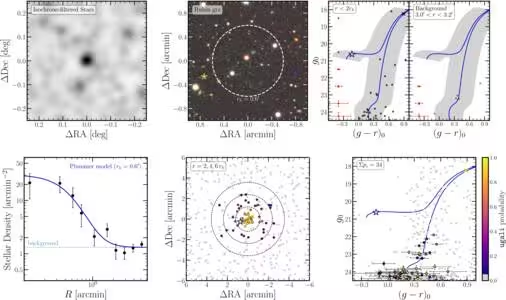
Ultra-faint dwarf galaxies are notoriously difficult to spot because their low stellar density often causes them to blend into the background of the night sky. Researchers identified Aquarius IV by mining data from the observatory’s Early Data Preview 2 (EDP2) collection, which surveyed approximately 7 percent of the sky between April 2025 and January 2026.
By employing sophisticated computer modeling, the team isolated groups of stars sharing specific color and brightness signatures. The analysis revealed a population of stars approximately 13 billion years old—nearly as ancient as the Big Bang itself. These findings were later corroborated by historical data from the Dark Energy Camera on the NSF Victor M. Blanco Telescope in Chile, which captured faint traces of the galaxy that had previously escaped notice.
A Cosmic Laboratory for Dark Matter
The physical characteristics of Aquarius IV are extreme even by the standards of dwarf galaxies. With an absolute magnitude of -1.9, it is roughly 14 million times less luminous than the Milky Way. Its total mass is estimated at only 1,500 times that of our Sun, a stark contrast to the Milky Way’s massive 1.5 trillion solar masses.
Astronomers suspect that these systems are composed almost entirely of dark matter, with visible stars accounting for as little as 0.1 percent of their total mass. Because dark matter remains invisible to traditional sensors, these dwarf galaxies act as vital gravitational markers, allowing scientists to map the distribution of the mysterious substance that forms the structural backbone of the universe.
Joshua Simon, an astronomer at the Carnegie Institution for Science, noted that these relic systems are invaluable. The stars in ultra-faint dwarfs are also extremely old, dating back to just after the Big Bang, so they give us a unique window to the properties of the first galaxies that formed, Simon said.
Expanding the Frontier of Space Observation
This discovery serves as a precursor to the Legacy Survey of Space and Time (LSST), the flagship mission of the Rubin Observatory. Equipped with a 3,200-megapixel camera, the observatory is designed to conduct a decade-long survey that will monitor the southern sky with unprecedented sensitivity.
The scientific community expects this mission to revolutionize our understanding of galactic formation, with projections suggesting the detection of up to 100 additional ultra-faint dwarf galaxies. As the Rubin Observatory continues its high-resolution scan of the heavens, Aquarius IV stands as the first of many anticipated clues in the ongoing effort to decode the history of our cosmic neighborhood.
This article has been fact checked for accuracy, with information verified against reputable sources. Learn more about us and our editorial process.
Last reviewed on .
Article history
- Latest version
Cite this page:
- Posted by Karan Das