Astronomers Detect First Ever Radio Signal Directly From A Distant Exoplanet
Astronomers have detected radio waves from an exoplanet, marking the first time a magnetic field has been measured on a world beyond our solar system.
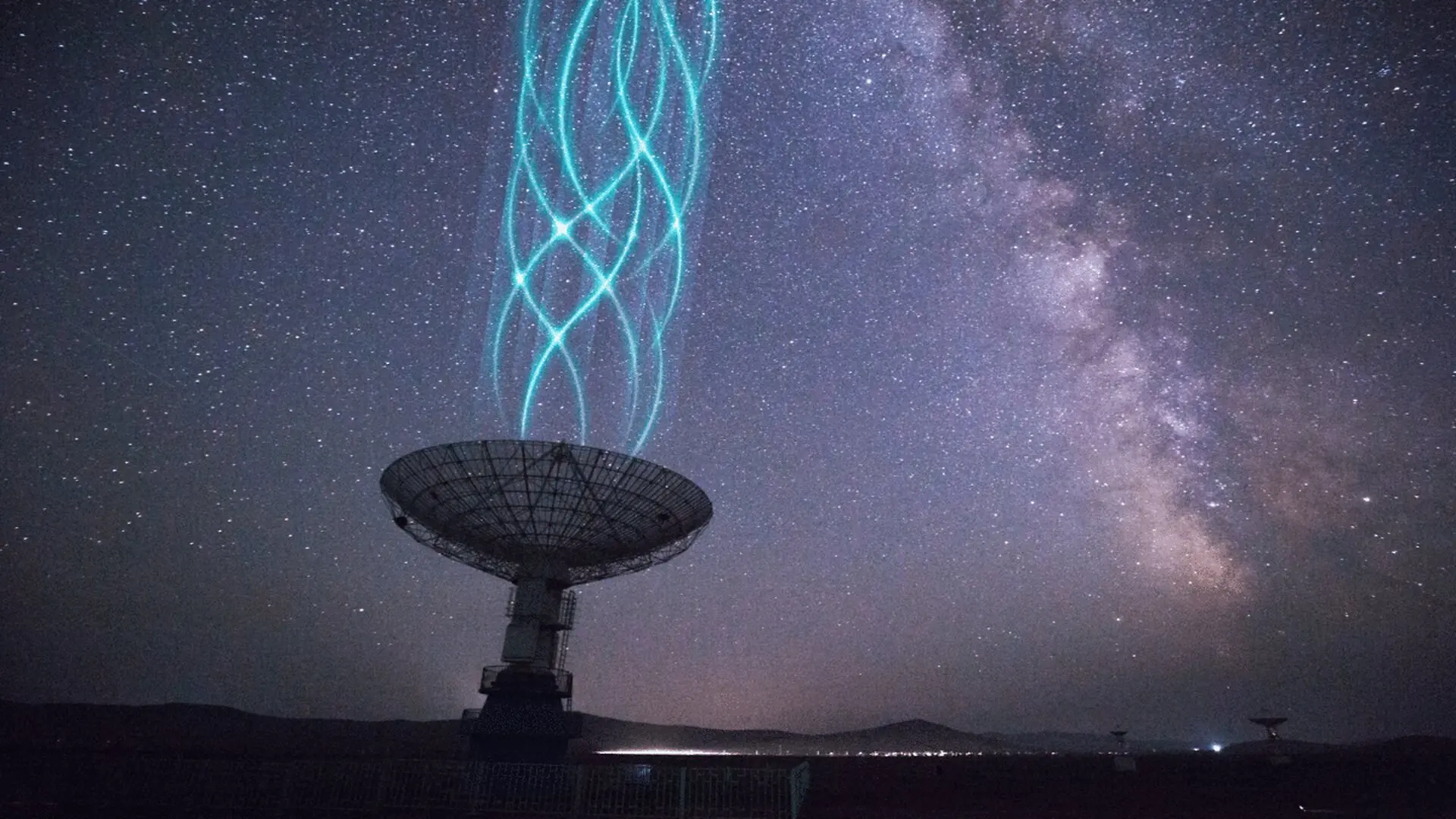
Astronomers have achieved a milestone in planetary science by capturing the first direct radio emissions from an exoplanet. The detection provides clear evidence of a magnetic field surrounding a massive, young world, opening a new frontier in our ability to probe the environments of planets orbiting distant stars.
Detecting Electromagnetic Activity Beyond Our Solar System
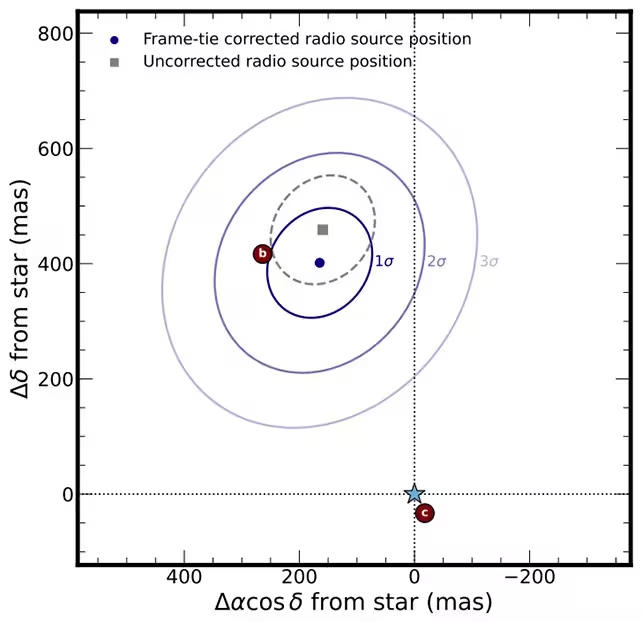
The groundbreaking observation, detailed in a paper available on arXiv, centers on a giant exoplanet whose radio output was successfully distinguished from the electromagnetic noise generated by its host star. Unlike previous methods that rely on indirect planetary measurements, this approach utilizes radio astronomy to pinpoint signatures indicative of active, planetary-scale magnetic environments.
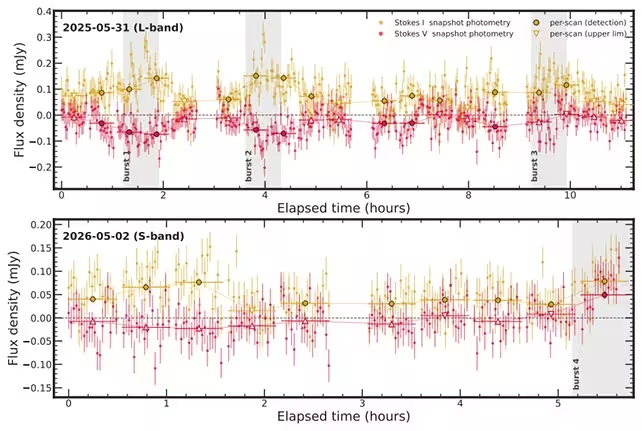
Researchers monitored frequencies between 0.85 and 3.5 GHz, identifying a combination of persistent emissions and rapid, highly polarized bursts. These patterns bear the hallmarks of auroral activity, similar to the processes observed in our own solar system but occurring on a much larger scale. As the authors note, while radio bursts are common in ultracool dwarfs and solar system planets, this represents the first time such a signal has been unambiguously tied to an extrasolar planet rather than its parent star.
Mapping Planetary Magnetism
The existence of a magnetic field is a critical piece of the puzzle in understanding planetary habitability and evolution. By analyzing the characteristics of these radio bursts, the team was able to estimate the planet’s magnetic field strength, which aligns with theoretical dynamo-scaling predictions for massive, young worlds. This internal dynamo, fueled by the motion of conductive material within the planet, likely shields the atmosphere from harsh stellar radiation.
The research team emphasized that no known physical mechanism associated with early-type stars could account for the specific radio signatures recorded. By isolating these emissions from stellar interference, the study confirms that the magnetic activity is intrinsic to the planet itself, providing a rare window into the internal dynamics of worlds located light-years away.
Expanding the Reach of Radio Astronomy
This discovery marks a shift in how astronomers characterize exoplanetary systems. Traditional techniques, such as the transit method, are highly effective at determining a planet’s size or orbit, but they offer little insight into the invisible magnetic forces at play. Radio observation fills this gap, offering a new tool to assess the resilience and behavior of distant planetary atmospheres.
While current instrument sensitivity presents a limitation, the researchers suggest that this is merely the beginning. With upcoming improvements in radio observatory technology—projected to be five to seven times more sensitive than current arrays—the ability to detect similar magnetic signatures from a broader range of worlds will soon be within reach. This evolution in observational capacity promises to deepen our understanding of how young planetary systems form and mature across the galaxy.
This article has been fact checked for accuracy, with information verified against reputable sources. Learn more about us and our editorial process.
Last reviewed on .
Article history
- Latest version
Reference(s)
- Ceballos, Kevin. “Discovery of radio emission from the exoplanet $β$ Pictoris b.” arXiv.org <https://arxiv.org/abs/2609.16720>.
Cite this page:
- Posted by Karan Das