Archaeologists Uncover Unique Roman Imperial Bath Hidden Inside a Palace Tower in Serbia
Archaeologists have uncovered a remarkably preserved and elaborate secret hidden within a fortified Roman palace in Serbia, defying all historical expectations.
Archaeologists working at the Vrelo-Šarkamen site in Serbia have uncovered a sophisticated private bath complex hidden within the foundations of a tower at the former palace of Roman Emperor Maximinus Daza. The discovery of this imperial balneum reveals a level of architectural sophistication and personal luxury that exceeds previous academic estimates for the Tetrarchy-era residence, which was occupied between 310 and 313 C.E.
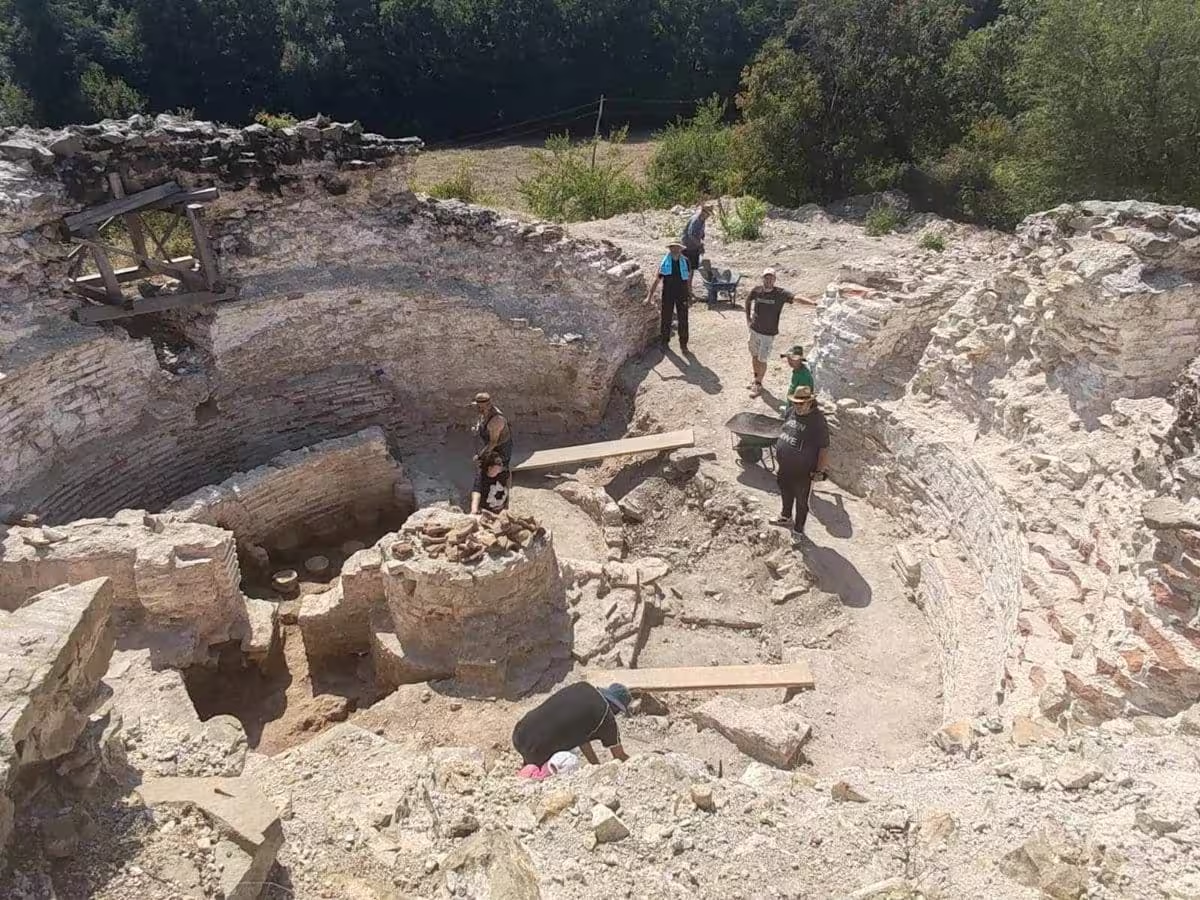
The excavation, supported by the Ministry of Culture of the Republic of Serbia, was led by Marija Jovic of the Archaeological Institute and Gordan Janjic of the Krajina Museum. Their findings illustrate a highly engineered space designed specifically for the emperor’s private use, rather than a communal facility.
Advanced Engineering in the Imperial Tower
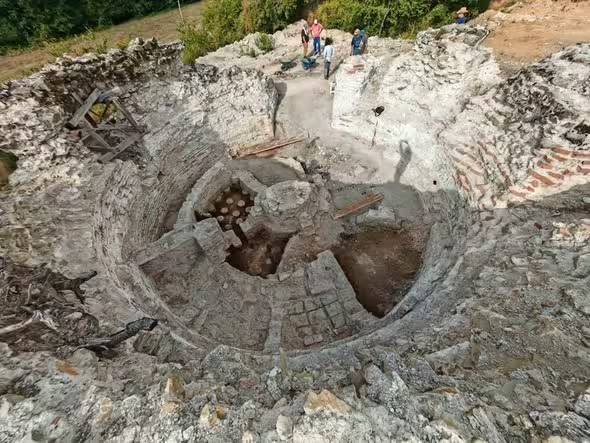
The bath suite was integrated into the circular layout of the southwest tower, a design choice that researchers describe as a significant feat of Roman engineering. The chamber was originally topped by a dome, which featured six windows to provide illumination and ventilation—a complex structural requirement for the time. Rather than being retrofitted into an existing structure, the bath and the tower were constructed as a cohesive, functional unit.
Infrastructure of Roman Comfort
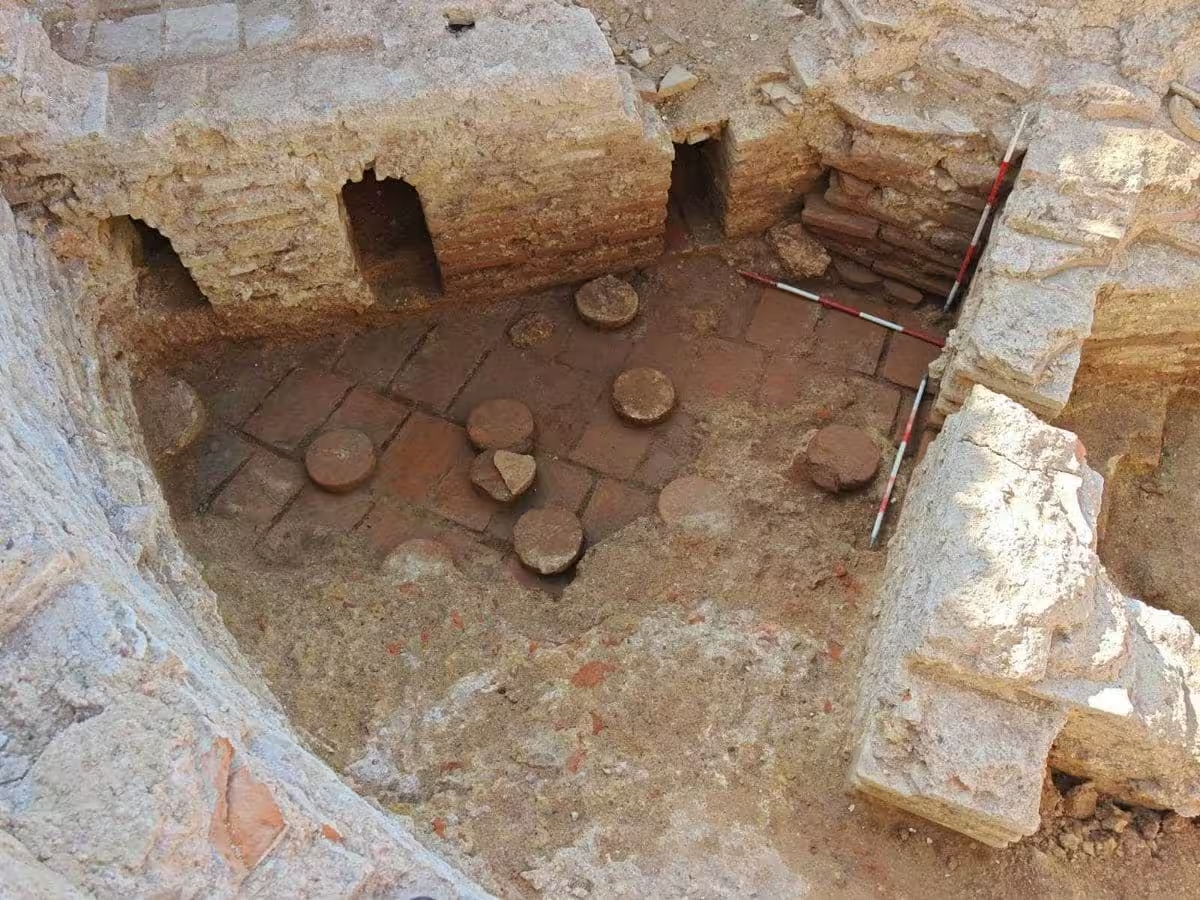
The technical heart of the complex lies in the separation of the bathing area from the utility chambers. On the western side of the suite, researchers identified the remnants of an advanced hypocaust heating system, which circulated hot air beneath the floors to regulate the temperature of the rooms. Although the original copper boiler has been lost to time, its structural base remains intact, providing rare evidence of how the water heating system was maintained by palace staff.
A Private Sanctuary
Beyond the heating apparatus, the suite featured at least three distinct pools and a sudatorium, or steam room. According to the research team, these elements indicate that the area served as a comprehensive, high-status bathing facility tailored for the imperial household. The site, which has yielded significant discoveries including gold artifacts at its associated mausoleum over the last thirty years, continues to reshape the understanding of daily life within the Vrelo-Šarkamen palace.
“This was not merely a simple space for personal hygiene, but a carefully designed private bathroom intended for high-status residents, where the architectural solution, technical infrastructure, and comfort formed a unified functional whole,” the researchers noted.
This article has been fact checked for accuracy, with information verified against reputable sources. Learn more about us and our editorial process.
Last reviewed on .
Article history
- Latest version
Cite this page:
- Posted by Karan Das