China Is Testing A Revolutionary Navigation Hack For Its Upcoming Mission To Jupiter
China has successfully tested a new star-based navigation method to support its ambitious mission to Jupiter, currently scheduled for launch in 2030.
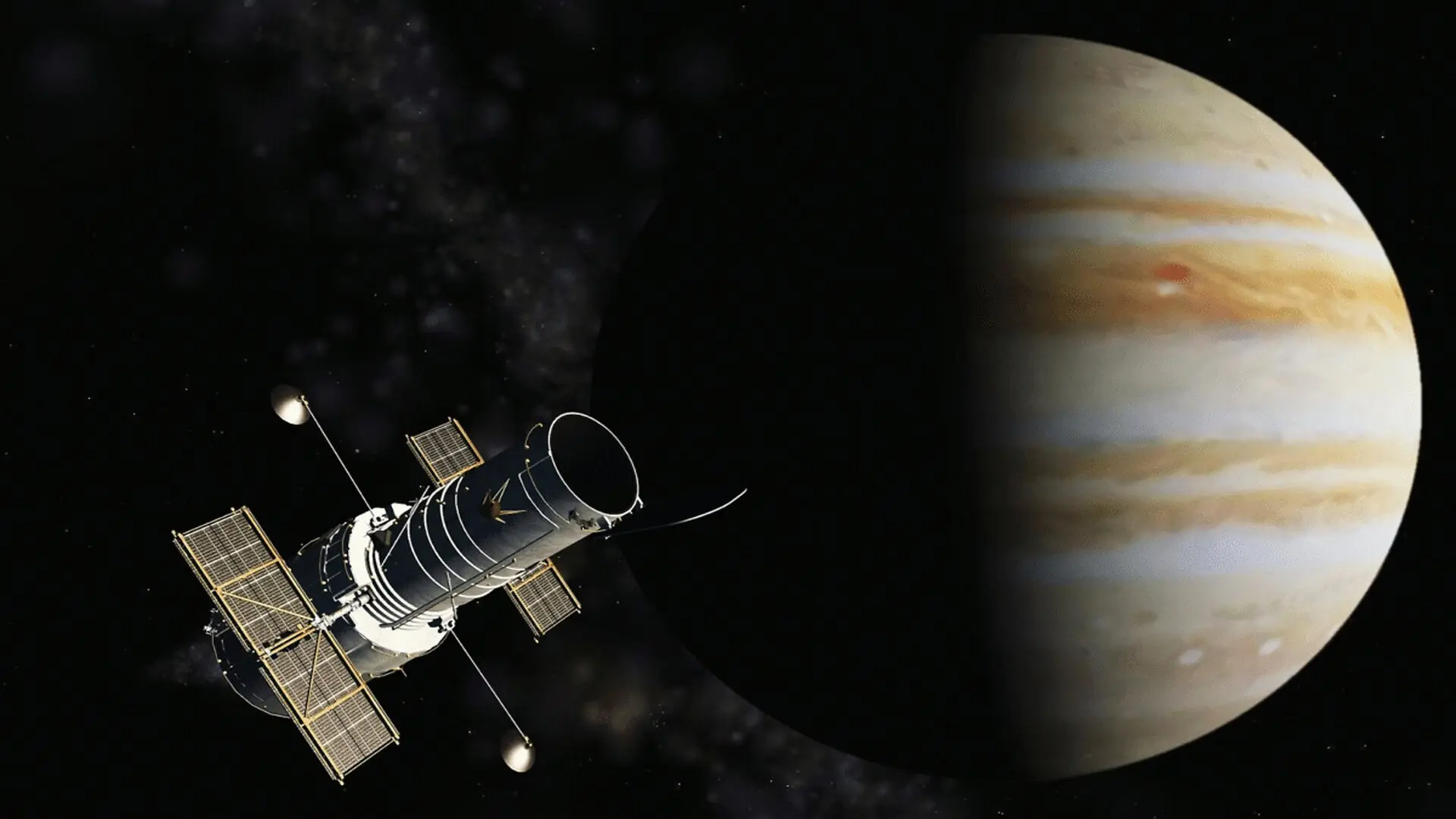
Chinese researchers have successfully demonstrated an autonomous navigation technique that could fundamentally change how spacecraft operate in the far reaches of the solar system. By utilizing the subtle, apparent shifting of stars, scientists have created a way for vehicles to calculate their own velocity and trajectory without needing constant input from ground control stations.
This breakthrough is a critical milestone as China prepares for its ambitious mission to Jupiter, currently slated for around 2030. When a spacecraft travels millions of kilometers from Earth, signal latency becomes a significant obstacle, with round-trip communication delays reaching nearly an hour. This lag renders real-time navigation from Earth nearly impossible, necessitating a new generation of onboard artificial intelligence capable of independent decision-making.
Leveraging Stellar Aberration for Deep-Space Positioning
The technology, detailed by researchers from the China Academy of Space Technology in the Journal of Deep Space Exploration, leverages a phenomenon known as stellar aberration. This effect occurs because the apparent position of stars changes slightly depending on the observer’s motion. By measuring these minute fluctuations, the spacecraft’s onboard sensors can derive its own speed and direction through space.
This approach mirrors the StarNAV concept, a project previously explored through NASA-funded research. By utilizing the cosmos itself as a fixed reference frame, spacecraft can maintain situational awareness regardless of their distance from Earth.
The report from the SCMP highlights that this move toward onboard autonomy is essential for planetary exploration. Because signals to Jupiter take more than 50 minutes to reach their destination, the ability for a probe to autonomously correct its course could be the difference between a successful mission and a catastrophic failure.
— South China Morning Post (@SCMPNews) September 21, 2026
Field Testing the Navigation System
The proof-of-concept trial was conducted earlier this year using the Tianhui-7 satellite, which operates in low Earth orbit. During the exercise, the satellite successfully mapped its location using only the stellar aberration method. The results were highly encouraging, with the system identifying the satellite’s position within an accuracy range of approximately 5 kilometers (3.1 miles).
Researchers noted that this level of precision is competitive with the current industry standard, the Deep Space Network—a global array of massive radio antennas used by space agencies to track distant probes. While the test was conducted within the confines of Earth’s orbit, the data confirms that stellar observations can serve as a robust, primary navigation tool when traditional ground-based tracking is unavailable.
The Future of Autonomous Planetary Exploration
As space agencies push toward more complex missions, the reliance on Earth-tethered tracking is becoming a structural bottleneck. Missions to Jupiter require an unprecedented level of independence, particularly during high-stakes maneuvers such as orbital insertion or close-range investigations of icy moons.
By shifting the burden of navigation to the spacecraft itself, agencies like the China Academy of Space Technology are paving the way for more resilient exploration. This transition represents a broader shift in aerospace engineering, moving away from constant human oversight and toward intelligent systems that can navigate the void of deep space with autonomy and precision.
This article has been fact checked for accuracy, with information verified against reputable sources. Learn more about us and our editorial process.
Last reviewed on .
Article history
- Latest version
Reference(s)
- Xin, Ling. “China gets closer to Jupiter mission by bringing Nasa’s StarNAV concept to life.”, September 21, 2026 South China Morning Post <https://www.scmp.com/news/china/science/article/3368292/china-gets-closer-jupiter-mission-bringing-nasas-starnav-concept-life>.
- Posted by Karan Das