Hidden Oceans May Survive Even The Most Violent Moon Collisions In The Outer Solar System
Could the hidden oceans of icy moons survive a catastrophic cosmic collision? New research reveals how these shattered worlds might hold onto signs of life.
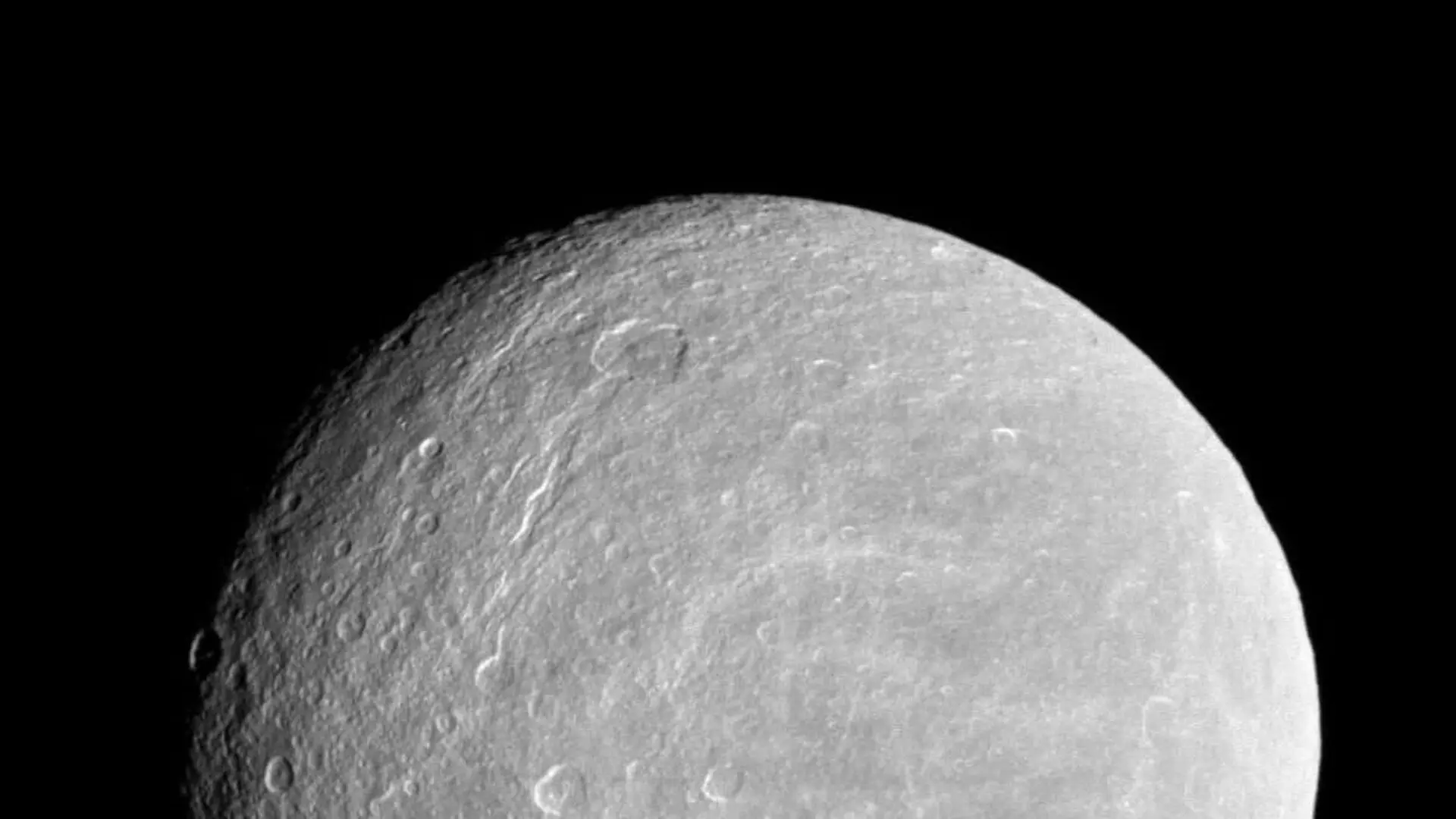
Subsurface oceans hidden beneath icy shells are a primary focus in the hunt for extraterrestrial life, with moons orbiting Saturn, Uranus, and Neptune serving as prime candidates. Yet, the history of the outer solar system has been defined by violent cataclysms, where some moons likely formed from the debris of previous, destroyed worlds. New research now suggests that even the most extreme collisions may not be enough to fundamentally alter the internal habitability of these icy bodies.
A study led by the University of Maryland and published in Nature Astronomy examined the long-term impact of massive collisions on icy moons. By simulating the destruction and subsequent re-formation of these bodies over billions of years, researchers sought to determine whether such events could erase or ignite an internal liquid ocean.
Modeling the Aftermath of Planetary Cataclysms
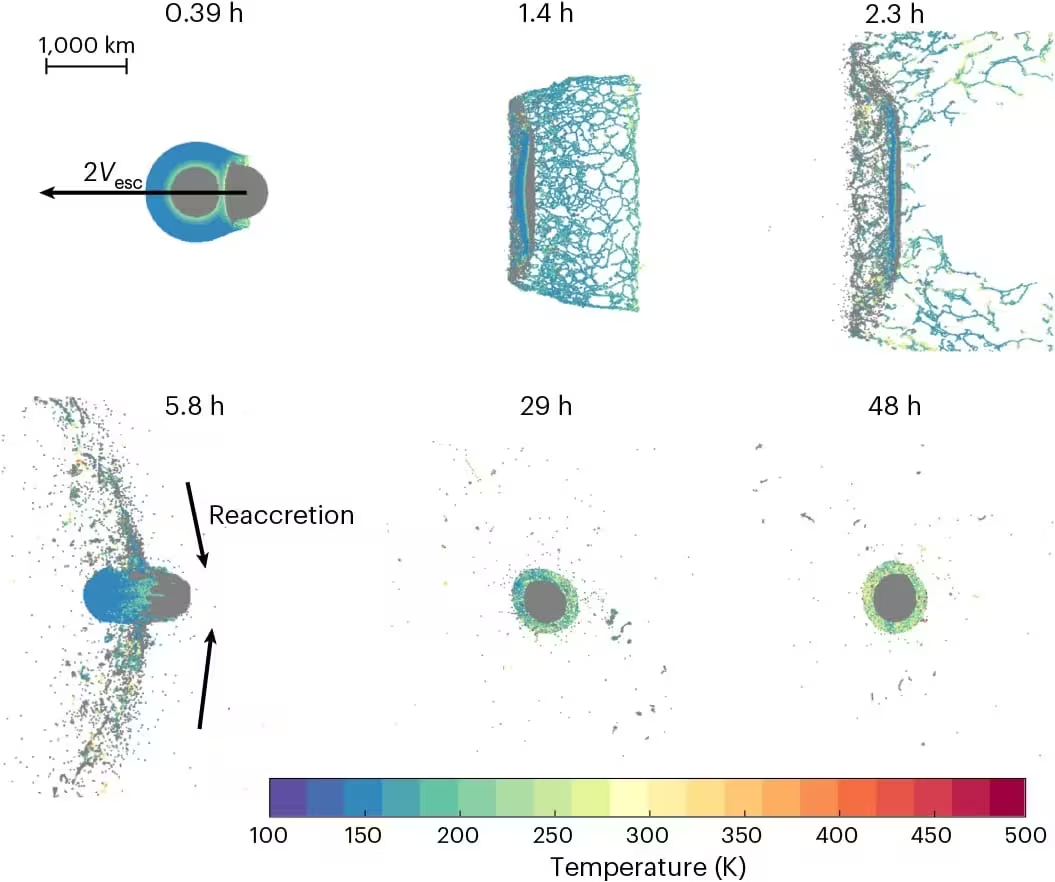
To capture both the instantaneous violence of a collision and the slow, eons-long thermal evolution of a moon, the research team utilized two distinct modeling approaches. The first simulated the physical impact, tracking the fragmentation of rock and ice as the debris clouds coalesced into a new moon. The second model analyzed the internal thermodynamics of these reconstructed worlds over a 4.5-billion-year timeline, tracking heat flow and the potential for ice to melt.
The simulations focused on bodies with radii of approximately 500 to 1,000 kilometers. Marc Neveu, the study’s lead author and an associate research scientist at the University of Maryland, noted that the team tested the most severe collision scenarios possible. “If those didn’t make a difference, it’s unlikely smaller ones would either,” he said.
The Divergent Fates of Large and Small Moons
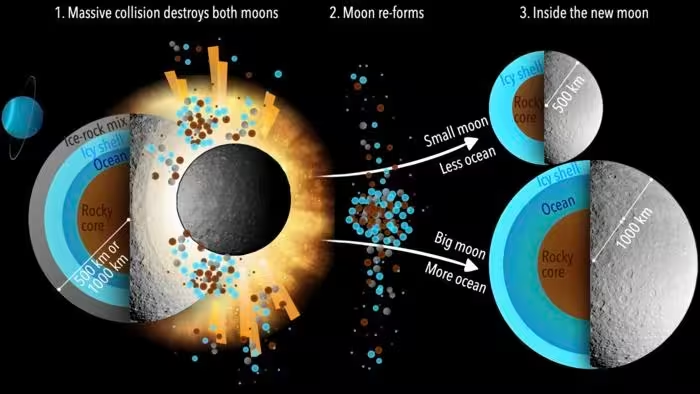
The findings indicate that the size of a moon plays a pivotal role in how it processes the energy of a crash. In larger moons, the kinetic energy from a collision can generate enough heat to potentially thicken an existing subsurface ocean for billions of years.
Conversely, the impact dynamics shift for smaller moons. Before a collision, a small moon might contain a mixed layer of rock and ice that acts as an insulating blanket, trapping the heat necessary to keep an ocean liquid. A massive impact forces a separation of materials, with rock sinking to the core and ice migrating to the surface, effectively stripping away that insulation. However, Neveu emphasizes that this reconfiguration does not guarantee the loss of an ocean. “If there was an ocean before, there’s likely to be an ocean after and vice versa,” he stated.
Evidence from Saturn’s Moon, Rhea
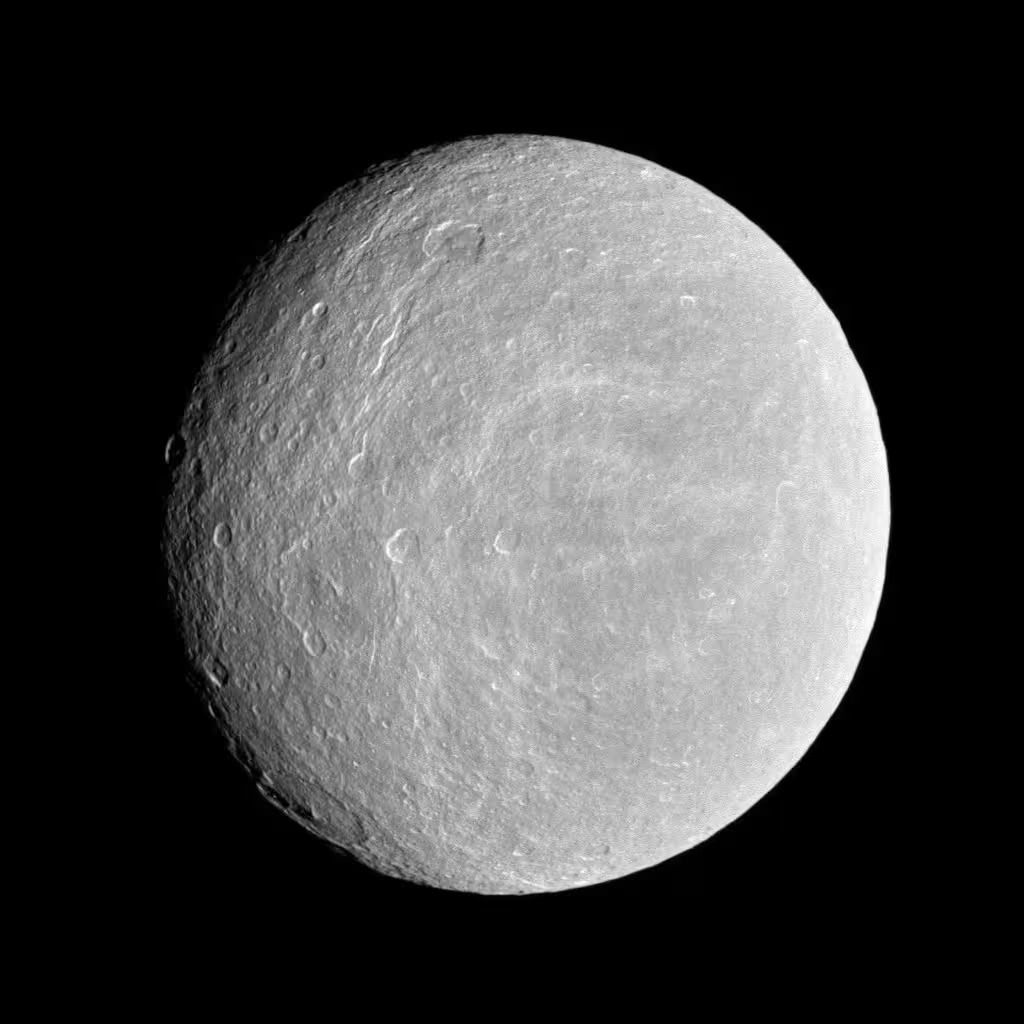
The study provides a possible explanation for the unusual geology observed on Rhea. Certain ancient craters on the moon appear softened or smoothed, a feature that cannot be attributed to solar heating. Researchers suggest that heat from an internal, collision-boosted ocean could be responsible for the surface deformation.
“It’s like building a snowman in the winter, and then a week later, there’s been warming and sunlight so the snowman is melting away,” Neveu explained. “Rhea’s craters look smoothed out like that, but it wasn’t the sun. The heat came from below.”
As scientists look toward future missions to explore these icy worlds, the research highlights that while collisions are dramatic, other factors like tidal heating may be just as vital in determining whether these moons can support liquid water. Moving forward, the team hopes to develop more comprehensive simulations to observe the dynamic evolution of entire moon systems, potentially unveiling the long-lost history of the outer gas giants.
This article has been fact checked for accuracy, with information verified against reputable sources. Learn more about us and our editorial process.
Last reviewed on .
Article history
- Latest version
Reference(s)
- Cermak, Alicia. “Rhea - NASA Science.”, December 1, 2017 NASA <https://science.nasa.gov/saturn/moons/rhea/>.
Cite this page:
- Posted by Karan Das