Scientists Have Converted The Sound Of Earth’s Collapsing Magnetic Field From 41,000 Years Ago
Scientists have recreated the eerie sounds of an ancient magnetic field reversal, offering a new perspective on a rare planetary event from 41,000 years ago.
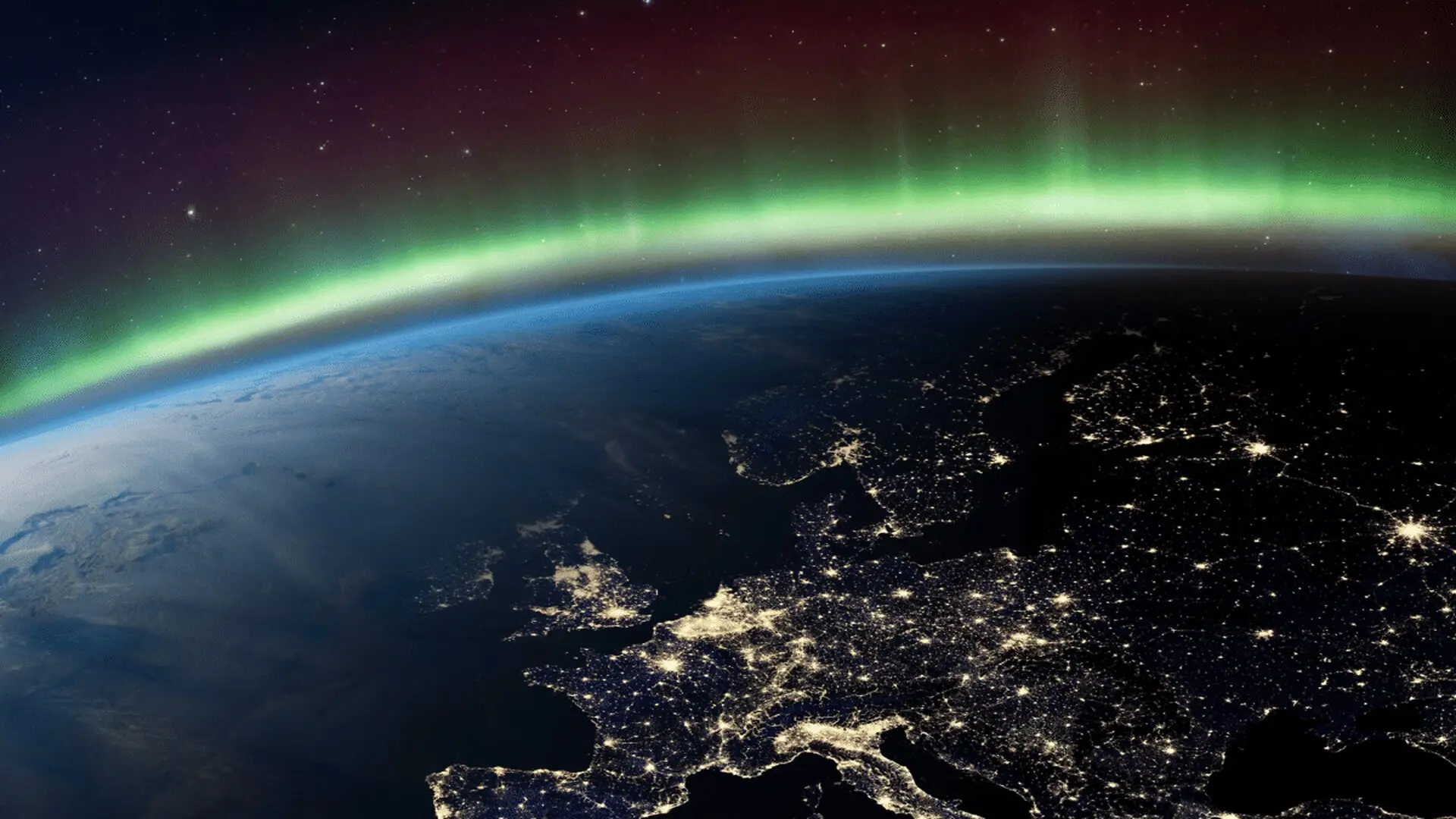
Researchers have transformed the turbulent history of Earth’s magnetic field into an immersive soundscape, offering a haunting auditory glimpse into a volatile period that occurred approximately 41,000 years ago. This sonic reconstruction, unveiled by the European Space Agency (ESA), captures the fluctuations of the so-called Laschamps event, a time when our planet’s protective shield underwent a dramatic and temporary weakening.
The Laschamps event remains a focal point for geophysicists, representing a moment when the magnetic poles became unstable, failing to complete a full reversal but significantly losing strength. To create this audio experience, scientists synthesized data derived from magnetic particles trapped in ancient geological archives, including sediments and rock samples. The resulting soundscape translates these long-dormant magnetic shifts into deep, resonant tones that highlight the dynamic and often unpredictable nature of the forces operating deep within the planet’s outer core.
Decoding the Pulse of a Planetary Shield
The Earth’s magnetic field acts as a vital buffer against the harsh radiation and charged particles emitted by the Sun. Driven by the convective motion of molten iron in the core, the field is anything but static. During the Laschamps interval, this shield faltered, leading to a period of instability that researchers are now re-examining through the lens of multisensory scientific data.
Correlating Ancient Flux with Global Change
The timeline of the Laschamps event coincides with significant environmental shifts, prompting scientists to investigate whether these magnetic disturbances played a role in broader ecological changes. While a direct causal link is not yet established, the timing of this weakening aligns with the extinction of Australian megafauna and the appearance of some of the earliest known cave art. These overlaps have led to intriguing hypotheses, including the possibility that increased radiation or shifting climates might have influenced early human activity, perhaps forcing populations to seek shelter in caves.
The Modern Shadow: The South Atlantic Anomaly
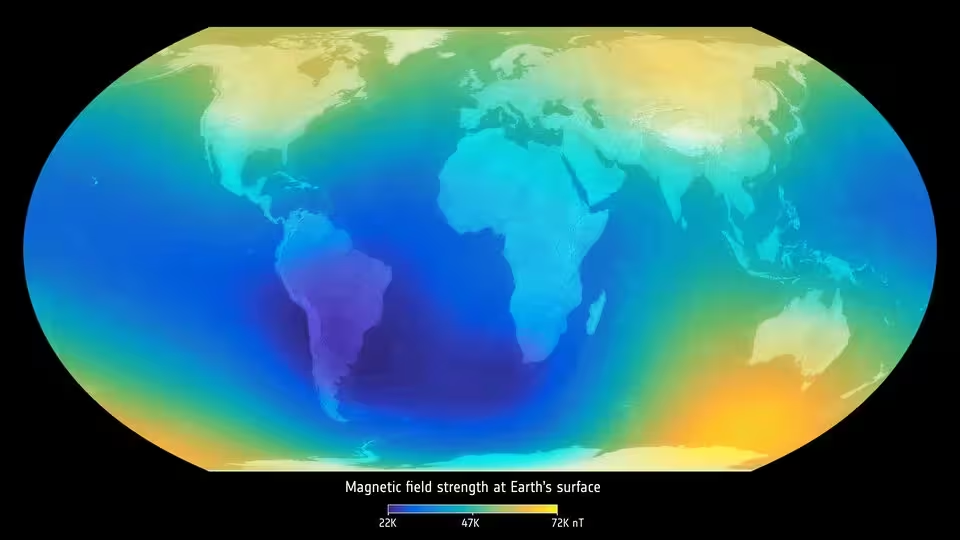
Today, researchers are closely watching the South Atlantic Anomaly, a region where the magnetic field is notably depleted. This area presents a genuine challenge for modern technology, as satellites passing through the zone are exposed to higher levels of particle radiation. Studies led by experts like Chris Finlay of the Technical University of Denmark emphasize that this region is not experiencing uniform decay; instead, the field is evolving in complex, asymmetrical ways near Africa compared to South America.
Continuous monitoring via satellite constellations, such as the Swarm mission, allows scientists to track these contemporary variations in high resolution. By comparing these modern observations with the ancient, reconstructed data of the Laschamps period, researchers hope to better forecast the long-term behavior of Earth’s magnetic architecture.
Refining the Future of Space Climate Predictions
Sanja Panovska of GFZ Potsdam, who spearheaded the data reconstruction for the sonification project, highlights that these historical records are essential for modern risk assessment. “Understanding these extreme events is important for their occurrence in the future, space climate predictions, and assessing the effects on the environment and on the Earth system,” she noted. Ultimately, translating these invisible, high-stakes geological shifts into sound serves as more than an artistic endeavor; it is a tool for communicating the profound complexities of our planet’s interior to a wider audience, grounding our understanding of Earth’s future in the lessons of its deep past.
This article has been fact checked for accuracy, with information verified against reputable sources. Learn more about us and our editorial process.
Last reviewed on .
Article history
- Latest version
Reference(s)
- “Sound of Earth’s magnetic flip 41 000 years ago.” <https://www.esa.int/ESA_Multimedia/Videos/2024/10/Sound_of_Earth_s_magnetic_flip_41_000_years_ago>.
Cite this page:
- Posted by Karan Das