Sophia Tiles Convert Heat To Infrared Solving Cooling For Space Data Centers
Sophia Space and Caltech develop compact all‑in‑one tiles that integrate solar cells, radiators and chips to cool orbital data centers efficiently.
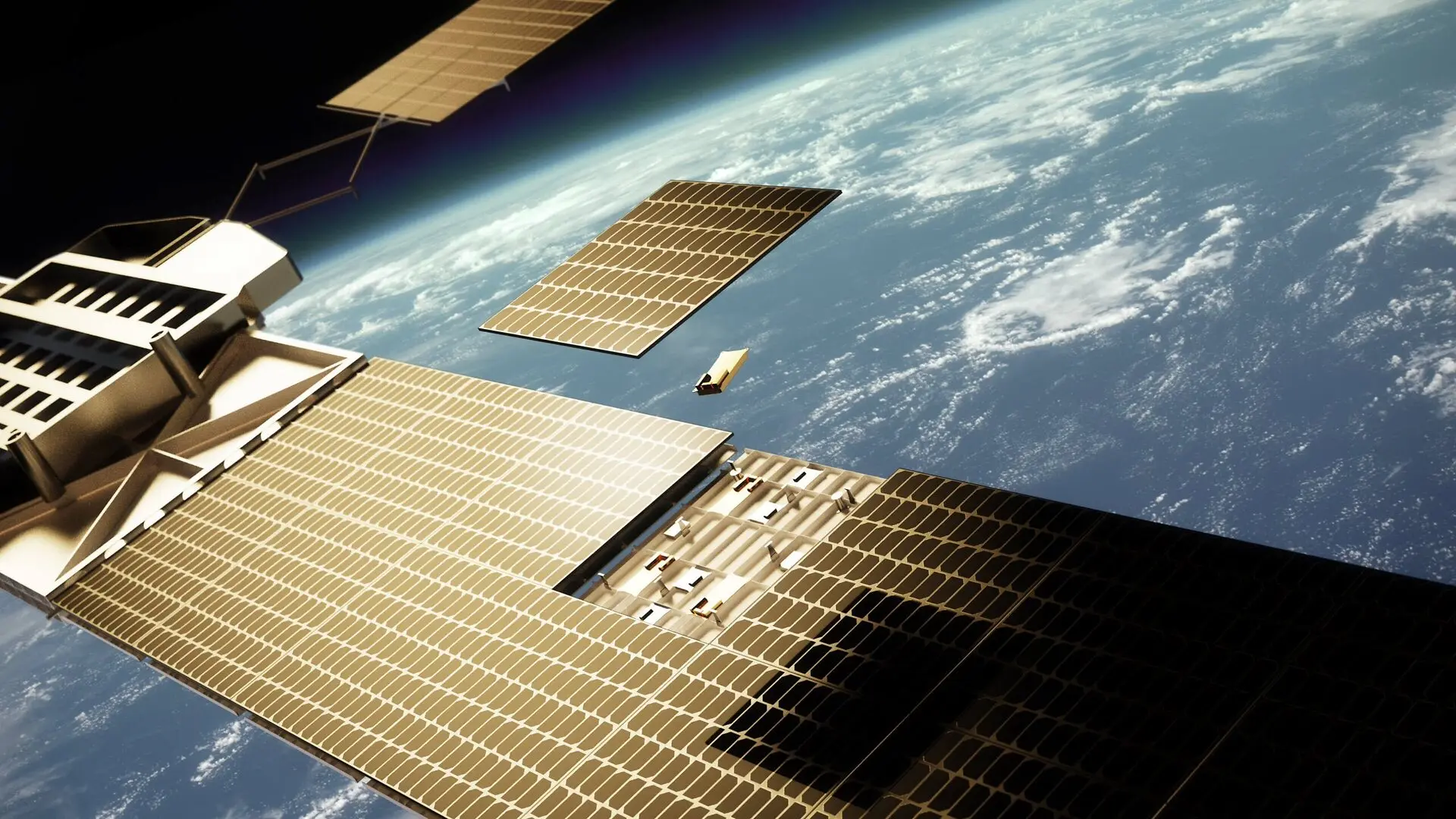
Sophia Space and Caltech want to fold the bulky parts of a space-based data center—solar cells and radiators—into all-in-one tiles with chips.
Artificial‑intelligence services rely on massive terrestrial data farms that draw huge amounts of electricity, generate heat, and consume water. In regions such as Virginia’s Henrico County, the surge of new facilities has forced schools and municipal buildings to curtail lighting and heating to keep utility bills from spiraling.
Community opposition is spreading nationwide, with legislators in dozens of states weighing restrictions on fresh data‑center construction. At the same time, AI workloads continue to climb, prompting industry leaders to explore alternatives beyond Earth’s surface.
One proposed answer is to relocate computing workloads to orbit, where sunlight is constant and the vacuum eliminates the need for conventional cooling fluids. The concept promises to shift both power generation and heat dissipation away from populated areas.
Orbital Computing Takes Shape
California Institute of Technology and the startup Sophia Space have filed a patent for a compact cooling module they call Sophia TILE. The design integrates solar cells, processors, memory, and an optical link into a single plate that radiates waste heat directly into deep space using a specialized infrared‑emitting material.
According to Leon Alkalai, founder and CTO of Sophia Space, the approach “reverses the usual paradigm of beaming energy down to Earth; instead we place the computers up there and beam the data back.” The team envisions arrays of thousands of tiles forming either large orbital data centers or smaller, distributed clusters that could operate continuously on solar power.
Sophia Space aims to demonstrate a prototype mission by late 2027, with a target of deploying a 2,000‑tile array capable of delivering roughly one megawatt of compute power by 2030. While a single ground‑based facility can produce hundreds of megawatts, the modular nature of the tiles could enable scalable, space‑based extensions of existing cloud infrastructure.
The effort joins a broader international push toward orbital computing. China’s ADA Space, in partnership with Zhejiang Lab, has already launched satellites for its “Three‑Body Computing Constellation,” and U.S. firms such as SpaceX, Starcloud, and Blue Origin are seeking regulatory clearance for constellations that could eventually host up to a million AI‑ready satellites.
Cooling the Void
In the absence of air or liquid coolant, orbital hardware must rely on thermal radiation to shed heat. Traditional radiator panels are large and heavy, driving up launch costs. The TILE concept tackles this by embedding a heat‑spreading layer beneath the electronics, spreading thermal energy across a broad surface before it is emitted as infrared radiation.
Each tile functions as a self‑contained computer node. When linked together, they form a mesh‑like computing platform that can reroute tasks around a failed unit, enhancing reliability while simplifying power and thermal management. Because the tiles can be packed tightly for launch and then unfurled in orbit—mirroring NASA’s roll‑out solar array technique—they address the payload‑space constraints of current rockets.
Despite the technical promise, operating in low‑Earth orbit introduces non‑technical challenges. The crowded orbital environment raises collision risks, as illustrated by past near‑miss incidents involving Starlink satellites and debris from a Chinese Long March rocket breakup in 2024. Astronomers also warn that proliferating satellite constellations could impede ground‑based observations.
“The field is just kind of exploding,” said Sergio Pellegrino, a Caltech engineer collaborating with Sophia Space, in an interview with The New York Times. “We need to become more comfortable with space doing things for us.” While orbital data centers are unlikely to replace existing ground facilities anytime soon, they may soon augment them, handling specialized workloads and returning only processed results to Earth.
This article has been fact checked for accuracy, with information verified against reputable sources. Learn more about us and our editorial process.
Last reviewed on .
Article history
- Latest version
Cite this page:
- Posted by Karan Das