Libya’s Giant Desert Pipeline Is Draining 40,000-Year-Old Fossil Water That Won’t Replenish
A massive Sahara pipeline is siphoning 40,000‑year‑old water, and once depleted, this hidden reserve cannot be replenished.
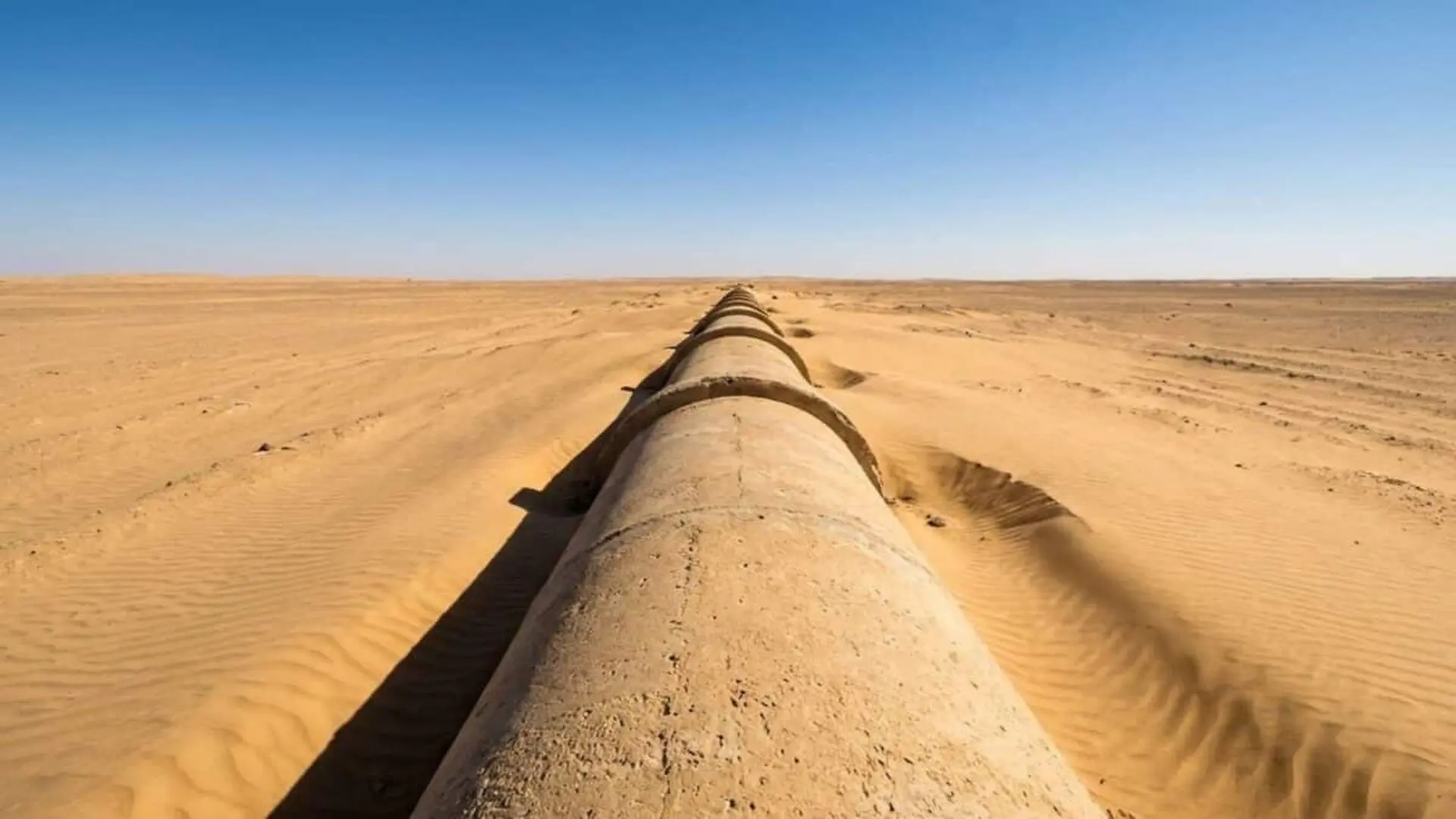
A sprawling subterranean network known as the Great Man‑Made River delivers fresh water from deep desert aquifers to Libya’s coastal towns and agricultural zones. Using prestressed concrete conduits up to four metres across, the system can move roughly two million cubic metres of water each day, reshaping the country’s water landscape.
How the Project Took Shape in the Desert
Facing acute shortages along the Mediterranean shoreline, Libyan authorities launched a national water initiative in 1983. The ceremonial cornerstone was set at Sarir on 28 August 1984, marking the beginning of an ambitious engineering effort. Two years later, the Brega facility began fabricating the massive concrete pipes required for the underground distribution grid. By 1991, the network started feeding both drinking supplies and irrigation channels across the northern region, replacing a reliance on desalination plants and dwindling rain‑fed reserves.
Ancient Waters Locked Beneath the Sahara
The pipeline draws its supply from the Nubian Sandstone Aquifer System, an extensive subterranean formation that stretches across Libya, Egypt, Chad and Sudan. Scientific analysis, including radiocarbon dating, indicates that portions of this groundwater have been isolated for approximately 40,000 years, predating the end of the last glacial period. Because the aquifer is sealed from contemporary recharge, the water is classified as “fossil water,” a non‑renewable resource preserved within porous rock and sand layers.
Satellite View Highlights Early Irrigation Works
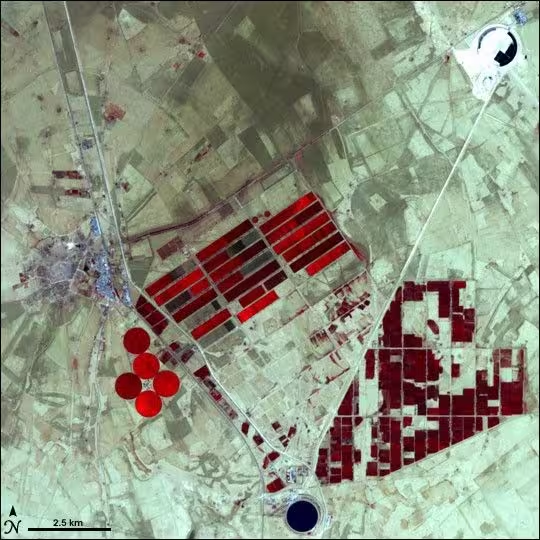
A false‑colour image captured by NASA’s Earth Observatory on 10 April 2006 displays sections of the Grand Omar Mukhtar project near Suluq. The picture reveals reservoirs and the distinctive circular fields typical of centre‑pivot irrigation, underscoring the scale of early agricultural development enabled by the Great Man‑Made River.
The Nubian Aquifer: A Finite Treasure
According to the International Atomic Energy Agency, the combined volume of the Nubian Sandstone Aquifer System equates to roughly 500 years of Nile River discharge, or about twenty times the water stored in the North American Great Lakes. Despite its magnitude, the aquifer’s fossil nature means that extraction is effectively a one‑time draw, comparable to depleting an oil reserve.
In 2006, the IAEA initiated a research program employing isotope hydrology to map the aquifer’s age distribution, flow patterns, and sensitivity to human activity. The initial phase yielded a computational model capable of simulating groundwater dynamics and projecting future water‑level trends.
This article has been fact checked for accuracy, with information verified against reputable sources. Learn more about us and our editorial process.
Last reviewed on .
Article history
- Latest version
Cite this page:
- Posted by Karan Das