Meteor Streak Photobombs Distant Lacerta Nebula In Rare NASA Capture
NASA shares a rare sky photo of a vaporizing meteor streaking across the distant Lacerta nebula, highlighting an unexpected cosmic alignment.
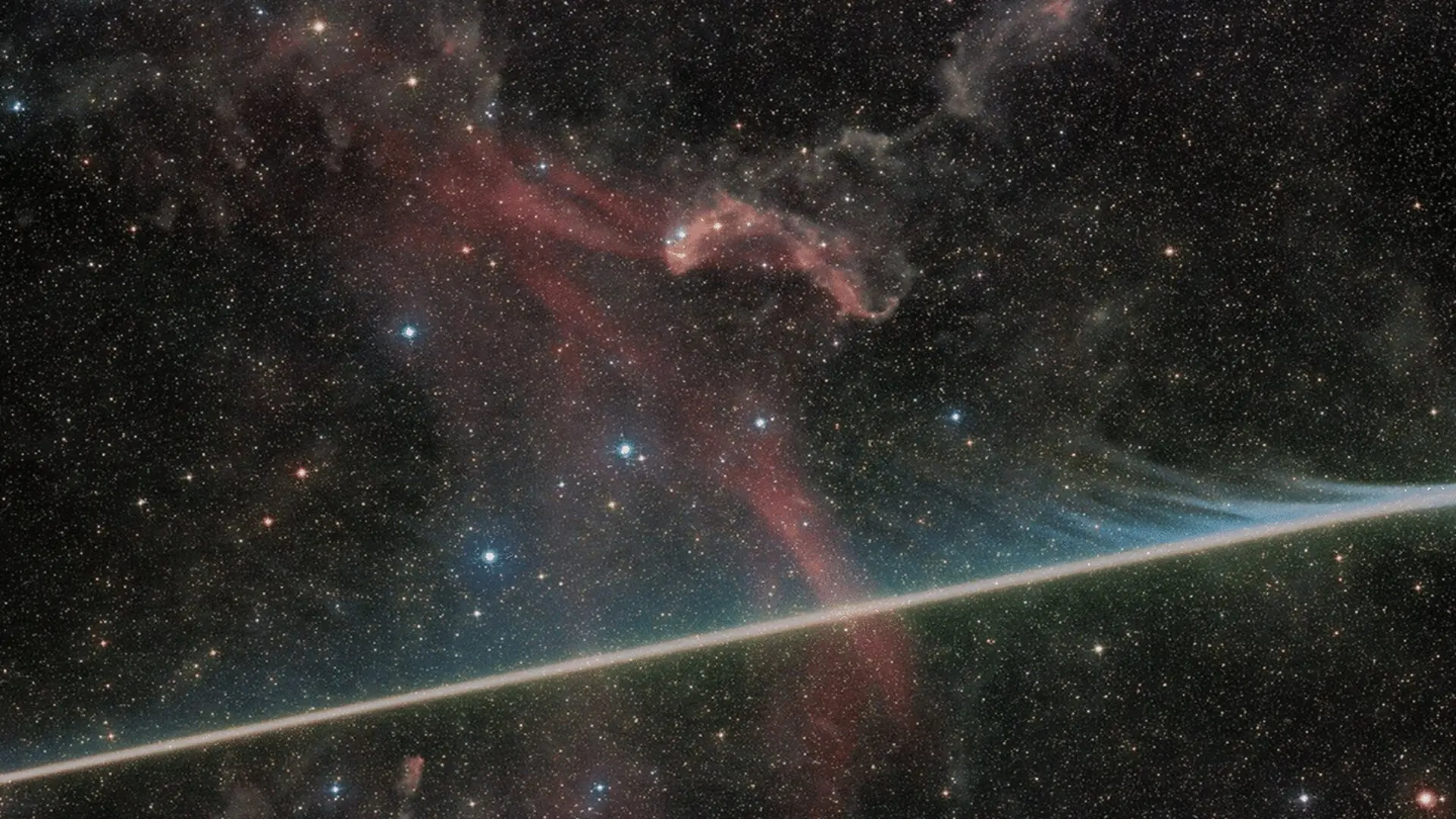
A brief meteor blaze cut across the view of the Lacerta nebula, producing a striking juxtaposition of a fleeting atmospheric event and a remote interstellar cloud in a photograph released by NASA. The picture illustrates how objects separated by astronomical distances can line up from Earth’s perspective, with a burning space fragment silhouetted against a luminous region of gas and dust deep within the Milky Way.
Unexpected Meteor Streak Overlaps Lacerta Nebula
In the frame, the Lacerta nebula appears as an expansive glow shaped by nearby stellar activity, while a meteor carves a bright line through the foreground. Though the two phenomena share the same line of sight, they exist at vastly different depths and bear no physical connection.
The meteor was a tiny piece of debris hurtling into Earth’s atmosphere. Rapid friction heated the material, causing it to vaporize and generate the luminous trail captured in the image.
Because the event lasted only a few seconds, the photograph represents a rare freeze‑frame of a transient occurrence. While nebulae persist for millennia, meteors typically vanish within moments.
The contrast between the swift meteor and the distant nebula underscores the immense scale differences in astronomy—a local fragment from our solar system intersecting the line of sight to a cloud of gas and dust many light‑years away.
NASA Showcases Rare Sky Alignment in APOD Feature
The image was posted by NASA as part of its Astronomy Picture of the Day series, which highlights notable celestial photographs and expert commentary. The agency frequently curates visuals that reveal unexpected cosmic perspectives from both professional and amateur observers.
NASA’s description notes that the shot combines a nearby meteor with the background structure of the Lacerta nebula, offering a glimpse of the fleeting moments that arise when distinct astronomical events overlap in the sky.
While the meteor belongs to Earth’s immediate environment, the nebula represents a far‑reaching region of interstellar material. Their apparent convergence is a matter of perspective rather than any direct interaction.
Such images serve as a reminder that the night sky is layered with activity at many distances. Local events can momentarily alter our view of distant galaxies, nebulae, and star‑forming regions.
What’s happening to this meteor? This bright meteor streak appeared and disappeared quickly during a long exposure of the Great Lacerta Nebula, seen faintly in red toward the center of the image. The meteoroid, likely a small pebble, creates its glow partly by heating and… pic.twitter.com/PgByTQD6yU
— NASA Astronomy Picture of the Day (@apod) August 3, 2026
How Atmospheric Entry Creates a Glowing Trail
A meteor originates when a small body penetrates Earth’s atmosphere at extreme speed. The intense heat generated by friction causes the object’s surface to disintegrate, releasing energy as visible light.
Many meteors are fragments left behind by comets or asteroids. When Earth traverses regions populated by such debris, observers may witness heightened activity known as meteor showers.
The meteor captured against the Lacerta nebula likely stood out because atmospheric clarity, viewing angle, and its intrinsic brightness allowed the trail to contrast sharply with the night sky.
Photographers often devote long observing sessions to capture rare combinations of celestial events. Documenting a meteor superimposed on a deep‑sky object demands precise timing, patience, and favorable conditions.
Images like this provide both scientific insight and aesthetic value, turning fleeting moments into lasting records.
This article has been fact checked for accuracy, with information verified against reputable sources. Learn more about us and our editorial process.
Last reviewed on .
Article history
- Latest version
Reference(s)
- Bonnell, Jerry. “APOD: 2026 August 3 - Vaporizing Meteor Photobombs the Lacerta Nebula - NASA Science.”, August 3, 2026 NASA <https://science.nasa.gov/image-article/apod/apod-2026-august-3-vaporizing-meteor-photobombs-the-lacerta-nebula/>.
- “https://twitter.com/apod/status/2084279741658403188/photo/1.” <https://t.co/PgByTQD6yU>.
Cite this page:
- Posted by Karan Das