Astronauts Harvest First Space-Grown Rice, Paving Way for Multi-Generation Space Farming
China’s Shenzhou-23 crew advances a pioneering rice experiment to study how crops evolve over generations in orbit, shedding light on space agriculture.
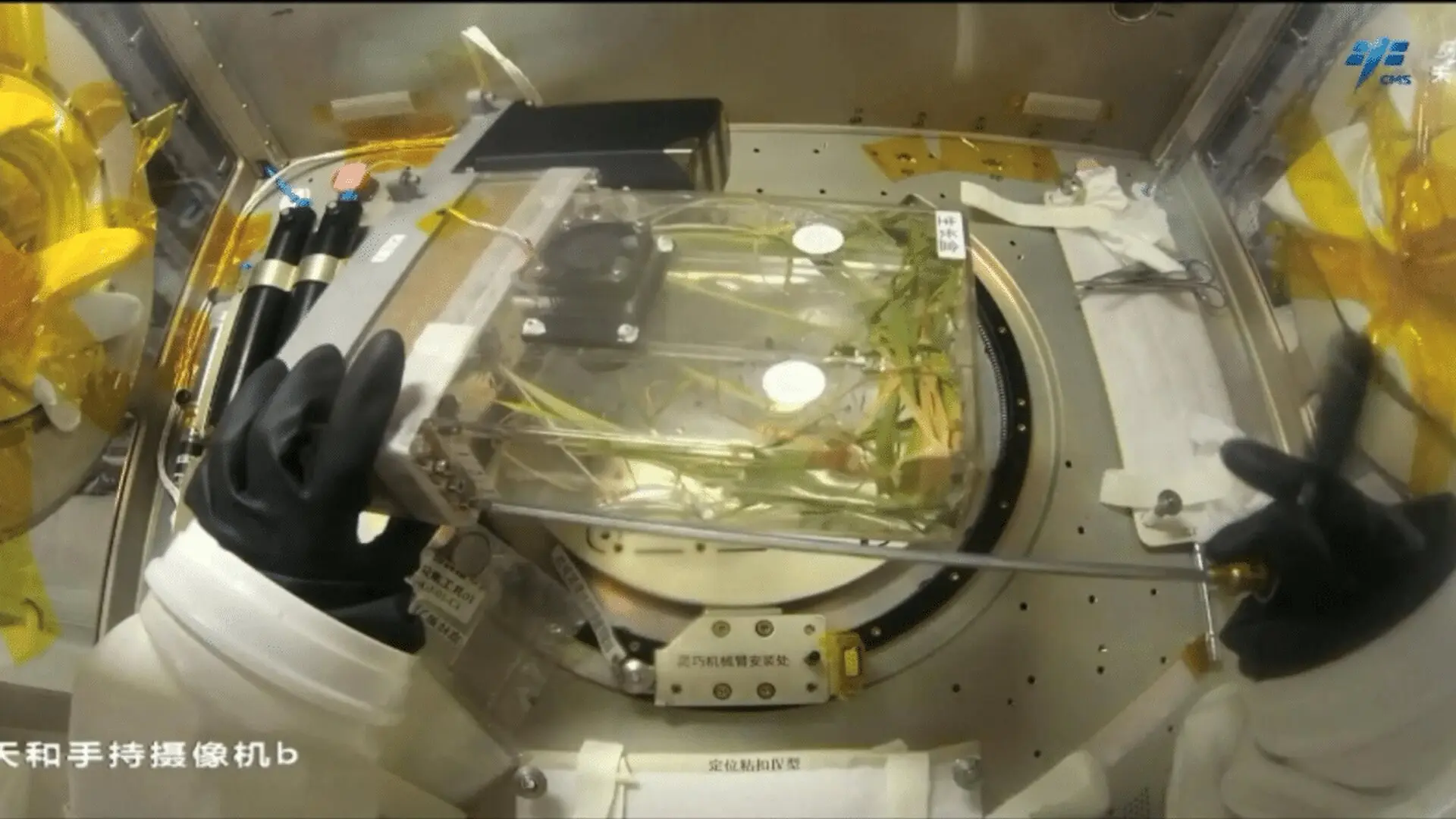
Ensuring a reliable food supply is a central obstacle for crews traveling beyond low Earth orbit, and recent work on the China Space Station is providing new insight into how staple crops might be cultivated in space.
Astronauts aboard the Shenzhou-23 mission—Zhu Yangzhu, Zhang Zhiyuan and Lai Ka‑ying—have retrieved the first batch of rice plants grown entirely in orbit, offering researchers a tangible sample to analyze the effects of microgravity on plant development.
The three‑person crew launched on May 24 carrying rice seeds, growth chambers and a suite of monitoring instruments. After more than two months of cultivation, the astronauts harvested the initial harvest, enabling scientists on the ground to begin detailed examinations of growth patterns, genetic integrity and physiological responses.
The study is designed to run two full life cycles of japonica rice within the station, assessing whether the plants can reproduce and mature across successive generations while exposed to weightlessness. By tracking the plants from germination through seed production, the experiment seeks to identify any subtle shifts in growth rate, morphology or gene expression that might emerge over time.
According to CGTN, China previously conducted a 120‑day rice growth trial in 2022, where six seeds produced 59 first‑generation space‑grown seeds that returned to Earth aboard the Shenzhou‑14 crew. The current mission expands on that foundation by examining two consecutive generations in orbit.
Researchers are working with two sets of japonica rice: one derived from conventional Earth‑grown seeds, and another originating from the 2022 space‑grown seeds that have been propagated for three generations after their return. Comparing these cohorts will reveal whether exposure to the space environment leaves lasting marks on subsequent generations.
Findings could inform the design of closed‑loop life‑support systems where crops not only provide nutrition but also recycle carbon dioxide and generate oxygen, reducing reliance on Earth‑based resupply for missions to the Moon, Mars or beyond.
Beyond plant biology, the Shenzhou‑23 crew is pursuing a range of biomedical investigations. Using portable ultrasound devices, the astronauts have scanned arteries such as the carotid, radial and dorsalis pedis to track vascular changes that occur during prolonged weightlessness.
Additional experiments examine cabin lighting effects on crew mood and performance, while routine health checks—including electrocardiograms, vision tests, intra‑ocular pressure measurements and body‑mass monitoring—help build a comprehensive picture of human adaptation to microgravity. Regular exercise sessions using onboard equipment continue to mitigate the musculoskeletal impacts of spaceflight.
This article has been fact checked for accuracy, with information verified against reputable sources. Learn more about us and our editorial process.
Last reviewed on .
Article history
- Latest version
Reference(s)
- “Shenzhou-23 crew advances multi-generation rice growth in orbit.” <https://news.cgtn.com/news/2026-08-02/Shenzhou-23-crew-advances-multi-generation-rice-growth-in-orbit-1PhzScFNhLi/p.html>.
Cite this page:
- Posted by Karan Das