Teenager Bored On School Trip Accidentally Uncovers 3,300 Year Old Egyptian Amulet
Please provide the text you would like me to rewrite.
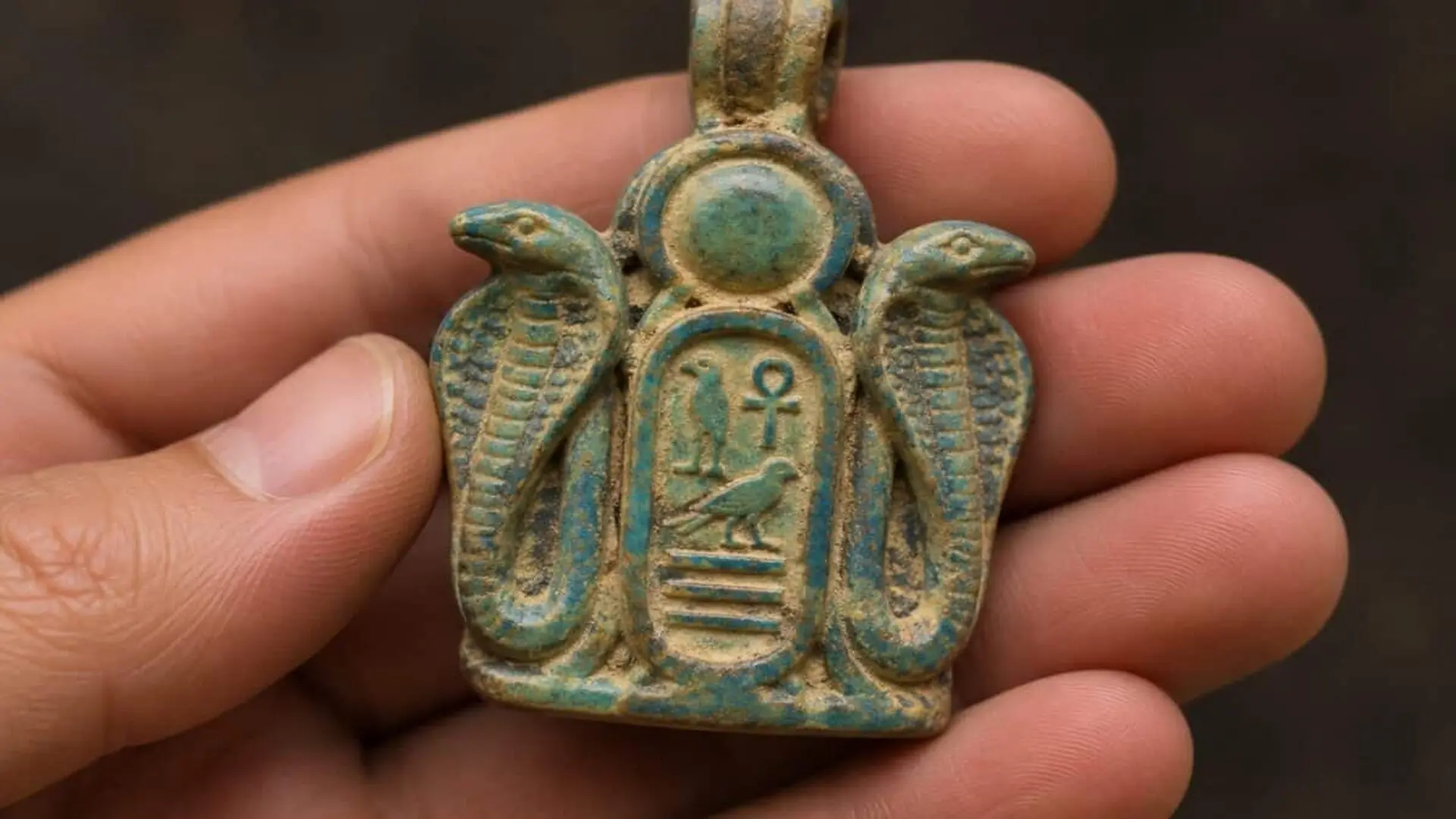
What began as a moment of adolescent restlessness on the slopes of Tel Gezer has resulted in a significant archaeological discovery. While exploring the ancient site in central Israel, 17-year-old American student Shiloh Attoun inadvertently unearthed a 3,300-year-old scarab amulet when a stone he kicked dislodged the artifact from the earth.
The discovery, announced by the Israel Antiquities Authority (IAA) on November 3, occurred just two days into Attoun’s study-abroad program with Jewish National Fund-USA’s Muss High School in Israel. The teenager was hiking toward an ancient altar within the national park when he spotted the small, metallic-looking object.
An Icon of Ancient Authority
Archaeologists from Tel Aviv University have dated the artifact to the Late Bronze Age. The carving features two rearing cobras—an Egyptian symbol known as the uraeus—positioned above a semi-oval hieroglyph representing the word nb, or “lord.”

Scarabs, modeled after the sacred dung beetle, served as symbols of creation and protection throughout the eastern Mediterranean. While common, this particular find offers a glimpse into the reach of Egyptian influence during the Canaanite period. Ido Koch, an archaeologist studying the piece, noted that similar items have been found at other major centers like Tel Megiddo, reinforcing the historical interconnectedness of the region.
Following the find, Benji Hain, the program’s dean of students, assisted Attoun in contacting the authorities. IAA archaeologist Adam William Asper subsequently recovered the item for the national treasures collection, and Attoun was awarded a certificate of recognition for his contribution to the site’s preservation.

The Strategic Importance of Gezer
Tel Gezer was a pivotal city-state during the Bronze Age, strategically located along key trade routes. Historical records, including the Amarna letters—a cache of diplomatic correspondence from the 14th century BCE—highlight the city’s complex political landscape and its rulers’ pledges of allegiance to Egyptian pharaohs.
The city’s tumultuous history is well-documented; it appears in the Merneptah Stele, an ancient victory monument that features the earliest non-biblical reference to Israel. Archaeologists have previously uncovered evidence of the city’s destruction, including a burned house containing human remains, marking the volatile end of an era.
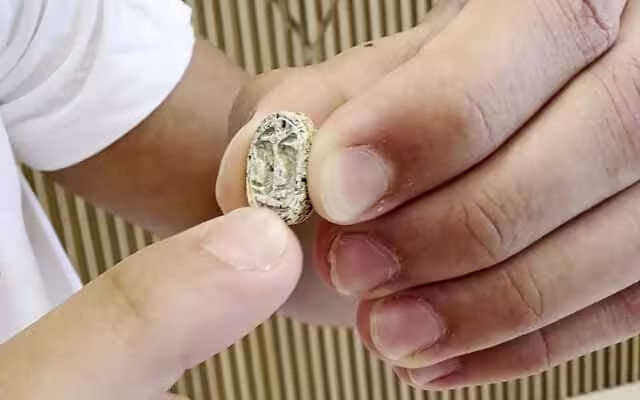
The Israel Antiquities Authority emphasized that such findings underscore the importance of leaving archaeological materials in their original context. Reporting discoveries immediately allows experts to document critical spatial data, ensuring that the historical narrative remains intact for future research.
This article has been fact checked for accuracy, with information verified against reputable sources. Learn more about us and our editorial process.
Last reviewed on .
Article history
- Latest version
Cite this page:
- Posted by Vikram Desai