Face Of Man Beheaded 2,000 Years Ago Near A Roman Fort Finally Revealed
Researchers have reconstructed the face of a decapitated man buried near a Roman fort 2,000 years ago, revealing clues about his mysterious, distant life.
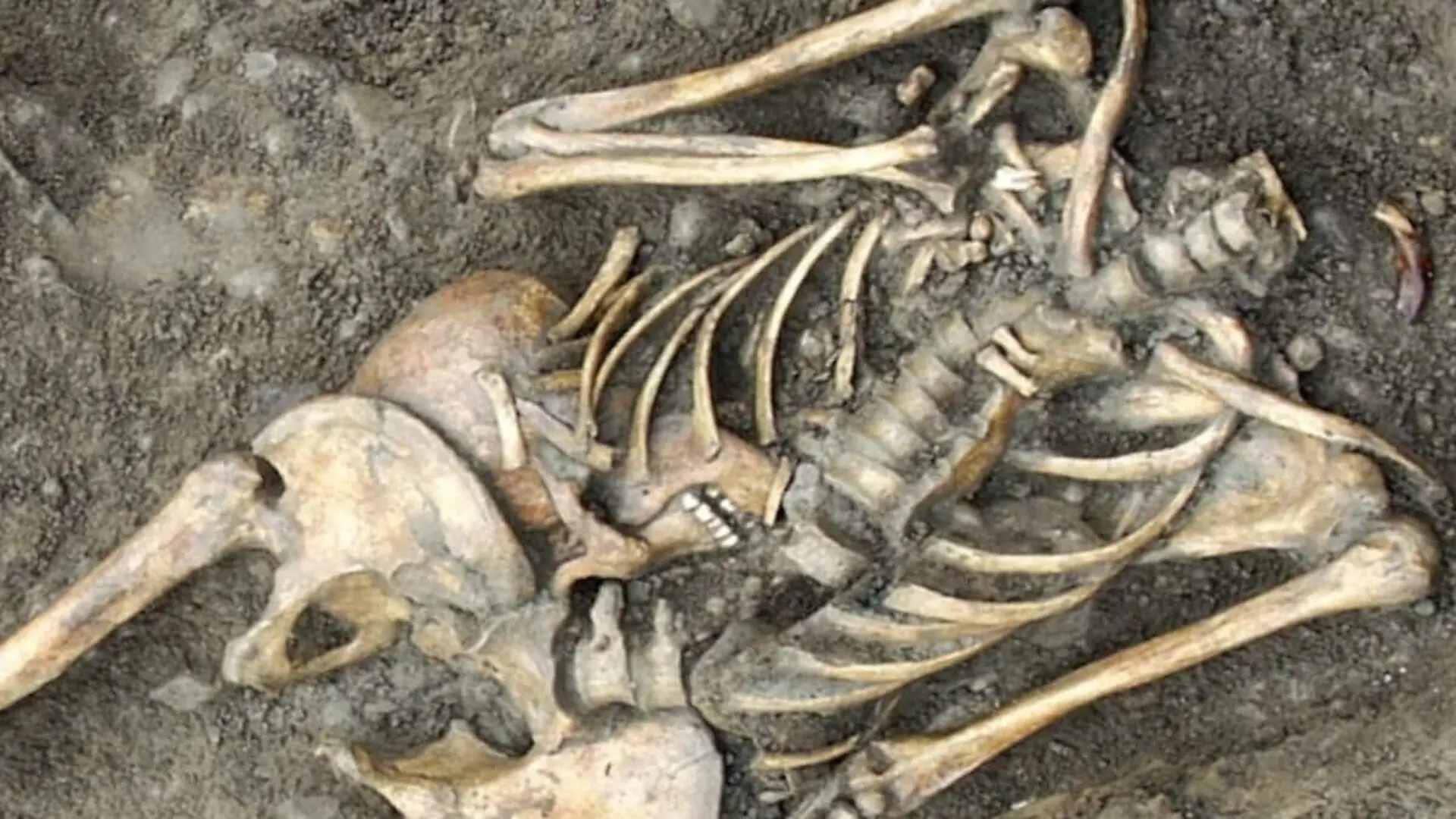
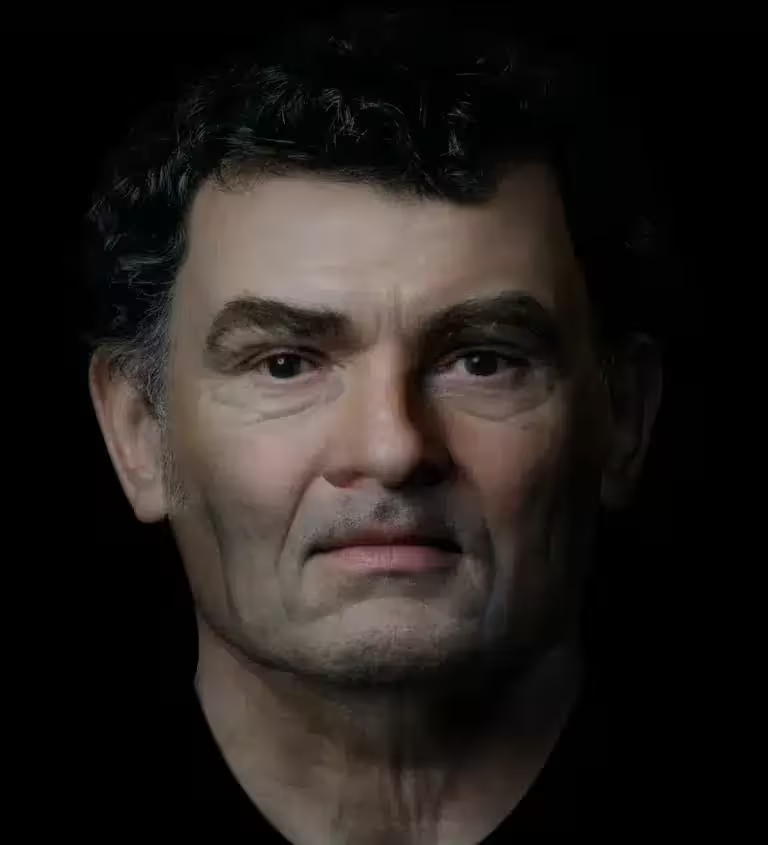
Forensic experts have unveiled a digital facial reconstruction of a man who died nearly 2,000 years ago, leaving behind a burial site that continues to baffle archaeologists. Excavated near a Roman-era fort in Scotland, the man’s remains reveal a complex life that ended in a ritualistic beheading, prompting new questions about the cultural practices of those serving on the fringes of the Roman Empire.
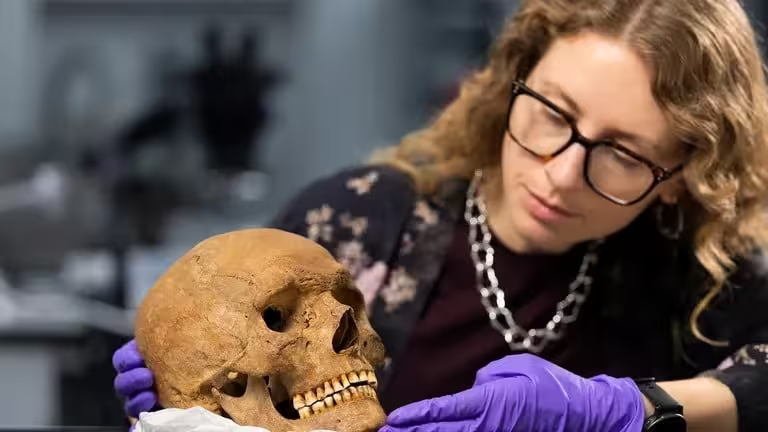
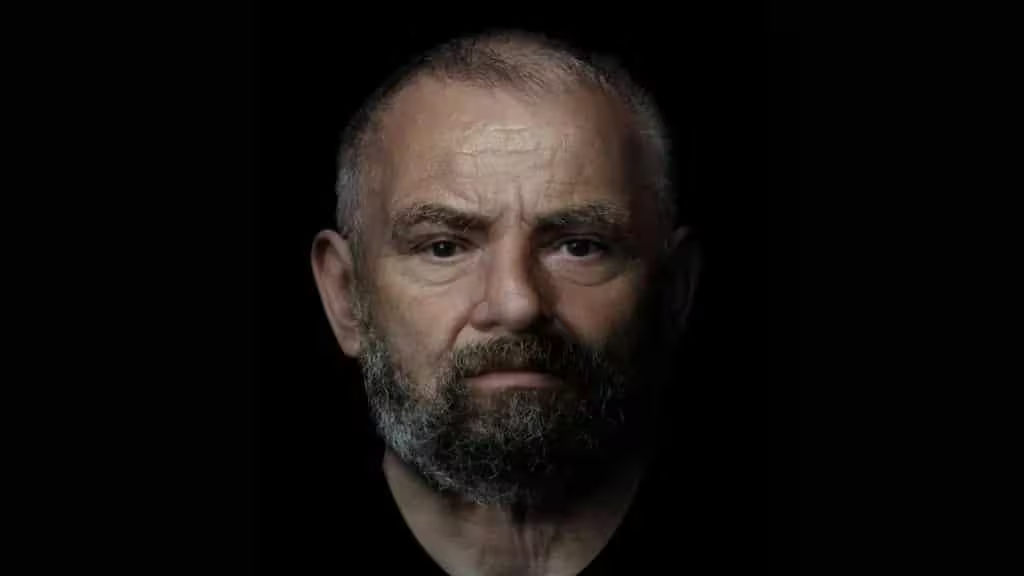
The reconstruction, led by National Museums Scotland and forensic anthropologist Christopher Rynn, provides a hauntingly lifelike portrait of the individual, characterized by dark eyes and hair. By utilizing the anatomical markers of the man’s skull, the team arrived at a clean-shaven appearance, a stylistic choice reflecting common trends of the era.
Clues From a Fractured Life
Dating back to between A.D. 142 and 165, the remains belonged to a man approximately 50 years of age. His skeleton tells the story of a physically demanding existence; he had survived a broken nose, and his right elbow displayed significant bone growth. While some researchers suggest this could be the result of arthritis, John H. Reid, an archaeologist at the Trimontium Trust, notes that it may also indicate a long-term physiological response to a localized injury.
Intriguingly, the condition of his right arm suggests he would have been unable to wield a sword, casting doubt on his role as a frontline soldier. Nevertheless, his proximity to the Inveresk fort—a key logistical hub for the Antonine Wall—strongly implies he was affiliated with the Roman military. Reid suggests the man likely filled a non-combatant role, perhaps as a clerk or a specialist who could manage without the use of his dominant arm.
A Mystery of Ritual and Migration
The most striking aspect of the discovery is the man’s decapitation. Isotopic analysis indicates he grew up in southern Britain, far from the Scottish coast where he was ultimately laid to rest. The presence of other headless bodies in his region of origin suggests that beheading may have been a cultural burial practice among some southern Britons rather than an act of criminal execution. This theory is bolstered by the context of his grave, which lacks the indicators of a shameful death.
Inveresk has yielded six Roman-era burials, four of which involved decapitation. According to Reid, as reported by Live Science, these individuals were treated with a level of respect that contradicts the notion of punishment.
Imperial Reach and Local Realities
The fort at Inveresk served as a vital node in Rome’s attempt to consolidate its hold on northern Britain. Established around A.D. 140, the facility supported the troops manning the Antonine Wall, an ambitious fortification project that sought to bridge the gap between the Firth of Forth and the Firth of Clyde. However, Roman control in this region was precarious. Following decades of conflict, including the aftermath of the Battle of Mons Graupius, the military eventually retrenched to the more established Hadrian’s Wall by A.D. 162.
The diverse composition of the military force at the time is a key point for historians. Reid points out that by the mid-second century, the legions in Scotland were rarely comprised of Italians, featuring instead a mix of local recruits, artisans, and auxiliaries from across the empire. While isotopic data favors a southern British origin, researchers acknowledge the possibility that this man could have originated from as far afield as the coast of the Netherlands, where similar chemical signatures are found.
This article has been fact checked for accuracy, with information verified against reputable sources. Learn more about us and our editorial process.
Last reviewed on .
Article history
- Latest version
Reference(s)
- Metcalfe, Tom. “Decapitated man buried near fort in Roman-era Scotland gets a new virtual face.”, October 29, 2026 Live Science <https://www.livescience.com/archaeology/romans/decapitated-man-buried-near-fort-in-roman-era-scotland-gets-a-new-virtual-face>.
Cite this page:
- Posted by Vikram Desai