Lost Pages of 600-Year-Old Manuscript Reveal Secret Kept by Henry VIII’s Official
Six missing pages from a 15th-century religious manuscript have been discovered in a Brighton archive, finally reuniting them with their Yale University book.
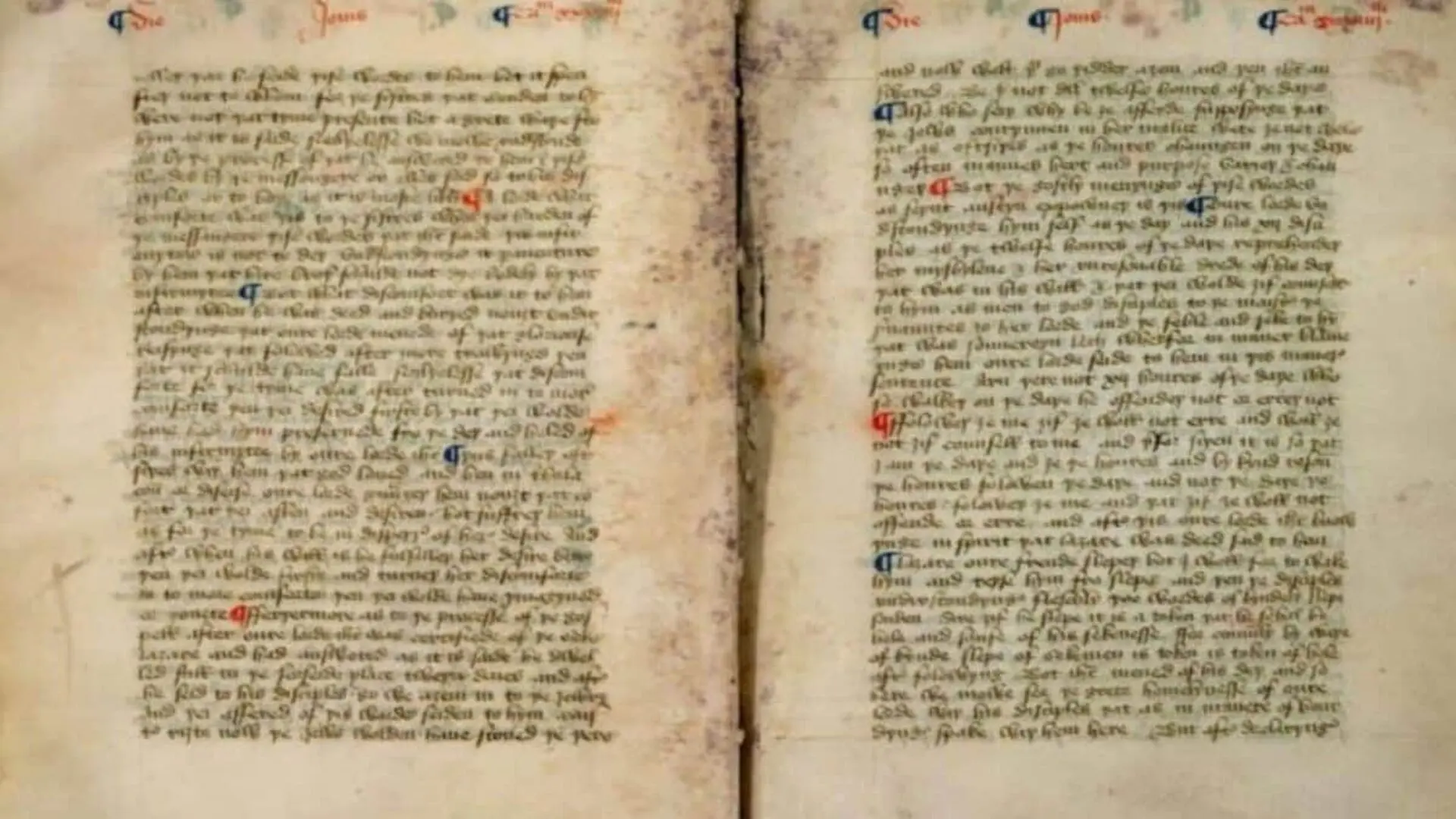
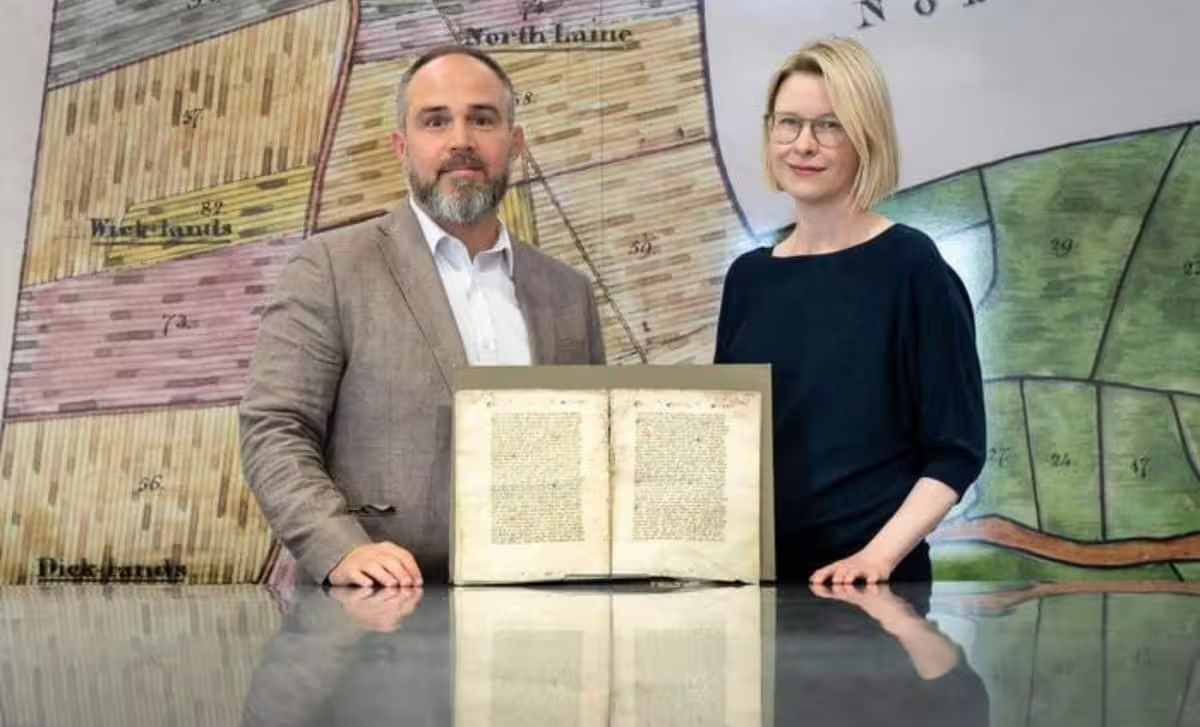
A centuries-old literary puzzle has finally been solved, reuniting fragments of a rare medieval manuscript that had spent decades misidentified in an archive. Researchers Katie Walter from the University of Sussex and James Wade of Girton College, Cambridge, successfully identified six lost pages of Nicholas Love’s Mirror of the Blessed Life of Jesus Christ, a significant work of early 15th-century English prose.
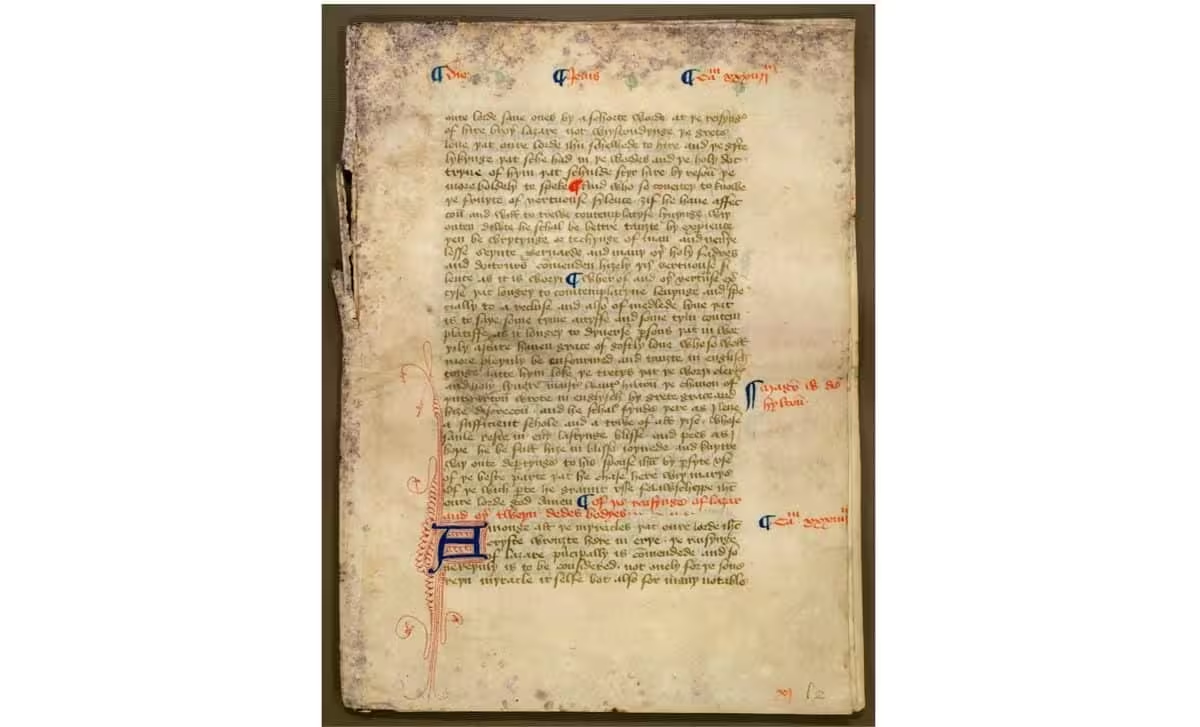
The discovery was made after the scholars cross-referenced a digitized copy of a manuscript held at Yale University’s Beinecke Library with a mysterious set of pages stored at The Keep, an archive in Brighton. While the Yale volume had been known to researchers, the six sheets in Brighton had been hiding in plain sight for nearly a century, mislabeled as general religious meditations in a box of unrelated family property records.
From Archive Obscurity to Scholarly Breakthrough
The journey of these pages is tied to the Gage family, who in 1929 donated dozens of boxes to the Sussex Archaeological Society. Most of the documents were mundane land deeds and estate papers, causing the curator to overlook the medieval fragment entirely. Even when scholars suspected its importance in 1978, poor cataloging hampered further research. A 2003 attempt to organize the files described the pages merely as miscellaneous sermons, leaving the manuscript’s true identity unrecorded for another two decades.
By comparing the physical dimensions and handwriting, Walter and Wade confirmed the Brighton sheets were the missing link in the Yale volume. The fragments contain a chapter depicting the resurrection of Lazarus, including a curious scribal error where the text accidentally reversed the meaning of a passage to read “from life to death” instead of the intended phrase.
A Survival Story Amidst Religious Upheaval
Nicholas Love’s Mirror of the Blessed Life of Jesus Christ was originally composed around 1409 as a safe, state-sanctioned alternative to the increasingly popular—and dangerous—English translations of the Bible favored by the Lollards. During that era, owning an English Bible could result in execution for heresy, making Love’s devotional text a widely circulated, “approved” version of scripture.
However, the book’s status changed drastically during the English Reformation. Because it upheld key Catholic doctrines like the Real Presence in the Eucharist and the necessity of priestly confession, it became a target for destruction under Henry VIII. This makes the survival of the Yale-Brighton manuscript particularly striking, especially given its connection to Sir John Gage.
The Keeper of a Forbidden Text
Sir John Gage, a prominent figure during the dissolution of the monasteries, was directly responsible for inventorying and closing religious houses in Kent, Surrey, and Sussex. Despite his professional duty to dismantle the machinery of the Catholic Church, he personally kept this prohibited devotional work. His signature graces the final page of the manuscript, which also shows evidence of earlier ownership by religious women—hinting that the book may have been salvaged from a monastic library before it reached his hands.
For the researchers, the finding is more than a bibliographic footnote. It highlights the complex, often contradictory lives of individuals caught in the crossfire of the English Reformation, where an official could simultaneously oversee the destruction of religious heritage while preserving a piece of it in his own private library.
The findings, published in the journal Notes and Queries, allow historians to better understand the provenance of these rare texts and the broader patterns of book movement during the turbulent 16th century.
This article has been fact checked for accuracy, with information verified against reputable sources. Learn more about us and our editorial process.
Last reviewed on .
Article history
- Latest version
Cite this page:
- Posted by Vikram Desai