Major Discovery Beneath Paris May Reveal The Lost Gallic Fortress Of Lutetia
Archaeologists have discovered an ancient wall beneath Paris that may finally reveal the long-debated location of the original Gallic settlement, Lutetia.
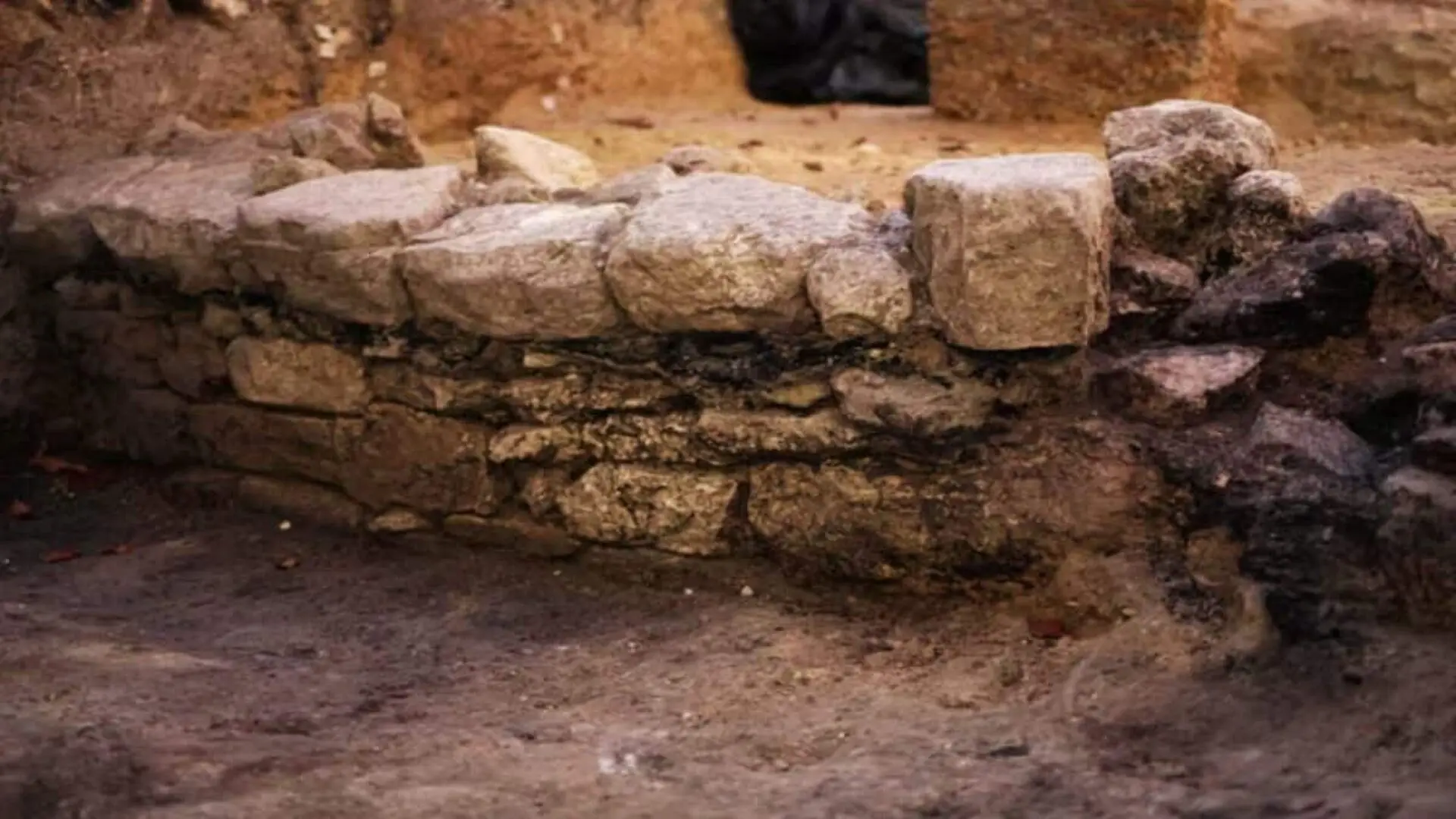
Archaeologists working beneath the historic Hôtel-Dieu hospital in central Paris have unearthed a substantial stone-and-timber fortification, a discovery that could rewrite the origin story of the French capital. The structure, located on the Île de la Cité adjacent to Notre-Dame Cathedral, is being scrutinized as a potential remnant of the elusive Gallic Lutetia.
Evidence of an Iron Age Stronghold
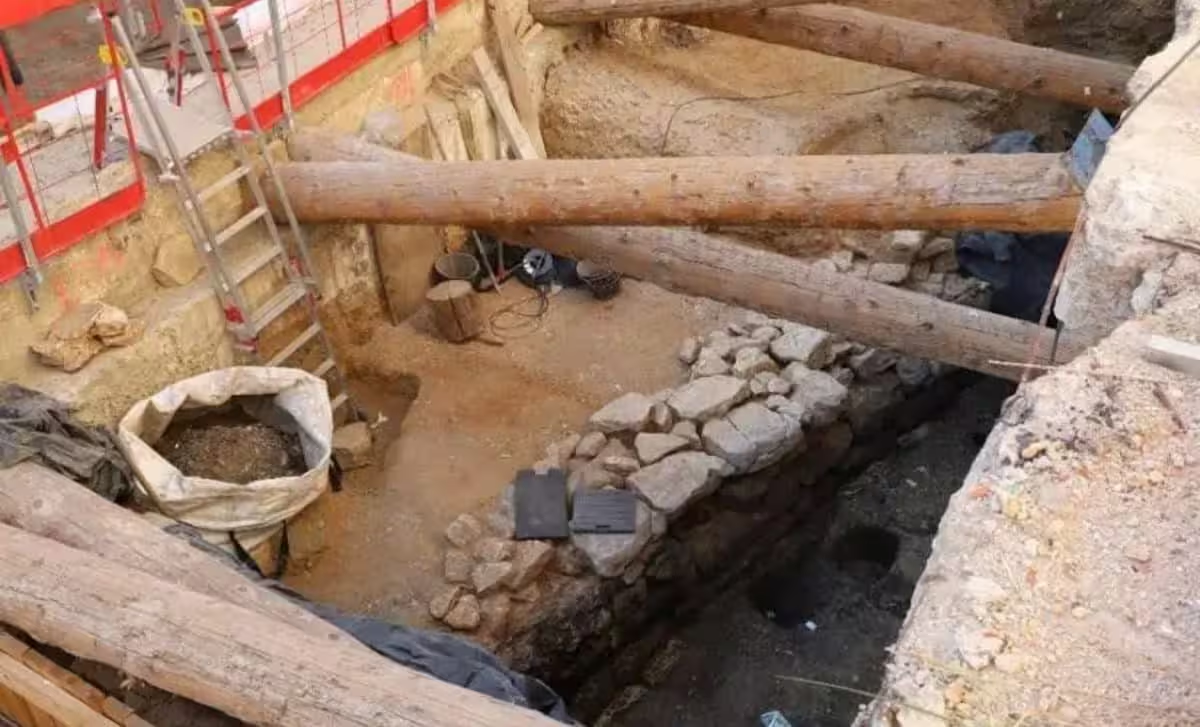
The excavation, led by David Couturier of the City of Paris Department of the History of Architecture and Archaeology with oversight from the French National Institute for Preventive Archaeological Research, began in February 2026. According to the French Ministry of Culture, the team exposed a 20-meter stretch of a defensive wall built using a distinct combination of large stone blocks and interlocking wooden beams, a signature technique of Gallic fortification.
Supporting the structure is a two-meter-thick platform of sand and gravel, an intentional engineering feat that points to a major defensive project. Further evidence of a turbulent history is visible in the form of charred remains, including burnt seeds and structural timber, suggesting the site was subjected to a significant fire. Preliminary radiocarbon dating places these materials between 200 B.C.E. and 10 B.C.E., a critical window that encompasses the 52 B.C.E. Battle of Lutetia.
Un rempart d’une vingtaine de mètres datant de l’époque gallo-romaine a été découvert cet été sur l’île de la Cité, à Paris. Il pourrait constituer une “avancée majeure” dans la connaissance des origines de la capitale, a indiqué le ministère de la Culture le 23 septembre. pic.twitter.com/CD4547U8WG
— franceinfo (@franceinfo) September 24, 2026
Bridging the Gap Between Legend and Archaeology
The location of Lutetia has long been a subject of scholarly dispute. While historical tradition situated the settlement of the Parisii on the Île de la Cité, based largely on Julius Caesar’s accounts of an island hub connected by bridges, the lack of physical proof allowed competing theories to flourish—most notably the argument that the true seat of power was in Nanterre, west of modern Paris.
The discovery of a Gallic-era spearhead and contemporary pottery, combined with the fortification’s placement, provides the first substantial physical link to the site described in the Gallic Wars. Culture Minister Catherine Pégard acknowledged the significance of the find but urged caution, noting that ongoing research is required to fully confirm the structure’s exact chronology and function.
Preserving History in a Modern City
Due to the delicate nature of the remains and the necessity of the planned hospital redevelopment, the wall cannot be preserved in situ. Instead, researchers are implementing a comprehensive documentation strategy, which includes 3D photogrammetric modeling to capture the site in high resolution. Plans are also underway to create a physical mold of the rampart, allowing for future analysis and potential public exhibition using select original stones.
As the investigation continues, this discovery serves as a rare material witness to the ancient conflicts that shaped the heart of Paris, offering a tangible connection to the Iron Age world that existed before the rise of the Roman city.
This article has been fact checked for accuracy, with information verified against reputable sources. Learn more about us and our editorial process.
Last reviewed on .
Article history
- Latest version
Reference(s)
- “Découverte archéologique majeure à Paris : le rempart de la Lutèce gauloise mis au jour | Ministère de la Culture.”, September 23, 2026 <https://www.culture.gouv.fr/regions/drac-ile-de-france/actualites/actualite-a-la-une/decouverte-archeologique-majeure-a-paris-le-rempart-de-la-lutece-gauloise-mis-au-jour>.
- “https://twitter.com/franceinfo/status/2103218148014985508/video/1.” <https://t.co/CD4547U8WG>.
Cite this page:
- Posted by Vikram Desai