Archaeologists Discover 476,000 Year Old Wooden Structure Predating Modern Humans
Archaeologists have discovered a 476,000-year-old wooden structure in Africa. Learn how this ancient feat of engineering survived for millennia without rotting.
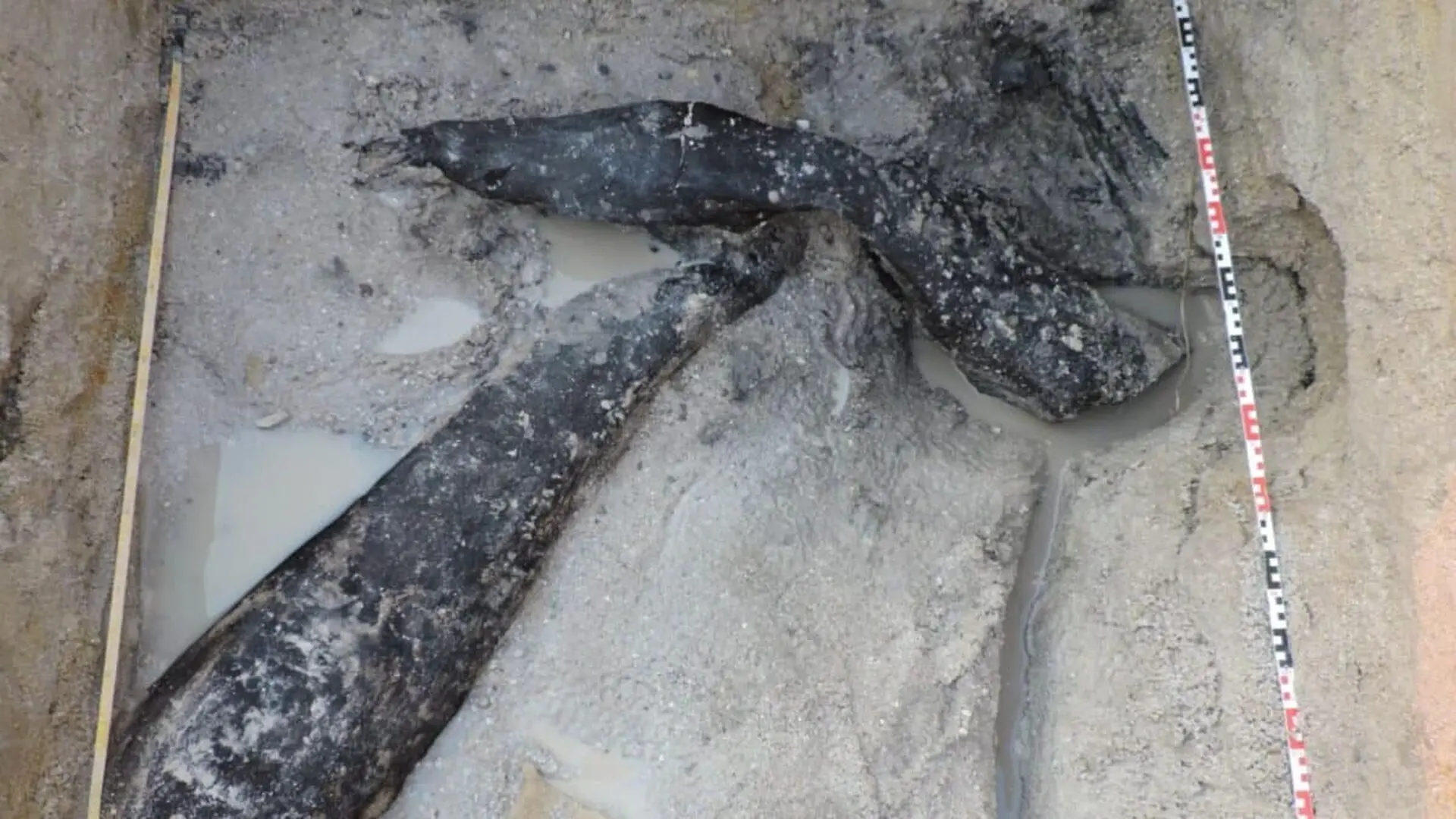
Archaeological evidence unearthed at Kalambo Falls in Zambia has rewritten the timeline of human ingenuity, revealing that ancestral hominins were constructing complex wooden frameworks as early as 476,000 years ago. This discovery, documented by researchers from the University of Liverpool and Aberystwyth University, predates the emergence of Homo sapiens by hundreds of thousands of years, offering a rare glimpse into a sophisticated technological past typically obscured by the ravages of time.
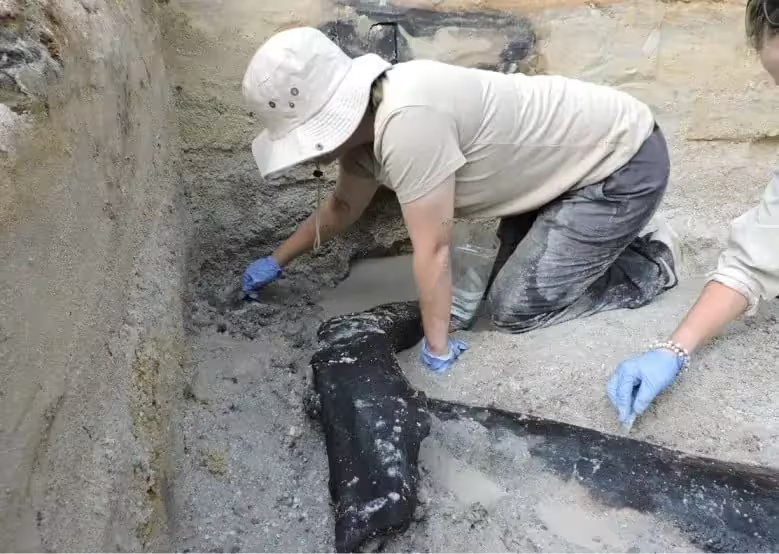
Because organic materials like wood usually decompose rapidly, the archaeological record is heavily biased toward stone tools. The site at Kalambo Falls, however, benefited from unique waterlogged conditions that preserved these ancient timber remnants for nearly half a million years. This preservation allows modern scientists to analyze a facet of prehistory that was previously considered lost to decay.
Advanced Woodworking Deep in the Past
The findings, detailed in the journal Nature, center on two large logs that exhibit clear evidence of deliberate modification. Stone-tool marks demonstrate that these timbers were shaped and notched to interlock, suggesting they once formed a foundational component of a larger construction, such as an elevated platform or walkway. While the specific purpose of the assembly remains a subject of ongoing research, the level of intent required to craft these joints marks a significant departure from earlier understandings of hominin cognitive capabilities.

Larry Barham, a lead author on the study, noted that the discovery challenges traditional definitions of the Stone Age. By demonstrating that ancient hominins were capable of large-scale, deliberate construction using wood, the site suggests a far more complex technological landscape than the name implies.
Precision Dating of Ancient Artifacts
Given the extreme age of the site, standard radiocarbon dating proved insufficient. To establish an accurate chronology, the research team utilized luminescence dating, a technique that calculates the time elapsed since mineral grains in the surrounding sediment were last exposed to sunlight. Expert Geoff Duller applied this method to confirm the structure dates to approximately 476,000 years ago.
“At this great age, putting a date on finds is very challenging and we used luminescence dating to do this. These new dating methods have far reaching implications – allowing us to date much further back in time, to piece together sites that give us a glimpse into human evolution,” Duller stated in a university statement.
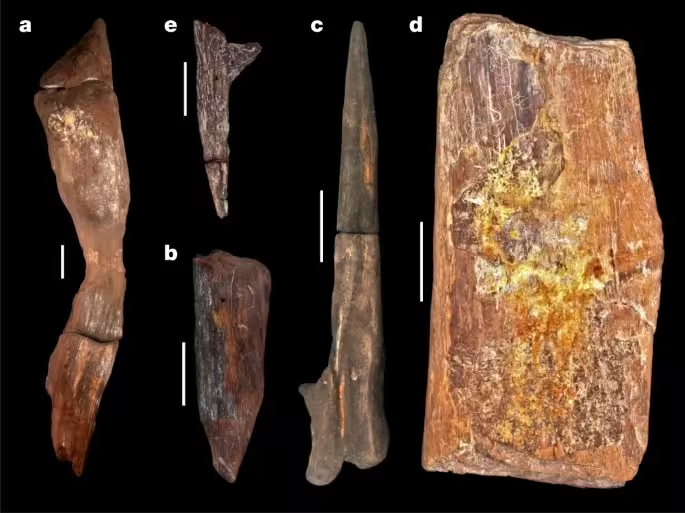
This same technique was used to date additional wooden tools found in the vicinity to roughly 324,000 years ago. These dates provide a profound context for human evolution, as they significantly precede the oldest known Homo sapiens fossils from Jebel Irhoud, Morocco, which are roughly 315,000 years old.
Unveiling a Hidden “Wood Age”
The Kalambo discovery is part of a growing body of evidence indicating that early humans engaged in sophisticated woodworking across the globe. Recent findings include digging sticks and tools recovered from sites in China and Greece, dating back hundreds of thousands of years. Together, these sites are prompting researchers to reconsider the existence of an invisible “Wood Age” that paralleled the well-documented Stone Age.
Recognizing the immense significance of these findings, Zambia moved to formally protect the site. On March 5, 2026, Kalambo Falls National Monument was officially added to UNESCO’s World Heritage Tentative List, a crucial milestone in the journey toward permanent international recognition for one of the most important archaeological sites in human history.
This article has been fact checked for accuracy, with information verified against reputable sources. Learn more about us and our editorial process.
Last reviewed on .
Article history
- Latest version
Reference(s)
- Barham, L.. “Evidence for the earliest structural use of wood at least 476,000 years ago - Nature.”, vol. 622, no. 7981, pp. 107-111. Nature, doi: 10.1038/s41586-023-06557-9. <https://www.nature.com/articles/s41586-023-06557-9>.
- Owen, Catrin. “Archaeologists discover world’s oldest wooden structure.”, September 20, 2023 News <https://news.liverpool.ac.uk/2023/09/20/archaeologists-discover-worlds-oldest-wooden-structure/>.
- <https://whc.unesco.org/en/tentativelists/6993/>.
Cite this page:
- Posted by Vikram Desai