8,500 Year Old Fingerprints Found on Abandoned Clay Lumps in Ancient Settlement
Archaeologists have discovered 8,500-year-old fingerprints preserved in an ancient Turkish settlement, offering a rare glimpse into a sudden evacuation.
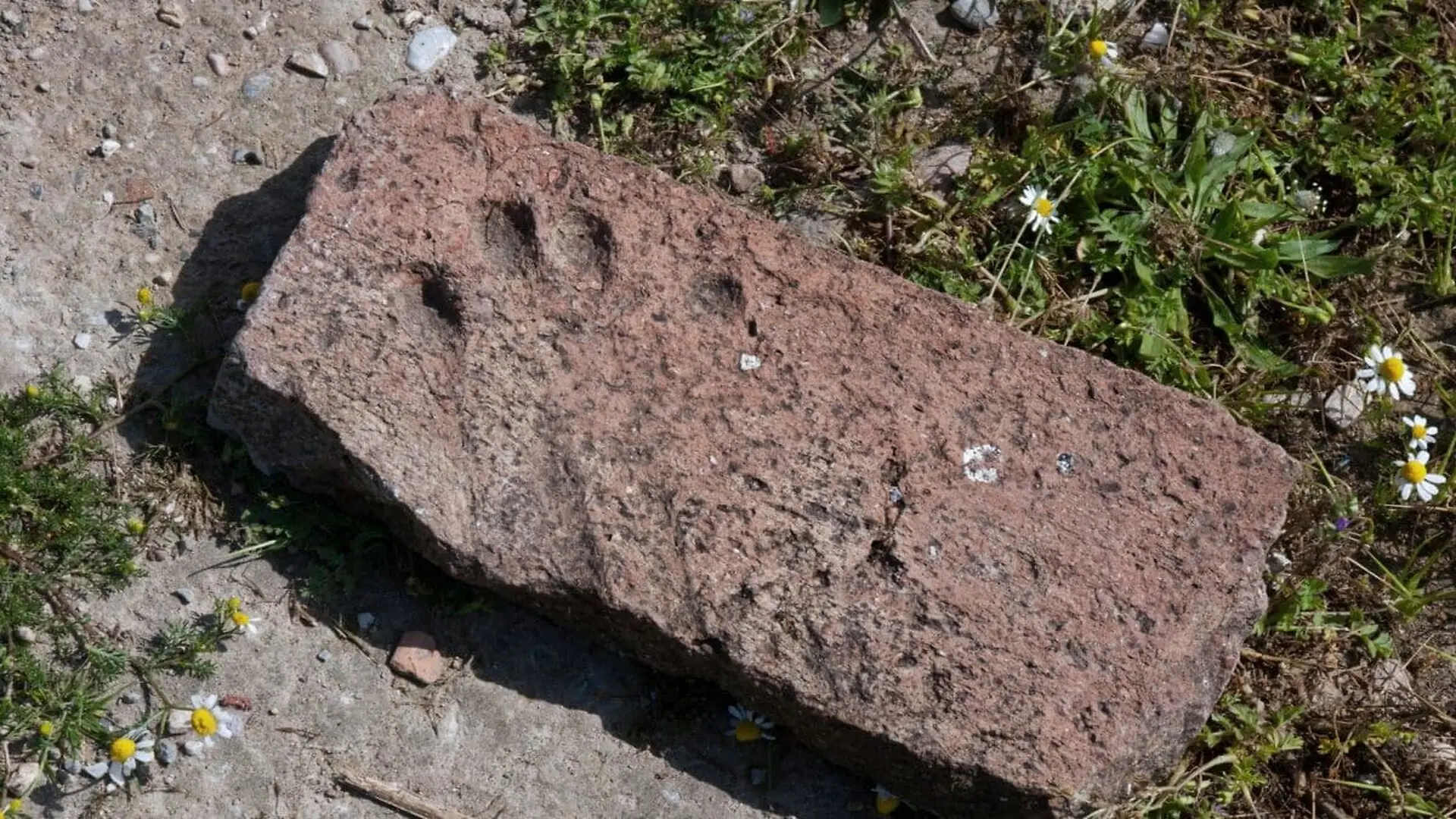
Archaeologists working at the Yeşilova Höyük site in İzmir, Turkey, have uncovered a rare and intimate link to the past: the preserved fingerprints of individuals living 8,500 years ago. These impressions, believed to belong to women and children, were found embedded in lumps of clay that had been prepared for pottery production before being abandoned in what appears to have been a sudden departure.
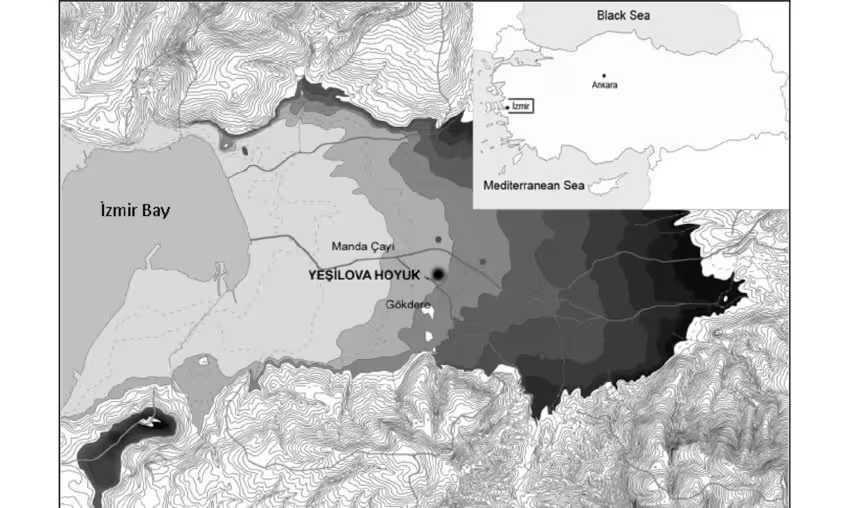
Yeşilova Höyük serves as the oldest known prehistoric settlement in the İzmir region. Since 2005, a research team led by Assistant Professor Zafer Derin of Ege University’s Department of Archaeology has been systematically uncovering the site. The ongoing project is supported by the Turkish Ministry of Culture and Tourism, Ege University, and the Bornova Municipality.
Tracing Ancient Craftsmanship
Evidence suggests that a significant fire forced the inhabitants of this Neolithic settlement to leave their homes in haste, leaving behind the tools and materials of their daily work. According to Zafer Derin, speaking to Anadolu Agency, each excavation season provides critical data that helps reconstruct the lives of a culture that remained hidden for millennia.
Alongside the fingerprint-laden clay, the team has recovered a variety of artifacts that highlight the sophistication of the society, including ceremonial vessels and early forms of lighting implements. These items offer researchers a window into both the ritualistic and practical aspects of Neolithic existence.
“Each year we obtain new data,” Derin noted. “We are trying to bring to light a hidden culture buried under the soil.”
The Human Touch in Neolithic Clay
The discovery of the fingerprints is particularly compelling for what it reveals about the division of labor in ancient craft production. The clay had been kneaded and mixed with specific additives—which researchers are still working to identify—before being shaped for pottery. These additives were instrumental in preserving the indentations for over eight decades of centuries.
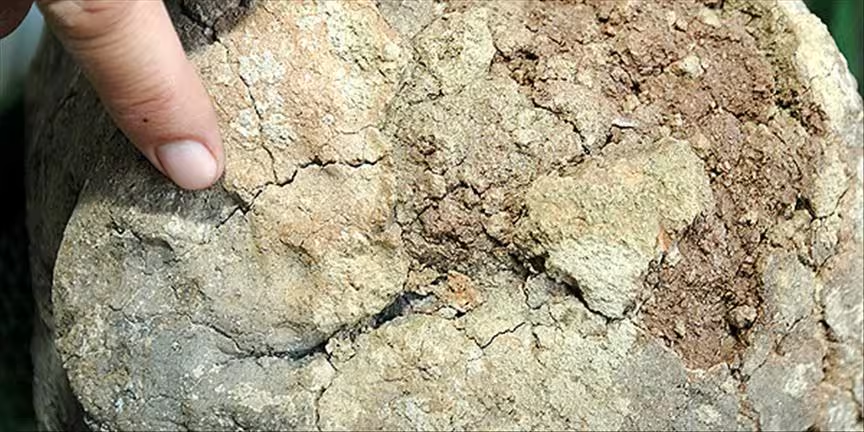
As reported by NTV, Derin explained that the clay lumps serve as evidence of a production site where individuals, likely women and children, were actively involved in shaping the raw materials. The sudden abandonment of the site, likely triggered by a fire, preserved these fleeting moments of labor in the hardened earth.
Ongoing Research at the Mound
This fingerprint discovery is just one chapter in the larger story of the Yeşilova excavation. By analyzing the pottery fragments and household items unearthed at the site, the team continues to build a more comprehensive understanding of the Neolithic era in Western Anatolia.
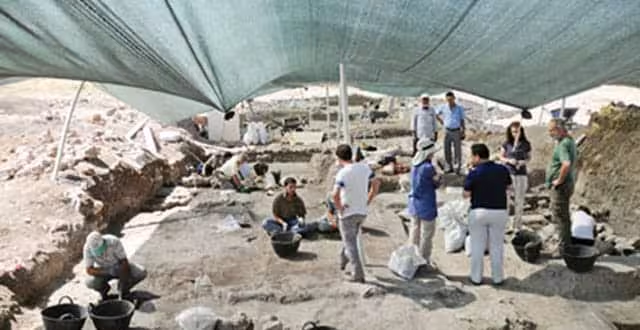
The persistence of the Ege University team ensures that the site remains a focal point for understanding the development of early settlements. As the soil is peeled back, the physical evidence of 8,500 years ago—from the pottery they fired to the very prints they left in the clay—provides an increasingly clear view into the lives of those who once walked these grounds.
This article has been fact checked for accuracy, with information verified against reputable sources. Learn more about us and our editorial process.
Last reviewed on .
Article history
- Latest version
Reference(s)
- “zafer derin.” <https://scholar.google.com/citations?user=aNNHYXQAAAAJ&hl=tr>.
- Ajansı, Anadolu. “8500 yıllık parmak izi bulundu.”, September 5, 2011 Anadolu Ajansı <https://www.aa.com.tr/tr/kultur-sanat/8500-yillik-parmak-izi-bulundu/414318>.
- NTV, “8 bin 500 yıllık parmak izi bulundu.”, September 5, 2011 NTV <https://www.ntv.com.tr/turkiye/8-bin-500-yillik-parmak-izi-bulundu,NSgcyowtbUKI3GeuBcdd9w>.
Cite this page:
- Posted by Vikram Desai