Scientists Finally Solve The Mystery Of A Strange Skull Hidden In A Cave For 65 Years
A human skull fused into a Greek cave wall has baffled scientists for 60 years. New dating analysis has finally revealed the mystery behind its origin.
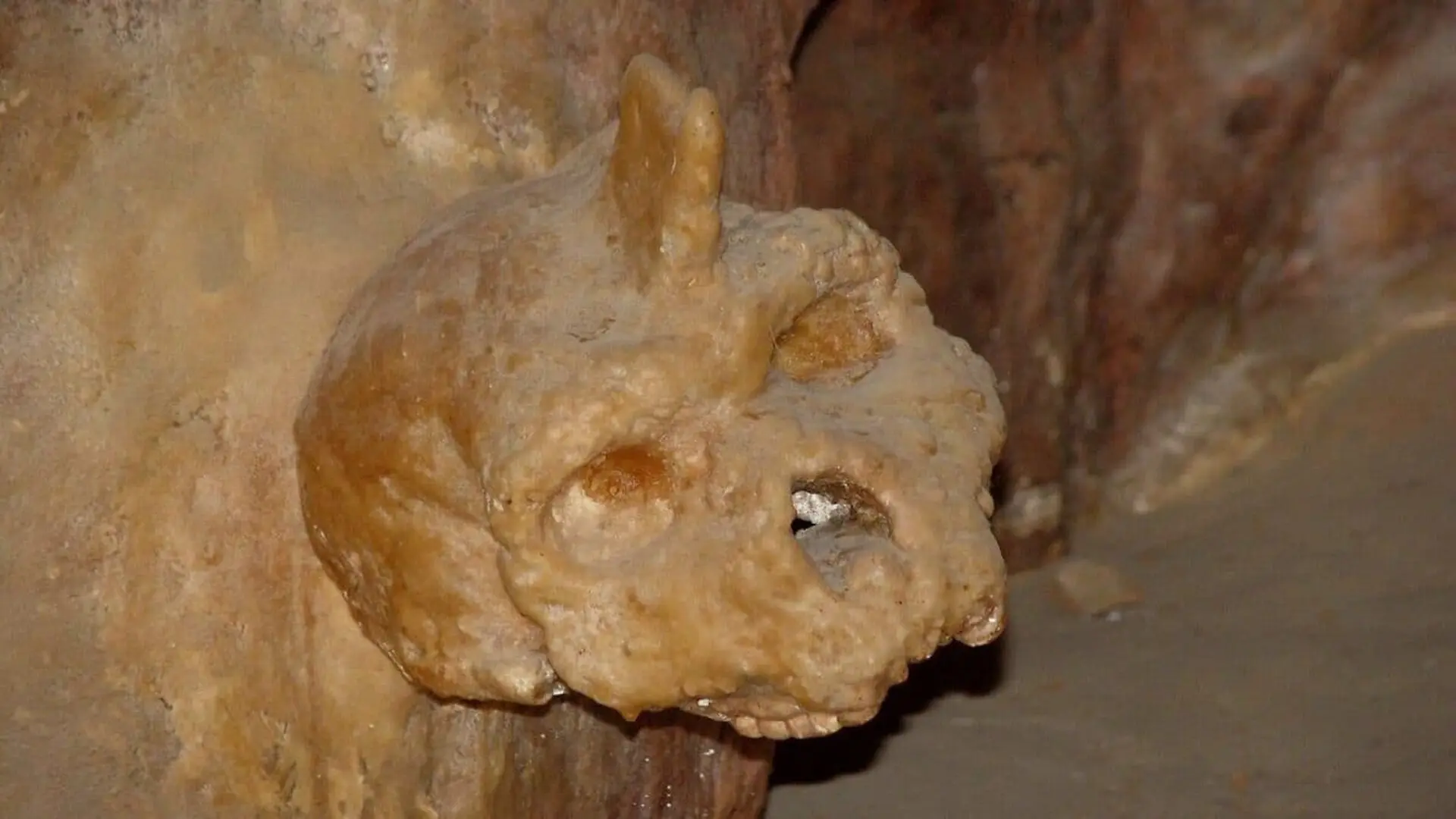
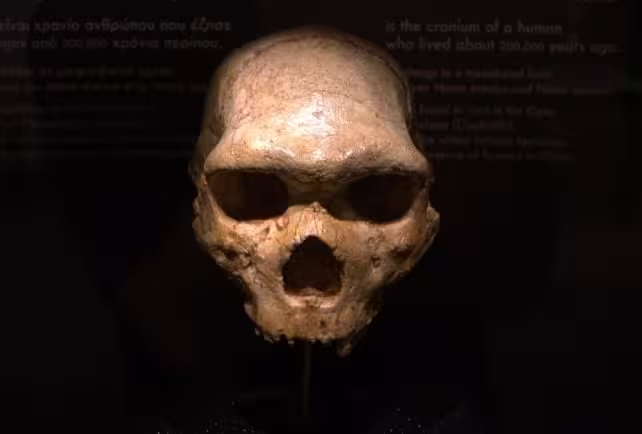
A mysterious fossil discovered decades ago in a Greek cavern has finally yielded its secrets, with new dating analysis providing a clearer window into the origins of the enigmatic Petralona cranium. Unearthed in 1960 by a local resident near Thessaloniki, the skull has long baffled paleoanthropologists due to its unique combination of anatomical traits that do not align perfectly with known human or Neanderthal populations.
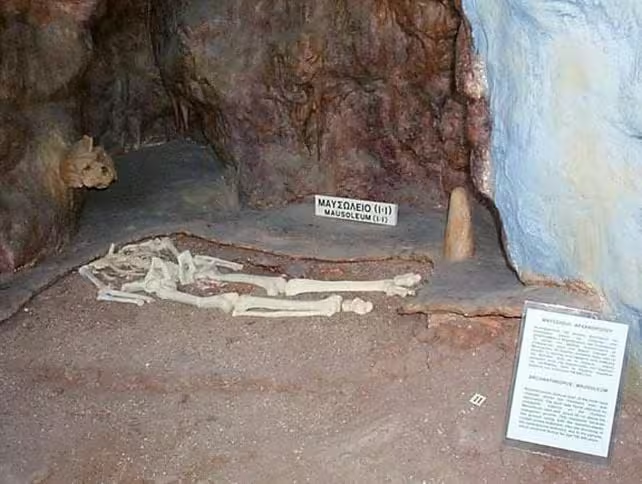
The fossil, which was missing its mandible, was encased in a thick crust of orange-brown calcite, with a prominent stalagmite structure growing from its top. This geological integration, while fascinating, created significant hurdles for researchers attempting to determine its age. For over 60 years, scientists have debated where this specimen fits on the human evolutionary tree, with previous estimates for its age ranging wildly from 170,000 to 700,000 years.
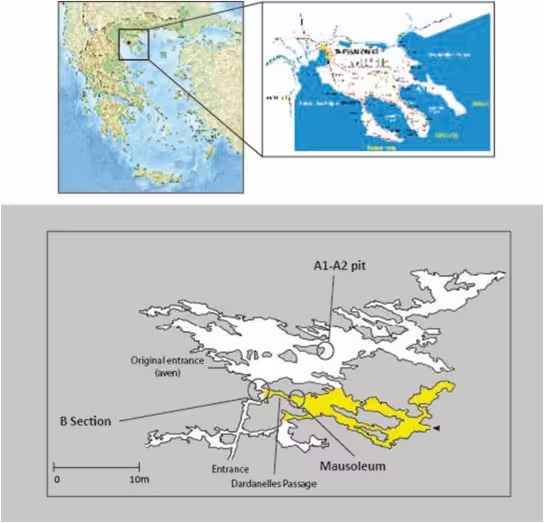
Pinpointing a Timeline Through Calcite
A new study, published in the Journal of Human Evolution, shifted the focus from the bone itself to the calcite deposits that shielded it. Led by Christophe Falguères of the Institut de Paléontologie Humaine in France, the research team utilized uranium-series dating. This technique measures the radioactive decay of uranium isotopes into thorium, a process that is particularly reliable when applied to cave-grown mineral formations.
Because mineral-rich water circulating through cave systems leaves behind layers of calcite as it evaporates, these deposits serve as a chemical clock. By analyzing these layers, the team successfully constrained the age of the fossil to between 277,000 and 539,000 years old. This places the specimen firmly within the Middle Pleistocene, a transformative era in human history.
A More Complex Evolutionary Landscape
The findings offer a significant update to how we perceive the movement and development of hominin populations in ancient Europe. According to co-author Chris Stringer of the Natural History Museum in London, the updated date range suggests that this specific population lived concurrently with the ancestors of the Neanderthals during the later Middle Pleistocene.
Rather than viewing the Petralona cranium as an evolutionary outlier, researchers are beginning to see it as evidence of a much more diverse and interconnected landscape. This era appears to have been a time when various distinct hominin groups inhabited the continent simultaneously, likely engaging in social and genetic exchanges that shaped the course of human development. While the skull remains a subject of intense study, its new, more precise age provides a vital reference point for future archaeological inquiry.
This article has been fact checked for accuracy, with information verified against reputable sources. Learn more about us and our editorial process.
Last reviewed on .
Article history
- Latest version
Reference(s)
- Falguères, Christophe., et al. “New U-series dates on the Petralona cranium, a key fossil in European human evolution.” Journal of Human Evolution, vol. 206, September 1, 2025, pp. 103732 Elsevier BV, doi: 10.1016/j.jhevol.2025.103732. <https://www.sciencedirect.com/science/article/pii/S0047248425000855?via%3Dihub>.
Cite this page:
- Posted by Vikram Desai