Massive 5000 Year Old Megastructure Hidden in Plain Sight Stumps Archaeologists
A mysterious ancient megastructure remained hidden for millennia, leaving researchers puzzled over its unknown creators, purpose, and original significance.
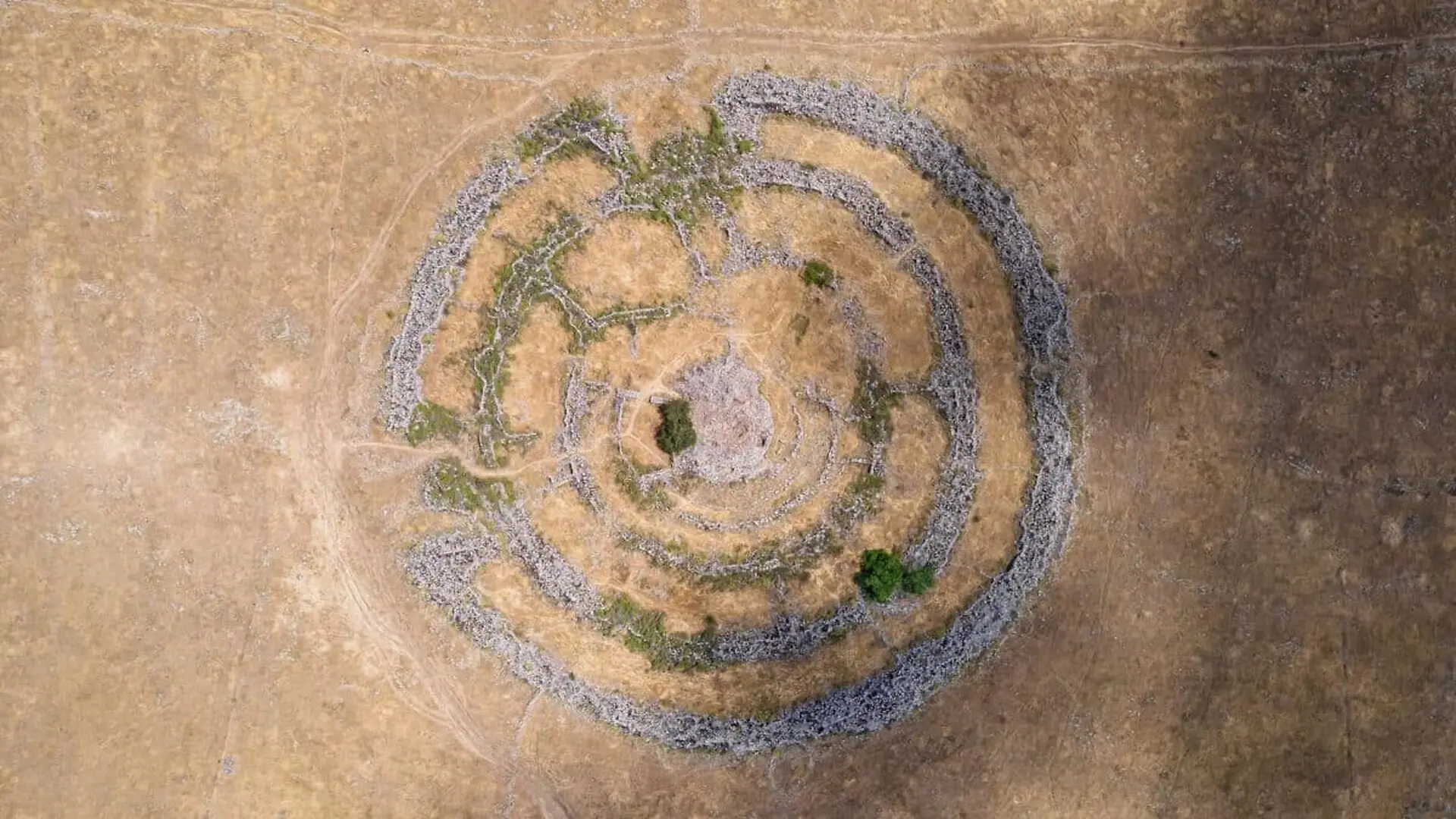
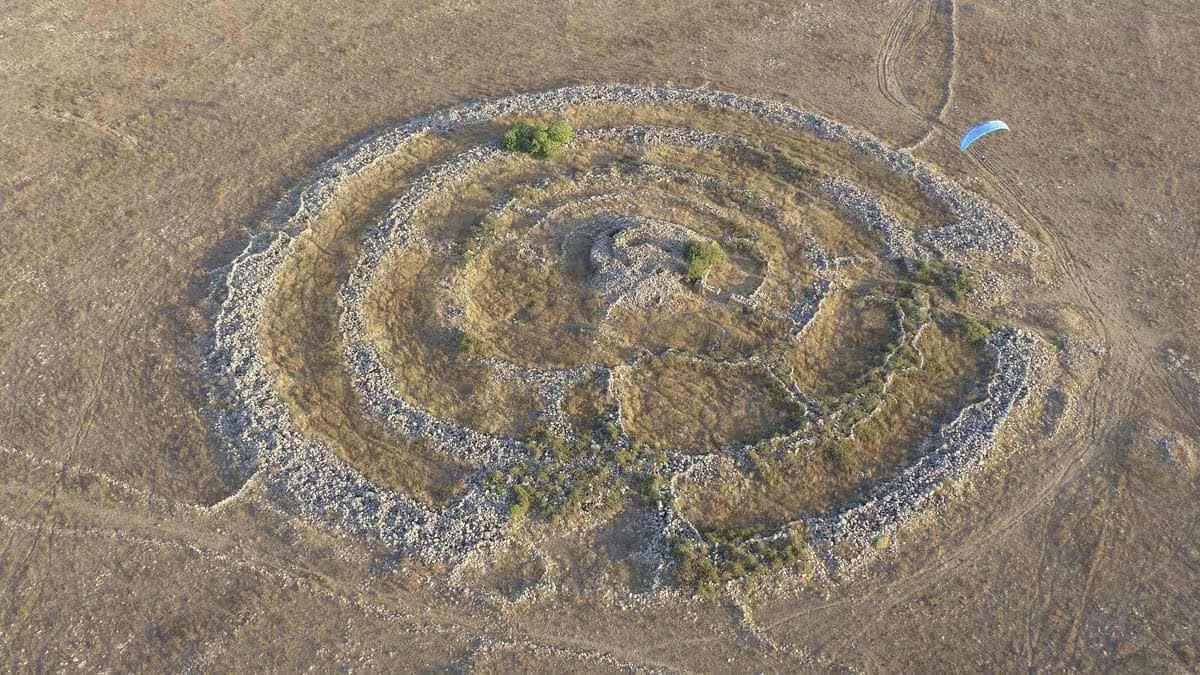
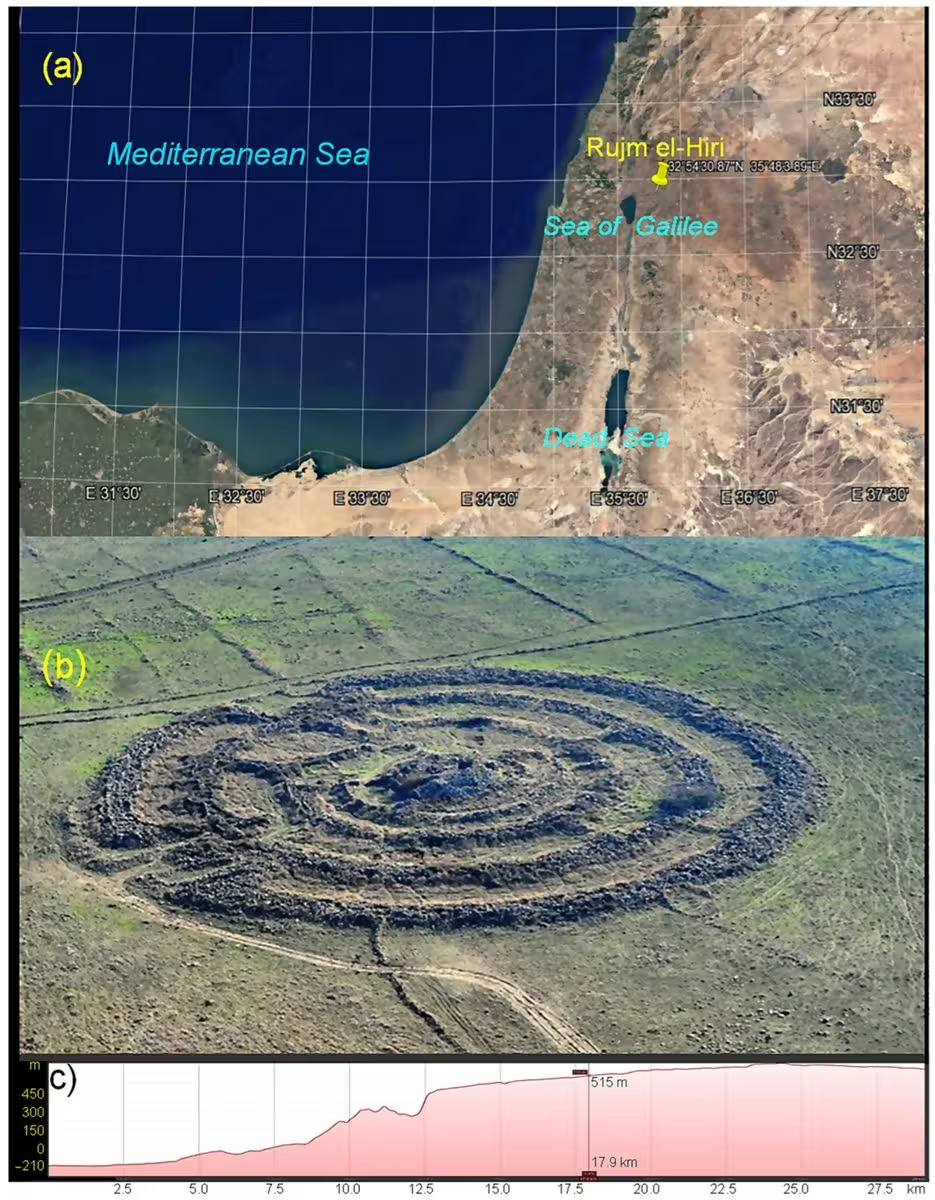
Hidden across the landscape of the Golan Heights lies a massive prehistoric complex that remains nearly invisible to those walking among its ruins. Known as Rujm el-Hiri, this sprawling arrangement of basalt rings spans more than 500 feet in diameter, yet it only entered the broader historical record following the 1967 war, when aerial reconnaissance first unveiled its striking, concentric geometry to modern observers.
The site, which consists of approximately 40,000 tons of stacked basalt stones, remains a profound archaeological enigma. Despite its immense scale—rivaling other famous megalithic structures—it lacks any accompanying written records or oral traditions to clarify its purpose or its architects. Its dual names reflect the mystery surrounding its origin: Rujm el-Hiri translates from Arabic to the “stone heap of the wild cat,” while its Hebrew name, Gilgal Refaim, translates to “wheel of giants,” referencing ancient biblical accounts of a mythical race.
Uri Berger, an expert on megalithic tombs with the Israel Antiquities Authority, describes the site as a persistent puzzle. “It’s an enigmatic site,” Berger told Reuters. “We have bits of information, but not the whole picture.”
Challenging Long-Held Theories
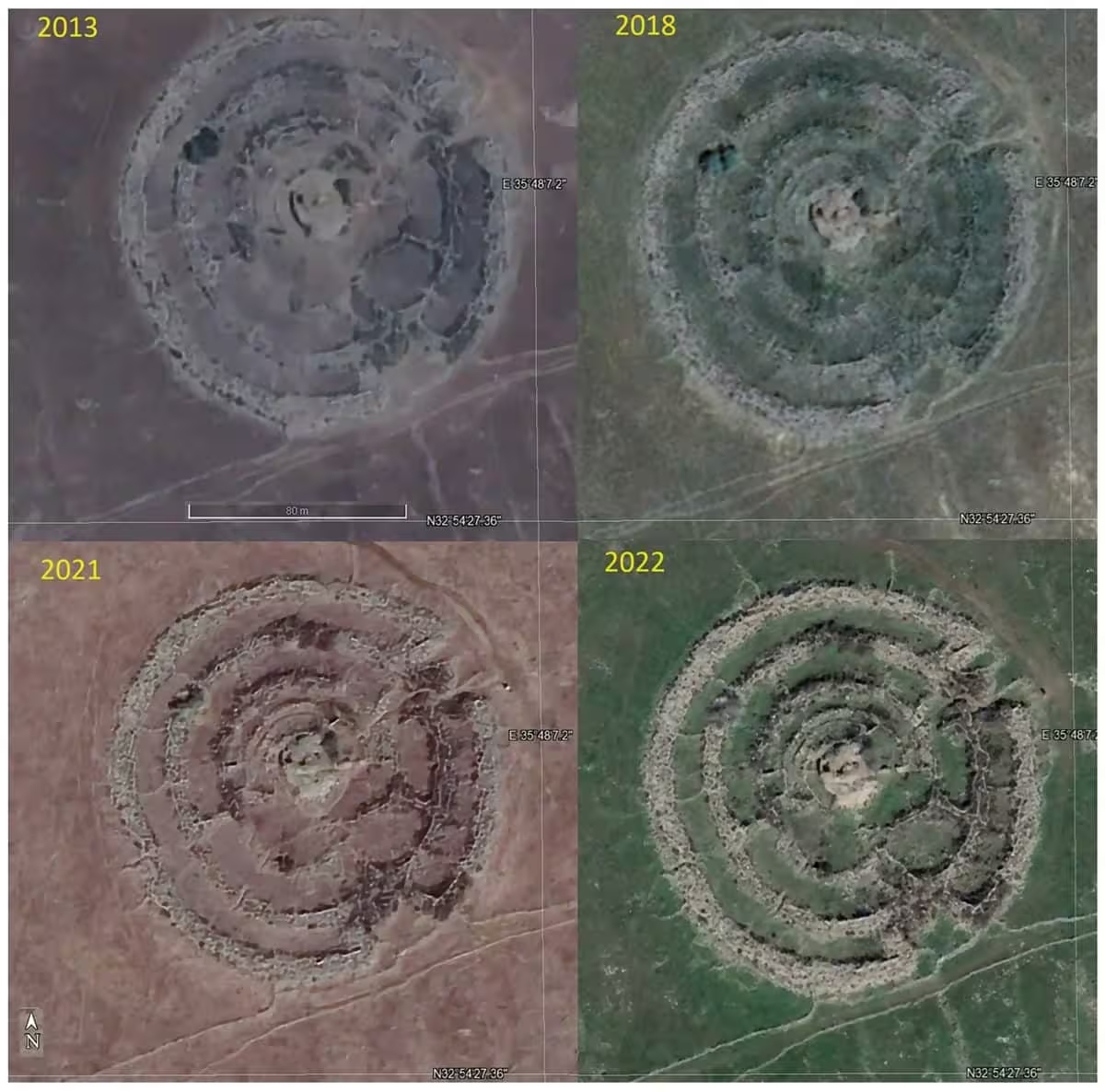
For years, researchers have proposed various functions for the site. One prominent hypothesis suggested it served as a calendar or celestial observatory, noting that its openings appear to align with the sun during the summer and winter solstices. However, this interpretation has faced significant challenges. New research published in the journal Remote Sensing suggests that geophysical shifts over thousands of years have fundamentally altered the landscape.
According to the study authors, the site has experienced a gradual, counterclockwise rotation and a physical displacement of tens of meters due to geological movement. “This means that the current orientation of the radial walls and entrances was not the same as ~4000–2000 BCE,” the researchers noted, concluding that past claims regarding astronomical alignments are likely unsupported by the original architectural layout.
Dating the Megastructure
Without written records, archaeologists have relied on the recovery of flint tools and pottery shards to establish a timeline. Current consensus suggests construction may have commenced as early as 3,500 B.C., with the site evolving through various phases of expansion over the next two millennia. While some have posited that a nomadic civilization built the structure, others argue that such a massive project would have required a level of sedentary support and labor organization that itinerant groups typically lacked.
Today, the site is situated within an active military training zone, though it remains accessible to the public on weekends and holidays. Visitors who traverse the site can inspect the central burial chamber, a structure measuring roughly 20 feet in length. Despite its age and the complexity of its construction, the full scale of the “bull’s-eye” pattern remains, as it has for millennia, best appreciated from the sky.
This article has been fact checked for accuracy, with information verified against reputable sources. Learn more about us and our editorial process.
Last reviewed on .
Article history
- Latest version
Cite this page:
- Posted by Vikram Desai