LiDAR Reveals Hidden Inca Road Network Near Machu Picchu That Challenges Everything We Knew
Using LiDAR technology, researchers have discovered two miles of hidden ancient roads and unknown structures near Machu Picchu, revealing secrets of the Andes.

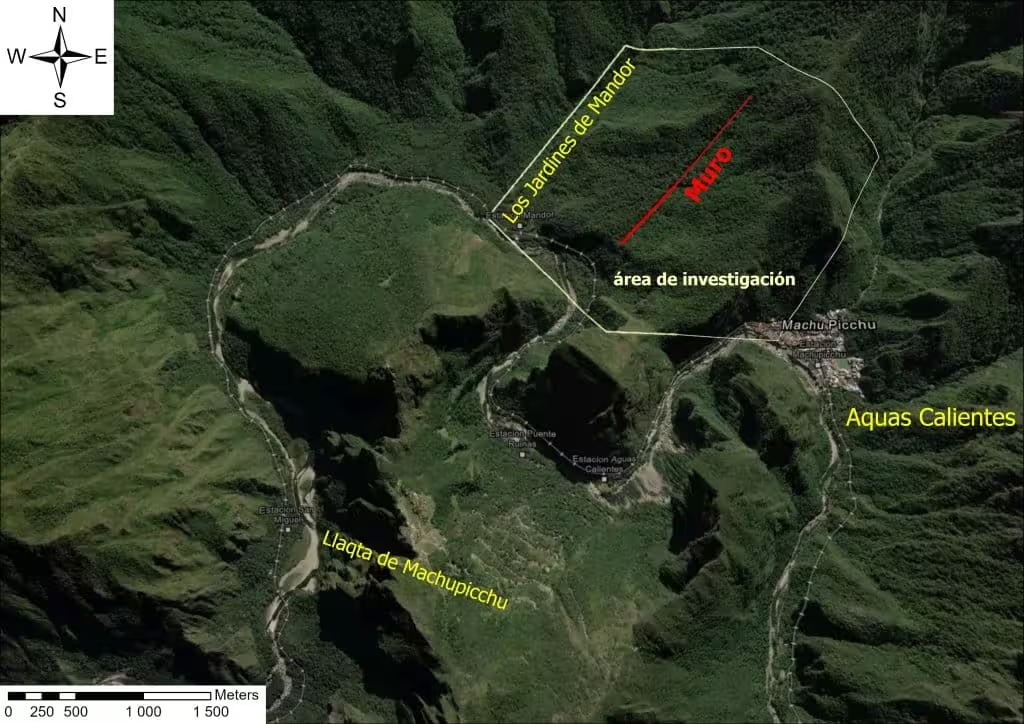
Archaeologists have unveiled a significant discovery near the iconic Inca citadel of Machu Picchu, using advanced remote-sensing technology to map a hidden network of ancient infrastructure. The survey identified roughly 1.5 miles of pre-Columbian roads concealed beneath the dense Andean canopy near the Mandor Wall. These paths connect the world-renowned archaeological site to a series of previously undocumented platforms and agricultural terraces, suggesting the urban footprint of the Inca Empire was far more extensive than researchers once assumed.
The project, spearheaded by the Center for Andean Studies at the University of Warsaw, challenges long-held geographic assumptions about the region. Traditionally, scholars believed the Inca focused their primary urban development on one side of the river. By uncovering these structures on the opposing bank, the team has provided evidence of a broader cultural and logistical footprint in the area.
Expanding the Map of Inca Civilization
Mariusz Ziółkowski, the project lead at the Center for Andean Studies, noted in a recent update that these findings require a fundamental revision of how the main Llagta de Machu Picchu complex functioned in relation to its surrounding satellite sites. Within the larger protected area, archaeologists have already cataloged more than 60 monuments, but this latest find reveals that the Inca transformation of the landscape reached into areas previously thought to be outside the core urban influence.
“These sites served various satellite functions in relation to the main complex, known as Llagta de Machu Picchu,” Ziółkowski explained, noting that the concentration of urban planning efforts on the left bank of the river had previously been the standard model for understanding the site.
High-Tech Surveying Pierces the Jungle Canopy
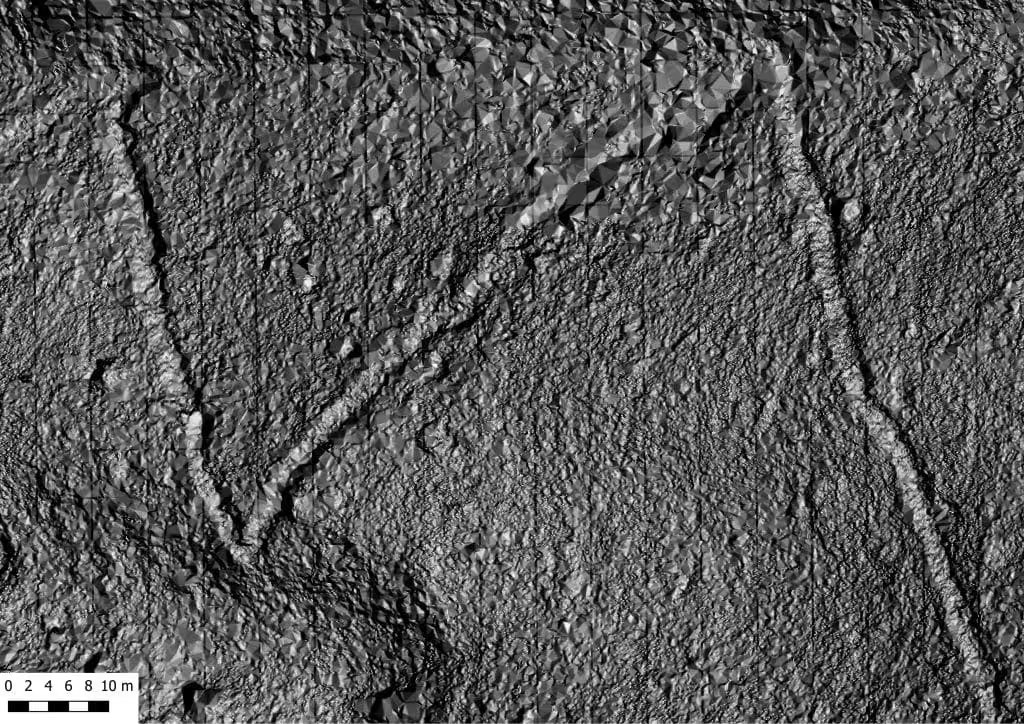
The discovery was facilitated by LiDAR (Light Detection and Ranging), a sophisticated laser-scanning technique that allows researchers to strip away forest cover digitally to reveal topographical anomalies on the ground. This method has become an essential tool for modern archaeology, enabling the discovery of lost urban centers that remain invisible to traditional aerial or ground surveys.
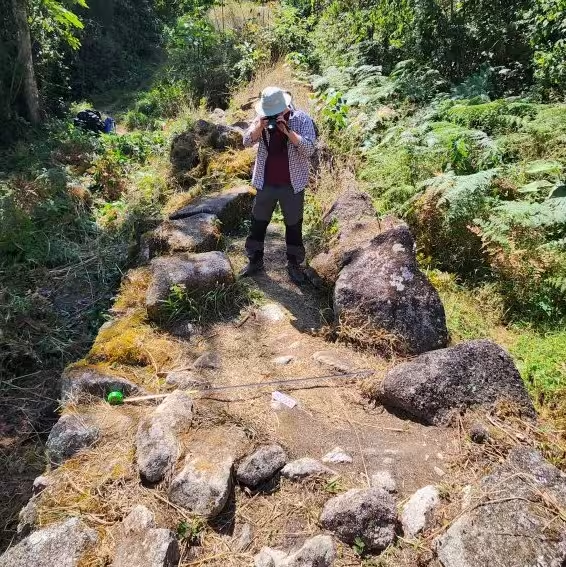
Looking ahead, the research team is preparing for on-site excavations scheduled for next year. These efforts aim to verify the chronological data and recover specific architectural insights that remote imagery cannot provide. Researchers hope to determine if the site underwent significant cultural changes during the height of the Inca Empire.
Protecting Uncharted Heritage
Engineers have identified a 0.75-mile segment of the road featuring a characteristic zigzag construction, a signature of Inca civil engineering. This design pattern strongly suggests the structures were built during the active period of the Machu Picchu citadel, approximately 600 years ago.
To prevent the looting or unauthorized disturbance of these sensitive ruins, both the University of Warsaw and Peruvian authorities have chosen to keep the exact coordinates of the site confidential. The area remains protected under the dense forest floor until systematic, controlled excavations can begin to properly document and preserve the history buried within.
This article has been fact checked for accuracy, with information verified against reputable sources. Learn more about us and our editorial process.
Last reviewed on .
Article history
- Latest version
Reference(s)
- <https://ceacusco.com/en/informacje/>.
- “A new discovery at Machu Picchu | University of Warsaw.” <https://en.uw.edu.pl/a-new-discovery-at-machu-picchu/>.
- Rayne, Elizabeth. “Scientists Found 6,000-Year-Old Human Remains. No Other People Share Their DNA..”, August 28, 2026 Popular Mechanics <https://www.popularmechanics.com/science/archaeology/a73553687/scientists-find-human-remains-no-relatives-dna/>.
Cite this page:
- Posted by Vikram Desai