Scientists Have Finally Reconstructed The Face Of A Woman Buried As A Vampire In Poland
Four centuries after her burial with a sickle and padlock, scientists have finally reconstructed the face of this suspected 17th-century “vampire.”
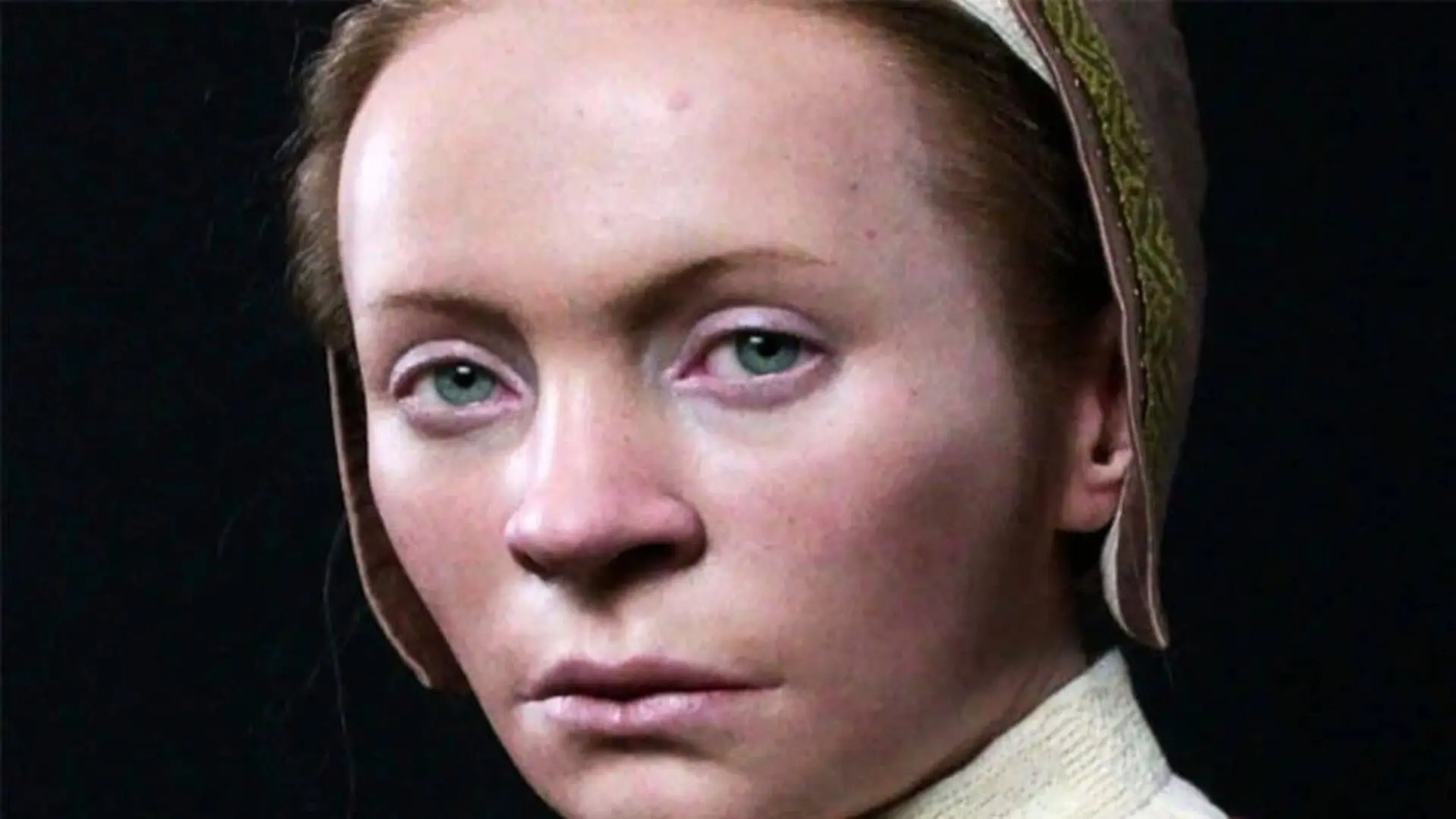
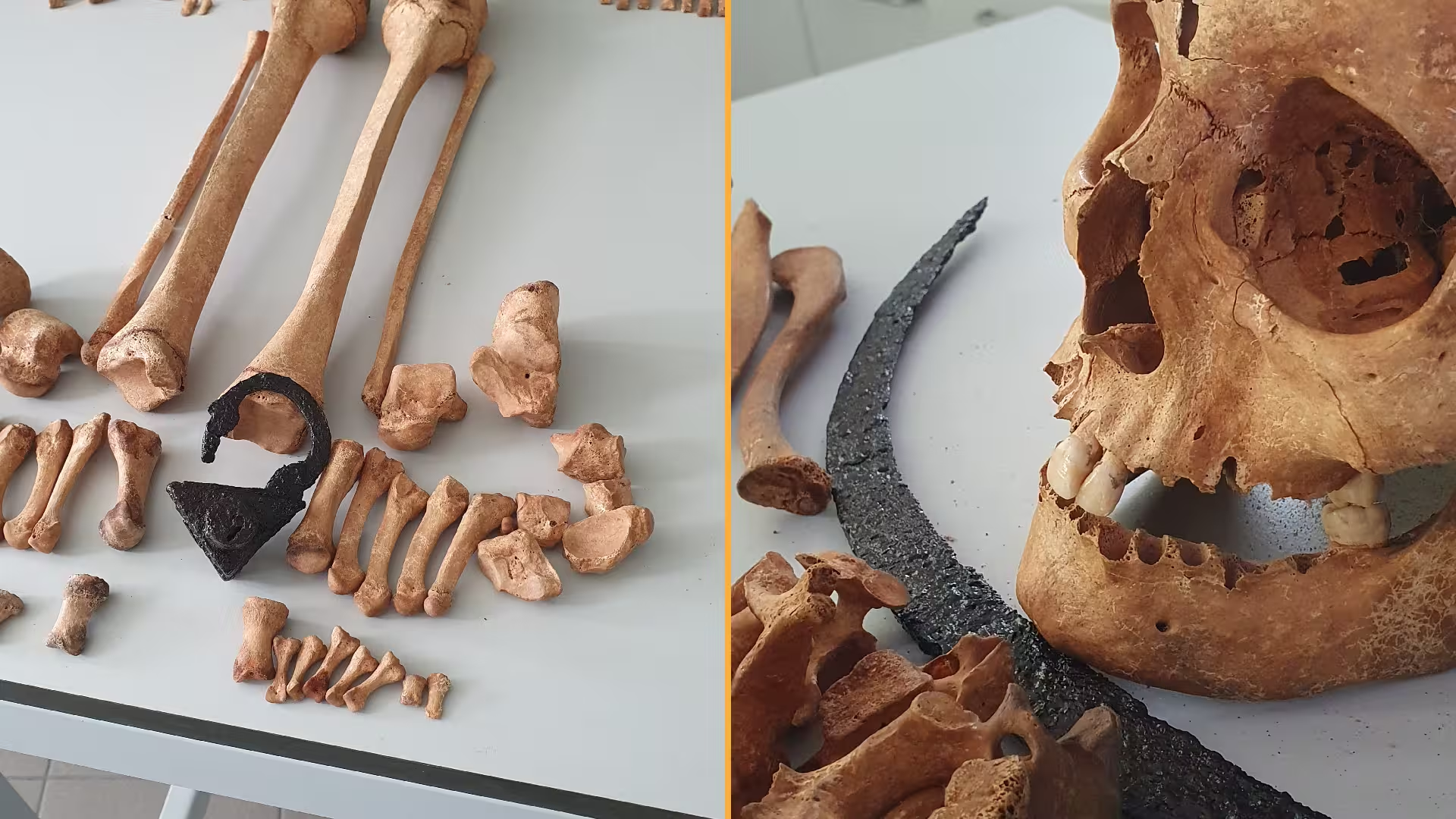
Archaeologists excavating a 17th-century cemetery in Pień, Poland, unearthed the remains of a young woman, now known as Zosia, whose burial customs reveal a dark history of superstition. Interred with a sharpened sickle pressed against her neck and a triangular padlock secured around her toe, the 18 to 20-year-old was interred using methods historically interpreted as protective measures against the undead. These ritualistic items were discovered by researchers from Nicolaus Copernicus University, who have been documenting the site since 2005.
While local media dubbed the site a “vampire grave,” lead excavator Dariusz Poliński emphasizes that the site reflects intense, localized efforts to protect the living from the deceased. Nearly four centuries after her death, Swedish forensic artist and archaeologist Oscar Nilsson has brought the young woman to life once more, completing a meticulous facial reconstruction that offers a human face to one of Poland’s most discussed archaeological discoveries.
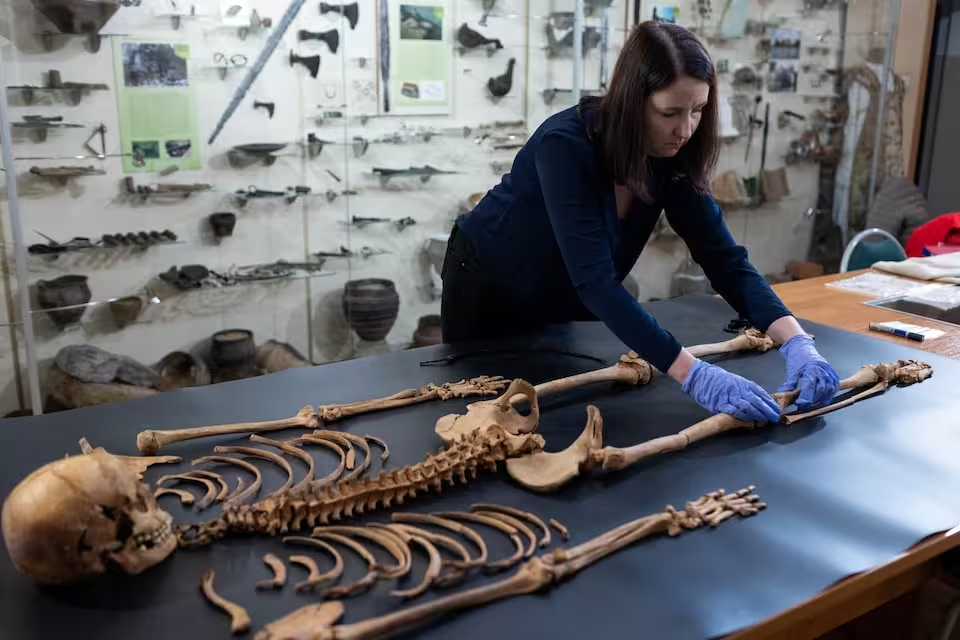
According to Reuters, Nilsson’s work serves as an attempt to “revive” the woman lost to history. The reconstruction process, which can span up to 400 hours, began with a 3D-printed model of the skull. Nilsson layered clay to mimic muscle and skin tissue, though he notes that certain features—specifically the ears and nose—remain educated estimates in the absence of soft tissue.
Decoding a Life Through Science and Art
DNA and isotope analysis indicate that Zosia likely had ancestry tracing back to southern Scandinavia, possibly Sweden. While researchers could not determine specific eye or hair pigmentation through genetics, Nilsson utilized the geographical data to portray her with blue eyes and dark blond hair. Beyond the artistic interpretation, her skeletal remains provided a roadmap of her health, revealing a life marked by significant physical challenges.
Her sternum displayed evidence of a painful cancer, and her vertebrae showed signs of a condition known as Kimmerle’s anomaly, which can trigger chronic fainting and severe migraines. Additionally, “Harris lines” found on her shin bones suggest periods of physiological stress or malnutrition during her development. Poliński suggests these ailments may have led to her social alienation and the eventual, cruel treatment of her body.

A Paradox of Status and Stigma
Despite the macabre burial measures, evidence suggests Zosia was not a social outcast by birth. Excavations revealed remnants of a high-quality silk bonnet and a gold brocade ribbon, materials that textile expert Maria Cybulska of Lodz University of Technology identifies as markers of elite status. Research assistant Anna Silwerulv of the Vasa Museum in Stockholm collaborated on the project by designing period-appropriate attire to reflect this noble standing.
The juxtaposition of wealth and “deviant” burial practices is a recurring theme at the Pień site, where roughly one-third of the burials exhibit similar anti-vampirism precautions. Further examination of Zosia’s palate revealed green staining, indicating that a copper coin or object had been placed in her mouth, a common practice in the region intended to prevent the deceased from returning. For Nilsson, the contrast between her noble accessories and the restrictive blade and padlock remains a poignant commentary on how the living perceived her physical suffering.
Reflecting on the finished portrait, which shows the woman glancing back over her shoulder, Nilsson suggests she was a young woman who likely “needed medical help” but was instead labeled as a source of danger. By recreating her likeness, the team has moved beyond the superstition of the 17th century to highlight the humanity of a life cut short.
This article has been fact checked for accuracy, with information verified against reputable sources. Learn more about us and our editorial process.
Last reviewed on .
Article history
- Latest version
Reference(s)
- “New Face of the Vampire Woman.”, October 1, 2019 <https://portal.umk.pl/en/article/new-face-of-the-vampire-woman>.
- <https://www.reuters.com/science/scientists-rebuild-face-400-year-old-polish-vampire-2024-10-30>.
- Geggel, Laura. “'Treated as something dangerous and vicious': See stunning reconstruction of 'vampire' buried with a blade over her neck.”, November 26, 2024 Live Science <https://www.livescience.com/archaeology/treated-as-something-dangerous-and-vicious-see-stunning-reconstruction-of-vampire-buried-with-a-blade-over-her-neck>.
- “Maria Cybulska, Ph.D. | Institute of Architecture of Textiles.” <https://iat.p.lodz.pl/en/maria-cybulska-en>.
- <https://www.researchgate.net/profile/Anna-Silwerulv>.
Cite this page:
- Posted by Vikram Desai