Largest Roman Bathhouse Unearthed in Netherlands Reveals Hidden City Life
Construction crews uncovered a forgotten Roman bath fragment while preparing a new neighborhood, revealing an unexpectedly rich history beneath the site.
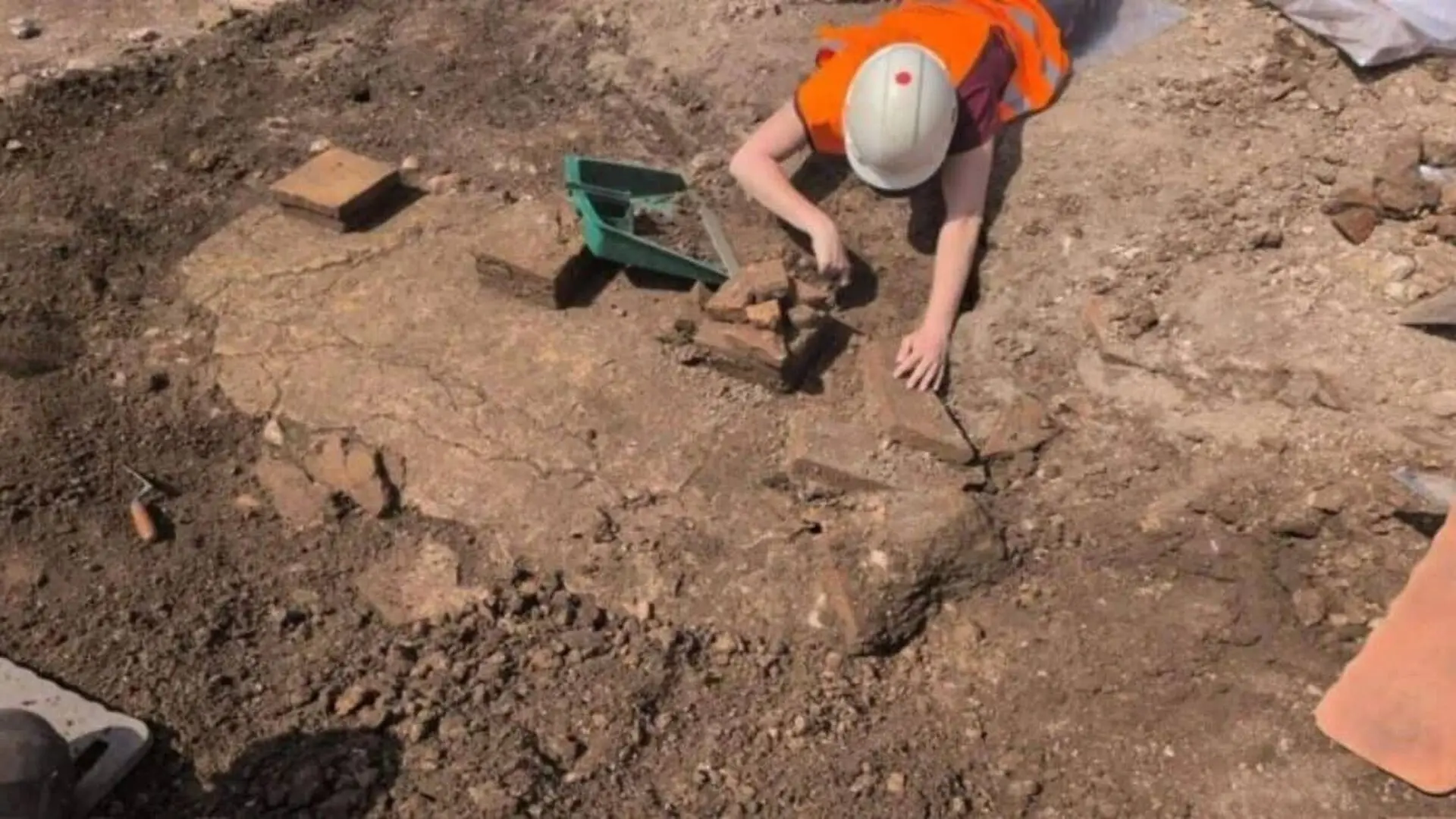
Excavations at a construction site in Nijmegen‑West have uncovered what experts now consider the largest Roman bathhouse ever identified in the Netherlands.
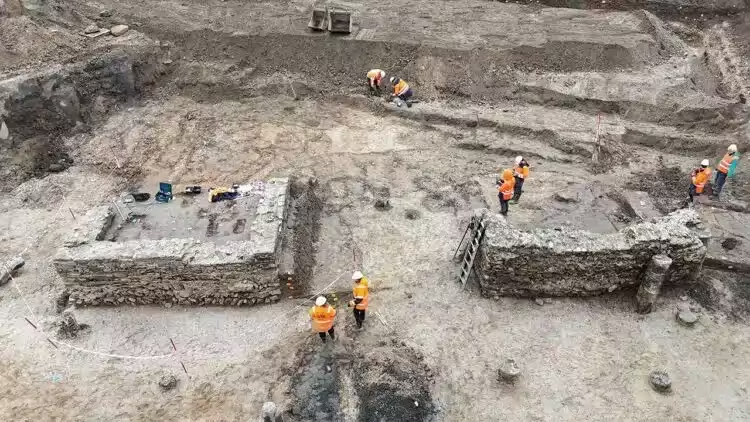
The discovery goes beyond a single building. Archaeologists have also mapped streets, residential blocks, upscale dwellings, a tower, and a variety of everyday items ranging from jewelry to coins, suggesting a thriving urban centre that played a far larger role in the Roman world than previously thought.
The multi‑institution project—co‑led by RAAP and BAAC and supported by Radboud University and the Valkhof Museum—started in September and is slated to run through July. Researcher Stephan Mols says the sheer scale of the newly revealed structures leaves little doubt about the city’s prominence during the Roman era.
Record‑Breaking Roman Bathhouse Unearthed in Nijmegen
Roman baths served as communal hubs where citizens gathered, relaxed and socialized. The newly mapped complex spans at least 4,900 square metres (approximately 52,700 sq ft), making it the biggest known Roman bathhouse in the country.
A recent Radboud University press release notes that the site is nearly twice the size of the public baths excavated at Forum Hadriani near The Hague (about 2,200 sq m) and Coriovallum in Heerlen (around 2,500 sq m). Earlier work in 1992 had exposed only a fragment of the facility; the latest digs reveal its true magnitude.
“A bathhouse was an integral part of a Roman town,” Stephan Mols explained. “During the excavations, we see only the lower parts of the buildings, often the foundations or sometimes just the spot where they once stood.”
These remnants alone indicate that the structure must once have dominated the local skyline.
Extensive Urban Complex Revealed
The excavation has mapped a full neighbourhood of Roman life. In addition to the bathhouse, researchers identified blocks of houses divided by streets, opulent townhouses and a defensive tower.
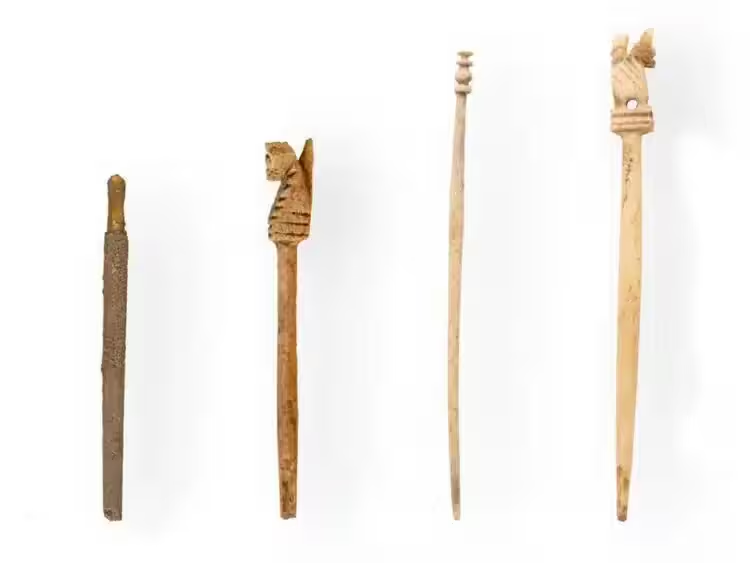
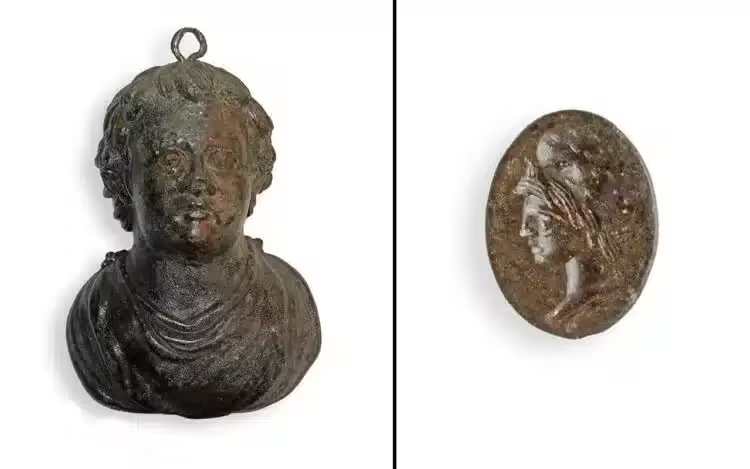
A range of smaller finds helps flesh out daily routines. The team recovered hairpins, jewelry, coins and a bronze bust of Bacchus, the Roman god of wine.
Historical records suggest the settlement received city rights from Emperor Marcus Ulpius Trajanus around 100 AD. Shortly thereafter, major public buildings—including the bathhouse—were erected in natural stone, reinforcing the view that Roman Nijmegen was a major urban centre.
“The new finds show that the Romans did not regard this city as a backwater,” Mols added.
Roman Building Techniques Shine Through
Analysis of the remains reveals substantial investment in high‑quality materials such as marble, limestone and sandstone. Much of the original superstructure disappeared after the site was quarried for reusable stone in medieval and later periods, yet key underground features survived.
Among the best‑preserved elements are drainage channels and sections of flooring linked to a hypocaust, the Roman underfloor heating system. Archaeologists uncovered a concrete floor supported by small brick pillars—core components of the heating technology.
Mols and his colleagues are now focusing on these engineering solutions. He notes that the ancient mortar—Roman concrete—exhibited self‑healing properties, a feature that could inform modern research into durable, self‑repairing materials.
“We can still learn a thing or two from that today. The same applies to the mortar—Roman concrete—which was self‑healing: If it cracked, it could repair itself. Knowledge of this is also very useful for scientific research into self‑healing materials.”
This article has been fact checked for accuracy, with information verified against reputable sources. Learn more about us and our editorial process.
Last reviewed on .
Article history
- Latest version
Reference(s)
- “Prof. S.T.A.M. Mols (Stephan) | Radboud University.” <https://www.ru.nl/en/people/mols-s>.
Cite this page:
- Posted by Vikram Desai