Romania Mega-Structure Upends 6,000-Year-Old Puzzle of Leaderless Settlements
Romanian mega-structure unearthed defies its pottery, overturns decades of survey data, and its mysterious purpose remains unknown.
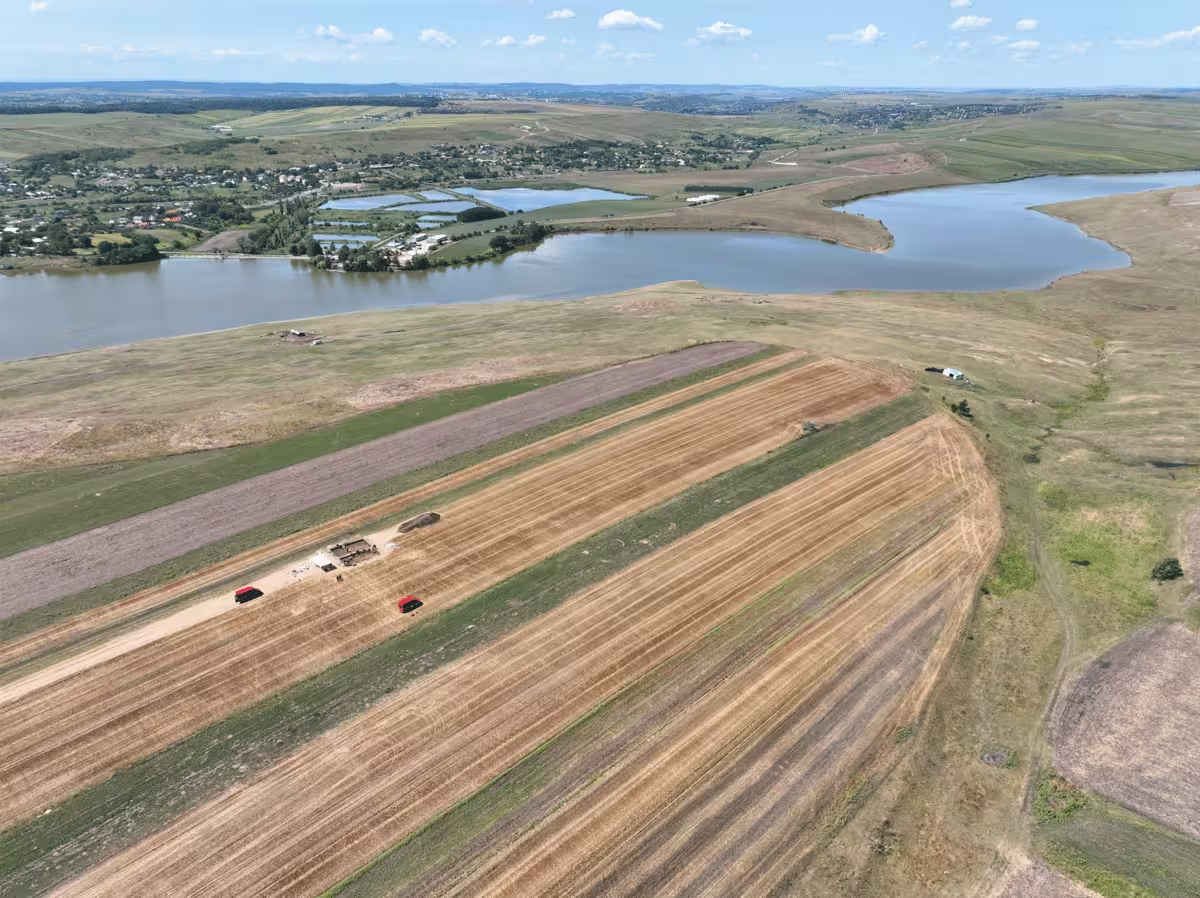
On a high plateau above the Sitna River in northeastern Romania, archaeologists uncovered a striking anomaly dating back about six thousand years. The settlement known as Stăuceni‑Holm contained roughly 45 dwellings of similar dimensions, arranged in neat rows behind ditches and palisades. Amid this uniformity stood House 5/6, a single building of roughly 350 m²—almost four times larger than its neighbours—positioned directly behind the main entrance ditch so that it dominated the view of anyone approaching.
Researchers label such outsize buildings mega‑structures, and they lie at the heart of a long‑standing mystery surrounding prehistoric Europe. A new study in PLOS One released in March by scholars from Friedrich‑Alexander‑University Erlangen‑Nürnberg and the Botoșani County Museum documents the first systematic excavation of the Stăuceni‑Holm example. The results challenge the primary survey technique that has guided investigations of similar monuments for years, a correction already drawing outside attention.
A Society Without Visible Hierarchy
The Cucuteni‑Trypillia culture flourished across present‑day Romania, Moldova and Ukraine between roughly 4800 and 3000 BC. Some of its settlements grew to impressive sizes, yet they left no clear signs of centralized authority—no palaces, no extravagantly rich graves, and no written records. For instance, the Ukrainian site of Maidanetske covered about 170 hectares and contained an estimated 2,930 houses, yet it offers little evidence of elite architecture or administrative control.
Uniform house sizes and construction methods dominate the archaeological record, making the occasional mega‑structure a conspicuous deviation. Across 19 sites, geomagnetic surveys—non‑invasive methods that map magnetic anomalies—have identified more than 140 potential mega‑structures. Prior to this work, only five of those candidates had been opened by excavation; Stăuceni‑Holm becomes the sixth.
What the Trench Work Revealed
Geomagnetic data collected in 2021 and 2022 suggested a series of interior rooms separated by walls. When the team led by Doris Mischka opened four trenches across the building’s southwest corner during 2023‑2024, the expected walls were absent. Instead, archaeologists uncovered a peripheral foundation ditch with postholes spaced every 70‑90 cm, filled with burnt clay likely sourced from earlier structures nearby.
The floor consisted of split oak logs laid beneath a layer of clay that later ignited, preserving the impressions of the timber. Two substantial postholes along the building’s central axis, sunk more than 80 cm deep, appear to have supported the roof. No ovens, storage pits, or grinding stones were present, indicating that routine cooking or food storage was not the primary function.
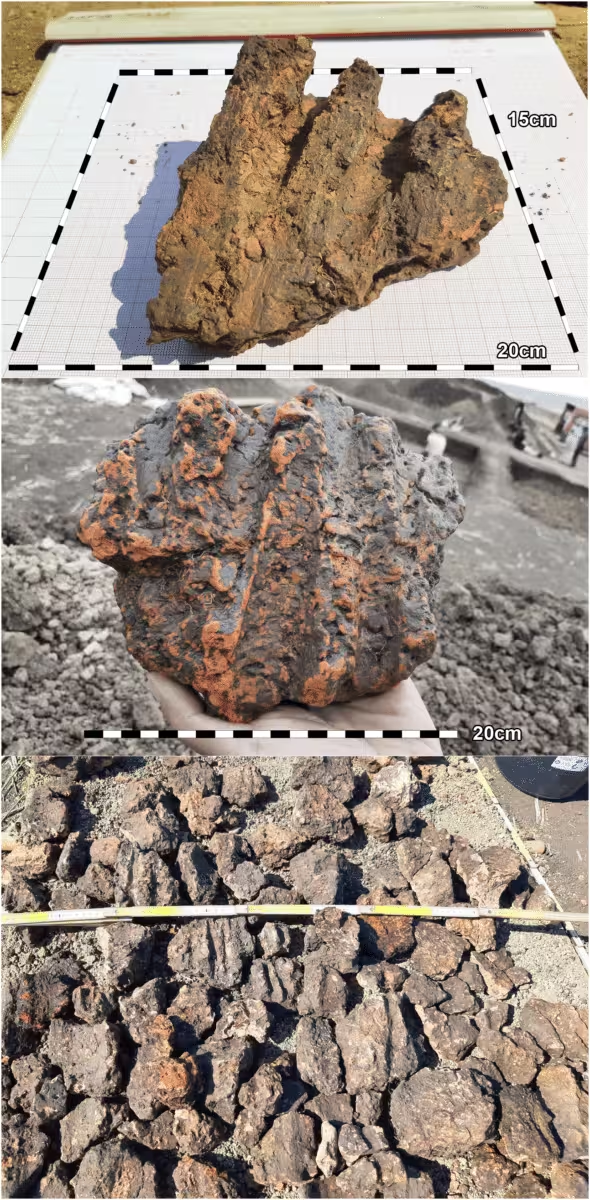
Repeated geomagnetic scans at varying depths inside the trenches demonstrated that the apparent wall‑like anomalies resulted from irregular collapse of the burnt clay as the building decayed. When that layer is removed, the magnetic signal disappears. The authors conclude that relying solely on geomagnetic data cannot reliably reconstruct interior layouts of mega‑structures, meaning that many of the 140‑plus known examples, studied only through surveys, may need reassessment.
Radiocarbon Dates Shift the Chronology
Surface pottery had initially placed the construction of House 5/6 in the Cucuteni A3 phase, dated to roughly 4350‑4050 BC. However, two radiocarbon samples taken from the floor—a fruit stone and a weed seed found between the oak logs—produced dates of 4000‑3800 BC, aligning with the later Cucuteni AB phase. Both samples derive from short‑lived plants, eliminating the common explanation that older timber was burned.
A small ceramic cup recovered from the base of one posthole, more than a meter below the surface, combined A3‑style decoration with earlier Precucuteni firing techniques, linking it to the same construction episode as the radiocarbon results.
Rather than treating their own results as an outlier, the researchers traced the discrepancy to the regional chronological framework, which has rested on only four radiocarbon measurements published before 1995—three of them from charcoal, a material prone to dating errors. The new Stăuceni samples may therefore provide the most reliable chronological anchor for Botoșani, Romania, suggesting that the Cucuteni A3 phase persisted longer in this area than previously thought. This refinement feeds directly into the broader debate over governance of Cucuteni‑Trypillia settlements.
Function Remains Unclear
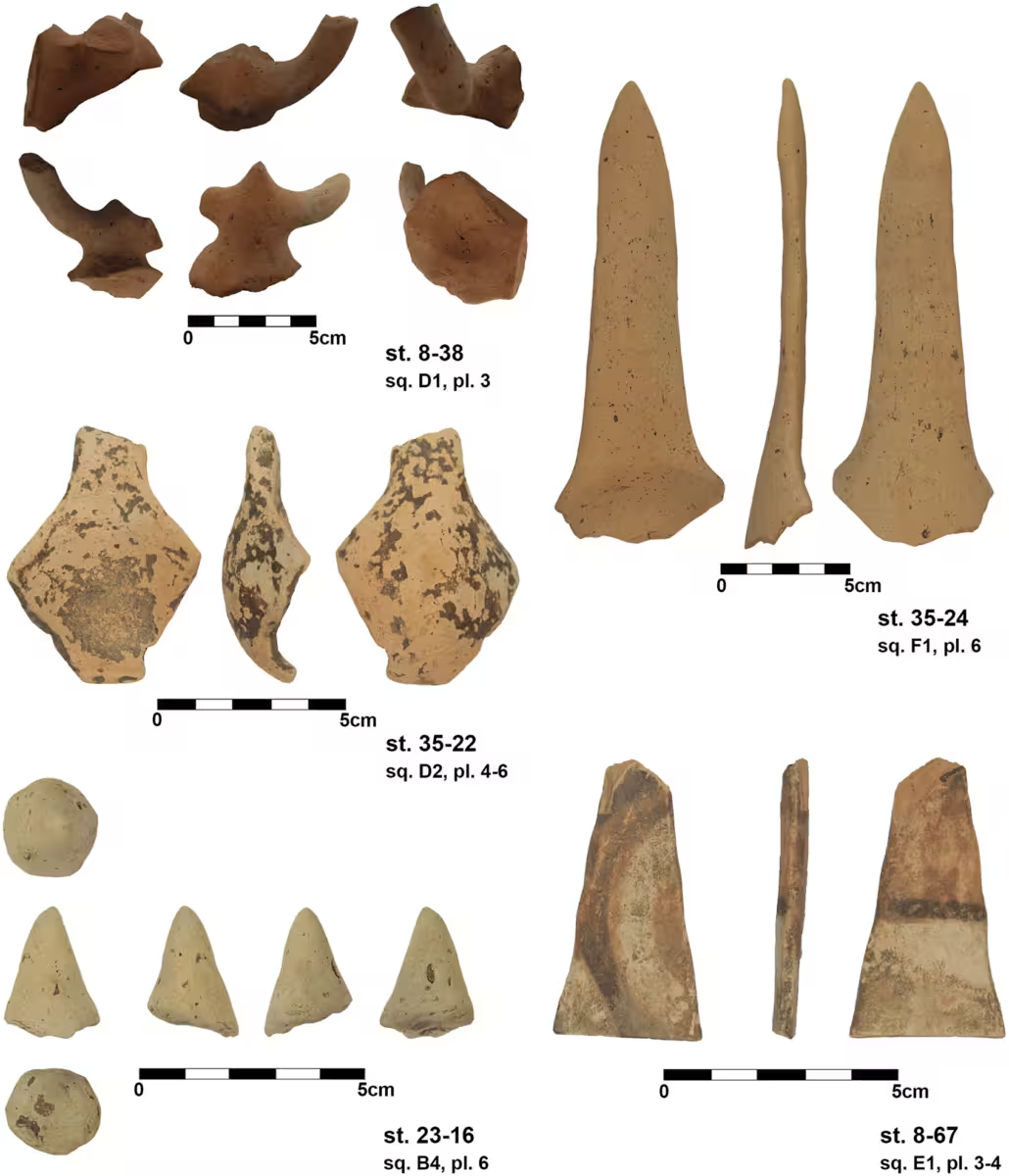
The authors caution against definitive interpretations of the building’s purpose. The lack of pits, containers, ovens, or grinding tools makes ordinary storage or cooking unlikely. Nevertheless, the excavation yielded a modest yet distinctive assemblage: pottery shards, three decorated ladles, a clay cone sometimes described as a “conical idol,” and a zoomorphic protome shaped like a bull’s head with broken horns.
Botanical remains included cereal grains, plum, elder, hawthorn, and mineralized henbane seeds—a plant later associated with medicinal and psychoactive uses. Human figurines, common at nearby sites, were absent.
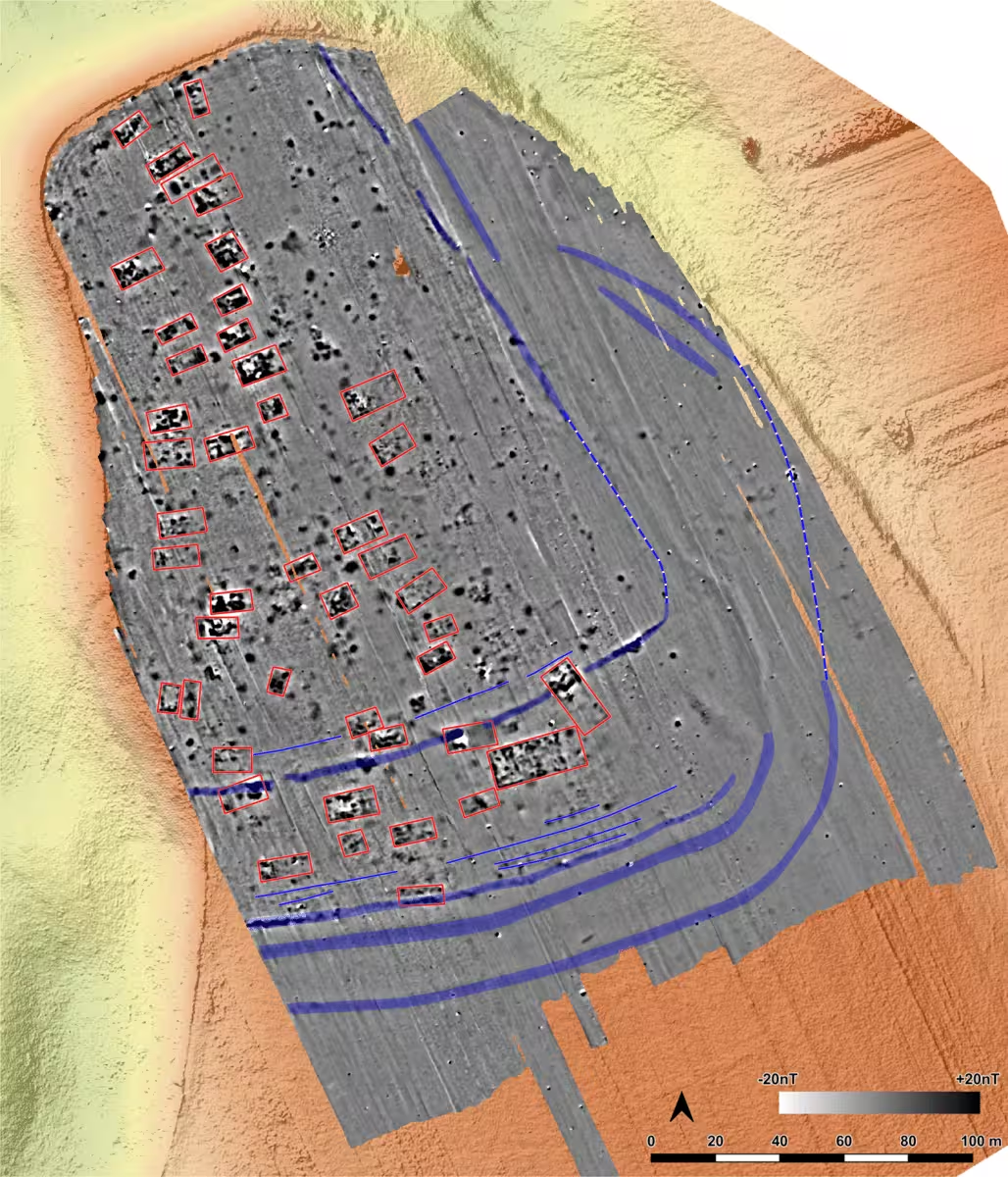
What the team can assert is the building’s strategic placement. Steep slopes restrict approaches to a single direction, and the mega‑structure faces that sole entrance, ensuring that any visitor would encounter it immediately. Whether this orientation reflects a political, ceremonial, or otherwise unknown organizational role, the positioning was clearly intentional.
The discovery attracted considerable attention earlier this year, and scholarly discussion about the role of such structures is likely to continue. Approximately three‑quarters of House 5/6 remains buried, leaving room for future excavations to reveal additional postholes, a possible oven, or perhaps nothing further.
This article has been fact checked for accuracy, with information verified against reputable sources. Learn more about us and our editorial process.
Last reviewed on .
Article history
- Latest version
Reference(s)
- Mischka, Doris. “The mega-structure at Stăuceni-‘Holm’, Botoşani county, Romania and the debate about the governing of Cucuteni-Trypillia-settlements.”, vol. 21, no. 3, pp. e0343603, doi: 10.1371/journal.pone.0343603. <https://journals.plos.org/plosone/article?id=10.1371/journal.pone.0343603>.
- Anthropology.net, “The Building That Shouldn’t Be There.”, April 15, 2026 Anthropology.net <https://www.anthropology.net/p/the-building-that-shouldnt-be-there>.
- <https://www.researchgate.net/publication/403224537_The_mega-structure_at_Stauceni-'Holm'_Botosani_county_Romania_and_the_debate_about_the_governing_of_Cucuteni-Trypillia_settlements>.
Cite this page:
- Posted by Vikram Desai