DNA from Spain’s medieval cave reveals isolated community and ancient smallpox strain
Archaeologists and geneticists reveal new findings from a hidden northern Spain cave, reshaping our view of its ancient inhabitants.
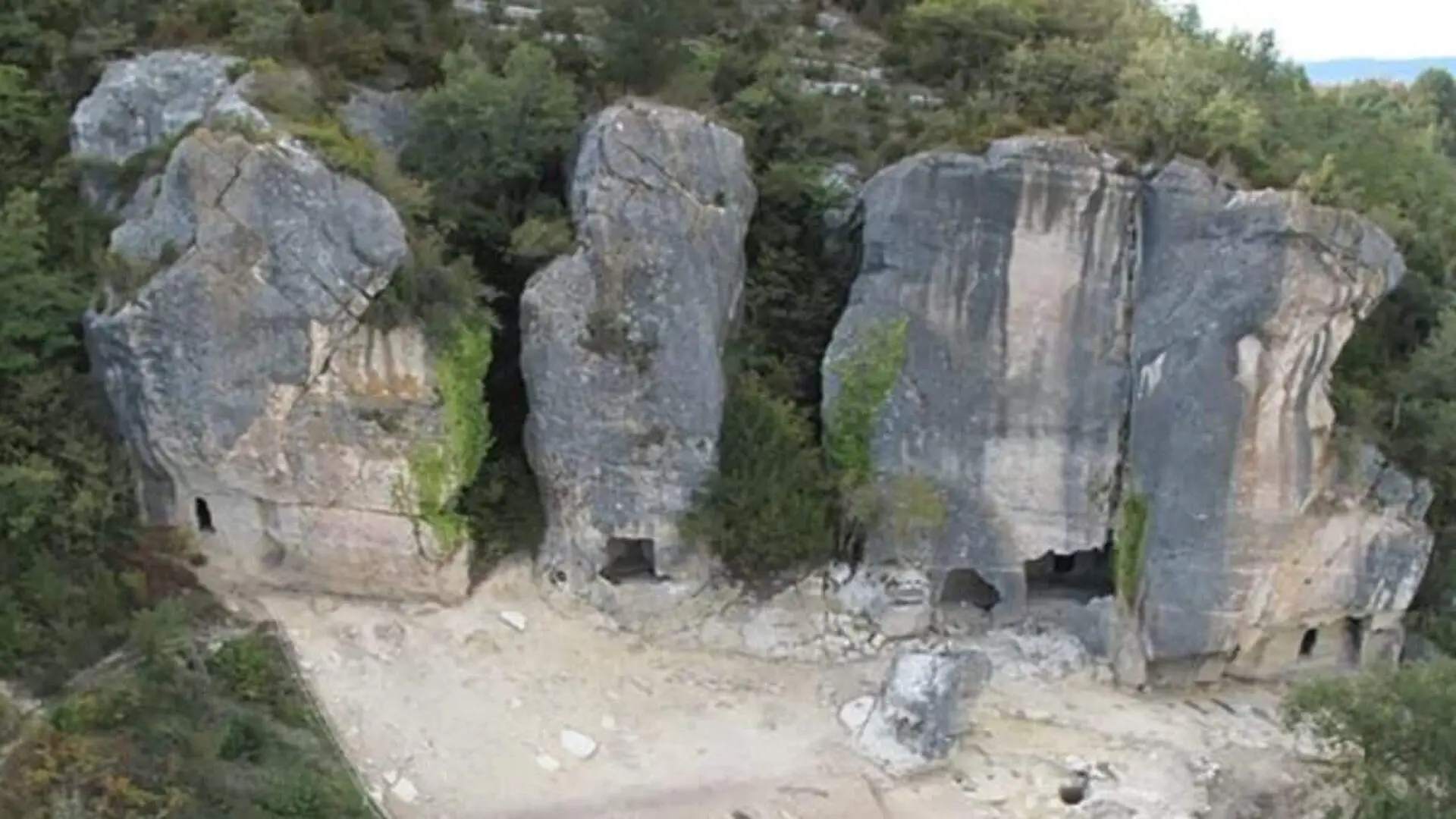
An interdisciplinary investigation of skeletal remains from the Las Gobas cave settlement in northern Spain is providing fresh insights into a little‑known medieval community that endured centuries of conflict along the Iberian frontier. By integrating ancient DNA analysis with archaeological context and historical records, the research team has uncovered evidence that revises previous ideas about the population’s ancestry, health and external contacts.
The findings, published in Science Advances, focus on individuals interred between the 6th and 11th centuries and reveal a narrative of relative seclusion, adaptation and unexpected links that emerge only through detailed molecular investigation.
Situated in today’s Burgos province close to the hamlet of Laño, Las Gobas is distinguished by its rock‑cut church and dwellings. Its burial ground, containing dozens of skeletons, has become the centerpiece of a study that aims to illuminate a millennium‑old story.
Genetic Portrait of a Self‑Contained Population
Out of 41 excavated individuals, 39 were successfully sequenced. The analysis, described in Science Advances, indicates that the community practiced endogamy, with families forming largely within the same group over many generations. Lead researcher Ricardo Rodríguez Varela of the Centre for Palaeogenetics in Stockholm explains:
“Our findings indicate that this community stayed relatively isolated for at least five centuries,” said Rodríguez Varela. Although Las Gobas is located just north of regions under Islamic rule, “we found relatively low levels of North African and Middle Eastern ancestry compared to other medieval individuals from the Iberian Peninsula, and we did not observe a significant increase in these ancestries after the Islamic conquest of Iberia.”
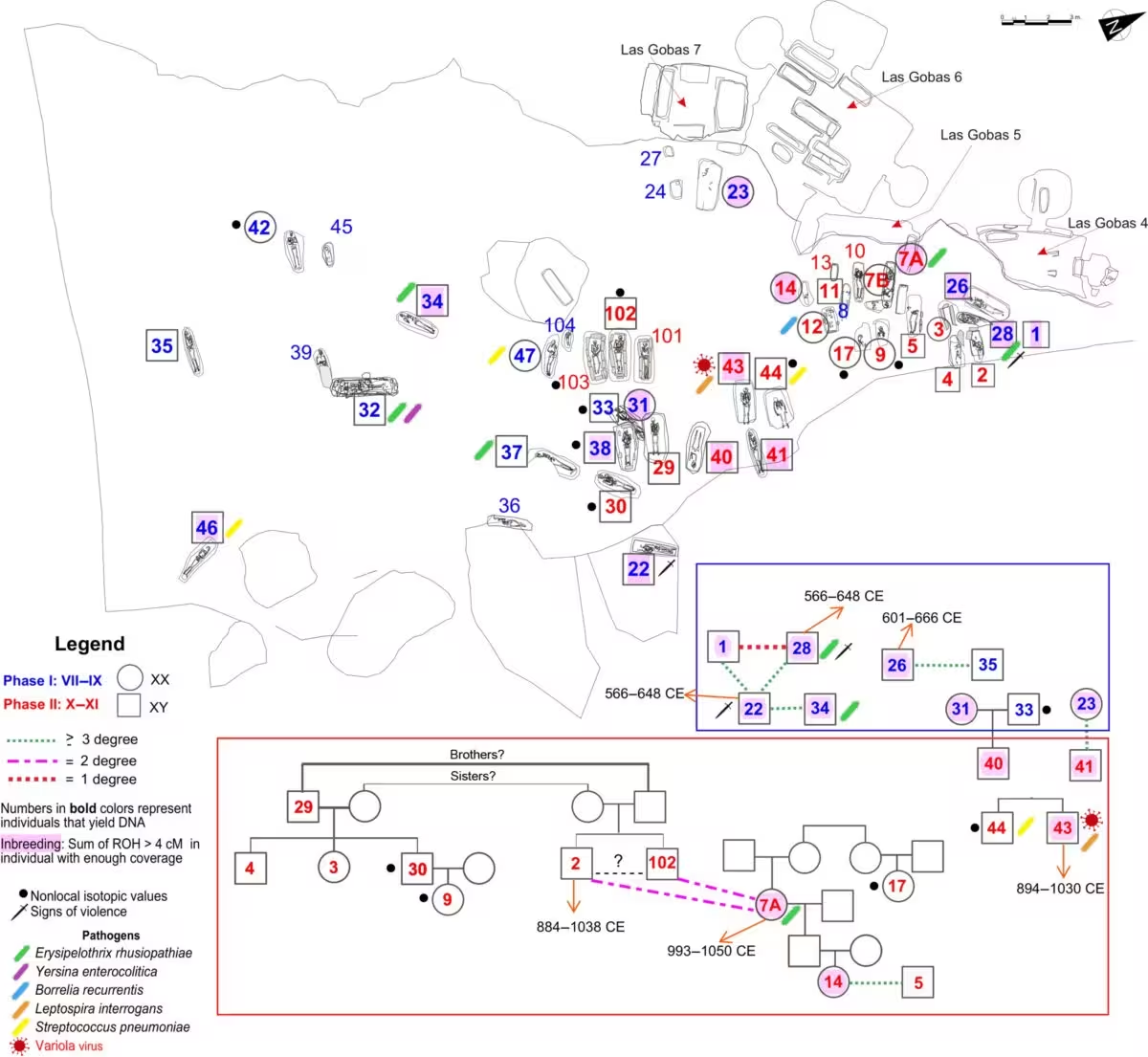
Compared with other medieval groups from the peninsula, the Las Gobas sample displays modest North African and Middle Eastern genetic components, and no marked rise in those elements after the Islamic expansion. This pattern stands out because many contemporary Iberian populations show clear signs of admixture during the same era, suggesting that Las Gobas maintained a distinct gene pool.
Pathogen Traces Reveal Daily Life and Trauma
Beyond ancestry, the researchers screened for ancient microorganisms preserved in the bones. Zoé Pochon, also of the Centre for Palaeogenetics, reports the detection of Erysipelothrix rhusiopathiae, a bacterium linked to skin infections that often arise from contact with domestic animals.
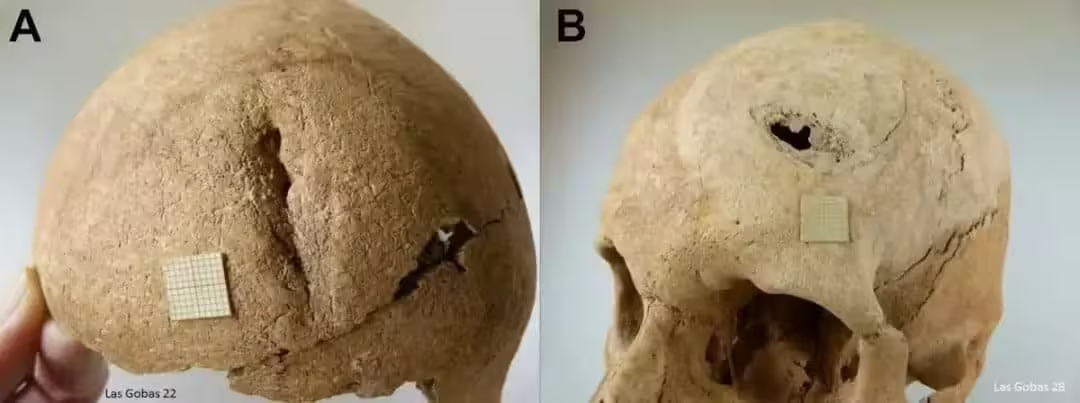
The presence of this bacterium supports the idea that animal husbandry formed a core part of the settlement’s economy. Additionally, several skeletons bear marks consistent with sword strikes, indicating episodes of conflict within the community. The remains also included a later burial that tested positive for the variola virus, the agent of smallpox.
A Medieval Smallpox Strain with Northern European Links
The smallpox DNA closely matches strains previously identified in Scandinavia, Germany and Russia, implying that the disease circulated widely across Europe during the early medieval period. This discovery challenges earlier theories that the virus entered Iberia primarily via Islamic routes.
“It is amazing how much information we were able to gather on this group of people through our archaeogenetic investigation,” said Anders Götherström, senior author of the paper. “By the 10th century, smallpox seems to have affected Las Gobas, likely spreading through Europe rather than via Islamic routes, as was previously theorized for how smallpox entered Iberia.”
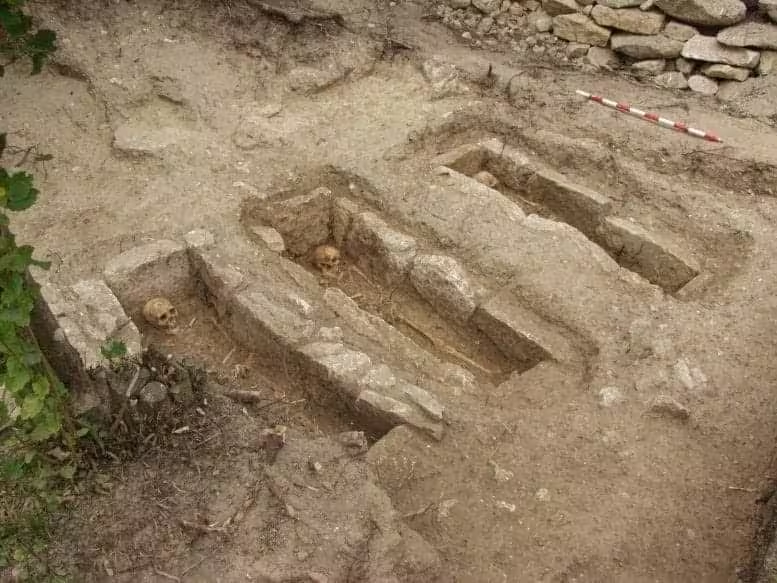
Together, the genetic, pathogen and trauma data paint a picture of a community that remained largely isolated while confronting disease, violence and the sweeping political changes of medieval Europe.
This article has been fact checked for accuracy, with information verified against reputable sources. Learn more about us and our editorial process.
Last reviewed on .
Article history
- Latest version
Reference(s)
- Rodríguez-Varela, Ricardo., et al. “Five centuries of consanguinity, isolation, health, and conflict in Las Gobas: A Northern Medieval Iberian necropolis.” Science Advances, vol. 10, no. 35, August 30, 2024 American Association for the Advancement of Science (AAAS), doi: 10.1126/sciadv.adp8625. <https://www.science.org/doi/10.1126/sciadv.adp8625>.
- “Ricardo Rodriguez Varela – Centre for Palaeogenetics.” <https://palaeogenetics.com/people/ricardo-rodriguez-varela/>.
- “Zoé Pochon – Centre for Palaeogenetics.” <https://palaeogenetics.com/zp/>.
- “Prof Anders Götherström – Centre for Palaeogenetics.” <https://palaeogenetics.com/people/prof-anders-gotherstrom/>.
Cite this page:
- Posted by Vikram Desai