NASA-Backed Laser Drone Set to Explore Moon’s Uncharted Underground Lava Tubes
NASA backs a laser-powered drone to probe hidden lunar caves, promising new insights into the Moon’s interior.
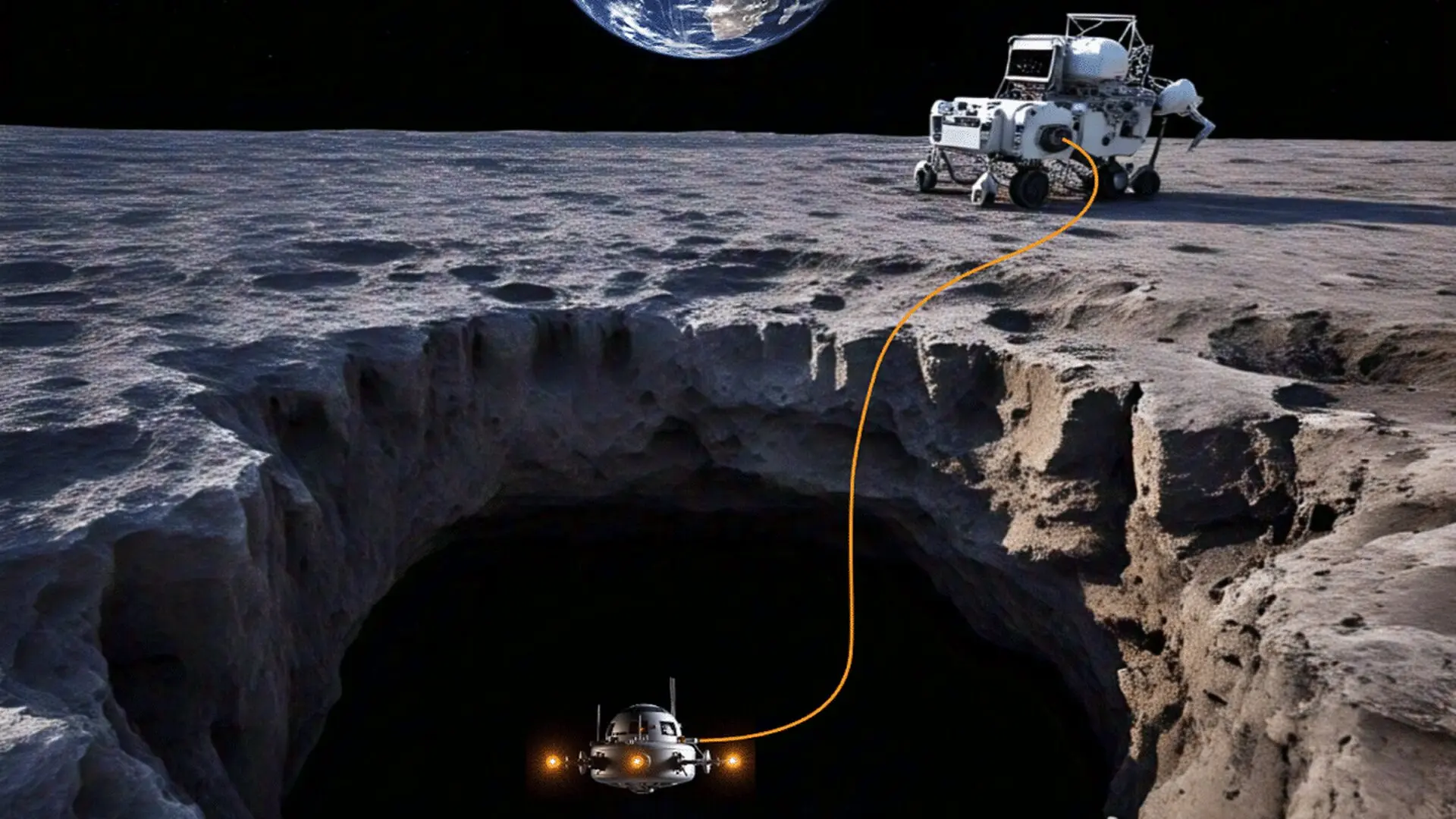
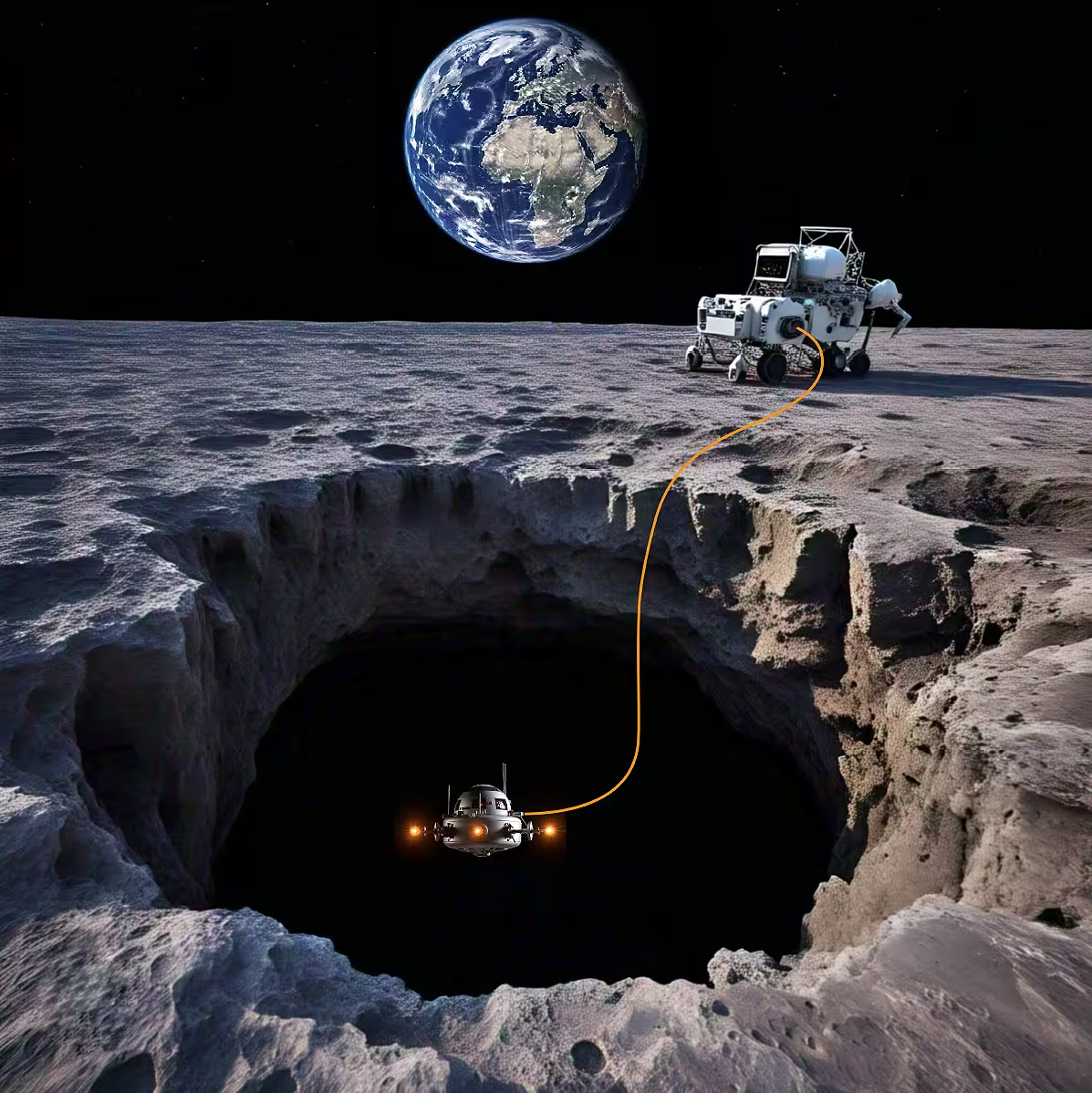
NASA is backing an innovative proposal that envisions a laser‑driven drone navigating the Moon’s extensive underground lava channels, opening a fresh avenue for probing the hidden subsurface environment.
The idea, originated by researcher Elor, calls for an autonomous aerial vehicle capable of entering pitch‑dark, unmapped lunar caverns where conventional rovers would be ineffective.
Operating inside these subterranean passages would demand a suite of cutting‑edge technologies: self‑reliant navigation, high‑resolution sensors, compact power generation, and systems that can function without any external lighting or pre‑existing maps.
Reimagining Access to Lunar Lava Tubes
The Moon hosts massive hollow tunnels formed billions of years ago by ancient volcanic flows. Researchers see these lava tubes as potential windows into lunar geology and as possible shelters for future human outposts.
A drone designed for such environments could thread through tight passages and relay data from regions that remain out of reach for surface‑based missions. Its laser‑based system would support both navigation and scientific observation where conventional cameras and instruments struggle.
Key engineering hurdles include sourcing power without sunlight, ensuring ultra‑efficient energy use, and maintaining a non‑contaminating footprint. “It will be energetically demanding (due to complete darkness),” Elor noted, adding that the vehicle must operate without GPS in a “completely un‑mapped” three‑dimensional space and remain “non‑polluting so as not to affect sensor measurements of the pristine environment,” as well.
Given the communication lag and physical barriers within lunar caves, the drone would need to make real‑time decisions autonomously, marking a shift toward self‑sufficient robotic explorers.
NASA’s Strategic Push for Next‑Generation Tech
The proposal aligns with NASA’s broader agenda to fund high‑risk, high‑reward technologies that could underpin long‑duration missions on the Moon and eventually on Mars.
Greg Stover, director of NASA’s Advanced Research and Technology division, emphasized the need for transformative breakthroughs as humanity prepares for more ambitious voyages.
“NASA has outlined an ambitious vision for the future of space exploration, we’re returning the Moon to stay, advancing to Mars, and pushing to deepen our understanding of space,” Stover said.
“Achieving that will require more than incremental technological advancement,” Stover added. “It means we need great leaps. These awards are the kinds of innovation the world needs NASA to help foster.”
By targeting an unexplored domain, the lunar cave drone concept exemplifies a move away from incremental upgrades toward a brand‑new class of autonomous explorers capable of reaching places current hardware cannot.
Beyond the Moon: Prospects for Subsurface Exploration on Mars
Elor’s team envisions that the same technology could later be adapted for Martian underground habitats, where protected caverns may preserve geological records shielded from harsh surface conditions.
The envisioned platform would fuse autonomous flight, sophisticated mapping, compact power modules, and low‑impact instruments to gather high‑resolution data while preserving the pristine nature of the target environment.
“While other lunar lava tube mission proposals exist, none have the unique combinations of enabling elements of our concept,” Elor explained. “Together they could dramatically improve the scope, duration, and quality of science and exploration for subsurface lunar (and eventually Martian) missions.”
If translated into a flight‑ready system, the drone could illuminate the hidden architecture of planetary interiors and help assess the suitability of underground sites for future human activity.
Although still at a conceptual stage, the proposal underscores NASA’s ongoing quest for breakthrough technologies that may redefine how robotic explorers tackle the most inaccessible corners of the solar system.
This article has been fact checked for accuracy, with information verified against reputable sources. Learn more about us and our editorial process.
Last reviewed on .
Article history
- Latest version
Cite this page:
- Posted by Vikram Desai