Turkish Cave Reveals Neanderthals and Modern Humans Shared Tools and Shell Ornaments
A Turkish cave reveals new evidence that blurs the line between Neanderthals and modern humans, challenging long‑standing debates.

Excavations in a Turkish limestone shelter have uncovered evidence that early modern humans may have carried forward many of the same habits practiced by Neanderthals, from stone‑tool production to decorative shell use.
Genetic studies have already confirmed that Neanderthals and Homo sapiens interbred in the Upper Palaeolithic, yet the degree to which they shared daily routines, technology, or symbolic expression remains a topic of active debate.
Comparative work at sites such as Mandrin Cave in France, where distinct occupational layers separate the two groups, and Tinshemet Cave in Israel, where overlapping technological traits suggest possible ritual parallels, highlights the diversity of regional interactions.
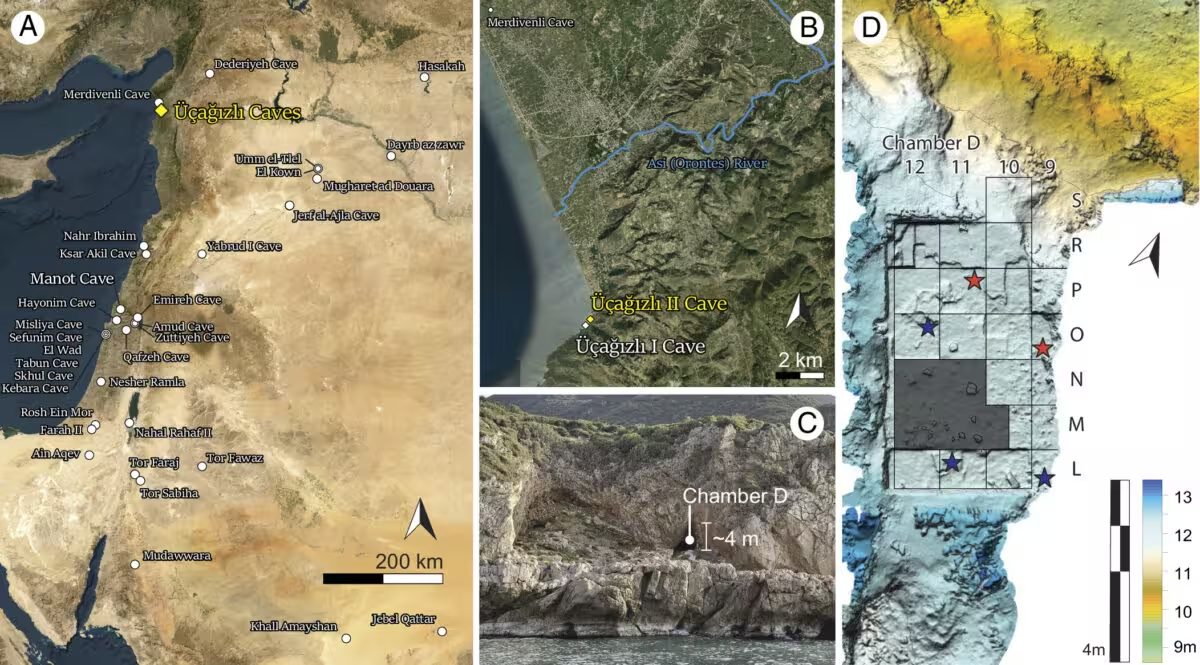
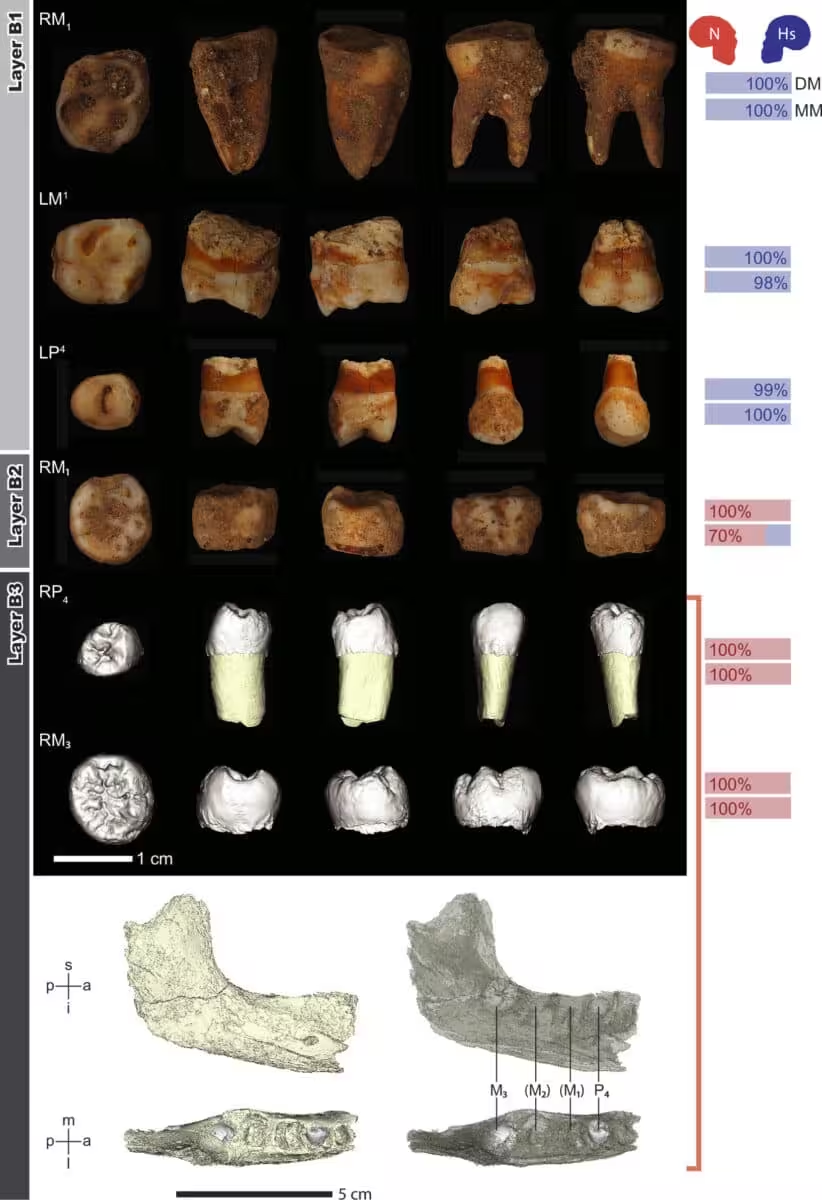
The new investigation, focusing on Üçağızlı II Cave, reports a stratigraphic sequence that places Neanderthal activity between 77,000 and 59,000 years ago and modern human presence from roughly 59,000 to 47,000 years ago. The findings appear in Proceedings of the National Academy of Sciences.
Toolkits and Hunting Techniques Show Remarkable Overlap
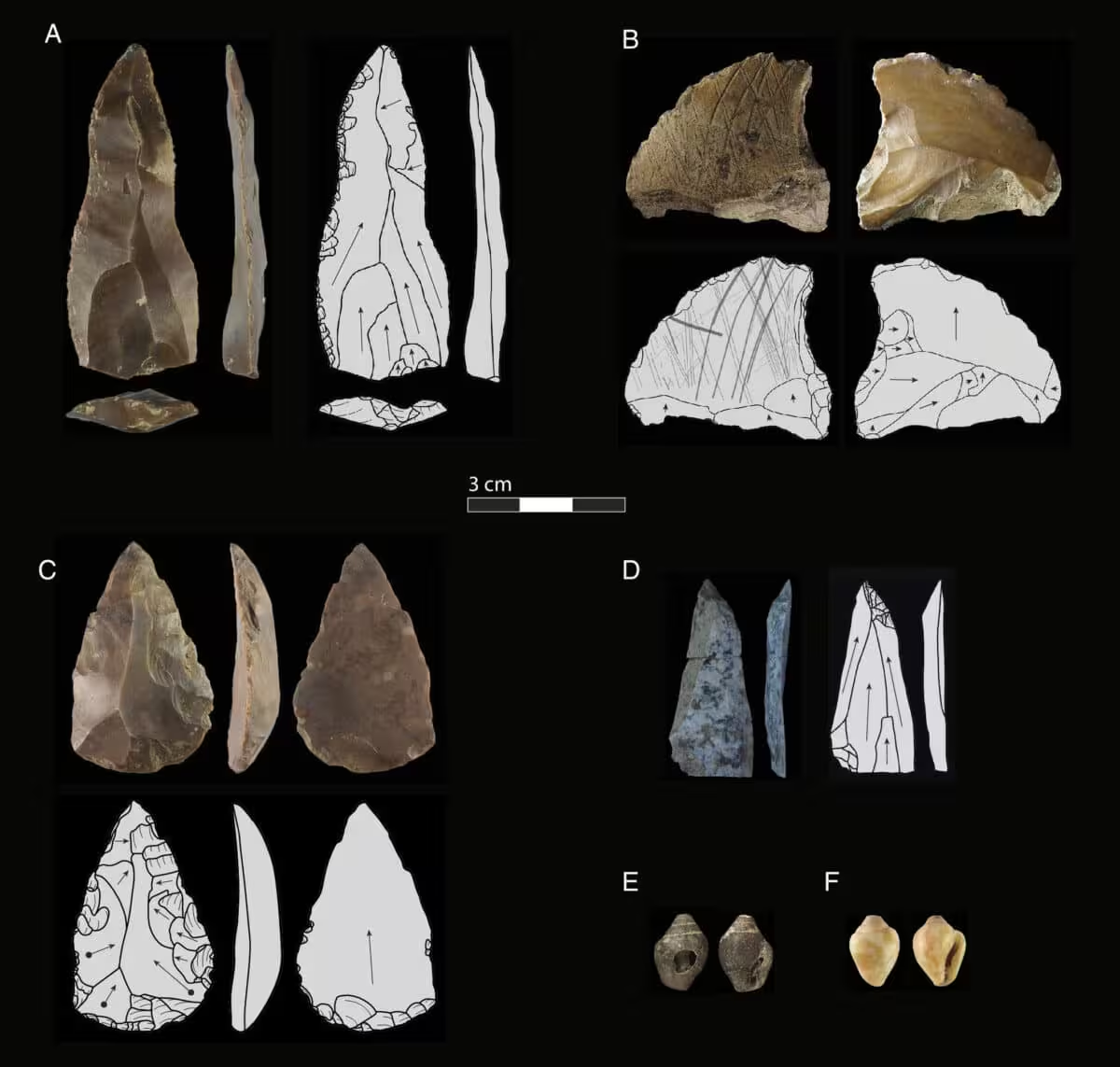
Researchers catalogued an extensive assemblage of 19,252 stone implements alongside 24,236 animal bones, offering a detailed picture of subsistence strategies within the cave. The distribution of these artifacts across both Neanderthal and Homo sapiens layers is strikingly similar, suggesting that later occupants adopted the same hunting, gathering, and knapping methods as their predecessors. The authors note that this level of continuity was unexpected.
“Such a finding was indeed very surprising, simply because we did not expect this level of continuity [between Neanderthals and Homo sapiens],” study author Professor İsmail Baykara from Gaziantep University told to IFLScience.
While the overall lifestyles of the two groups were not identical, the persistence of certain practical behaviors across a 30,000‑year span underscores a cultural resilience that survived the arrival of a new hominin species.
Shells Point to a Shared Symbolic Tradition
Among the most compelling artifacts are 59 marine shells, including 29 specimens of Columbella rustica. These shells are unlikely to have been harvested for food; instead, researchers interpret them as decorative items or objects imbued with symbolic value. The presence of identical shell types in both Neanderthal and Homo sapiens layers suggests a continuity of ornamental practice.
The authors argue that this pattern reflects “shared behaviors between Neanderthals and modern humans that extended beyond subsistence to include nonutilitarian behaviors,” as stated in the paper.
The findings show “shared behaviors between Neanderthals and modern humans that extended beyond subsistence to include nonutilitarian behaviors,” the study authors wrote.
Levantine Crossroads of Cultural Transmission
Üçağızlı II Cave sits within the Levant, a region long recognized as a contact zone where Neanderthals and Homo sapiens likely met and interbred. The new data imply that beyond genetic exchange, the two groups may have also shared learned practices, reinforcing the idea of a bidirectional flow of cultural information.
“We hypothesize that they exchanged culture,” Baykara said, indicating that interactions between the two populations may have shaped their behaviors over time.
The authors caution that many aspects of Neanderthal and modern human cognition remain unresolved. Future research targeting brain morphology and functional capacities will be essential to delineate where the two lineages converged or diverged in thought and behavior.
“Future studies will be necessary to determine how cognitive capacities – which are fundamentally a matter of brain structure and function – differed or aligned between Neanderthals and modern humans,” he added.
This article has been fact checked for accuracy, with information verified against reputable sources. Learn more about us and our editorial process.
Last reviewed on .
Article history
- Latest version
Cite this page:
- Posted by Hassan Raza