Million-Year-Old New Zealand Cave Uncovers Lost Bird Community and Kākāpō Ancestor
Million-year-old ash layers lock fossils that reveal a lost North Island ecosystem wiped out long before humans arrived
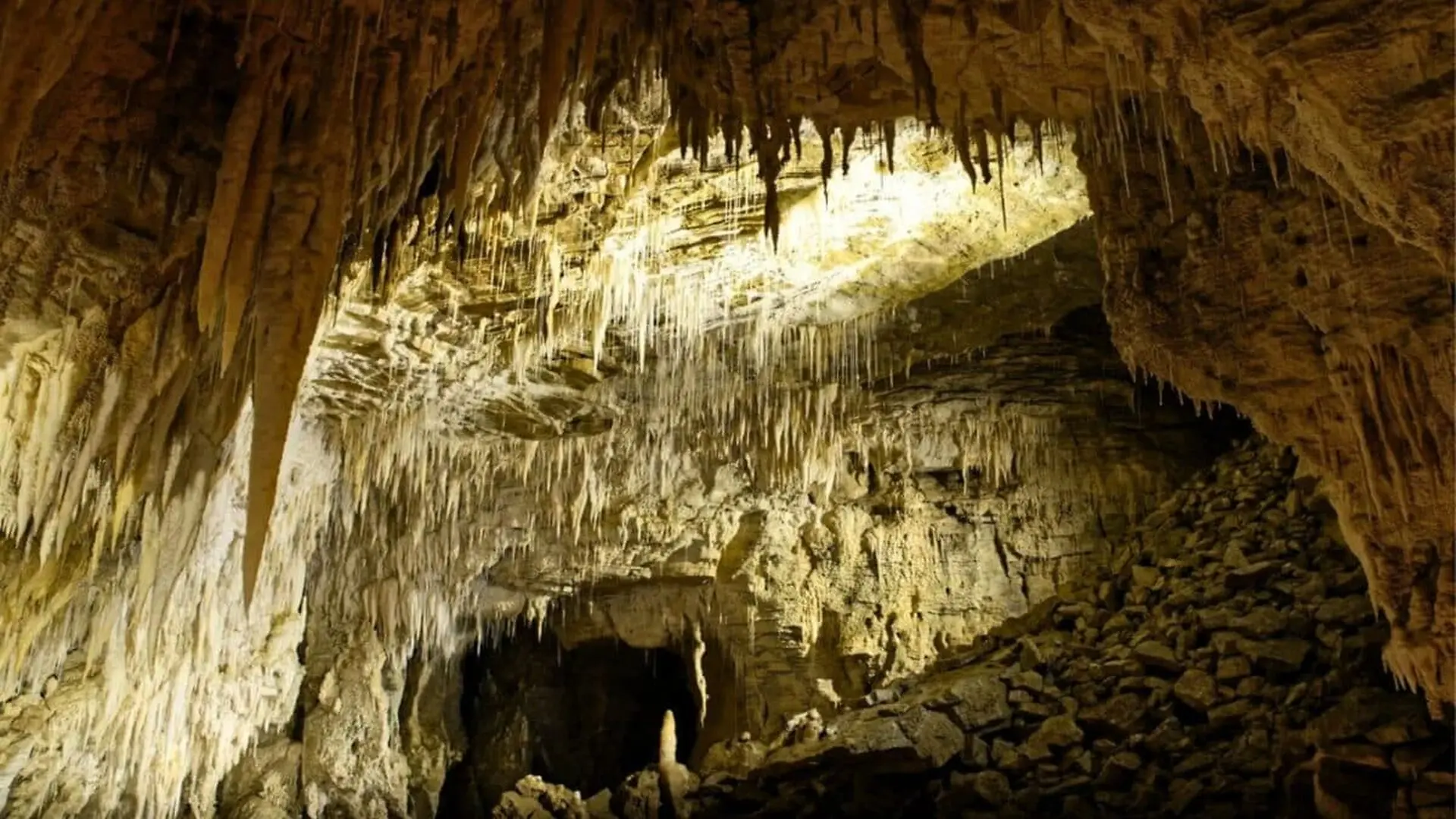
A limestone cave close to Waitomo on New Zealand’s North Island has produced a remarkable set of fossil bones that were trapped between two layers of volcanic ash, one deposited 1.55 million years ago and another from a larger eruption about 1 million years ago. The sealed sediment offers an unprecedented glimpse of birds and frogs that lived long before humans reached the archipelago.
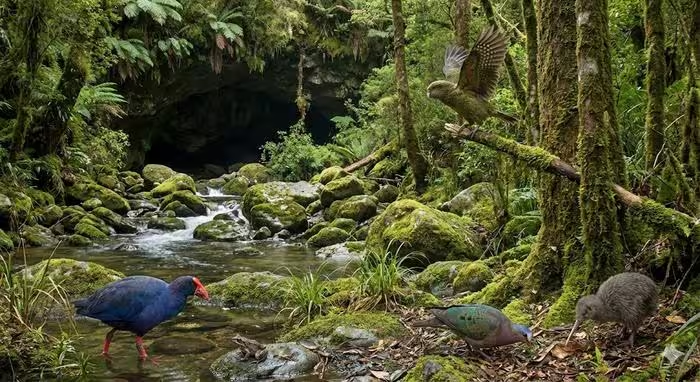
Researchers from Canterbury Museum describe the find as the first extensive collection of million‑year‑old fossils from Aotearoa, documenting skeletal remains of twelve extinct bird species and four frog species. Among the specimens is a primitive relative of the modern kākāpō, the iconic flightless parrot that still survives today.
Volcanic Ash Layers Pinpoint Cave Age
The significance of the Waitomo specimens lies in their placement within a sedimentary package sandwiched between two datable ash deposits. The older layer originates from an eruption 1.55 million years ago, while the younger layer records a massive volcanic event roughly one million years in the past, a burst that deposited metres of ash across much of the North Island. This chronological framework pushes the cave’s fossil record further back than most New Zealand cave discoveries.
Because the older ash marks the earliest known cave formation on the North Island, the site also serves as a natural archive of a period that has been difficult to reconstruct. Dr Paul Scofield, senior curator of natural history at Canterbury Museum, notes that earlier work at St Bathans in Central Otago illuminated life between 20 million and 16 million years ago, but the interval from then to about one million years ago remains sparsely documented.
Discovery of a Prehistoric Kakapo Ancestor
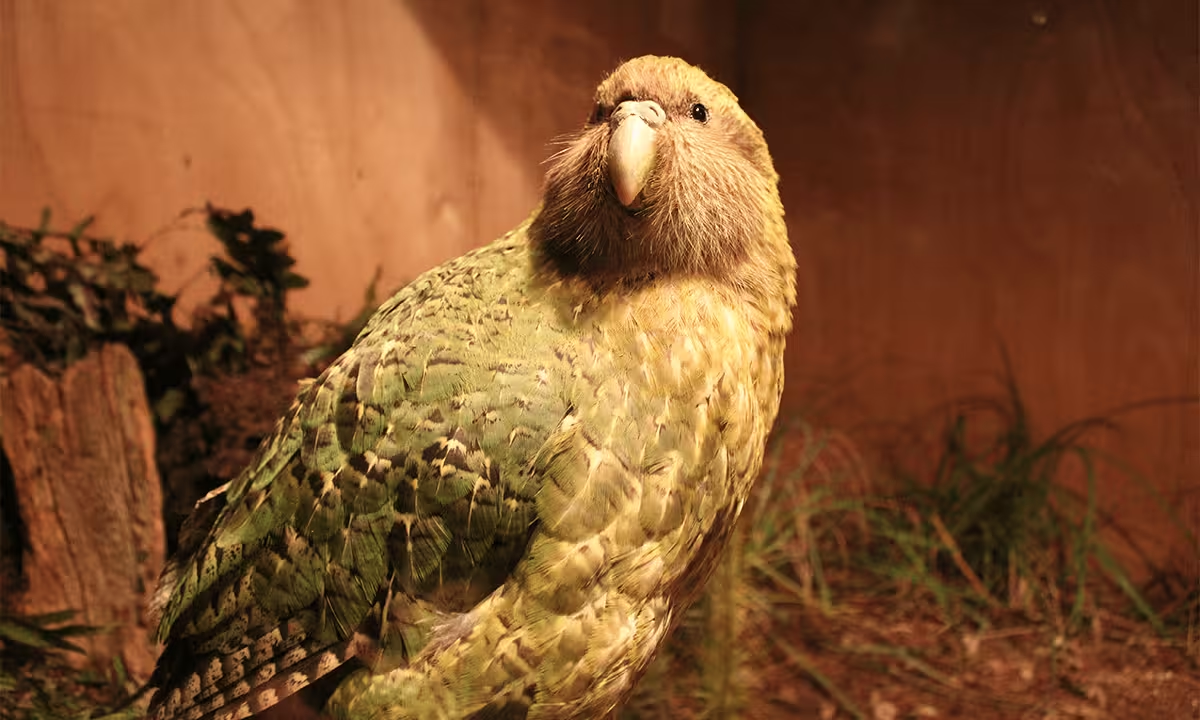
Among the most striking discoveries is a newly named parrot, Strigops insulaborealis, identified in a recent study (link) as an ancestral form of the kākāpō. The fossil material suggests this ancient bird possessed comparatively weaker legs than its modern descendant, implying a reduced climbing ability. While the authors speculate that the species might have retained some capacity for flight, they stop short of confirming it, highlighting the need for further investigation.
The cave also yielded the remains of an extinct ancestor of the takahē, as well as a pigeon species closely allied with Australian bronzewings. These finds demonstrate that the avian assemblage a million years ago differed markedly from the bird communities documented in more recent New Zealand deposits.
Evidence of Pre‑Human Avian Extinctions
Analyses indicate that between 33 percent and 50 percent of the species represented in the cave vanished during the million‑year interval preceding human settlement, which began roughly 750 years ago. The authors attribute this turnover to natural drivers such as rapid climate fluctuations and the aftermath of large‑scale volcanic eruptions.
While Polynesian arrival later imposed severe pressures on native fauna, the Waitomo record shows that significant ecological reshaping had already taken place. Trevor Worthy, speaking for Flinders University, described the assemblage as evidence of a previously unrecognised bird fauna, effectively a “lost bird community” that disappeared before any human could have observed it (source).
Habitat Shifts Drove Evolutionary Change
The researchers link the fossil pattern to alterations in forest and shrubland habitats, arguing that such environmental changes forced a reset of bird populations. This reset, they suggest, set the stage for later bursts of evolutionary diversification among the islands’ avian and amphibian lineages.
By providing a baseline from a previously missing interval, the Waitomo cave helps scientists quantify how New Zealand’s wildlife transformed over hundreds of thousands of years. The study, titled “The first Early Pleistocene (ca 1 Ma) fossil terrestrial vertebrate fauna from a cave in New Zealand reveals substantial avifaunal turnover in the last million years,” underscores the value of deep‑time perspectives in understanding island biogeography.
This article has been fact checked for accuracy, with information verified against reputable sources. Learn more about us and our editorial process.
Last reviewed on .
Article history
- Latest version
Reference(s)
- Worthy, Trevor H.., et al. “The first Early Pleistocene ( ca 1 Ma) fossil terrestrial vertebrate fauna from a cave in New Zealand reveals substantial avifaunal turnover in the last million years.” Alcheringa: An Australasian Journal of Palaeontology, vol. 50, no. 1, January 26, 2026, pp. 480-519. Informa UK Limited, doi: 10.1080/03115518.2025.2605684. <https://www.tandfonline.com/doi/full/10.1080/03115518.2025.2605684>.
- <https://www.eurekalert.org/news-releases/1114510>.
Cite this page:
- Posted by Hassan Raza