Apophis 2029 Flyby: Asteroid Passes Inside Satellite Ring, Visible to Billions
massive asteroid will sweep closer than many satellites, creating a rare sky event
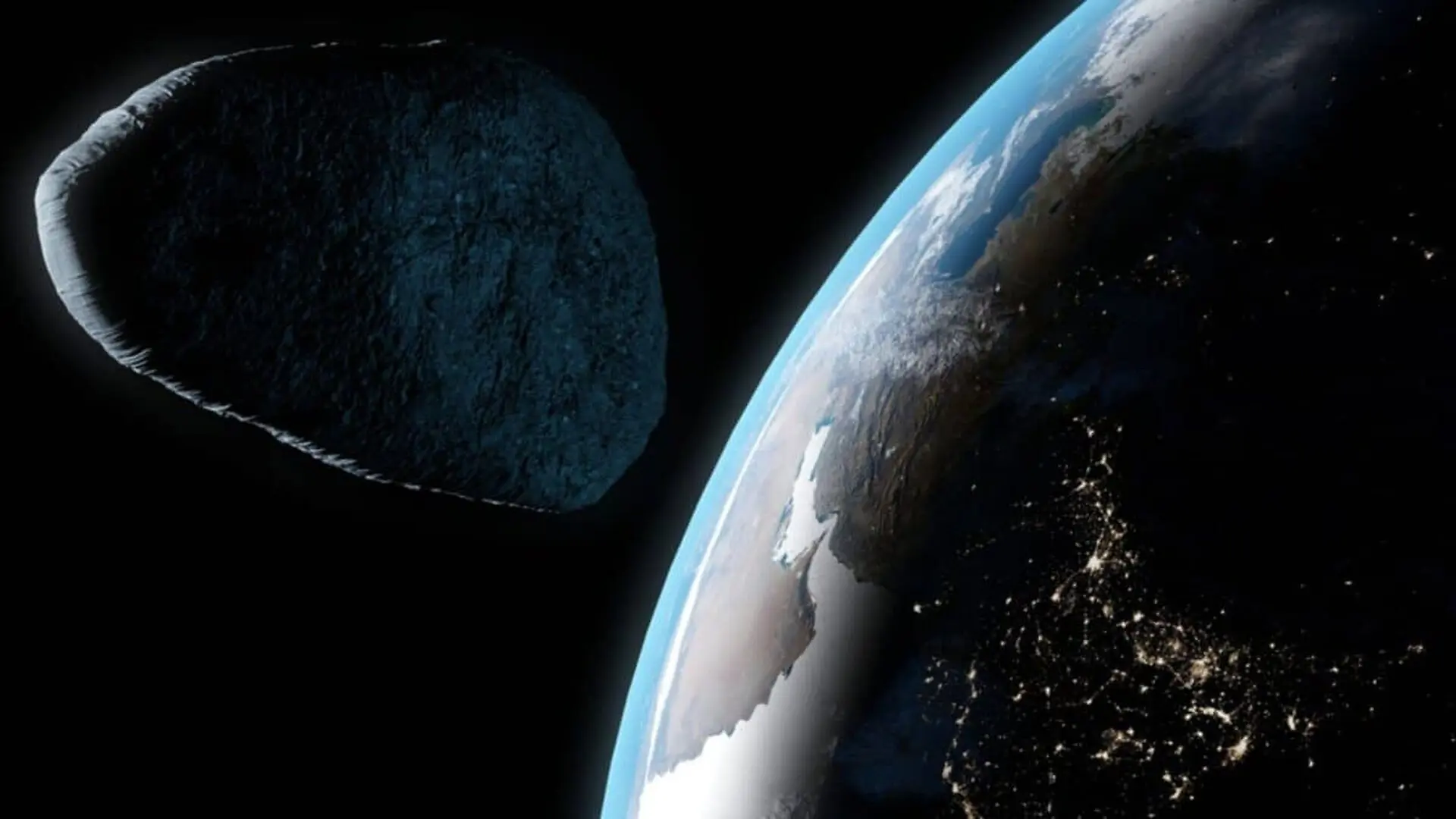
Asteroid Apophis will skim the Earth at roughly 32,000 km on 13 April 2029, an altitude lower than many geosynchronous satellites. Although the object will not collide with the planet, its trajectory could bring it into view for up to 7.6 billion people during a seven‑hour window.
New visibility projections show that observers across Australia, Asia, Africa, Europe and eastern South America may catch a glimpse of the asteroid as it arcs across the sky. Local darkness, cloud cover, and light pollution will dictate actual observing conditions, with Apophis appearing as a steady point of light rather than a resolved body.
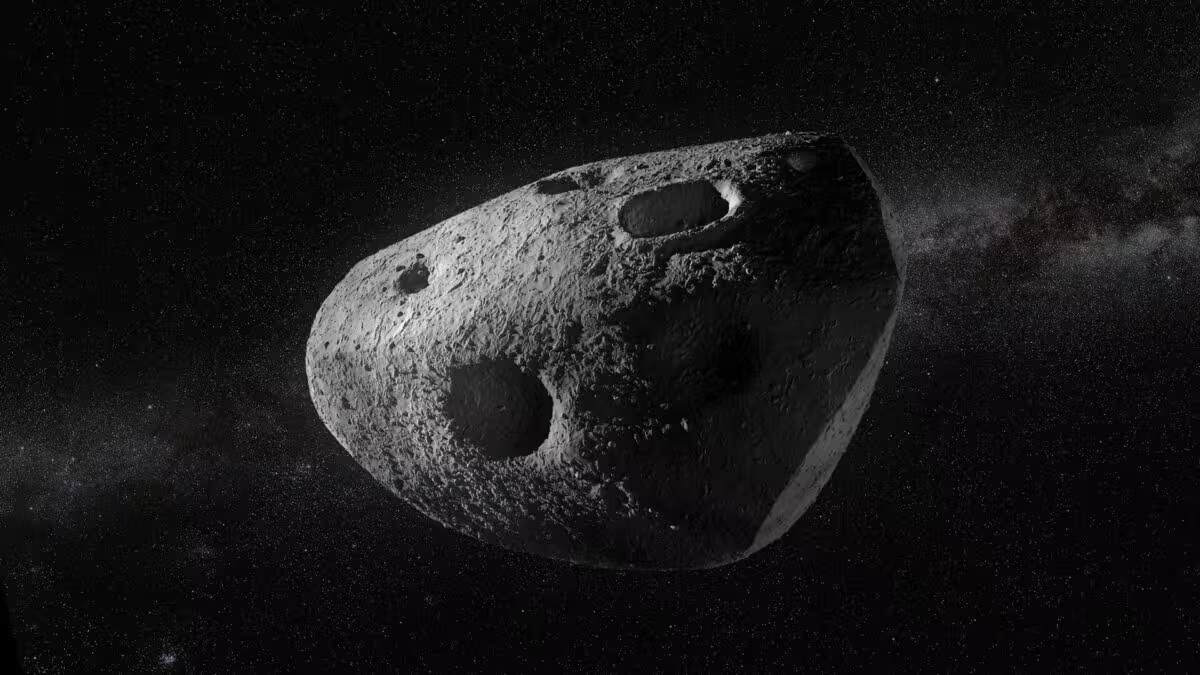
The asteroid, officially designated 99942 Apophis, was first spotted at Kitt Peak National Observatory on 19 June 2004. ESA characterises it as an irregular, elongated stony body about 375 m across and weighing roughly 20 million tons. It originated in the main asteroid belt between Mars and Jupiter before planetary perturbations nudged its orbit toward Earth.
At closest approach the asteroid will pass at a distance smaller than one‑tenth of the Earth‑Moon separation, well above the International Space Station but inside the ring of geosynchronous satellites that orbit near 36,000 km. No collision with those spacecraft is expected.
Early calculations once assigned Apophis a 2.7 % chance of striking Earth in 2029, earning it the highest rating ever recorded on the Torino scale. Subsequent observations eliminated impact scenarios for 2029 and 2036, and radar data gathered in March 2021 ruled out any known impact risk for at least the next century.
Global viewing zones for the 2029 pass
Maps unveiled at the Apophis T‑3 Years workshop in Padua, Italy, suggest that up to 90 % of the world’s population—about 7.6 billion people—could fall within the observable region at some point during the encounter. Favorable viewing will still require clear, dark skies with minimal artificial illumination.
Planetary scientist Richard Binzel, a co‑organiser of the workshop, described the event as “a way of feeling a shared cosmic experience.” Because the asteroid will be relatively close, its apparent position will shift across the sky depending on the observer’s location.

The asteroid is expected to reach peak brightness at 20:35 UTC—just over an hour before its closest approach at 21:45 UTC. Its apparent magnitude will depend on distance and the portion of its sunlit surface facing Earth, producing lunar‑like phases as the geometry changes.
Canada will not be positioned to see Apophis at its brightest or during the closest pass. However, observers in southwestern Ontario might spot the object with binoculars or a small telescope before sunrise on 13 April, when it should appear low on the southwestern horizon at a visual magnitude around seven, which is beyond naked‑eye detection.
How Earth’s tide will reshape the asteroid
During the close encounter the side of Apophis nearest Earth will feel a stronger gravitational pull than the far side, creating tidal forces that can stretch and compress the body. ESA notes that these stresses could trigger minor quakes or landslides and may alter the asteroid’s spin rate.
The planet’s gravity will also modify Apophis’s heliocentric orbit. Currently classified as an Aten asteroid—objects that cross Earth’s path but have shorter orbital periods—the body completes a solar circuit in roughly 0.9 years. After the flyby, calculations indicate it will shift into the Apollo group, lengthening its orbital period to about 1.2 years as its speed and trajectory are adjusted.
Missions poised to study the encounter up close
The European Space Agency’s proposed Ramses mission aims to rendezvous with Apophis before the 2029 flyby and accompany it through the gravitational interaction. The spacecraft would image the asteroid’s shape, rotation and surface before and after the encounter, deploying two CubeSats equipped with scientific payloads.
ESA frames the event as “nature bringing one to us and conducting the experiment itself,” allowing researchers to observe a large asteroid as Earth’s gravity reshapes it without traveling to the distant main belt. Any surface movements can be directly compared with pre‑flyby measurements.
NASA is redirecting the former OSIRIS‑REx probe under the moniker OSIRIS‑APEX. The spacecraft is slated to arrive shortly after the closest approach, maneuver near Apophis’s surface and fire its thrusters to loft dust and rocks, enabling analysis of material freshly exposed beneath the surface layer.
In parallel, ground‑based optical telescopes will track reflected sunlight and thermal emission, while radar facilities will ping the asteroid to refine estimates of its dimensions and surface features. Together, these observations will create a comprehensive record of Apophis before, during, and after its historic 2029 pass.
This article has been fact checked for accuracy, with information verified against reputable sources. Learn more about us and our editorial process.
Last reviewed on .
Article history
- Latest version
Reference(s)
- <https://www.esa.int/Space_Safety/Planetary_Defence/Apophis>.
- Sutherland, Scott. “Asteroid Apophis' 2029 flyby of Earth will be visible to billions of people.”, July 11, 2026 The Weather Network <https://www.theweathernetwork.com/en/news/science/space/asteroid-apophis-2029-flyby-will-be-visible-to-billions-around-the-world>.
- <https://www.esa.int/ESA_Multimedia/Images/2024/02/Apophis_orbit_diverted_by_Earth_s_gravity>.
Cite this page:
- Posted by Karan Das