NASA’s Psyche Probe Just Flew 2,864 Miles Above Mars and Revealed Images from an Angle Almost Never Seen
Psyche’s Mars flyby unveils unexpected vistas on mission to enigmatic asteroid
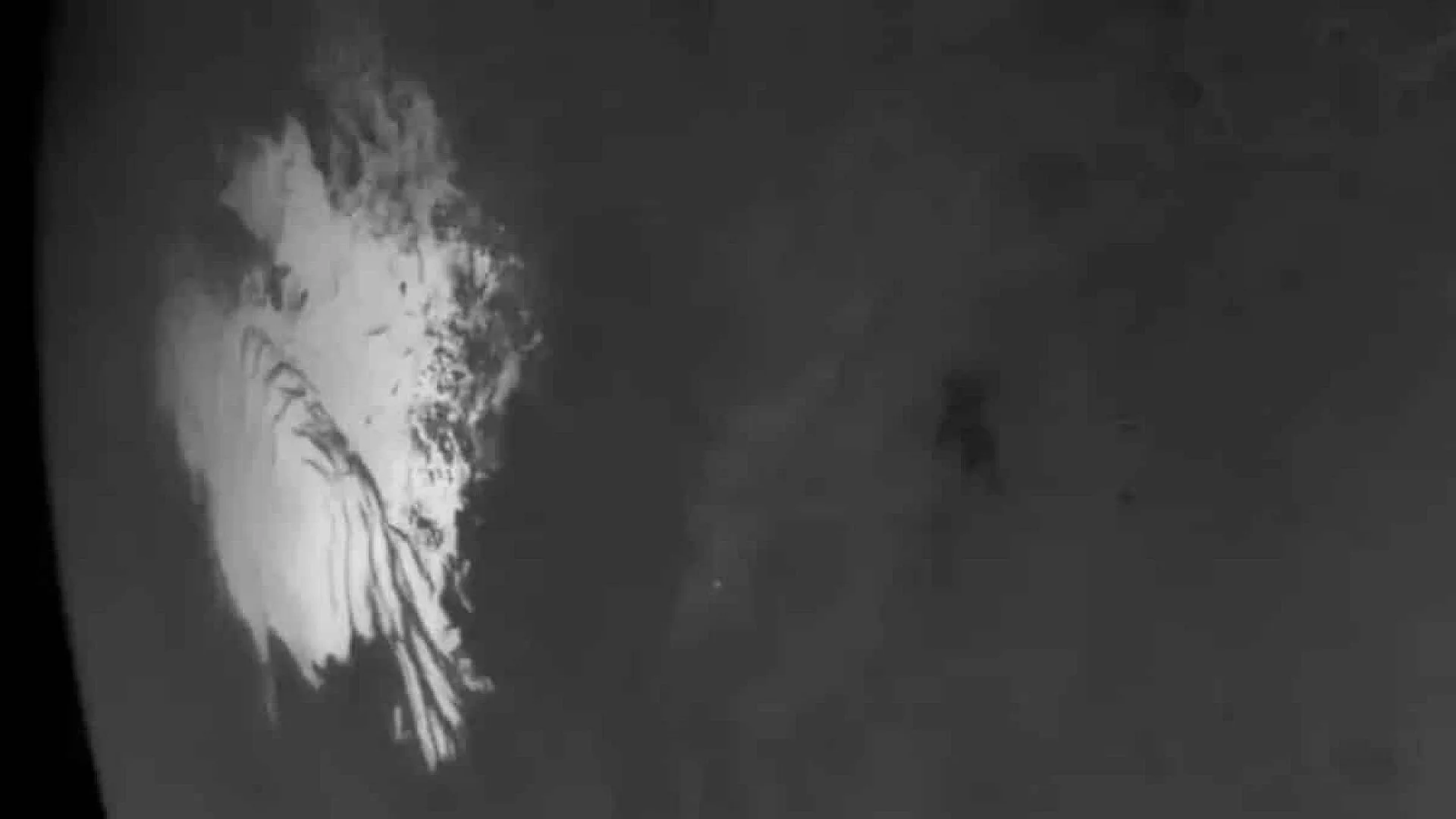
NASA’s Psyche spacecraft completed a gravity‑assist swing by Mars, keeping the mission on schedule for a 2029 arrival at the metallic asteroid Psyche. The flyby also delivered a set of rare images of the Red Planet.
Beyond the trajectory correction, the encounter let engineers run a full suite of instrument checks while gathering fresh data on Mars. Thousands of frames were taken as the probe slipped past the planet, revealing perspectives rarely seen from deep space.
Mars Provides the Critical Velocity Boost
On 15 May, Psyche skimmed the Martian atmosphere at an altitude of just 4,609 km (2,864 mi). The maneuver harnessed the planet’s gravity to accelerate the spacecraft and tilt its orbit.
“We’ve confirmed that Mars gave the spacecraft a 1,000 mile‑per‑hour boost and shifted its orbital plane by about 1 degree relative to the Sun. We are now on course for arrival at the asteroid Psyche in summer 2029,” said Don Han, the mission’s navigation lead at NASA’s Jet Propulsion Laboratory.
The gravity assist is a pivotal step for a journey that will span roughly 3.5 billion km (2.2 billion mi) before the spacecraft reaches its target. By fine‑tuning its path, the maneuver ensures the most fuel‑efficient route to the asteroid.
A Fresh View of Mars From Space
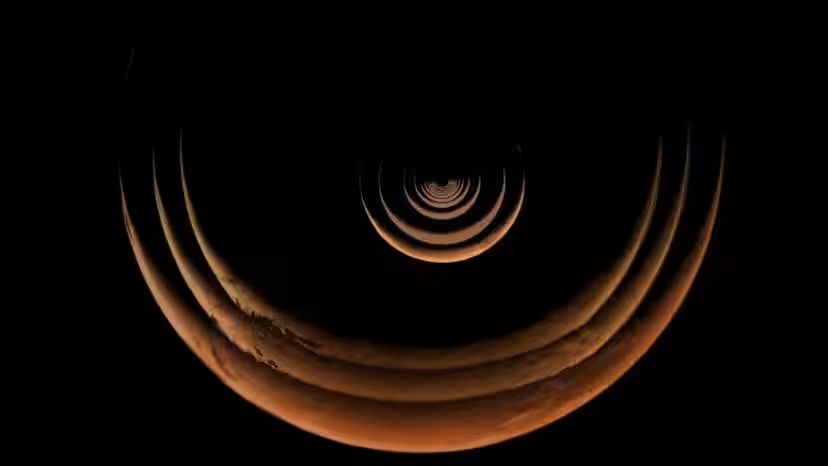
One striking outcome of the flyby was the visual record taken as Psyche approached from the planet’s night side, allowing the probe to capture a thin crescent that gradually filled in as illumination increased.
During the close approach, every instrument onboard was active, producing thousands of images that served both as performance checks and as scientific observations.
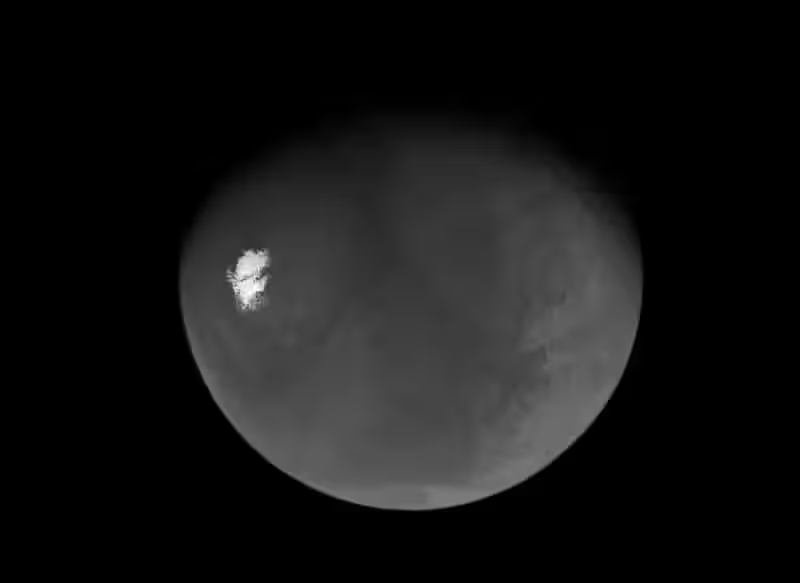
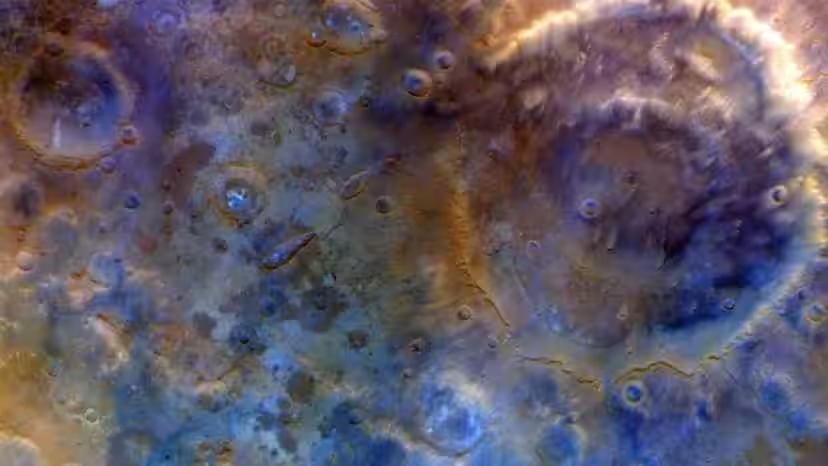
Among the released frames, a color‑enhanced capture of the double‑ringed Huygens crater stands out, taken moments after closest approach. Another image presents a nearly full, side‑on Mars with the south pole at the edge of the disk, while the towering Valles Marineris canyon system dominates the right side.
The mission also highlighted the Syrtis region, where wind‑driven streaks extend roughly 50 km (30 mi), comparable in length to the largest craters captured in the same scene.
Searching for Dust and Hidden Moons
Scientists leveraged the flyby to probe for a faint dust ring that might encircle Mars, hypothesized to arise from micrometeorite impacts on Phobos and Deimos that loft particles into orbit.
The team also scanned for any previously unnoticed moonlets—tiny captured asteroids or debris fragments—around the planet. A similar survey will be conducted when Psyche arrives at its namesake asteroid.
The ultimate goal remains the study of asteroid Psyche itself, a body composed of metal and silicate that may contain up to 60 % metal by volume. While early theories suggested it could be the exposed core of a shattered planet, researchers anticipate a more nuanced origin story, one of the central questions the mission seeks to resolve.
This article has been fact checked for accuracy, with information verified against reputable sources. Learn more about us and our editorial process.
Last reviewed on .
Article history
- Latest version
Reference(s)
- Charles-Henri, NASA. “Psyche.”, July 12, 2023 NASA <https://science.nasa.gov/mission/psyche/>.
- “Author - Don Han.” <https://descanso.jpl.nasa.gov/biography/han.html>.
- Alanis, Rafael. “NASA’s Psyche Mission Images Mars’ Huygens Crater - NASA Science.”, May 19, 2026 NASA <https://science.nasa.gov/photojournal/nasas-psyche-mission-images-mars-huygens-crater/>.
Cite this page:
- Posted by Karan Das