309‑Million‑Year‑Old Fossils Reveal Early Four‑Legged Animals Skipped Tadpole Stage
Rare Illinois fossils upend a long‑standing evolutionary theory, showing an unexpected route taken by Earth’s earliest four‑legged animals.
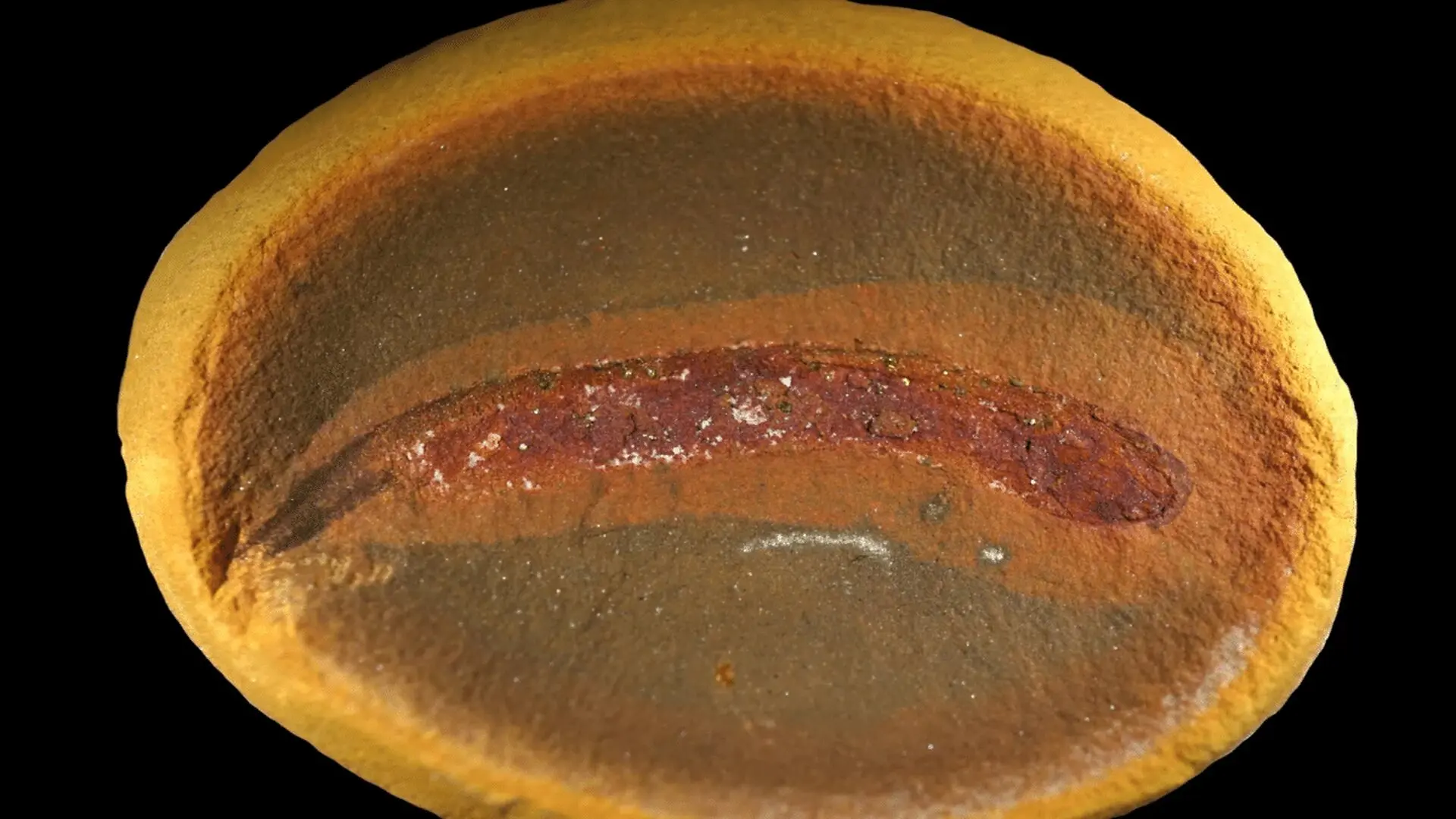
A striking assemblage of fossils dated to roughly 309 million years ago is prompting scientists to rethink a long‑standing view of vertebrate evolution. New findings published in Science suggest that some of the earliest ancestors of today’s four‑limbed animals may have bypassed a tadpole‑like larval stage, emerging instead as miniature versions of the adult form. This insight reshapes how researchers picture the pivotal shift from aquatic to terrestrial life.
Illinois’s Mazon Creek Yields Unforeseen Growth Pattern
The specimens central to the study originate from the celebrated Mazon Creek deposits in northern Illinois, a fossil hotspot renowned for preserving fine details, even soft tissues, within iron‑carbonate concretions. Around 309 million years ago the area was a mosaic of swamps, river deltas and shallow coastal waters that supported a diverse array of flora and fauna. The research team, whose work appears in Science, examined dozens of specimens that bridge the gap between ancient fishes and early tetrapods, the first vertebrates to develop four limbs.
Among the material is a diminutive fossil identified as a juvenile of an embolomere—a crocodile‑like predator that already possessed short legs. Paleontologists had long assumed that juveniles of such taxa would resemble modern amphibian larvae, complete with external gills and a prolonged metamorphic phase. Instead, this specimen displays a proportionally adult‑like body plan, indicating a mode of development known as direct development, in which the organism skips a dramatic larval stage.
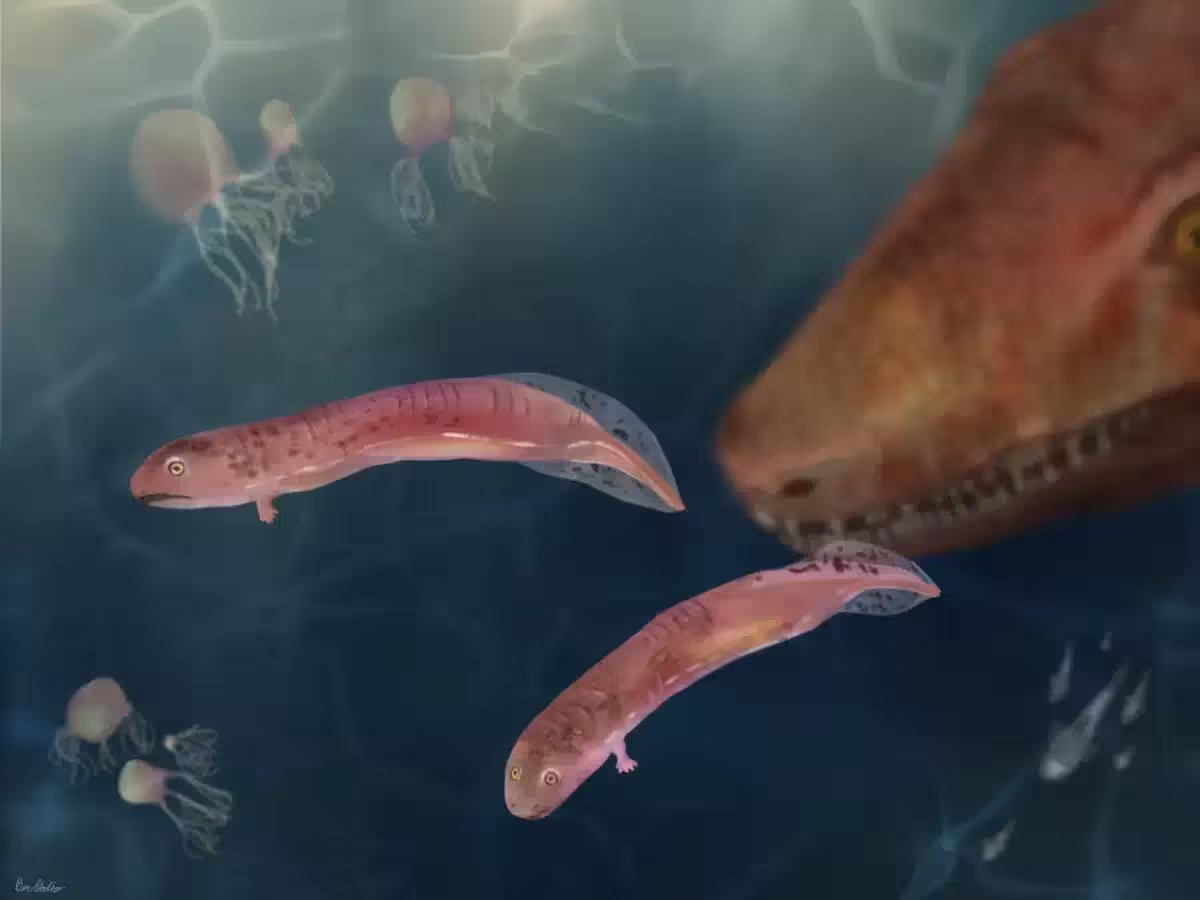
A Finding That Upends a Century‑and‑Half of Assumptions
The ramifications extend well beyond a single bone. For more than 150 years scientists have inferred that the life cycle of modern frogs and salamanders mirrors an ancestral blueprint inherited from the earliest tetrapods. New fossil evidence calls that inference into question. Jason Pardo, research associate at the Field Museum in Chicago and co‑lead author, described the impact:
“We now actually have some direct fossil record evidence,” Pardo told AFP, “that this metamorphosis, this amphibian‑like life cycle that we’ve for 150 years assumed was part of our history, turns out that it wasn’t part of that at all.”
If the tadpole stage emerged later as a specialized adaptation, evolutionary models of how vertebrates first conquered land will need substantial revision. The case underscores how a single, well‑preserved specimen can overturn concepts that have persisted across generations of research.
Rare Juvenile Remains Illuminate Early Tetrapod Development
Fossils of young animals from this era are exceptionally scarce because their fragile skeletons seldom survive fossilization. Australian paleontologist John Long highlighted the significance of the new material: “Not much was known about their early life stages,” he said to AFP, referring to the creatures that gave rise to the first tetrapods.
“This detailed work on a bunch of simply glorious fossils nails it that they went straight into a juvenile phase, so didn’t need to go through the tadpole stage.”
The assemblage offers a unique glimpse into the developmental biology of organisms that lived hundreds of millions of years ago. Rather than inferring growth patterns solely from living analogues, researchers can now observe direct evidence of how these ancient vertebrates matured, providing one of the clearest windows into a pivotal chapter of evolution.
Preserved Specimens Keep Redefining Evolutionary Narratives
The study also showcases how exceptionally conserved fossils can answer questions once thought unapproachable. Jason Anderson of the University of Calgary praised the work, noting that the “impressive” paper demonstrates “the power of fossils to address questions we thought impossible given they take place in short periods of time, and in tissues not normally preserved over hundreds of millions of years.” He added, “Our amphibians, instead of being relicts of earlier stages in the evolutionary history of tetrapods, are themselves highly evolved creatures.”
Viewing modern amphibians as later‑evolved innovators rather than primitive holdovers reshapes their role in the evolutionary story and highlights the continual refinement of developmental strategies over deep time.
Amateur Collectors Play a Crucial Role in the Discovery
The research further emphasizes the importance of non‑professional fossil hunters. Many of the specimens examined were recovered over decades by dedicated collectors exploring the Mazon Creek deposits before entering museum collections. One particularly intriguing fossil lay dormant in storage until scientists recognized its relevance. Advanced scanning electron microscopy at the Canadian Museum of Nature confirmed it as a likely juvenile embolomere.
Co‑author Arjan Mann stressed that the project would not have succeeded without long‑standing collaboration between museums and the fossil‑collecting community. “This paper, in a way, is kind of a love letter to them, that shows the power of what we can do with working together with this community to synthesize really high‑impactful new research,” Mann told AFP. The case illustrates how patient fieldwork, meticulous curation, and modern imaging can transform overlooked pieces into evidence capable of rewriting a major chapter in Earth’s biological history.
This article has been fact checked for accuracy, with information verified against reputable sources. Learn more about us and our editorial process.
Last reviewed on .
Article history
- Latest version
Reference(s)
- Pardo, Jason D.., et al. “Direct development of stem tetrapods across the fin-to-limb transition.” Science, vol. 392, no. 6804, June 18, 2026, pp. 1292-1296. American Association for the Advancement of Science (AAAS), doi: 10.1126/science.aeb7635. <https://www.science.org/doi/10.1126/science.aeb7635?__cf_chl_f_tk=JrLWcMPqsGumqeYKGU5yQaNJXov1cGyGW_NFqDJtsLE-1783367757-1.0.1.1-cwisoGNL5pcstF0F.Rl1vOiTaS.nfD02SLeKHGdPq0c>.
Cite this page:
- Posted by Hassan Raza