Tiwanaku’s Sunken Offerings and Distant Temple Uncover Pre‑Inca Trade Empire
Discover the pre‑Inca civilization that thrived around Lake Titicaca, revealed by years of archaeological research uncovering an advanced ancient state.
The Tiwanaku civilization flourished around the Lake Titicaca Basin from roughly 500 to 1100 CE, supporting a community of perhaps 10,000–20,000 individuals. Because the society left no written records, archaeologists rely on artifacts recovered from lake sediments and surrounding hills to reconstruct its rise and influence.
Underwater Finds Reveal Tiwanaku Sacrificial Practices
A team led by anthropologist Jose Capriles spent 19 days in 2013 mapping the Khoa Reef near Bolivia’s Island of the Sun with sonar and 3D photogrammetry. Their work, reported in the Proceedings of the National Academy of Sciences, uncovered a collection of puma‑shaped incense burners, gold ornaments, shell pieces, and finely worked stones that appear to have been deliberately placed in the lake rather than lost accidentally.
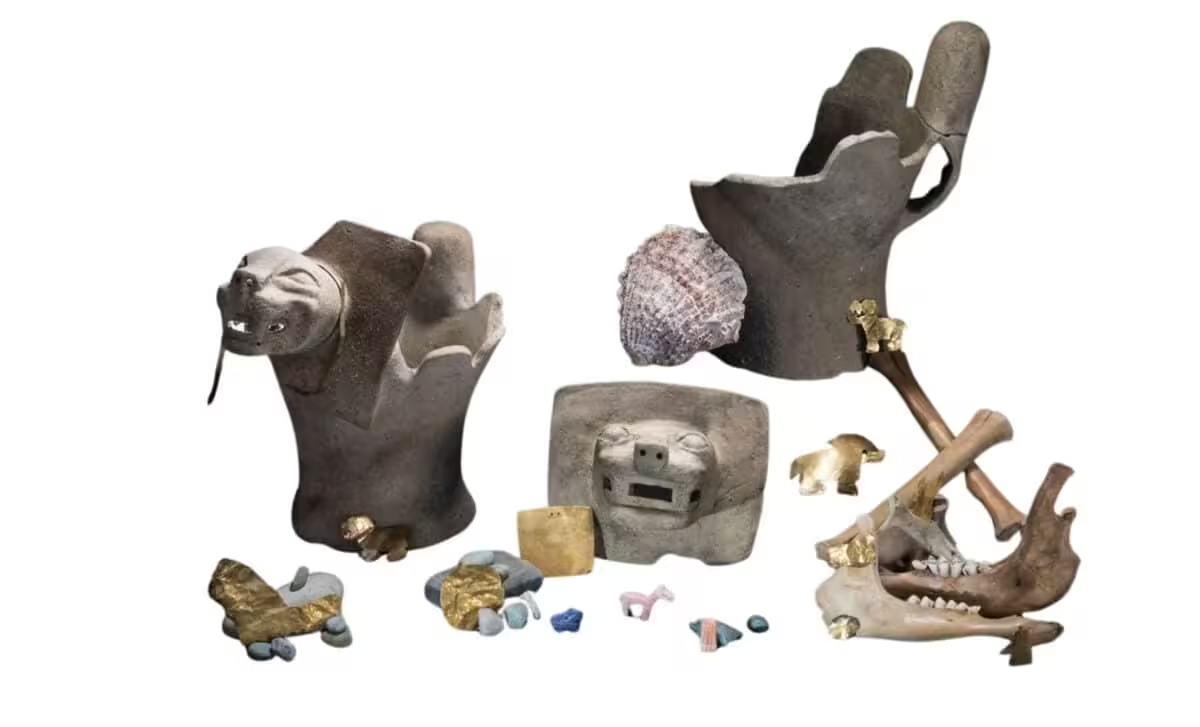
Stone anchors found near the deposits suggest that officials lowered the objects into the water from boats during ritual ceremonies. Radiocarbon analysis dates the assemblage to the 8th–10th centuries CE, aligning with the period of Tiwanaku’s territorial expansion. Among the recovered items were the remains of at least seven juvenile llamas, interpreted as sacrificial animals. Two gold medallions bearing a rayed‑face motif link the find to the central deity often identified with the later Inca god Viracocha, indicating that Tiwanaku may have been the first culture in the region to present valuable gifts to divine figures at this lake sanctuary.
Hilltop Temple Marks Tiwanaku Trade Networks
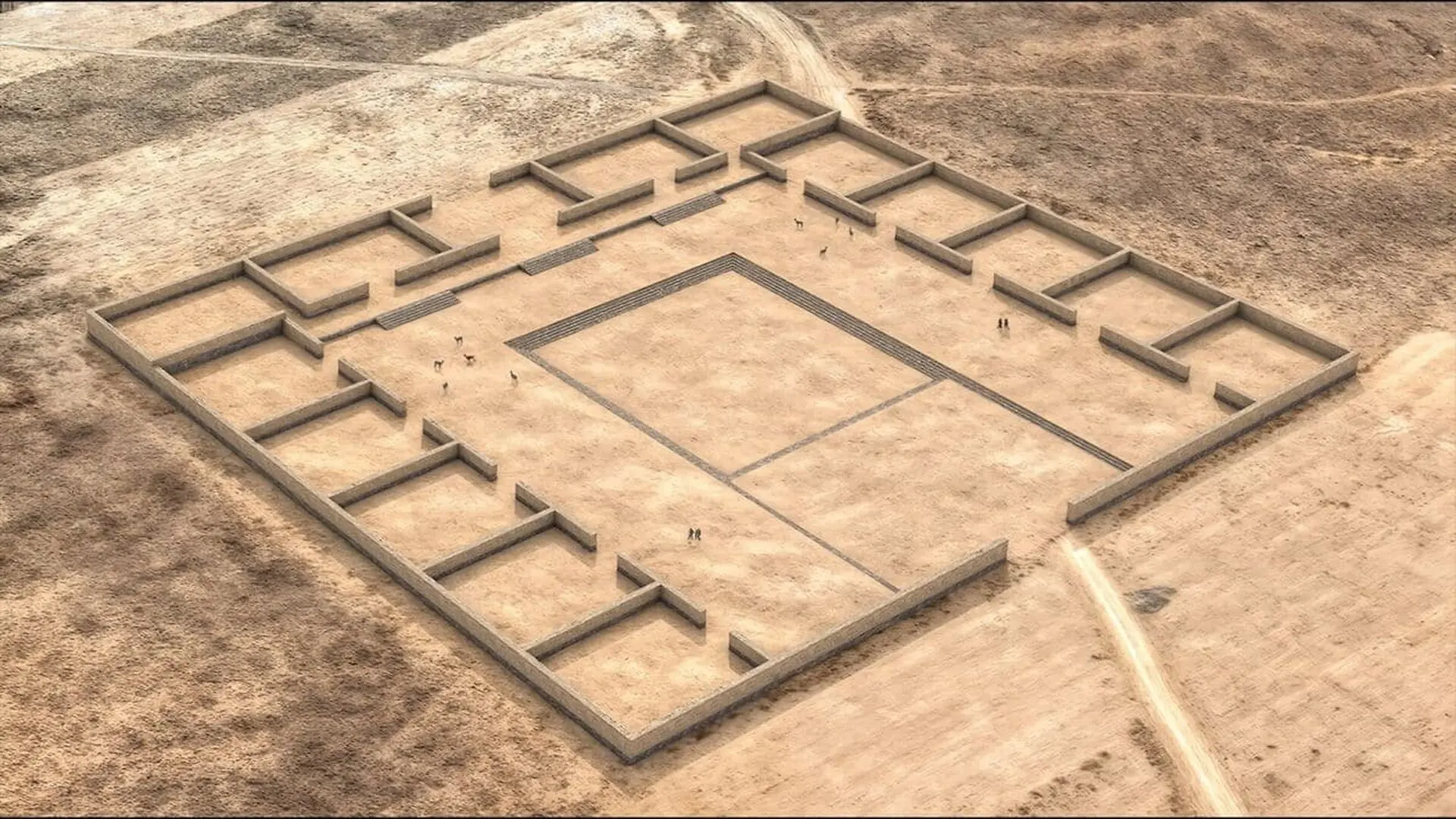
A separate investigation, published in Antiquity, highlights a massive temple complex called Palaspata on a hill 215 km southeast of the Tiwanaku capital. The structure measures roughly 125 m east‑west and 145 m north‑south, comprising 15 modular enclosures arranged around a central courtyard, with its main entrance aligned to the solar equinox.
Archaeologists argue that Palaspata occupied a pivotal crossroads linking the Tiwanaku core to the eastern valleys of Cochabamba, where llama caravans moved maize, ceramics, and other commodities. Radiocarbon dates from the nearby Ocotavi 1 site span 630–950 CE, mirroring the broader Tiwanaku expansion. Ceramic fragments recovered at the temple include classic Tiwanaku styles alongside pottery from the inter‑Andean valleys, suggesting the site functioned as a cultural and commercial hub. The authors propose that the temple served to project state authority at a strategic node controlling movement between highland and lowland regions.
Together, the underwater ritual cache at Khoa Reef and the distant Palaspata temple illustrate complementary strategies used by Tiwanaku leaders: elaborate religious offerings at a sacred lake site and monumental architecture at frontier locations to cement political and economic influence. Ongoing analysis of the artifacts and planned excavations at Palaspata aim to refine the chronology of construction and clarify how these sites relate to other Tiwanaku ceremonial complexes around Lake Titicaca.
This article has been fact checked for accuracy, with information verified against reputable sources. Learn more about us and our editorial process.
Last reviewed on .
Article history
- Latest version
Reference(s)
- “José M. Capriles - Department of Anthropology.”, October 14, 2016 Department of Anthropology <https://anth.la.psu.edu/people/juc555/>.
- Delaere, Christophe., et al. “Underwater ritual offerings in the Island of the Sun and the formation of the Tiwanaku state.” Proceedings of the National Academy of Sciences, vol. 116, no. 17, April 1, 2019, pp. 8233-8238. National Academy of Sciences, doi: 10.1073/pnas.1820749116. <https://www.pnas.org/doi/full/10.1073/pnas.1820749116>.
Cite this page:
- Posted by Hassan Raza