40,000-Year-Old Mammoth Ivory Boomerang Pushes Back Ice Age Weapon Timeline
A 14,000‑year‑old mammoth ivory boomerang from Poland reveals Ice Age humans’ sophisticated technology and ingenuity.
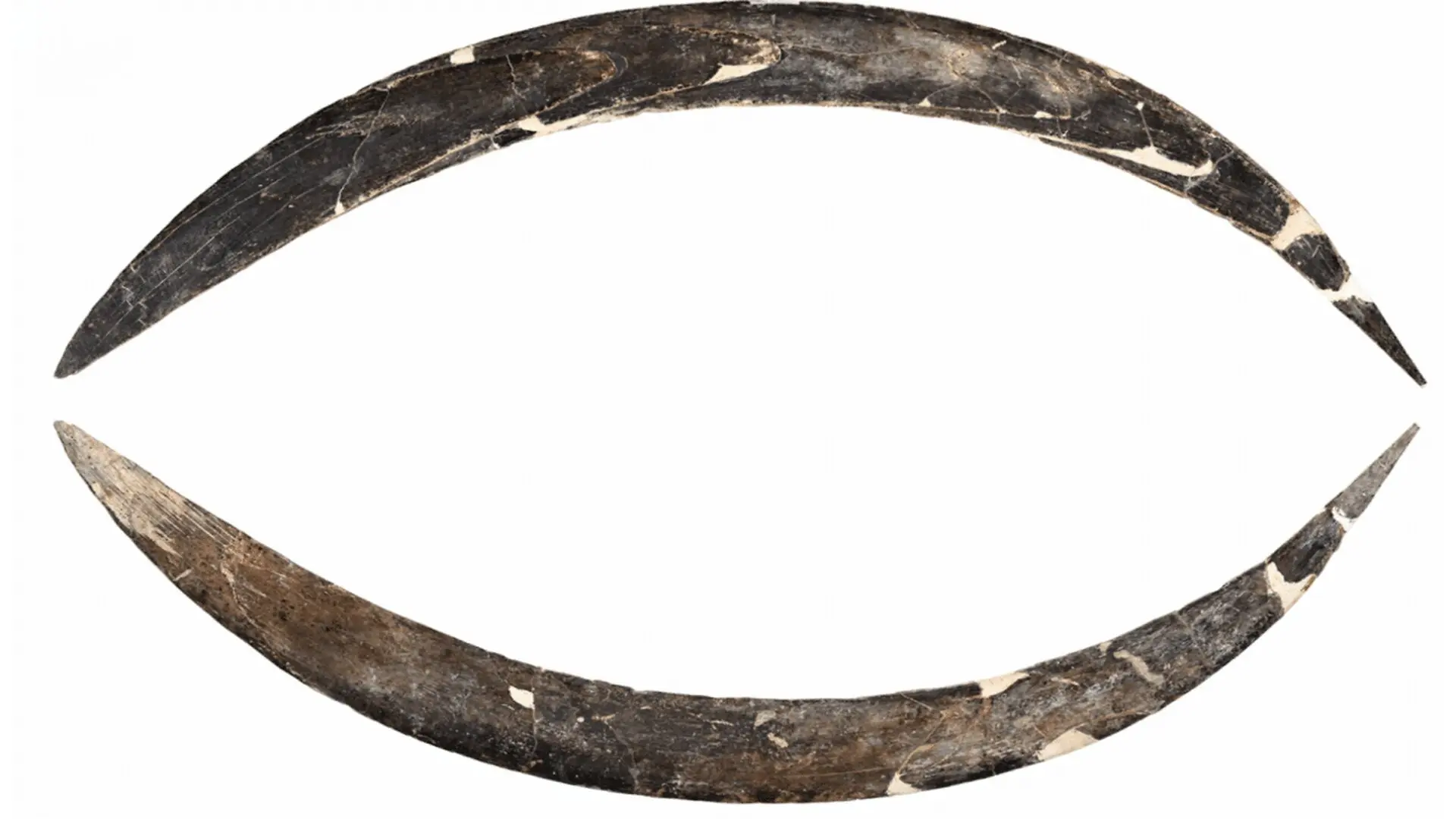
A finely carved piece of mammoth ivory recovered from a southern‑Poland cave has been dated to between 39,000 and 42,000 years ago, making it the oldest boomerang yet identified. The discovery, detailed in PLOS ONE, pushes the emergence of this sophisticated hunting tool deep into the Upper Paleolithic and offers a rare window onto the technical skill and symbolic life of early Homo sapiens.
Ice‑Age Innovation Challenges Long‑Held Views
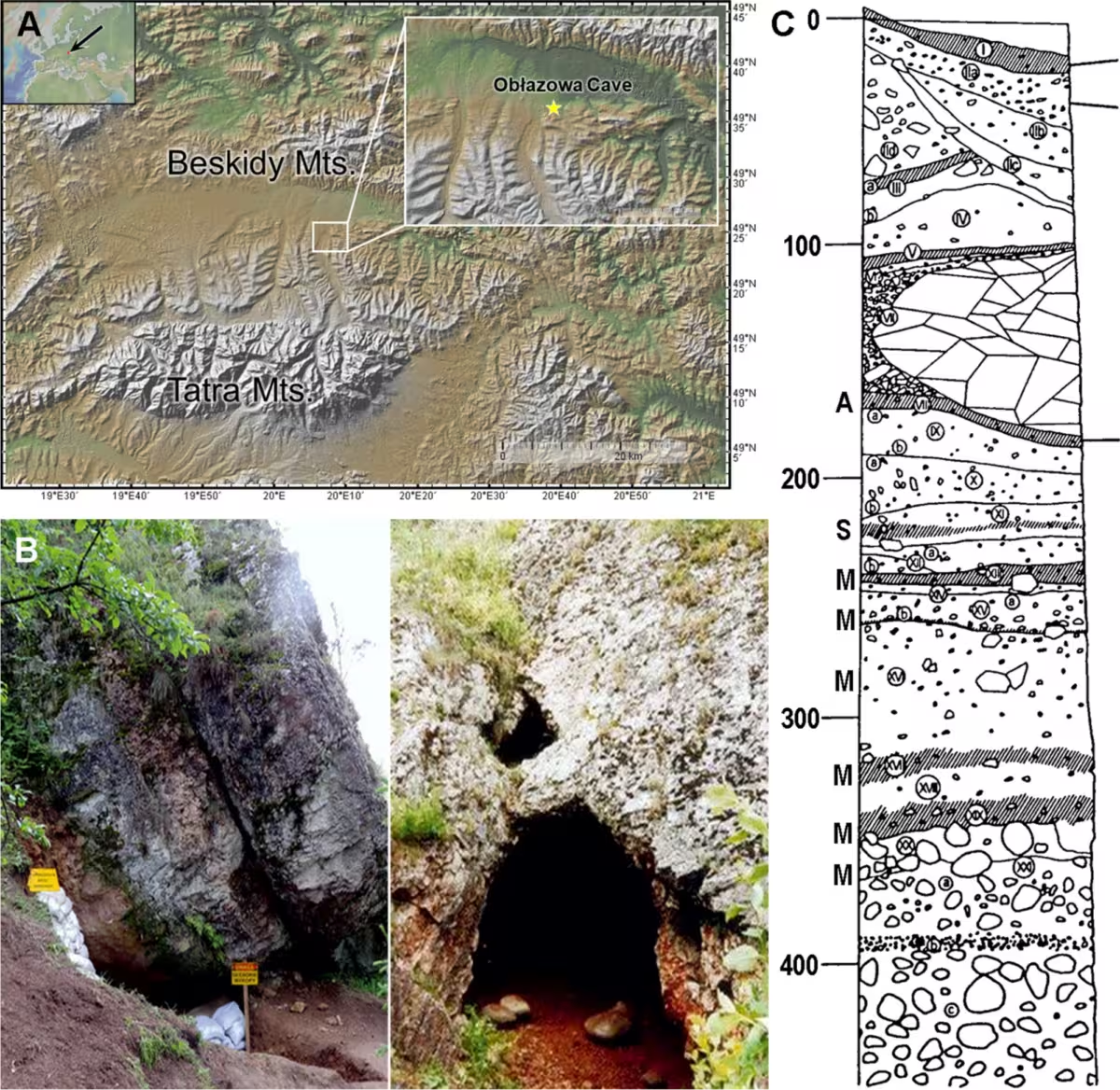
For decades the boomerang has been linked to Aboriginal Australia, where both returning and non‑returning forms have played practical and ceremonial roles. The Polish find does not overturn that legacy; instead it shows that comparable aerodynamic concepts were explored far earlier and far from the continent. The object, uncovered in Obłazowa Cave during 1985 excavations, was initially thought to be between 23,000 and 30,000 years old. New radiocarbon work now pushes its creation back to a period when modern humans were rapidly expanding across Europe, bringing with them increasingly intricate technologies and symbolic practices.
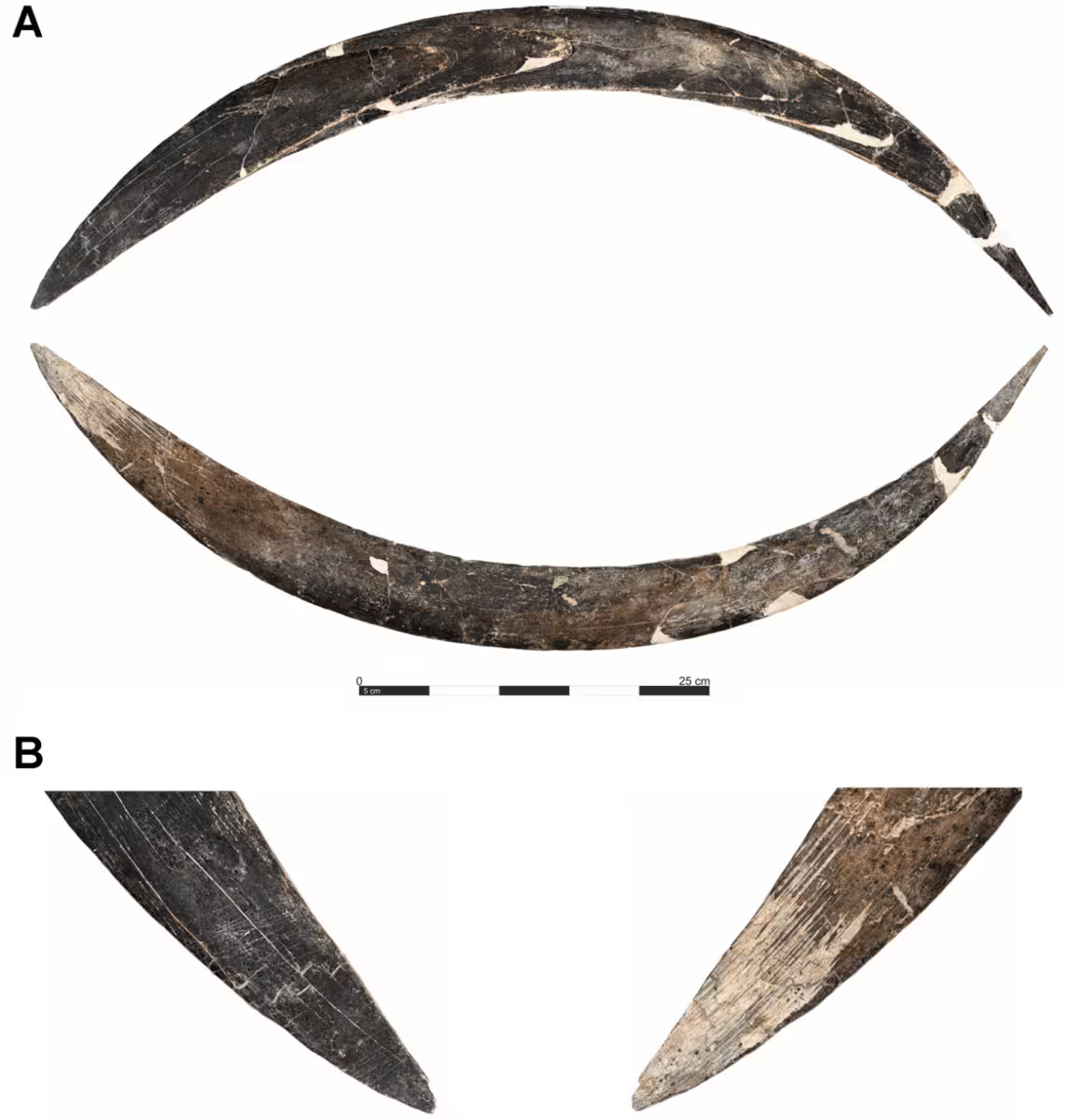
The ivory piece, fashioned from a mammoth tusk with striking precision, displays an advanced grasp of geometry, balance, and material behavior. Even after tens of millennia, the workmanship remains clear, suggesting that its makers possessed skills on par with the finest Upper Paleolithic tools. Its presence expands the known chronology of complex hunting equipment and raises fresh questions about the diffusion of such technologies among prehistoric groups.
Radiocarbon Results Reset the Boomerang’s Age
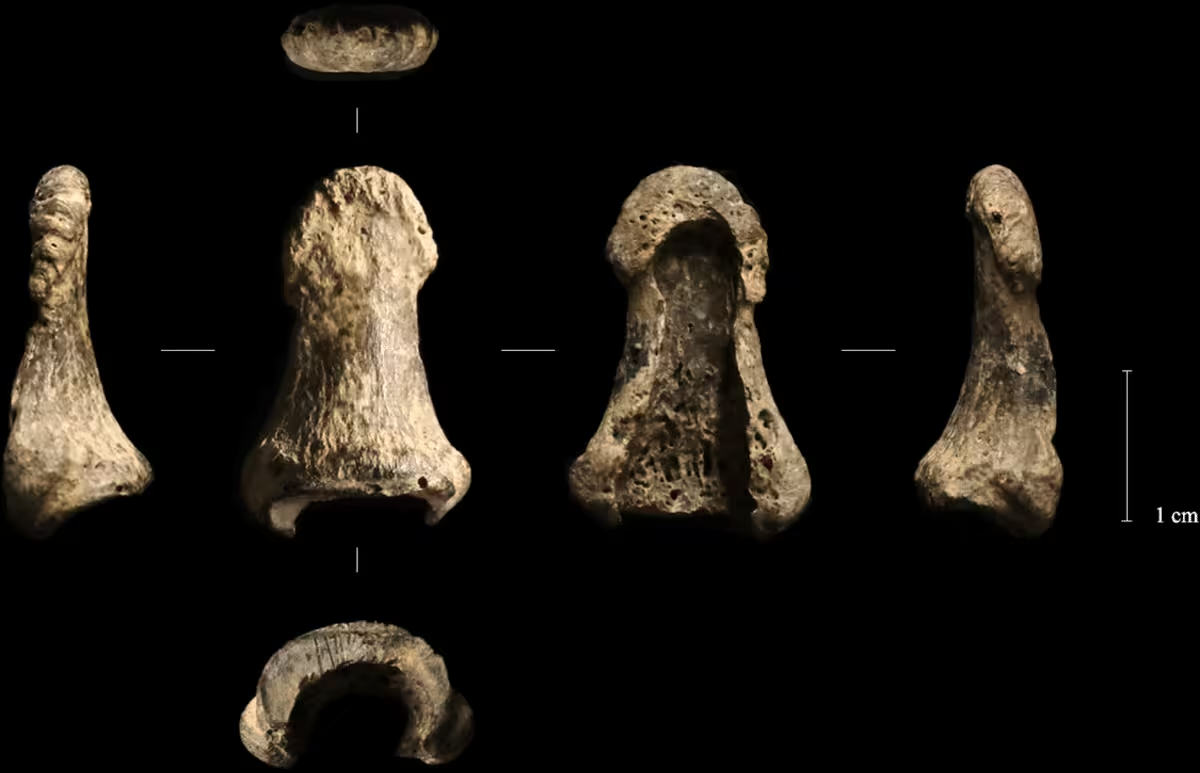
The revised age stems from radiocarbon analysis of human and animal bones recovered from the same layer as the boomerang. The study, published in PLOS ONE, places the associated material at roughly 39,000–42,000 years old. Lead researcher Dr. Sahra Talamo of the University of Bologna noted that the find is unparalleled both for its antiquity and its distinctive form. The timing coincides with a phase when early modern humans were producing elaborate ornaments, artwork, and other symbolic objects across the continent, suggesting the boomerang was part of a broader wave of technological refinement.
Design Details of a Mammoth‑Ivory Throwing Weapon
Researchers interpret the artifact as a non‑returning projectile rather than a returning boomerang. Its aerodynamic shape would have allowed it to travel straight and strike prey at distance, making it suitable for hunting birds or medium‑sized animals. The choice of mammoth ivory over wood required sophisticated planning, as ivory fractures easily and demands careful shaping to preserve strength. Polished surfaces and subtle finishing marks indicate the piece was likely intended for right‑handed use, reflecting a blend of functional engineering and aesthetic intent.
Possible Ritual Context
The boomerang was recovered from an exposed area of Obłazowa Cave, surrounded by deliberately placed stones. Adjacent layers yielded some of Poland’s oldest human remains, a suite of valuable artifacts, and abundant red ochre—a pigment often linked to Upper Paleolithic ritual activity. These circumstances have led scholars such as Professor Paweł Valde‑Nowak to speculate that the object may have held ceremonial importance, perhaps connected to hunting rites or communal identity. While definitive conclusions remain elusive, the find illustrates how technological items could also carry symbolic weight in Ice Age societies.
Implications for Understanding Early Human Creativity
The mammoth‑ivory boomerang from Poland reshapes multiple narratives of human evolution. It extends the known use of advanced projectile devices by several thousand years, showcases the engineering prowess of Ice Age Homo sapiens, and underscores that innovative ideas flourished across prehistoric Europe, independent of the Australian boomerang tradition. Each new analysis adds depth to our picture of early humans as inventive, adaptable, and technically skilled. Ongoing work in Obłazowa Cave promises to reveal further insights into the cultural and technological fabric of our ancestors.
This article has been fact checked for accuracy, with information verified against reputable sources. Learn more about us and our editorial process.
Last reviewed on .
Article history
- Latest version
Reference(s)
- Talamo, Sahra. “Boomerang and bones: Refining the chronology of the Early Upper Paleolithic at Obłazowa Cave, Poland.”, vol. 20, no. 6, pp. e0324911, doi: 10.1371/journal.pone.0324911. <https://journals.plos.org/plosone/article?id=10.1371/journal.pone.0324911>.
Cite this page:
- Posted by Hassan Raza