Two Decades of Mouse Cloning Expose Rapid Mutation Build-Up and Sudden Infertility
A two‑decade mouse cloning study reveals hidden genetic damage, highlighting a biological limit that forces scientists to confront cloning’s constraints.
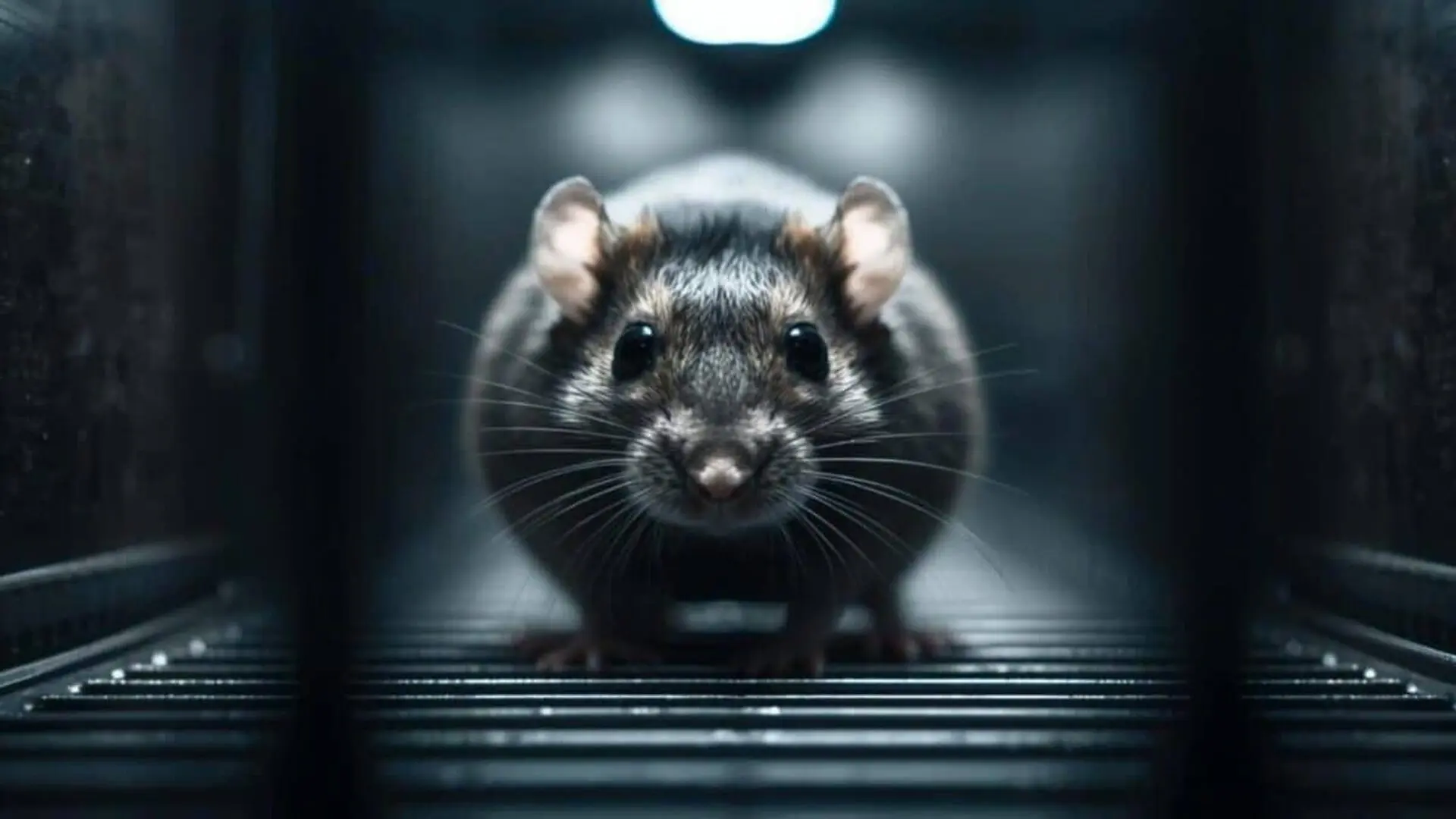
Researchers at Japan’s University of Yamanashi spent two decades repeatedly cloning the same mouse line. Starting with a single female donor, each clone’s cells served as the source for the next animal, creating a continuous chain of generations.
The work relied on nuclear transfer, the same approach that produced Dolly the sheep. After reaching roughly three months of age, each mouse’s cells were harvested and used to generate the subsequent generation, a cycle repeated three to four times annually from January 2005 onward. All individuals were female and displayed the agouti coat pattern of the original donor.
Published in Nature Communications, the study demonstrates that long‑term serial cloning eventually encounters a biological ceiling. Over the 20‑year span, the team attempted more than 30,000 nuclear transfers and produced in excess of 1,200 cloned mice from the single founder, ranking among the longest cloning projects ever undertaken.
Initial Success Followed by a Steady Drop in Viability
Early generations suggested a smooth operation. A 2013 report from the same group indicated that the first 25 cloned generations appeared healthy and lived normal lifespans (source). This led researchers to suspect that serial cloning could proceed indefinitely.
The trend reversed around the 27th generation, when birth rates began to decline and continued to fall as the experiment progressed.

By the 58th generation, the decline culminated in every newborn dying within a day, despite earlier generations looking outwardly normal (source). The apparent health of prior mice had concealed accumulating damage.
Senior author Teruhiko Wakayama told Reuters, “No one has ever continued re-cloning for this long before,” underscoring that the experiment tested the endurance of an entire cloned lineage rather than the feasibility of a single clone.
Genomic Analysis Shows Gradual Mutation Accumulation
To pinpoint the failure mechanism, the team sequenced genomes from mice spanning generations 6 to 57. This approach allowed tracking of genetic alterations across each step, rather than relying solely on phenotypic observation.
Across generations 1–57, researchers identified about 3,700 single‑nucleotide variants and 80 small insertions or deletions, averaging roughly 69 new SNVs and 1.4 indels per generation. The mutations accumulated steadily instead of appearing abruptly.
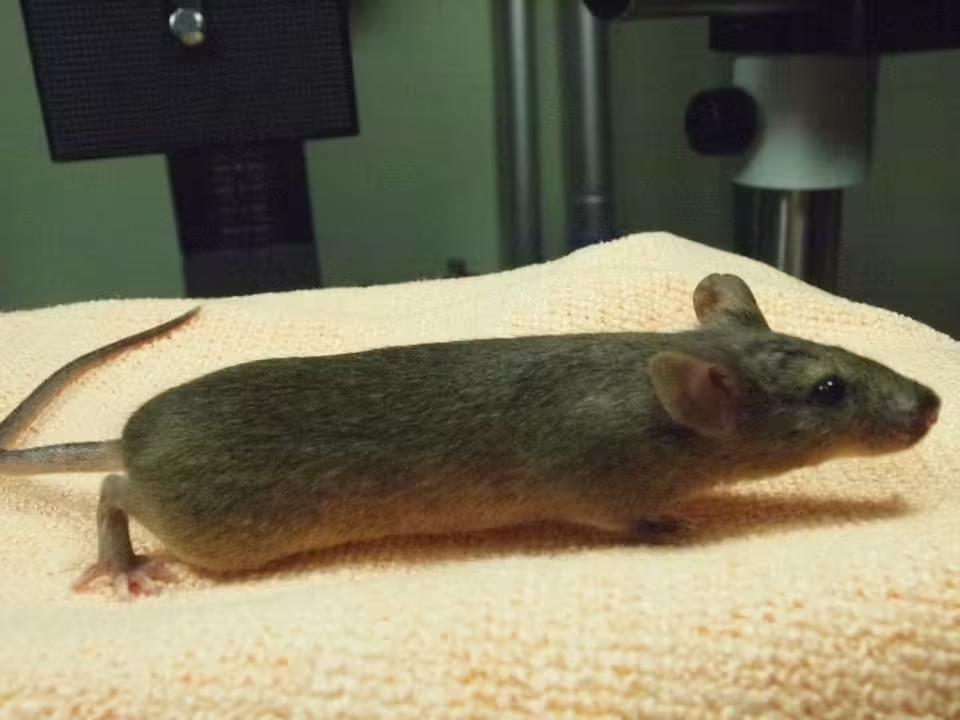
Larger chromosomal alterations also emerged, including loss of one X chromosome in certain individuals and various translocations, most of which occurred between generations 25 and 45—the same window when birth rates were already decreasing.
When compared with mice bred through natural mating, the cloned line accrued mutations at nearly three times the normal rate. Because cloning bypasses the genetic recombination inherent in sexual reproduction, harmful mutations are not purged, causing each successive generation to inherit and add to the existing genetic load.
Reproductive Capacity Erodes Long Before Lethality
Fertility metrics revealed early warning signs. Female clones from generation 20, when mated with standard males, produced litters averaging about ten pups—comparable to control mice.
By generation 50, litter sizes fell to an average of 2.8 pups, and by generation 55 they dropped further to 2.2. Oocyte counts remained stable, indicating that the reduction was not due to a shortage of eggs but to other reproductive defects.
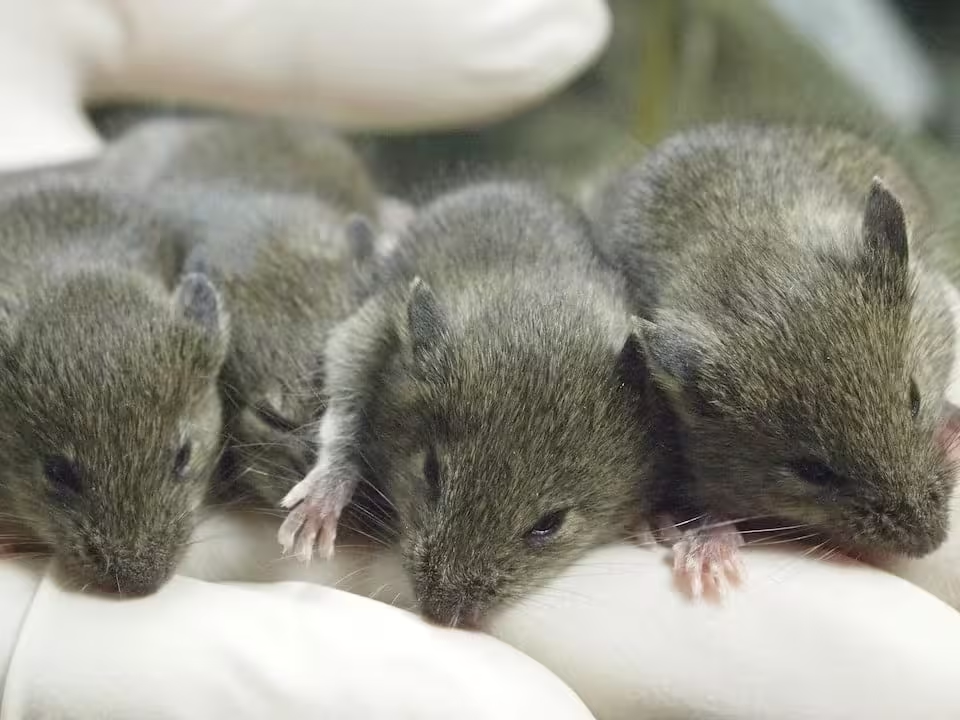
A partial rebound occurred when offspring of generation‑55 clones were allowed to reproduce naturally. Their grandchildren’s litters rose to an average of seven pups, and placental sizes resembled those of normally fertilized mice, unlike the enlarged placentas typical of cloned embryos.
Wakayama emphasized to Reuters that these findings challenge the long‑held notion that clones are perfect copies of their donors. The combination of egg and sperm cells appears to help eliminate accumulated genetic damage, a benefit absent in pure cloning cycles.
This article has been fact checked for accuracy, with information verified against reputable sources. Learn more about us and our editorial process.
Last reviewed on .
Article history
- Latest version
Reference(s)
- Wakayama, Sayaka. “Limitations of serial cloning in mammals - Nature Communications.”, vol. 17, no. 1, March 24, 2026, pp. 2495 Nature, doi: 10.1038/s41467-026-69765-7. <https://www.nature.com/articles/s41467-026-69765-7>.
Cite this page:
- Posted by Hassan Raza