Ancient 518‑Million‑Year‑Old Fossil Unveils Birth of Spider Fangs and Scorpion Pincers
New Cambrian fossil reveals the oldest spider‑fang precursor, offering a rare glimpse into the earliest hunting adaptations of predators.
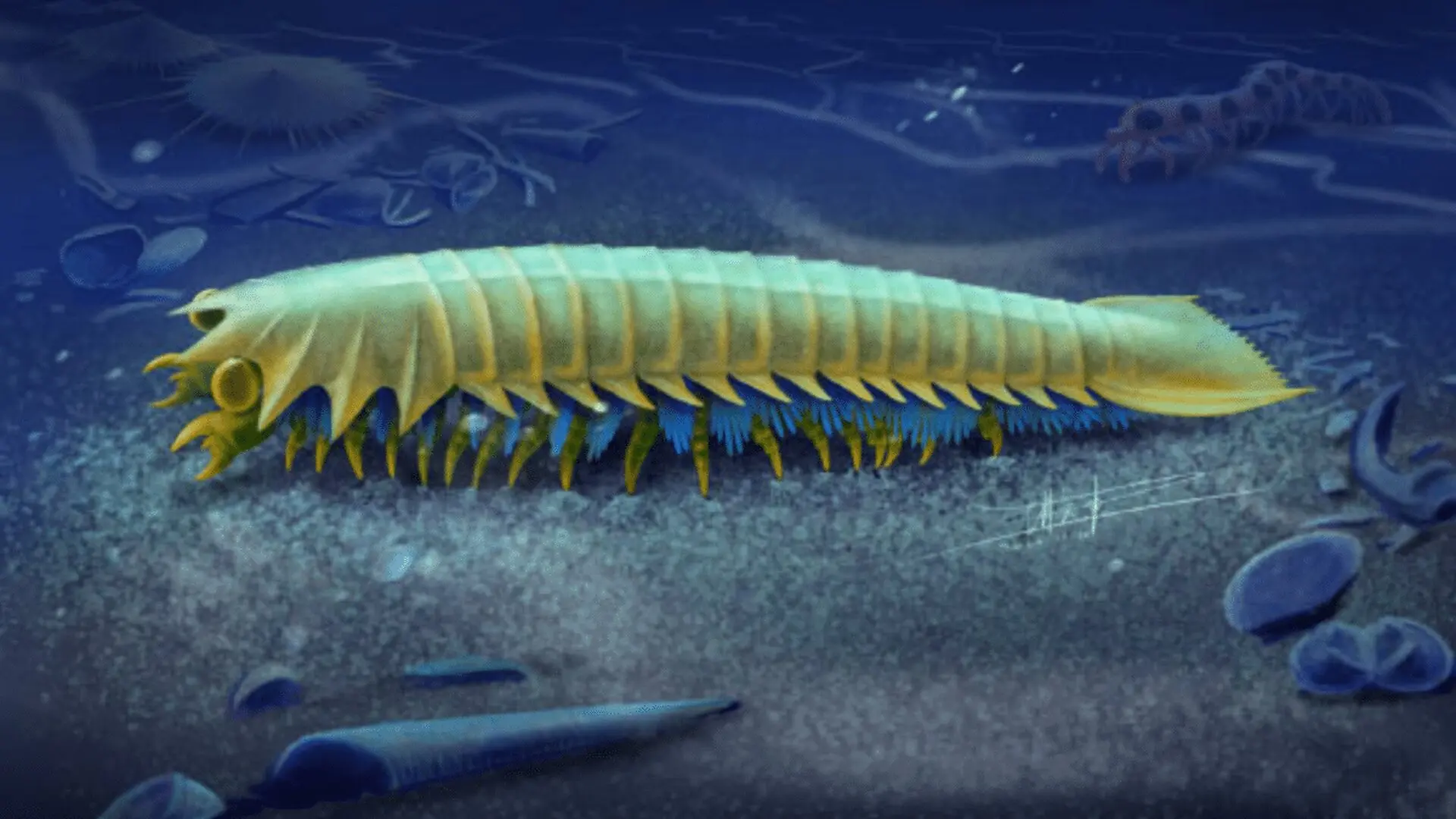
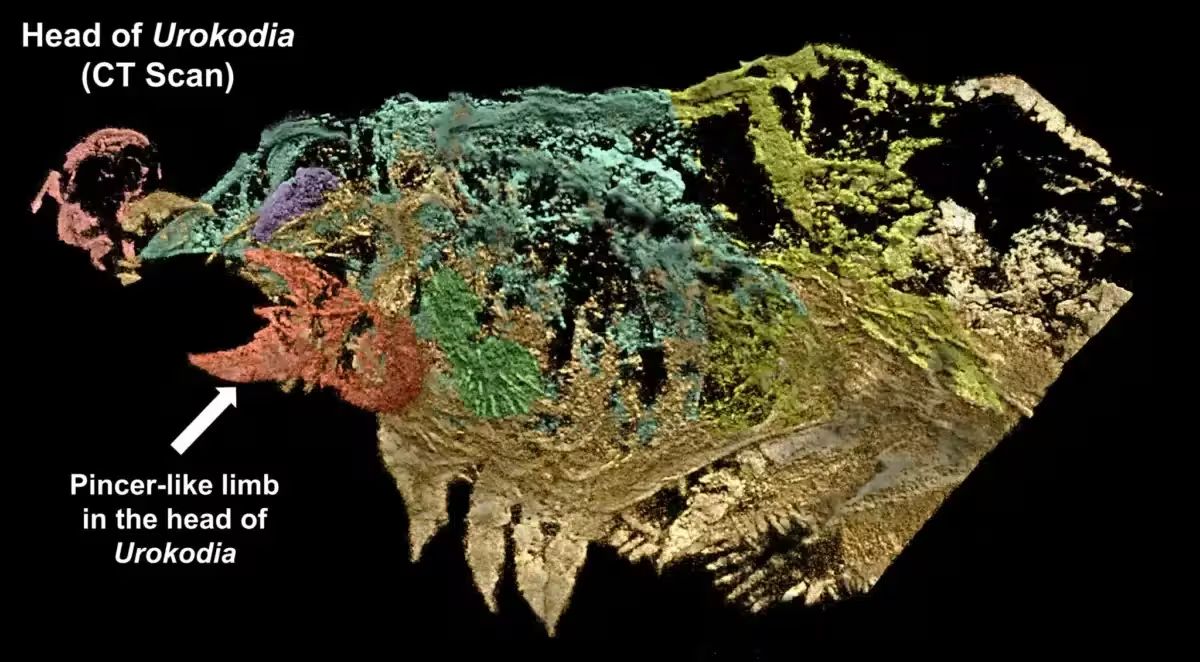
Using high‑resolution X‑ray tomography, a team of paleontologists has visualized soft‑tissue structures in a Cambrian fossil that have been invisible for more than 500 million years. The scans, performed without harming the specimen, revealed delicate, pincer‑like limbs at the front of the animal, prompting researchers to identify the fossil as a key early member of the chelicerate lineage.
X‑ray Scans Unveil Hidden Details of a Cambrian Predator
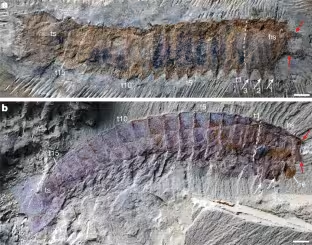
The specimen, named Urokodia aequalis, measures just two to three centimetres long but carries a suite of anatomical features that bridge primitive arthropod limbs and the specialized feeding appendages of modern spiders and scorpions. Its body is segmented, covered by a hardened exoskeleton, and equipped with forward‑projecting stalked eyes and jointed appendages. The newly exposed pincer‑like structures sit directly behind the eyes, representing the earliest morphological stage of what would later become venom‑delivering fangs and powerful claws.
“We were using X-ray tomography analysis of these fossils to reveal their soft anatomy buried in the rocks for hundreds of millions of years, when suddenly we noticed the pincer-like limbs at the front of the animal.” He continued, “We knew immediately that this was a very exciting fossil and indeed a distant ancestor of living chelicerates like scorpions and spiders.”
A Minute Marine Creature Sheds Light on Early Chelicerate Anatomy
Recovered from the famed Chengjiang Lagerstätte in present‑day Yunnan Province, China, the creature lived in shallow Cambrian seas teeming with a remarkable variety of early animal life. Its seven‑segmented head bears a hardened hypostome, while the trunk limbs are biramous, featuring overlapping exite flaps that resemble the primitive book‑gill structures seen in today’s horseshoe crabs.
Professor Mark Williams of the University of Leicester highlighted the broader context, noting that the fossil comes from an ecosystem that hosted more than two hundred distinct animal types over half a billion years ago. “Urokodia aequalis was part of an ancient ecosystem of over 200 different types of animals living in the seas over 500 million years ago,” he said. “These spectacularly preserved fossils provide real insights into how life was evolving on our planet at the very dawn of animals.”
From Ancient Limbs to Modern Fangs: Tracing Evolutionary Roots
The discovery extends beyond the identification of early chelicerae. Researchers also documented structures akin to early book gills on the limbs, reinforcing the link between Cambrian arthropods and contemporary chelicerates such as spiders, scorpions, ticks, mites, and horseshoe crabs. By preserving multiple transitional features within a single organism, Urokodia aequalis supplies concrete anatomical evidence for hypotheses that previously relied on fragmented fossils and comparative anatomy alone.
Why This Fossil Represents a Crucial Evolutionary Link
The combination of primitive and derived traits makes Urokodia aequalis a rare snapshot of an intermediate stage in arthropod evolution. Its head bears seven segments, a sclerotized hypostome, and the newly identified pincer‑like appendages that act as a morphological bridge between multisegmented limbs and true chelicerae. Meanwhile, the biramous trunk limbs support the hypothesis that book‑gill structures originated from megacheiran ancestors.
Because soft tissues seldom survive fossilization, specimens like this are invaluable for reconstructing the sequence of innovations that led to the diverse predatory strategies seen in modern chelicerates. As imaging technologies continue to advance and additional Cambrian fossils are reexamined, scientists anticipate uncovering further concealed details that will refine our understanding of how early marine ecosystems drove rapid evolutionary change.
This article has been fact checked for accuracy, with information verified against reputable sources. Learn more about us and our editorial process.
Last reviewed on .
Article history
- Latest version
Cite this page:
- Posted by Elizabeth Taylor