Parker Solar Probe Finds Dust Near Sun That May Explain Corona’s Extreme Heat
Study finds tiny charged dust near the Sun could significantly boost solar corona heating, reshaping our understanding of solar physics.
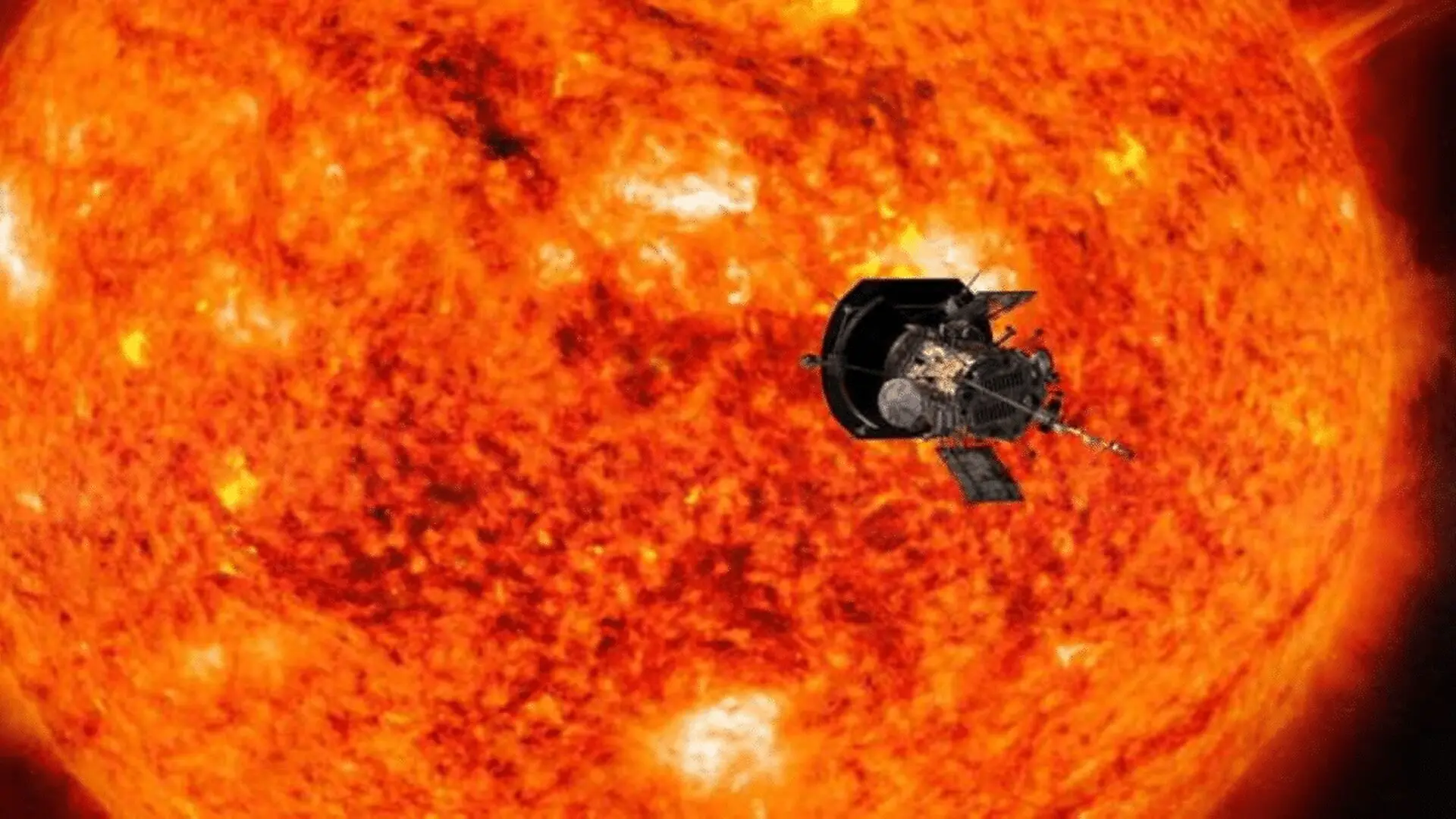
New analysis of data from NASA’s Parker Solar Probe suggests that minute charged dust particles orbiting close to the Sun may play a role in channeling energy through the solar corona, offering a fresh angle on the longstanding puzzle of why the corona burns at millions of degrees while the photosphere stays comparatively cool. The study, appearing in The Astrophysical Journal, adds a dusty twist to a field that has traditionally focused on plasma, magnetic fields and wave dynamics.
A Hidden Contributor to Coronal Heating Emerges
For years, researchers have attributed the Sun’s extreme outer‑atmosphere temperatures to the interplay of electrons, ions, magnetic fields and kinetic Alfvén waves, which ferry electromagnetic energy before it is deposited into particles. Lead author Syed Ayaz, a graduate research assistant at The University of Alabama in Huntsville’s Center for Space Plasma and Aeronomic Research, argues that an overlooked component—charged dust—deserves attention.
Ayaz notes,
“The higher temperature of the sun’s corona remains one of the major unsolved problems in heliophysics. For decades, researchers have focused mainly on how electrons, ions, magnetic fields and plasma waves transport and dissipate energy in the solar atmosphere. Kinetic Alfvén waves are especially important because they can carry electromagnetic energy through the corona and transfer that energy to particles, helping to heat and accelerate the plasma.”
Their work extends this framework by exploring how electrically charged dust grains could modify wave propagation and energy dissipation.
Dust Survival Near the Sun Defies Expectations
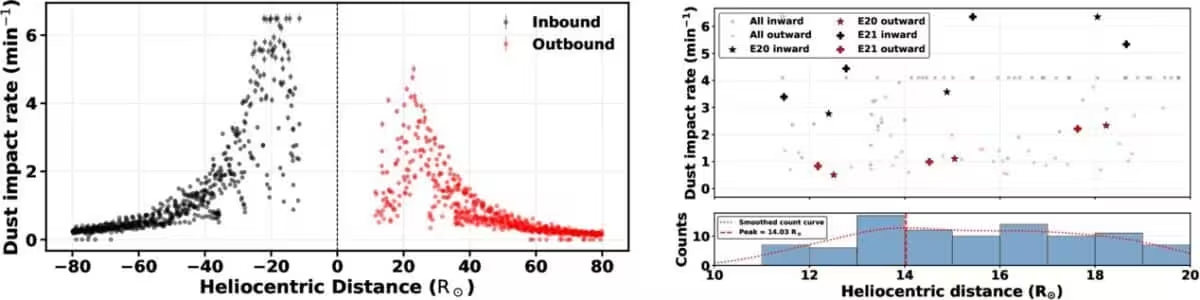
Conventional models have largely excluded dust because the intense solar heat was thought to vaporize any grain before it could affect coronal dynamics. Parker Solar Probe’s close passes challenged that view. “Our work adds a new ingredient to this picture: dust grains. Before the Parker Solar Probe, dust was not usually considered an active part of coronal heating models because dust grains—a million times more massive than electrons/ions—were not expected to survive the high temperature of the solar corona,” Ayaz explains.
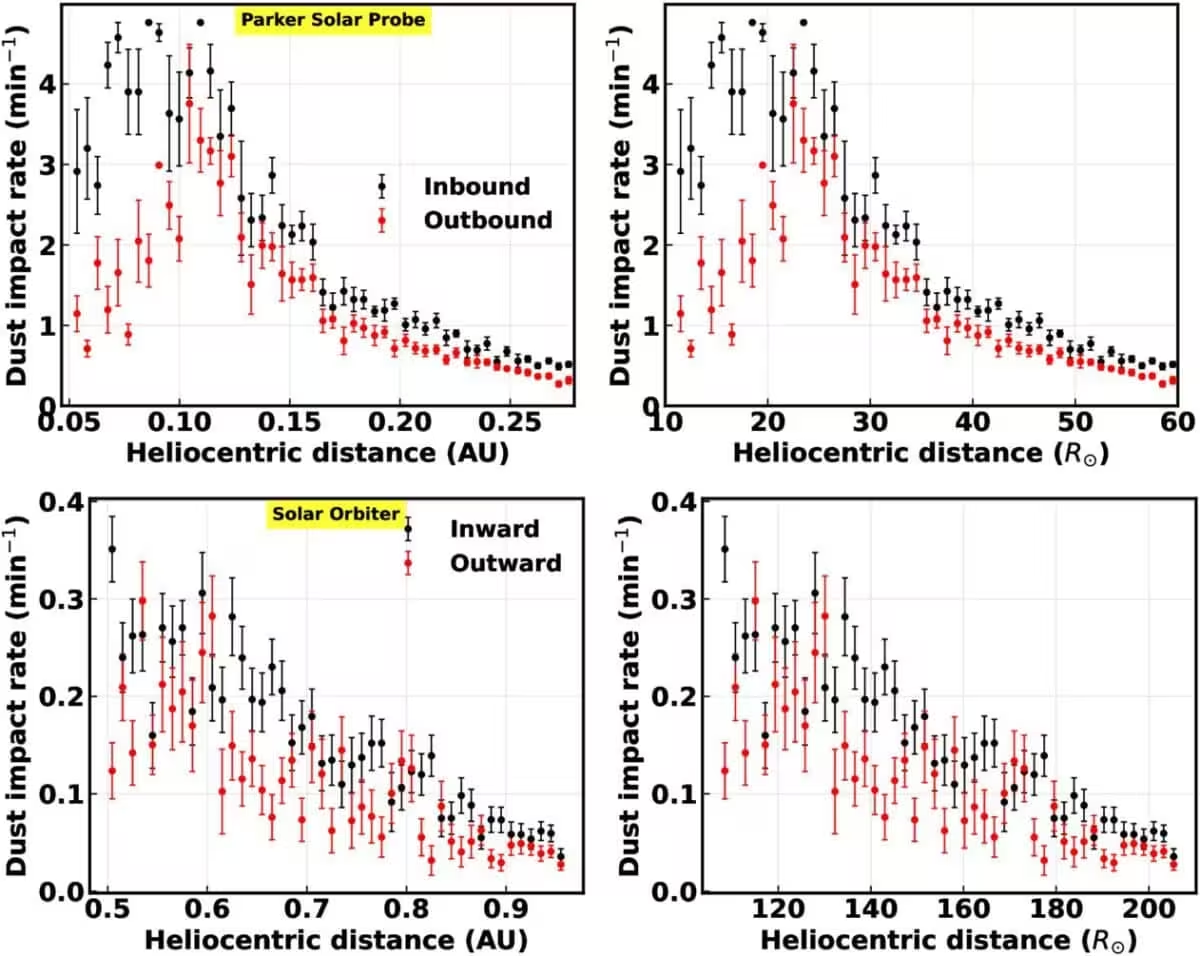
Remarkably, the probe detected these particles without a dedicated dust sensor. “What surprised me most was that the PSP could reveal so much about dust, even though it does not carry a dedicated dust detector on board,” he says. “When tiny dust grains strike the spacecraft at high speed, they vaporize and produce small clouds of charged particles. These impacts appear as sharp voltage spikes in the FIELDS antennas, allowing the whole spacecraft itself to act, in effect, like a dust detector.” The observations indicate that dust remains present and electrically active much closer to the Sun than previously assumed.
Charged Grains May Rewire Energy Transport
The The Astrophysical Journal paper argues that dust is far from passive. Once a grain picks up an electric charge through photoemission or plasma collection, it interacts with ambient electric and magnetic fields, altering plasma wave behavior. “This matters for solar physics because charged dust grains are not just passive particles. Once dust grains acquire an electric charge through processes such as photoemission and plasma collection, they interact with electric and magnetic fields, influence plasma waves and modify how energy is transported and dissipated,” Ayaz says.
The team identified two competing effects on kinetic Alfvén waves. Dust mass adds inertia, slowing the waves and allowing their energy to travel farther before dissipating. Conversely, dust charge strengthens the coupling between the wave, electric field and surrounding particles, enhancing local heating. “If dust mass dominates, wave energy may travel farther into the corona or young solar wind. If dust charge effects dominate, the energy may be released more locally as particle heating,” he explains.
Rethinking Solar‑Atmosphere Models
These results challenge the prevailing view that the near‑Sun environment can be treated as a plasma consisting solely of electrons, ions and magnetic fields. “Most models of solar heating and particle acceleration treat the near‑sun environment as a plasma made mainly of electrons, ions and magnetic fields,” Ayaz notes. “Those ingredients are still essential, but our research shows that charged dust grains also influence the physics in this region.” If future measurements confirm the effect, dust could become the missing link in explanations for both coronal heating and the acceleration of the nascent solar wind.
A New Path for Solar Research
Senior scientists on the project endorse the discovery. Dr. Gary Zank, distinguished professor of space science at UAH and director of CSPAR, says the probe’s dust detections “open up an entirely new and unexpected area of study in solar physics.” He adds, “Syed realized very quickly that the presence of dust could change how we view the long‑standing and open problem of how to heat the solar corona to more than a million degrees. The results he obtained in his preliminary study already suggest that a surprising new paradigm may be emerging.” Upcoming missions equipped with purpose‑built dust detectors and advanced wave instruments could determine whether these grains merely survive near the Sun or actively shape one of the most energetic environments in the solar system.
This article has been fact checked for accuracy, with information verified against reputable sources. Learn more about us and our editorial process.
Last reviewed on .
Article history
- Latest version
Reference(s)
- Ayaz, Syed., et al. “Parker Solar Probe Observations of Dust Mass and Charge Densities and Their Impact on Kinetic Alfvén Wave Dynamics in Solar Coronal Heating.” The Astrophysical Journal, vol. 1005, no. 2, July 1, 2026, pp. 133 American Astronomical Society, doi: 10.3847/1538-4357/ae77f7. <https://iopscience.iop.org/article/10.3847/1538-4357/ae77f7>.
Cite this page:
- Posted by Karan Das