In An Ancient Cave, A Team Of Researchers Discovered Jewelry And The Bones 11,000 Years Ago
Ancient human remains and artifacts discovered in a northern Britain cave spark scientific debate over their origins and cultural identity
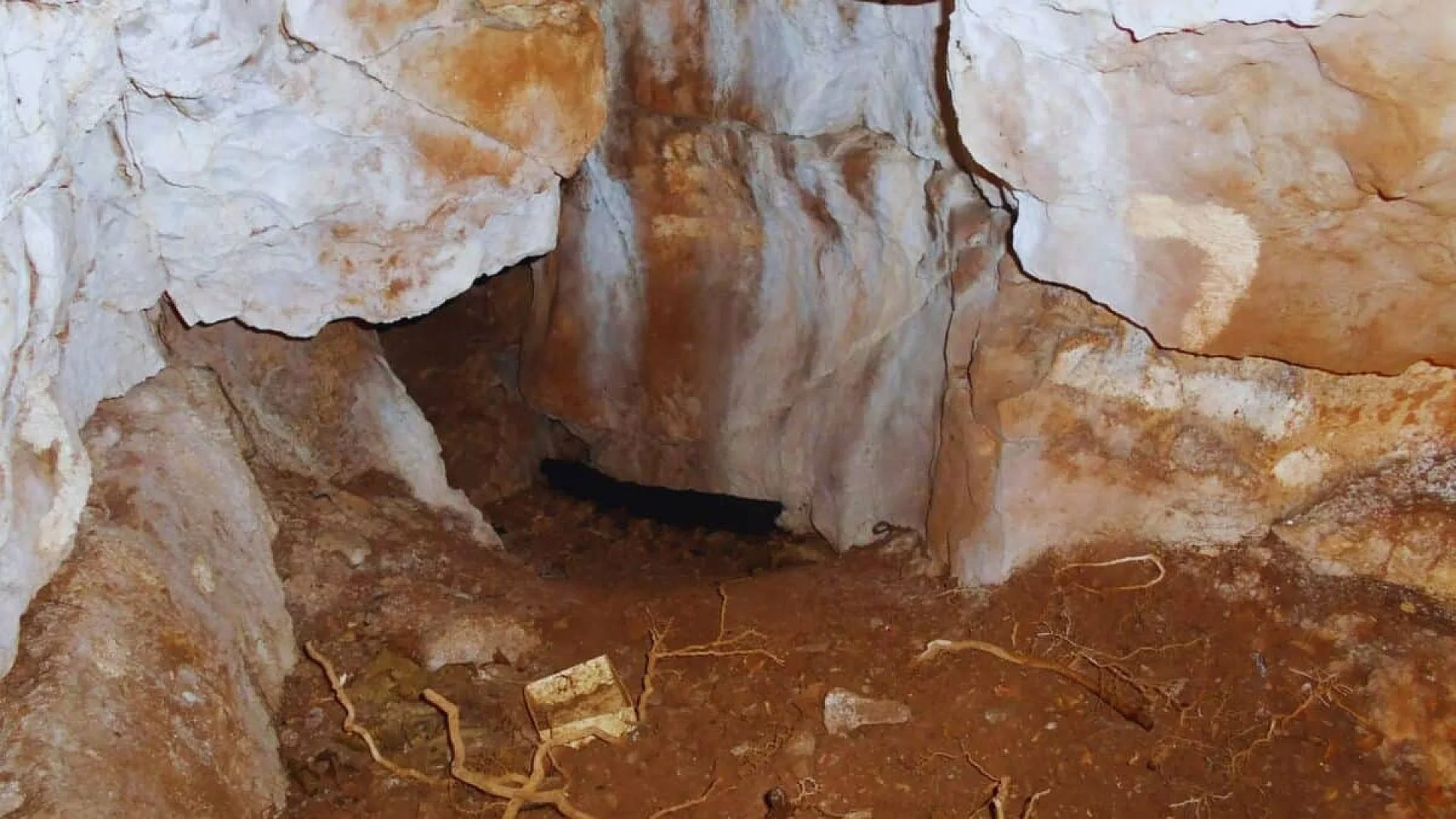
Scientists have identified the earliest human fossils from northern England as belonging to a toddler who lived roughly 11,000 years ago. The skeletal fragments emerged from Heaning Wood Bone Cave in Cumbria, and genetic analysis confirms the individual was a girl aged between two and a half and three and a half years at death.
The find was spearheaded by local archaeologist Martin Stables, with subsequent examination carried out by researchers from the University of Central Lancashire. Accompanying the child’s skeleton were objects suggesting a purposeful interment rather than a random deposit.
The site appears to have held ceremonial significance for Mesolithic foragers, indicating that even eleven millennia ago, communities deliberately arranged the disposition of their deceased.
Ancient Child Illuminates Early Burial Rituals
Three years after the bones were first uncovered, an international consortium succeeded in retrieving genetic material from the skeleton. The sequencing confirmed both the child’s age and her sex—a rare achievement for specimens of this antiquity. Dr. Rick Peterson, who headed the study, observed:
“It is the first time we have been able to be so specific about the age of a child whose remains are so old and be certain that they are from a female.” And the jewelry found with her, dated to the same period, makes it clear that the burial was intentional.
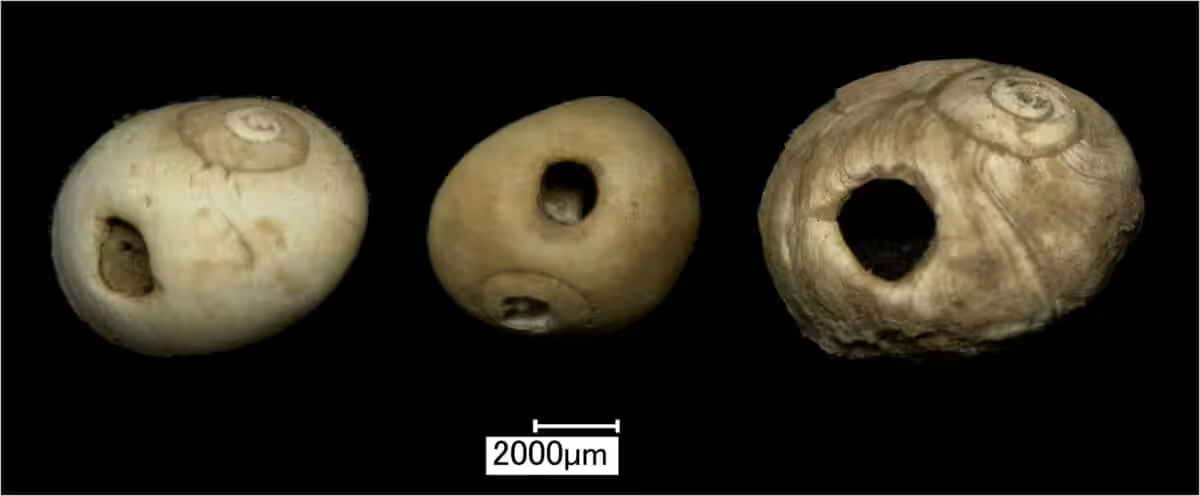
Such caverns were frequently regarded as thresholds to the otherworld. Peterson highlighted that the meticulous placement of the Ossick Lass, together with pierced shell beads and a deer tooth, reflects a deliberate funerary ceremony comparable to other Mesolithic contexts across northern Europe.
Insights into Prehistoric Spiritual Practices
The remains have been affectionately dubbed the “Ossick Lass,” a regional term meaning “Urswick girl,” linking the individual to the nearby settlement.
Martin Stables, an autodidact archaeologist who commenced excavation in 2016, describes the work as a journey through successive ages, uncovering Bronze Age and Neolithic layers before arriving at the Mesolithic stratum.
“Ultimately, reaching the Mesolithic Period has obviously become the highlight of the excavation and something that’s particularly poignant to myself. Effectively, I was the first to bear witness to the obviously caring burial of someone’s child that occurred over 11,000 years ago,” he said in a release published by the University of Central Lancashire.
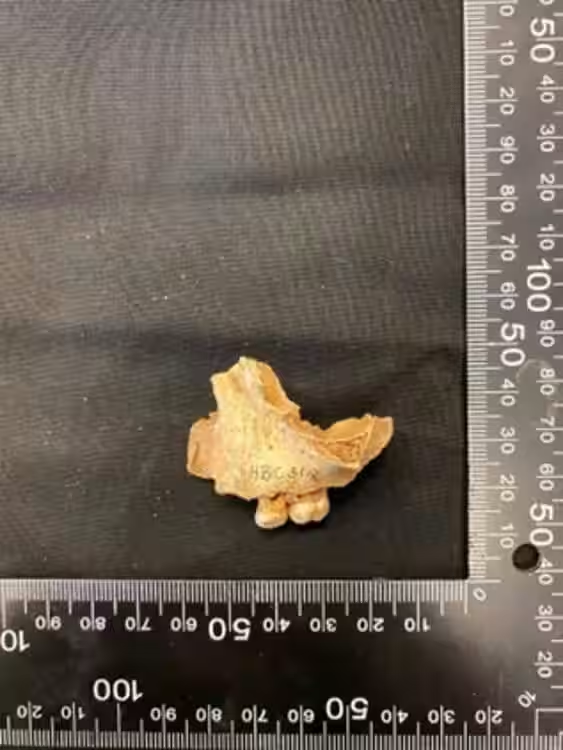
At least eight human bodies have been recovered from the cave, spanning three distinct phases: Early Bronze Age, Early Neolithic, and the initial Mesolithic. Stables notes that the recurrent interments underscore the site’s long‑standing ritual significance.
Caves as Central Ritual Spaces in Prehistoric Britain
Prior to this discovery, the most ancient human fossils from northern England dated to roughly 10,000 years ago and were recovered from Kent’s Bank Cavern. The University of Central Lancashire team asserts that the Ossick Lass now establishes a new chronological frontier for early inhabitants of the region.
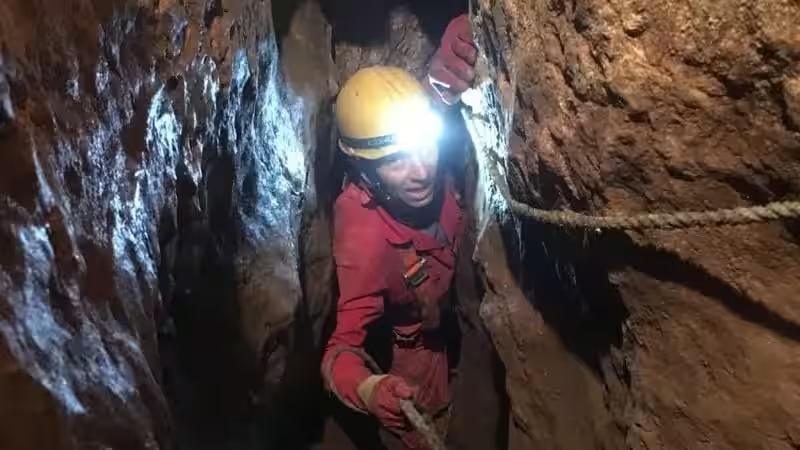
The findings, appearing in the Proceedings of the Prehistoric Society Journal, highlight the scarcity of Mesolithic skeletal material in northern Britain. Stables added that ongoing research aims to shed further light on funerary customs and daily activities of these early peoples.
“The publication of this research paper is an important stage, that in due course, allows us to reveal further information about this unique site of national importance. My journey continues, but in the present as this is just the beginning and there is much more we plan to tell.”
This article has been fact checked for accuracy, with information verified against reputable sources. Learn more about us and our editorial process.
Last reviewed on .
Article history
- Latest version
Reference(s)
- “Rick Peterson - Academic Staff.” University of Lancashire <https://www.lancashire.ac.uk/academics/dr-rick-peterson>.
- Lancashire, University. “DNA analysis reveals Northern Britain’s oldest human remains are of a young female child.”, February 12, 2026 University of Lancashire <https://www.lancashire.ac.uk/news/northern-britain-oldest-human-remains-identified>.
- Warburton, Keziah. “Farthest North: Human Remains from Heaning Wood Bone Cave, Cumbria, UK and their European context | Proceedings of the Prehistoric Society | Cambridge Core.”, vol. 91, pp. 47-66. Cambridge Core, doi: 10.1017/ppr.2025.10077. <https://www.cambridge.org/core/journals/proceedings-of-the-prehistoric-society/article/farthest-north-human-remains-from-heaning-wood-bone-cave-cumbria-uk-and-their-european-context/3F163365E901870EF93F78E6BA634A17>.
Cite this page:
- Posted by Elizabeth Taylor