For 70 Years, Scientists Thought These Were Mammoth Bones… Until They Discovered They Belonged To An Entirely Different Animal
Researchers uncover an unexpected twist in two massive fossil bones long labeled as Alaska Ice Age, challenging previous interpretations.
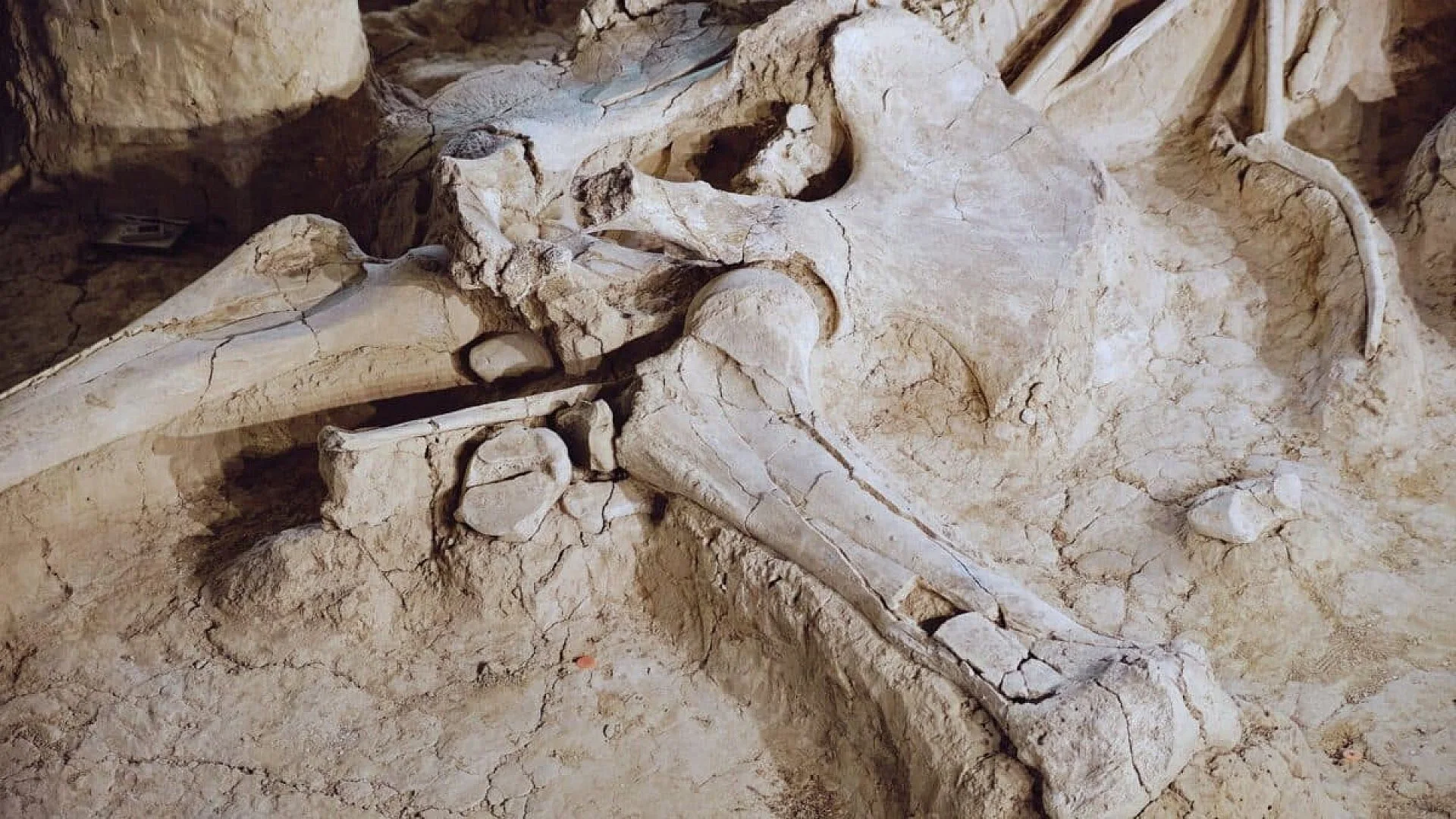
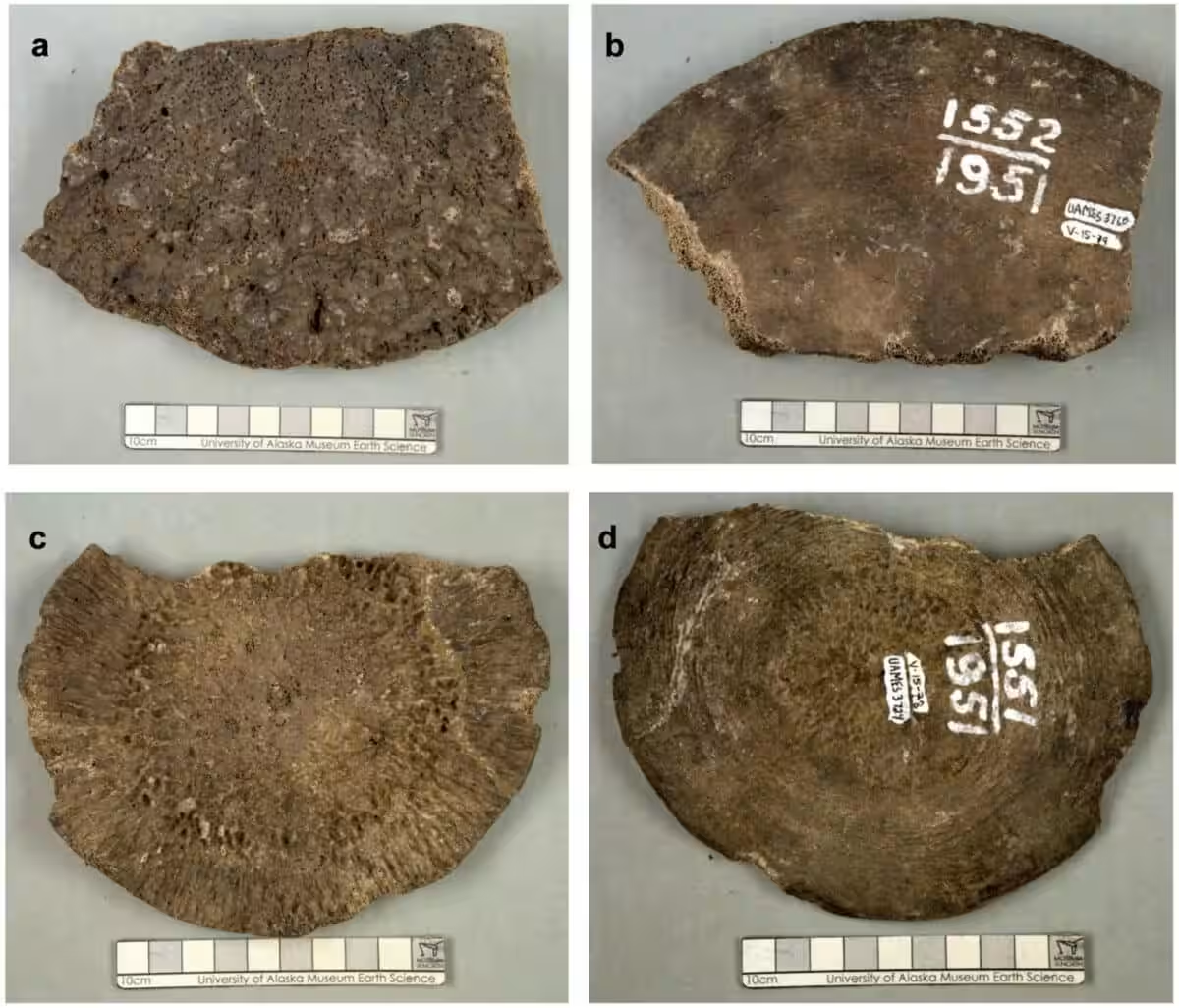
Two massive fossils that have hung in the University of Alaska Museum of the North for more than seven decades were long assumed to be the remains of woolly mammoths. New laboratory analyses have shown they are actually whale bones, originating from animals that lived roughly 1,100 to 1,800 years ago hundreds of kilometres inland from the coast.
The specimens were gathered near Fairbanks in the early 1950s by Otto Geist, a researcher who worked across interior and coastal Alaska. They remained in storage until the Adopt a Mammoth initiative, launched in 2022, applied radiocarbon dating. Preliminary results indicated ages between 1,854 and 2,731 years, which, if the bones had belonged to mammoths, would have set a record for the youngest mainland specimens ever found.
Such a find would have forced a major revision of post‑glacial Arctic ecosystem models. Existing data place the disappearance of mainland Beringian mammoths at around 13,000 years ago, while isolated island groups persisted until roughly 4,000 years ago. A mammoth surviving only a few thousand years ago would have been a striking outlier, prompting scientists to rethink extinction chronologies.
Genetic Tests Reveal Whale Origins
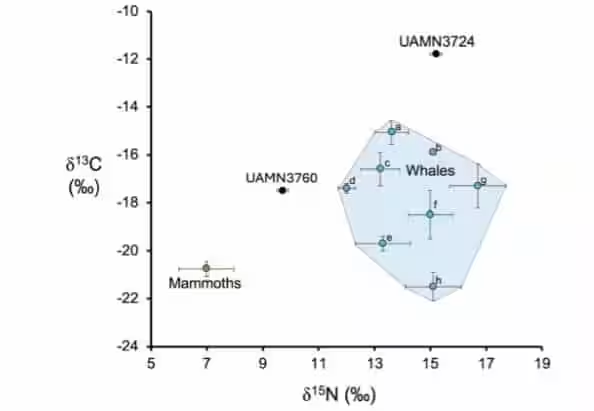
Before announcing a groundbreaking mammoth, researchers performed additional analyses. Stable‑isotope measurements indicated a marine diet, contradicting the herbivorous feeding habits of mammoths. Subsequent ancient‑DNA sequencing identified one bone as belonging to a common minke whale and the other to a North Pacific right whale, a critically endangered species with an estimated global population of about 30 individuals today. Matthew Wooller, a member of the research team, explained the findings in a statement released by the University of Alaska Fairbanks:
“The DNA evidence told us they were whales, but not even the same species of whale.”
After adjusting the radiocarbon dates for marine carbon sources, the whales are now estimated to have lived about 1,100 to 1,800 years ago.
“Those would be the youngest mammoth fossils on the planet,” he added. “That’s a really big deal.”
The episode underscores the importance of integrating dating techniques, isotopic data, and genetic evidence; reliance on a single method could have produced an exciting yet inaccurate conclusion.
How Did Marine Giants Reach the Interior?
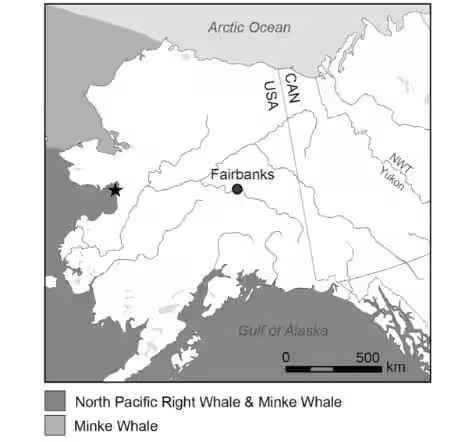
The unexpected inland location—approximately 250 miles from the ocean—has sparked speculation about the pathways that might have carried whale remains that far inland. The study, published in the Journal of Quaternary Science, considered river transport, predation, and even the possibility of ancient coastal trade, noting that whale bones were sometimes repurposed for tools and plates.
None of these scenarios fully explain the presence of the rare North Pacific right whale so far from its typical shoreline, leaving researchers with an unresolved puzzle about how a marine species could end up hundreds of kilometres inland.
A straightforward explanation may involve a labeling error. Geist worked in both interior and coastal regions, and historic museum records might have been misfiled, assigning the bones to an inland provenance. Even if the misidentification stemmed from a simple cataloguing mistake, the episode demonstrates that legacy collections can still yield novel insights when examined with modern techniques.
Implications for Museum Collections and Future Research
The authors emphasize that subjecting museum specimens to multiple analytical approaches can correct long‑standing assumptions and strengthen the evidentiary base, even when headline‑grabbing claims disappear.
“We could have easily stepped away from it, but by putting dates on specimens you’re adding value to the museum collection,” Wooller said. “Now there are specimens of ancient whales that people can use in future research.”
The University of Alaska Fairbanks plans to open a new radiocarbon dating laboratory in summer 2026, the first facility of its kind in the state. The lab will accelerate age determinations and help clarify how Alaska’s ecosystems have evolved over millennia. While the mystery of how whale remains traveled so far inland remains unresolved, the case highlights how rigorous verification and interdisciplinary evidence can overturn decades‑old interpretations.
This article has been fact checked for accuracy, with information verified against reputable sources. Learn more about us and our editorial process.
Last reviewed on .
Article history
- Latest version
Reference(s)
- Wooller, Matthew J.., et al. “Adopted “mammoths” from Alaska turn out to be a whale's tale.” Journal of Quaternary Science, vol. 41, no. 2, December 8, 2025, pp. 199-206. Wiley, doi: 10.1002/jqs.70040. <https://onlinelibrary.wiley.com/doi/10.1002/jqs.70040>.
Cite this page:
- Posted by Elizabeth Taylor