Buried for Hundreds of Thousands of Years, Ancient Teeth Contained a Protein Scientists Had Never Seen Before
At first glance, these fossilized teeth appeared unremarkable. Yet upon closer examination, researchers uncovered preserved proteins within them, revealing an unexpected discovery.
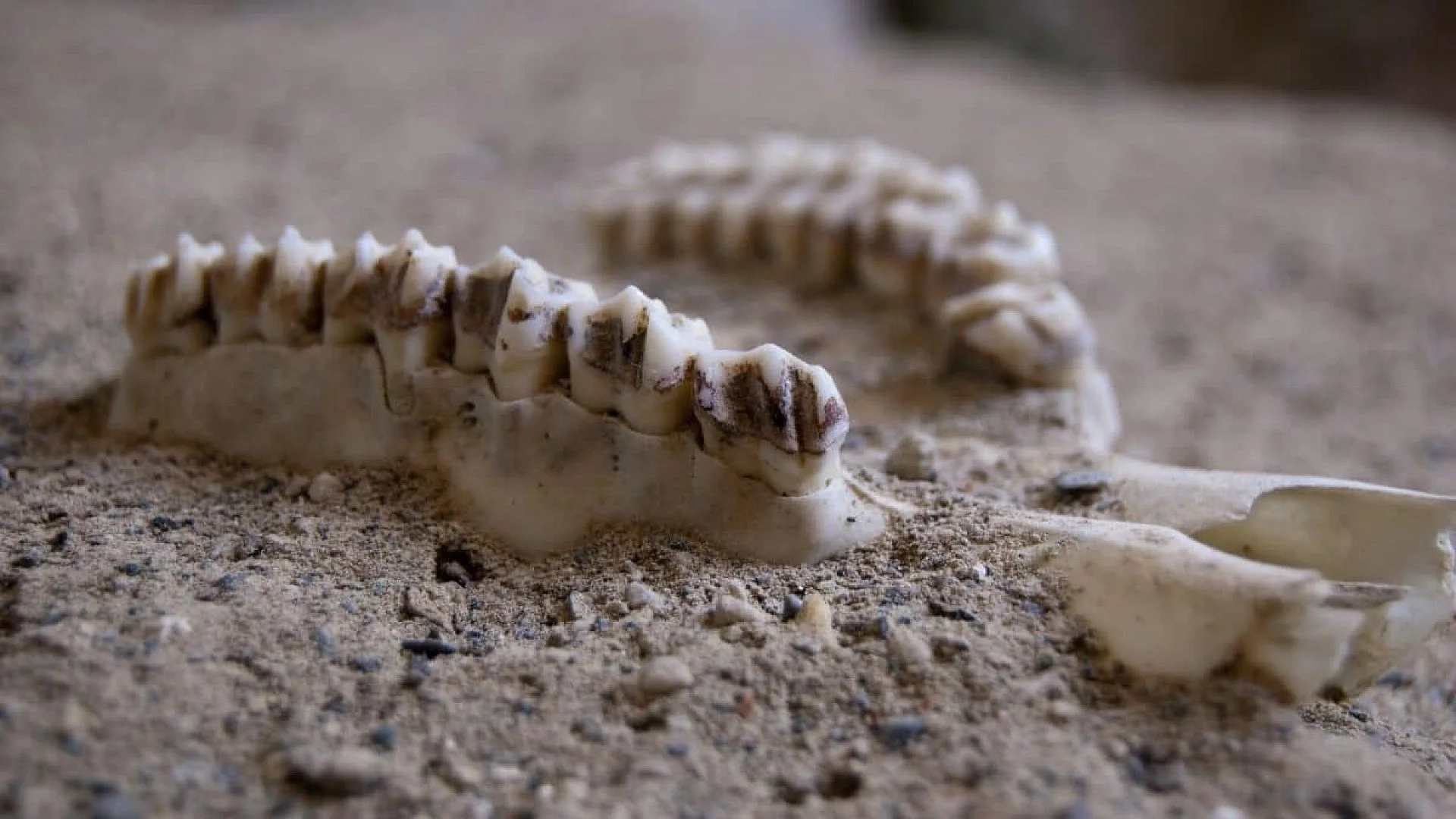
Groundbreaking Discovery in China Unveils Ancient Human Migrations
A remarkable find in China has shed new light on one of the most enduring mysteries of human evolution: the interactions between ancient human species. By analyzing proteins preserved inside six fossil teeth, researchers have discovered evidence that Homo erectus may have interbred with Denisovans, a previously unknown human population, hundreds of thousands of years ago.
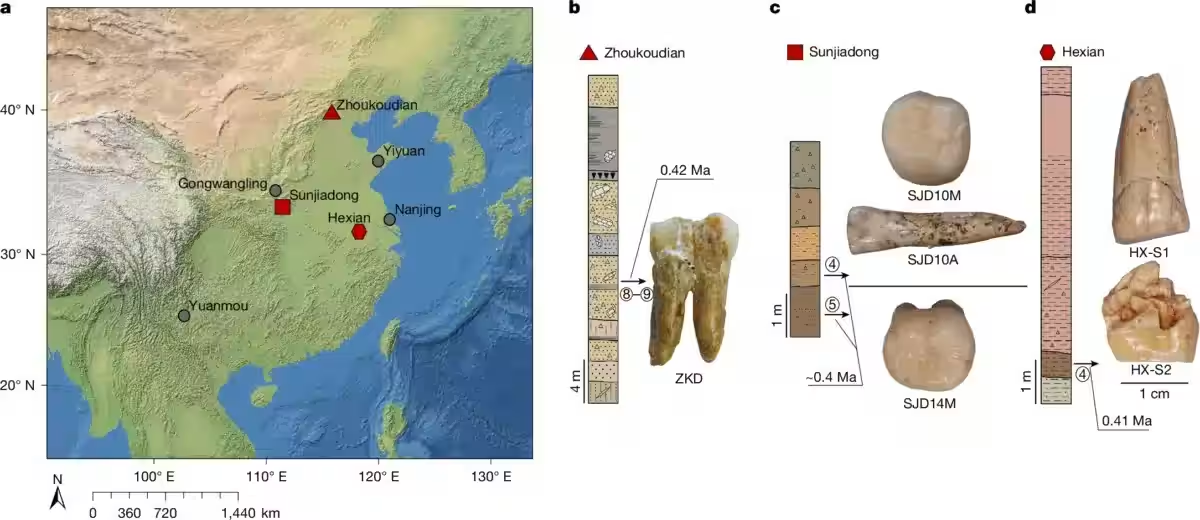
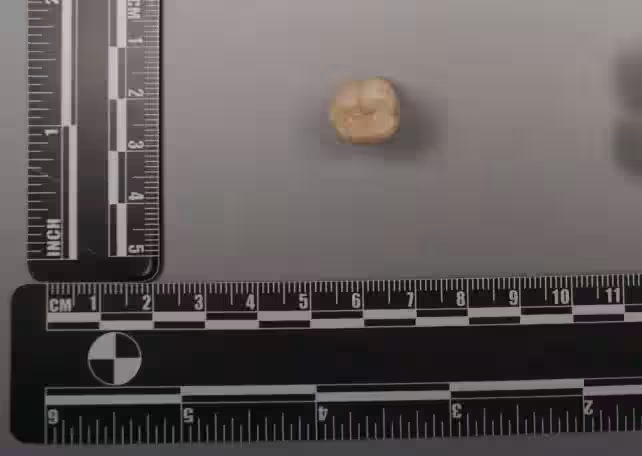
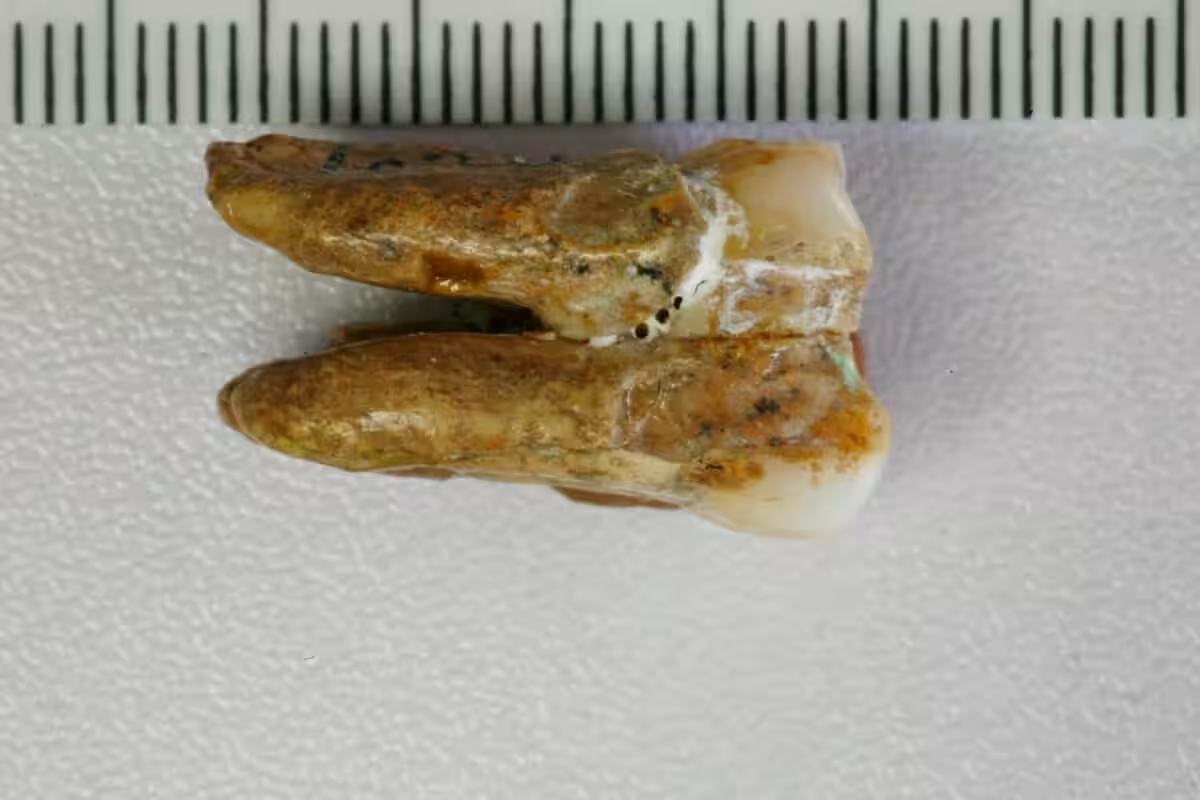
The discovery, published in Nature, is based on teeth dating back approximately 400,000 years, unearthed at the sites of Zhoukoudian, Hexian, and Sunjiadong. This groundbreaking research marks a significant milestone in the field of paleoanthropology, as it provides the first-ever recovery of proteins from fossils of this age.
Despite numerous discoveries, scientists still have a limited understanding of how Homo erectus interacted with other ancient human species. DNA rarely survives in fossils this old, especially in warmer regions, making the preservation of proteins a crucial aspect of this research.
Unveiling the Secrets of Ancient Proteins
The research team, led by Qiaomei Fu at the Institute of Vertebrate Paleontology and Paleoanthropology in Beijing, extracted proteins from six fossil teeth assigned to Homo erectus. The study found that five of the teeth belonged to males and one belonged to a female.
The researchers identified two protein variants shared across all six fossils. One variant had never been observed in any known human group, suggesting it may be unique to Homo erectus. The second variant was more surprising, as it had already been identified in Denisovans, a species known to carry DNA from an unidentified ancient human population.
The discovery of these proteins may indicate that Homo erectus is the unknown contributor to the Denisovan genetic material. However, the isolated nature of the teeth makes interpretation challenging, as no complete skeletons were discovered alongside them.
Debate Surrounding the Fossils
John Hawks, a paleoanthropologist at the University of Wisconsin-Madison, has raised concerns about the identification of the fossils. He notes that the teeth were found independently, rather than attached to skulls or skeletons, making identification more complicated.
Hawks proposes three possible explanations for the findings: the teeth genuinely belonged to Homo erectus and preserve evidence of interbreeding with Denisovans, the fossils actually belonged to Denisovans with the unusual proteins reflecting variation within Denisovan populations, or the fossils represent a Denisovan population that had already inherited genetic material from earlier contact with Homo erectus.
He emphasizes that the data cannot distinguish between these interpretations, and further research is needed to determine the authenticity of the fossils and their connection to other ancient human species.
The Future of Ancient Protein Research
The study highlights the rapid advancement of ancient protein analysis. A few years ago, researchers managed to recover proteins from a Homo erectus tooth found at Dmanisi in Georgia, though the results provided little evolutionary information.
Ryan McRae, an expert in paleoanthropology at the Smithsonian National Museum of Natural History, notes that the findings demonstrate how new molecular techniques are transforming the study of human origins.
However, scientists still need more fossils and molecular evidence before drawing firm conclusions. As Qiaomei Fu noted, “We really need to get more DNA,” and additional Homo erectus remains will be necessary to determine how closely this species was connected to other ancient humans.
This article has been fact checked for accuracy, with information verified against reputable sources. Learn more about us and our editorial process.
Last reviewed on .
Article history
- Latest version
Reference(s)
- “Prof. Qiaomei Fu | UNESCO AL FOZAN International Prize for the Promotion of Young Scientists in STEM.” <https://unescoalfozanprize.org/fr/first-edition/prof-qiaomei-fu/>.
- “Hawks, John.”, November 7, 2016 Department of Anthropology <https://www.anthropology.wisc.edu/staff/hawks-john/>.
- “Ryan McRae.”, April 4, 2024 The Smithsonian Institution's Human Origins Program <https://humanorigins.si.edu/about/human-origins-program-team/ryan-mcrae>.
Cite this page:
- Posted by Elizabeth Taylor