A Farmer Abandoned Five Cows on a Remote Island in 1871. 130 Years Later, Scientists Opened Their DNA and Froze
What started with a handful of abandoned cattle evolved into a long-term scientific study, and the newest genetic findings uncovered an unexpected discovery.
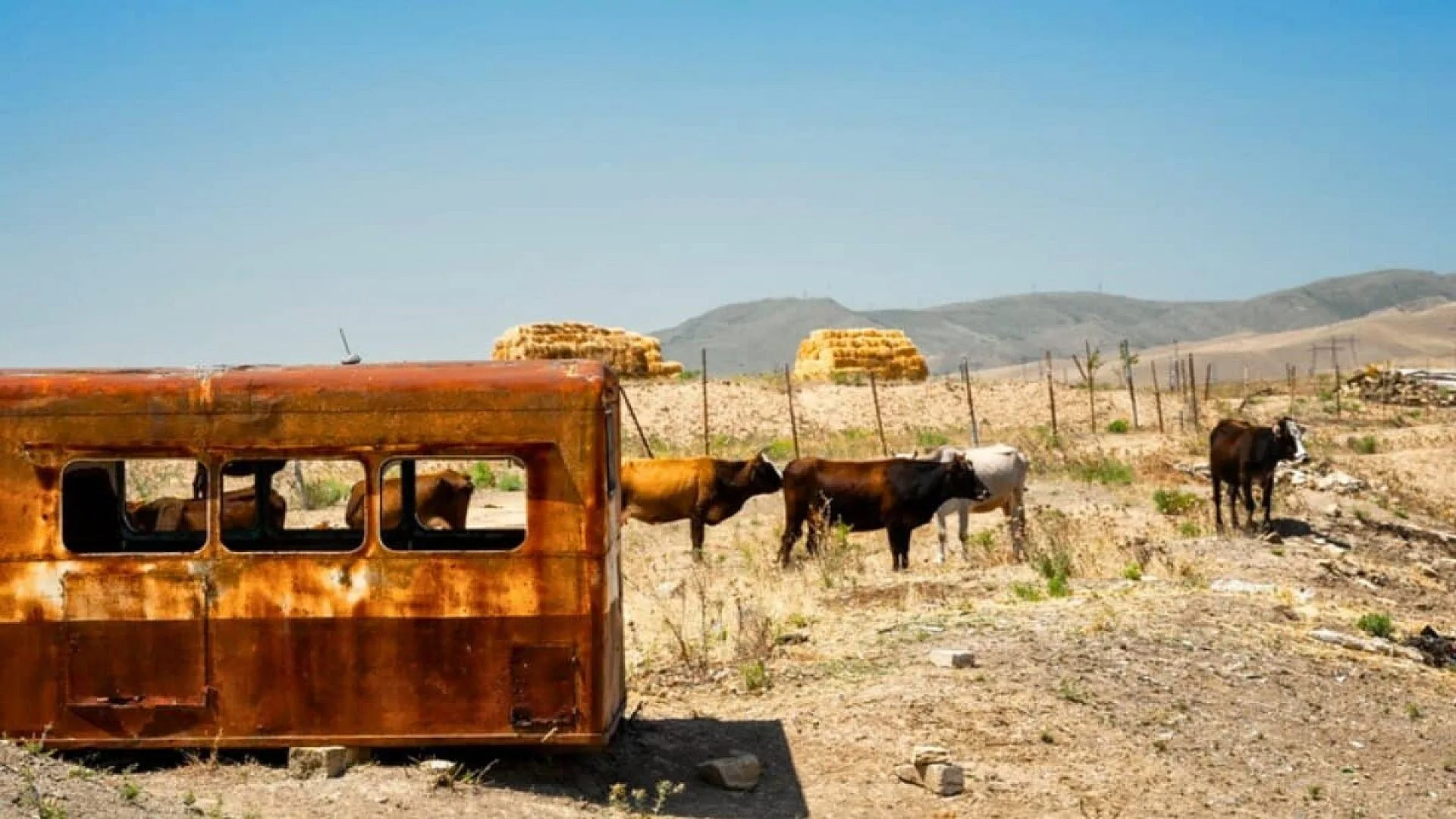
Five cattle abandoned on a remote subantarctic island in 1871 formed a resilient herd that defied extinction for over a century. When scientists finally deciphered their DNA decades after the last animals were killed, they overturned a long-held assumption about how these unlikely survivors adapted to one of the planet’s most isolated environments.
The herd did not undergo rapid island dwarfism, a genetic study has now revealed. Instead, the animals likely arrived already small and carried a hidden genetic advantage that allowed them to thrive.
Published in May 2026 in the journal Molecular Biology and Evolution, the research reconstructs the genetic history of the feral cattle of Amsterdam Island, a 21-square-mile French territory in the southern Indian Ocean roughly 2,760 miles southeast of Madagascar. Geneticist Mathieu Gautier led the work with collaborators from INRAE and the University of Liège. The team used preserved DNA from animals sampled in 1992 and 2006, sequencing eight whole genomes and genotyping ten more.
Unraveling the Herd’s Origins
The analysis uncovered two distinct ancestral roots. Approximately three-quarters of the cattle’s genetic background matched European taurine breeds, specifically today’s Jersey cattle. The remaining quarter aligned with Indian Ocean zebu, animals tied to warm climates and related to cattle from Madagascar and Mayotte.
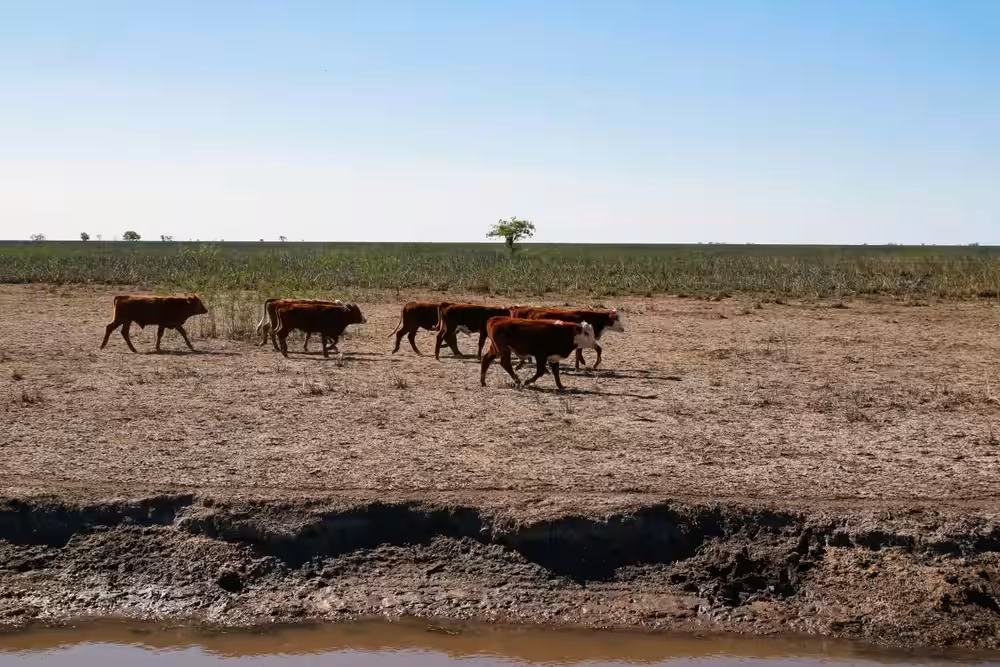
The study suggests that the five founders brought to the island by a farmer named Heurtin may have carried blended ancestry before leaving Réunion Island. This mixed ancestry can prop up genetic diversity from the start, even when a founding group is tiny.
The founders’ European lineage descended from breeds suited to cool, wet, and windy conditions. The cattle may have arrived biologically prepared for an environment hammered by hurricane-force winds, cold, and scarce fresh water.
Challenging a Long-Standing Dwarfism Claim
This genetic portrait pushes back against a 2017 study in Scientific Reports that argued the cattle underwent rapid dwarfism, shrinking to roughly three-quarters of their original body size in just over a century. That earlier research on rapid dwarfing of an insular mammal, led by Roberto Rozzi and Mark V. Lomolino, examined skeletal measurements from 90 adult animals culled in the late 1980s.
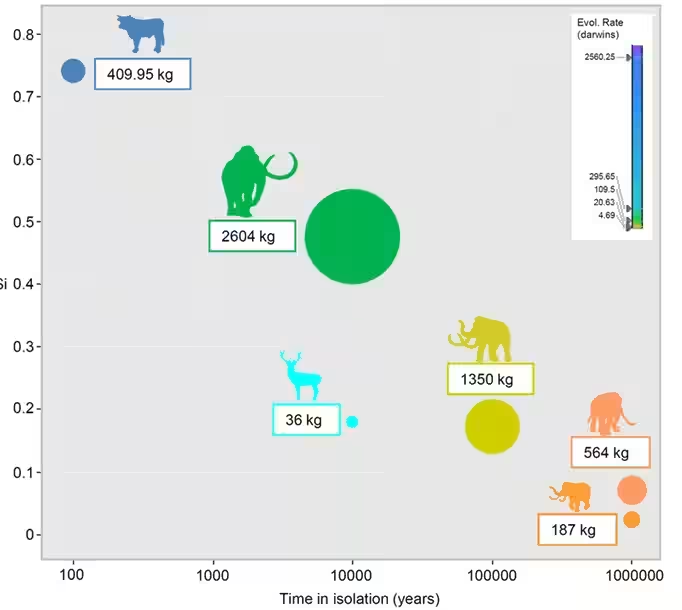
The new genetics paper disputes that reading. Researchers found no clear genetic signal of selection for reduced body size. DNA patterns point instead to founders who were small from the outset, carrying the genetic resilience to multiply fast after an extreme population bottleneck. The herd swelled to roughly 2,000 animals by 1952 and rebounded to similar numbers in 1988 after a disease-driven crash.
Survival in Extreme Isolation
Launching from five animals meant heavy inbreeding across generations. The study pegs individual inbreeding near 30 percent, a level that can raise the odds of genetic disease. Relatives are more likely to share harmful mutations. Yet the team found no evidence that damaging variants were purged by natural selection, nor did they detect the genetic collapse many would predict from such a narrow start.
The bottleneck was severe but brief. The herd expanded quickly, which curbed the loss of genetic diversity. Earlier observers described animals in solid health, though the researchers caution that hidden genetic risks may have lingered.
The team relied on whole genome sequencing, a method that reads nearly all of an animal’s genetic code rather than selected segments. According to MedlinePlus Genetics, this approach determines the order of all nucleotides in a person’s DNA and can flag variations in any part of the genome, a far wider net than older techniques that scanned only protein-coding regions.
Why the Herd Was Removed
By the late 1980s, conservation managers faced a stark tradeoff: preserve a rare feral herd or protect an island ecosystem that exists nowhere else. A 1995 paper in Biological Conservation by Pierre Jouventin identified the cattle as a serious threat to endangered native species, particularly the endemic Amsterdam albatross and the rare Phylica arborea tree.
A fence went up in 1987. More than a thousand cattle were cleared from the southern part of the island over the next two years. The Agreement on the Conservation of Albatrosses and Petrels later confirmed that the final animals were killed in 2010 as part of broader restoration work that included replanting native vegetation. UNESCO added the French Austral Lands and Seas to its World Heritage List in 2019.
The genetic study became possible only because researchers had banked DNA from 18 cattle sampled years before the eradication. No coordinated effort saved biological material when the herd was eliminated, the report on the findings notes. That stored DNA, genotyped with modern tools and fully sequenced for eight animals, gave scientists a second chance to examine what five cows left behind on a windswept island 130 years after their arrival.
This article has been fact checked for accuracy, with information verified against reputable sources. Learn more about us and our editorial process.
Last reviewed on .
Article history
- Latest version
Reference(s)
- <https://academic.oup.com/mbe/article/41/7/msae121/7695851>.
- Rozzi, Roberto. “Rapid Dwarfing of an Insular Mammal – The Feral Cattle of Amsterdam Island - Scientific Reports.”, vol. 7, no. 1, August 18, 2017, pp. 8820 Nature, doi: 10.1038/s41598-017-08820-2. <https://www.nature.com/articles/s41598-017-08820-2>.
- “What are whole exome sequencing and whole genome sequencing?: MedlinePlus Genetics.” <https://medlineplus.gov/genetics/understanding/testing/sequencing/>.
- “Agreement on the Conservation of Albatrosses and Petrels - Bye-bye moo-cows and bye-bye Mouflons! Recent conservation and restoration efforts at the French sub-Antarctic islands.” <https://www.acap.aq/news/news-archive/2012-news-archive/bye-bye-moo-cows-and-bye-bye-mouflons-recent-conservation-and-restoration-efforts-at-the-french-sub-antarctic-islands>.
Cite this page:
- Posted by Elizabeth Taylor