A Shepherd in Patagonia Discovered 65-Foot Dinosaur Fossils Beneath His Farm That Don’t Belong to Any Recognized Group
Deep below a quiet farmland, colossal fossils lay undisturbed for countless millennia. Specialists now suspect this ancient being might represent an entirely new dinosaur group, unlike any previously documented.
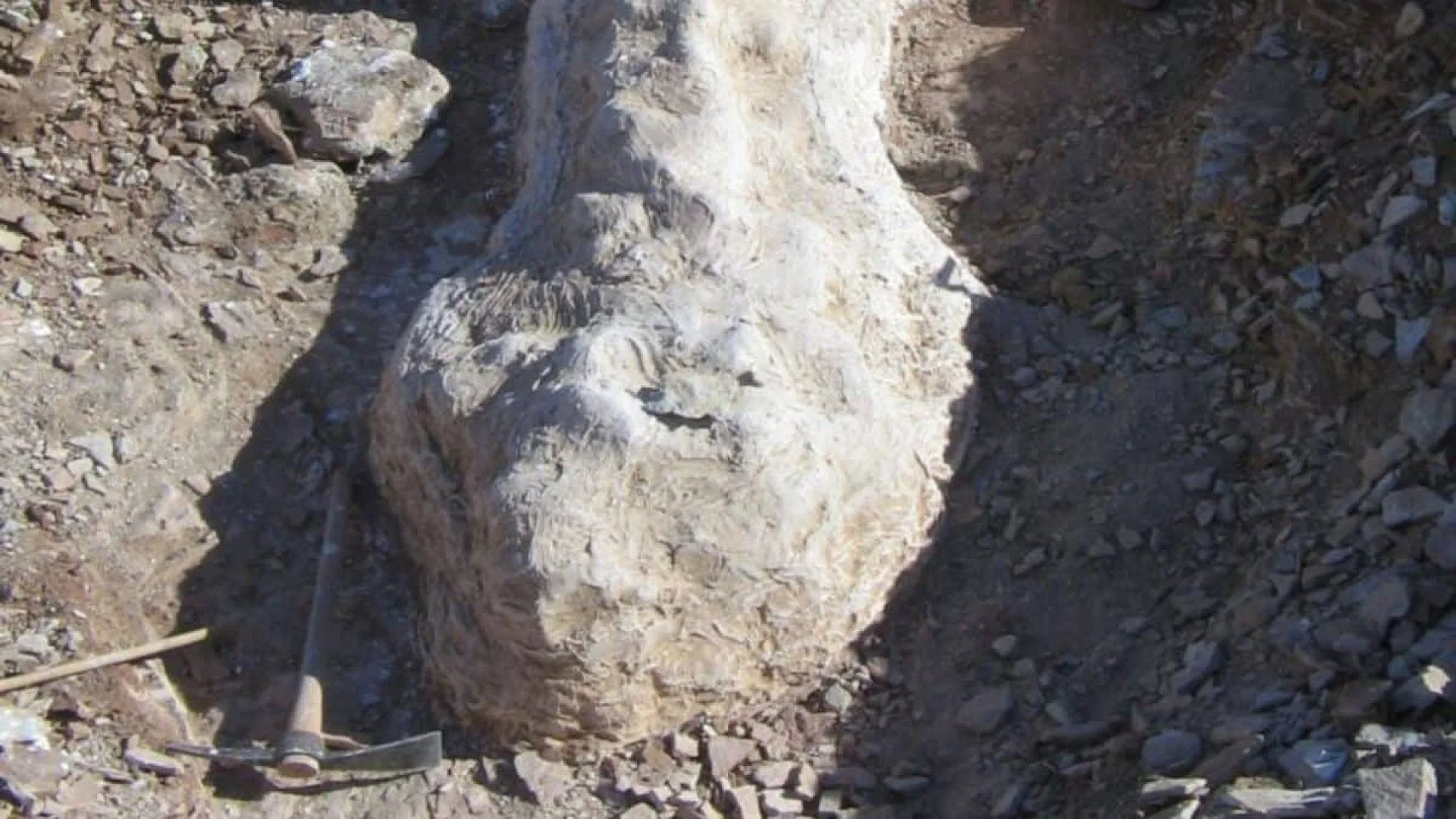
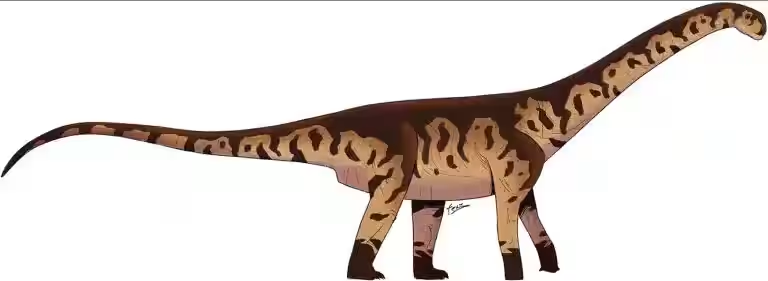
A groundbreaking discovery in Argentina is revolutionizing our understanding of the evolution of giant sauropods in the Southern Hemisphere. Meet Bicharracosaurus dionidei, a massive plant-eater that defies categorization by exhibiting a unique blend of characteristics from both brachiosaurids and diplodocids.
The fossil, unearthed in the Cañadón Calcáreo Formation in Patagonia, dates back around 155 million years and is a significant find for the scientific community. According to the research, published in PeerJ, Bicharracosaurus dionidei could be the first Jurassic brachiosaurid identified in South America, a revelation that sheds new light on the evolutionary history of these iconic creatures.
Sauropods, with their imposing stature, diminutive heads, and sweeping tails, have long been a staple of the dinosaur imagination. Famous giants like Diplodocus and Brachiosaurus have shaped our perception of these prehistoric behemoths. However, most fossil discoveries linked to these animals have originated from North America and parts of Africa, making the discovery of Bicharracosaurus dionidei a significant milestone.
The researchers from LMU Munich and the Bavarian State Collections of Natural History have found that fossils from Patagonia are crucial in filling gaps in the fossil record from the ancient southern supercontinent known as Gondwana. This discovery has far-reaching implications for our understanding of the evolution of these massive creatures.
A Dinosaur That Defies Categorization
The team recovered over 30 vertebrae from the neck, back, and tail, along with ribs and part of the pelvis. These bones belonged to an adult dinosaur estimated to have reached approximately 65 feet, or 20 meters, in length. Some parts of the skeleton bear an uncanny resemblance to Giraffatitan, while others, particularly in the back vertebrae, are closer to Diplodocus and related dinosaurs from North America.
Lead author Alexandra Reutter explained that the phylogenetic analyses of the skeleton indicate that Bicharracosaurus dionidei was related to the Brachiosauridae, making it the first Brachiosauridae from the Jurassic of South America.
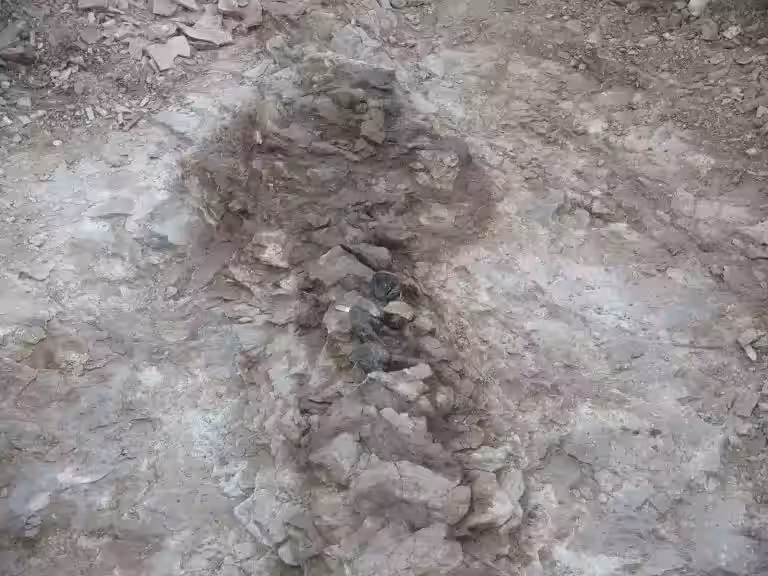
The unusual combination of traits exhibited by Bicharracosaurus dionidei is one reason paleontologists find this fossil so fascinating. Sauropod classification often depends on details hidden in vertebrae, and this dinosaur does not fit neatly into categories scientists are used to seeing.
Patagonia Unveils More Jurassic Secrets
The fossils were discovered in Argentina’s Chubut Province, a region already known for significant dinosaur finds. Scientists describe the Cañadón Calcáreo Formation as an increasingly important source of information about Jurassic ecosystems in Gondwana.
Dinosaur expert Oliver Rauhut said most knowledge about Late Jurassic sauropods still comes from fossils found in the Northern Hemisphere. For years, Tanzania remained one of the only major Southern Hemisphere sites from that time period.
“The fossil site in the Argentine province of Chubut, from which Bicharracosaurus dionidei originates, provides us with important comparative material, allowing us to continuously supplement and reevaluate our understanding of the evolutionary history of these animals, particularly in the Southern Hemisphere,” he said in an university statement.
The Fossil Find That Began With A Shepherd
The species name dionidei honors Dionide Mesa, the shepherd who first spotted the fossils on a farm in Patagonia. Researchers chose the genus name Bicharracosaurus from the Spanish slang word “bicharraco,” which roughly translates to “big animal.”
Today, the fossils are housed at the Museo Paleontológico Egidio Feruglio in Trelew, Argentina. The study itself involved researchers José Luis Carballido, Guillermo José Windholz,Diego Pol, and Oliver W.M. Rauhut alongside Reutter.
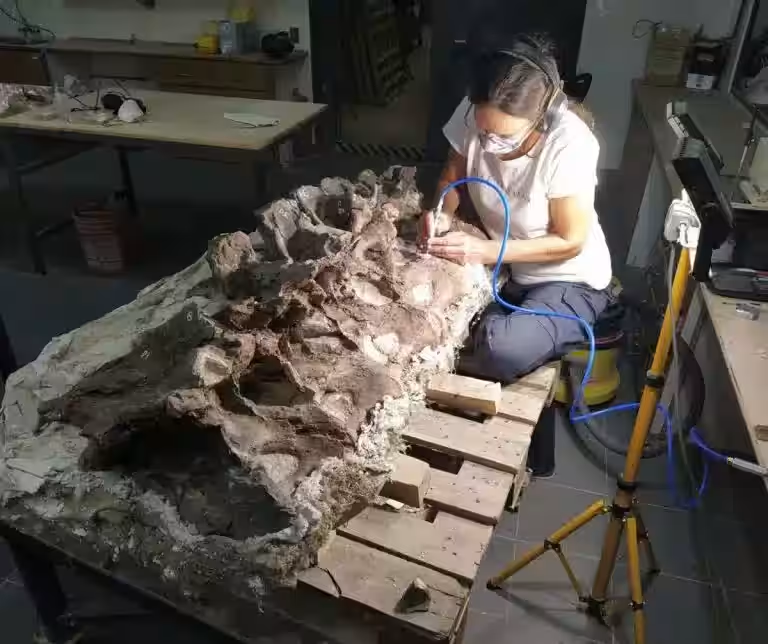
Even though the skeleton remains incomplete, the fossil already ranks among the more important Jurassic sauropod discoveries from South America in recent years. Its unusual anatomy is providing paleontologists with new clues about how some of Earth’s largest land animals evolved nearly 155 million years ago.
This article has been fact checked for accuracy, with information verified against reputable sources. Learn more about us and our editorial process.
Last reviewed on .
Article history
- Latest version
Reference(s)
- <https://www.researchgate.net/profile/Alexandra-Reutter>.
- “Bayerische Staatssammlung für Paläontologie und Geologie » Prof. Dr. Oliver W. M. Rauhut.” <https://bspg.snsb.de/sektion-mitarbeiter/oliver-rauhut/?lang=en>.
- “Palaeontologists Discover New Long-Necked Dinosaur in Patagonia.” <https://www.lmu.de/en/newsroom/news-overview/news/palaeontologists-discover-new-long-necked-dinosaur-in-patagonia-dd830393.html>.
Cite this page:
- Posted by Elizabeth Taylor