A Man’s Bones Kept Washing Up on the Beach for Decades. Investigators Finally ID’d Him 181 Years After He Vanished
For years, researchers identified him solely by the name “Scattered Man John Doe.” Later, amateur genealogists using DNA evidence linked the remains to a wrecked schooner from 1844.
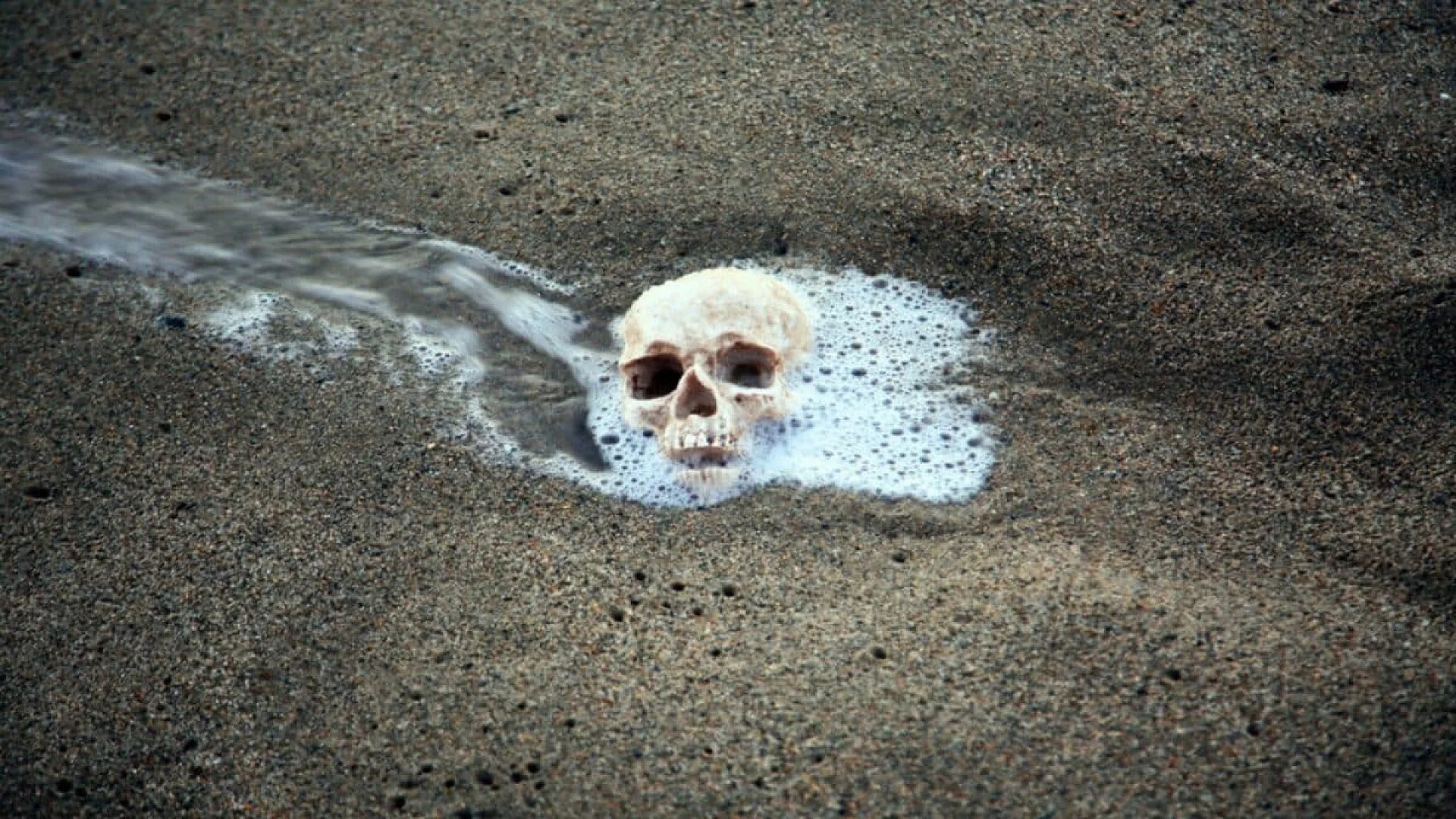
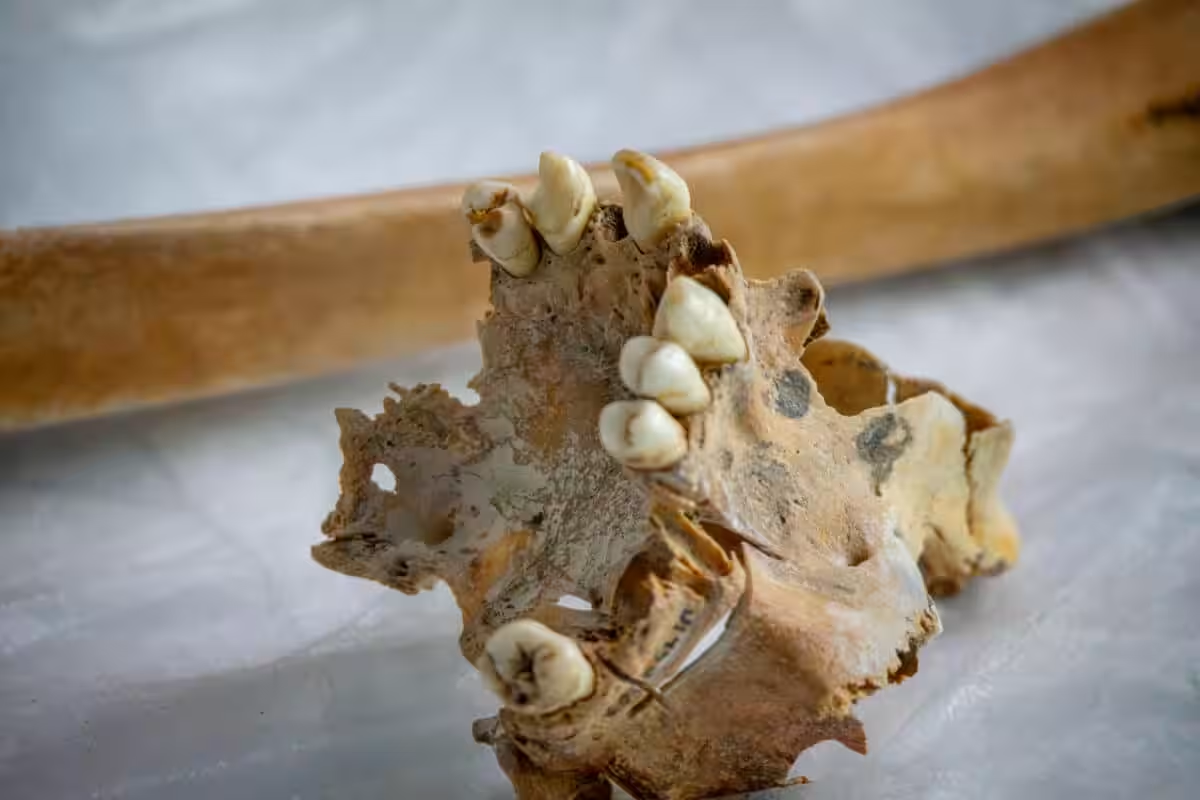
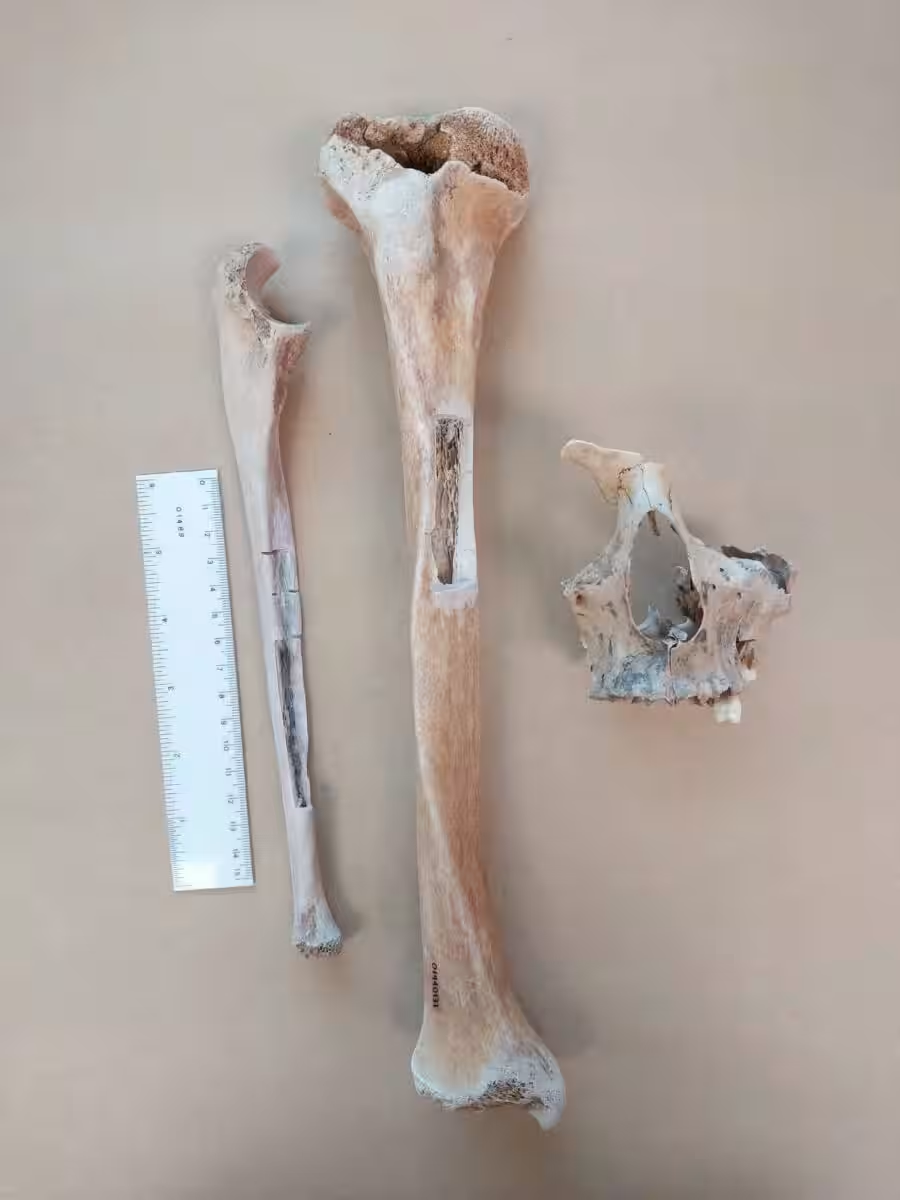
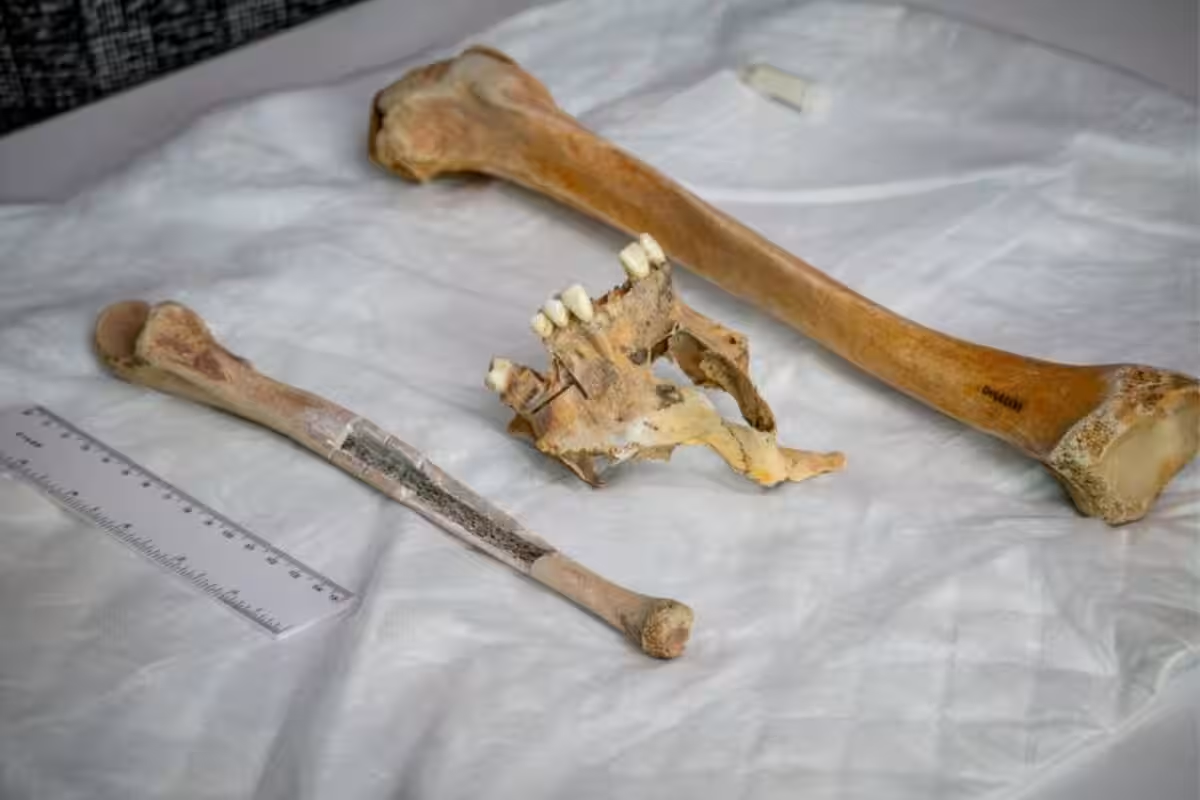
In 1995, a human skull emerged from the Atlantic Ocean and landed on a beach in Longport, New Jersey. More bones followed over the next 18 years, surfacing across three different Jersey Shore towns. For three decades, investigators called the unidentified remains "Scattered Man John Doe." Now, genetic genealogy researchers have given him back his name: Captain Henry Goodsell, a 29-year-old schooner commander who died in a winter storm 181 years ago.
The identification, confirmed in April 2025 and announced by the Ramapo College of New Jersey’s Investigative Genetic Genealogy Center in May, marks one of the oldest cold cases ever resolved through forensic DNA analysis. Goodsell spent more years as an unnamed set of bones than he ever did as a living man.
“A death certificate was issued for Goodsell more than 180 years after he died,” the IGG Center noted in its case resolution announcement on May 21, 2025. The family, located through DNA matching, declined to take possession of the remains. They will stay in a state repository indefinitely.
Skeletal Remains Surfaced Across Three New Jersey Towns
The case began on a Longport beach in 1995, when a skull washed ashore in Atlantic County. Four years later, in 1999, additional bone fragments linked to the same individual appeared less than two miles away in Margate. Then, in 2013, more remains believed to belong to the same person turned up in Ocean City, down the coast in Cape May County.
Traditional DNA testing confirmed the bones came from a single individual. But standard investigative methods could not determine who that person was. The remains were found years apart, in different towns, with no connection to any modern missing-person file. The evidence sat in storage. The case went nowhere.
“Law enforcement works hard knowing that behind every case is a promise: that no one will be forgotten, and that we will pursue the truth until families have the answers they deserve,” said Chief of County Detectives Patrick Snyder at the Atlantic County Prosecutor’s Office, in a statement released by Ramapo College.
Student Researchers Traced Ancestry Back to 1600s Connecticut
The investigation turned a corner in fall 2023, when the New Jersey State Police partnered with the IGG Center at Ramapo College. That November, a DNA sample from the remains went to Intermountain Forensics for processing. By February 2024, a SNP profile was uploaded to the public genealogy databases GEDmatch and FamilyTreeDNA. Student researchers now had a genetic trail to follow.
Undergraduates in field studies and participants in the IGG Certificate Program started building family trees. They found genetic relatives with deep roots in Litchfield and Fairfield counties in Connecticut, reaching back to the 1600s. The geographic concentration was striking. It did not, however, point straight to a name.
Throughout 2024 and into early 2025, student volunteers kept narrowing the search. They cross-referenced the Connecticut lineage with historical records of shipwrecks off the New Jersey coast. That painstaking archival work produced the breakthrough.
A Schooner, 60 Tons of Marble, and a Storm in December 1844
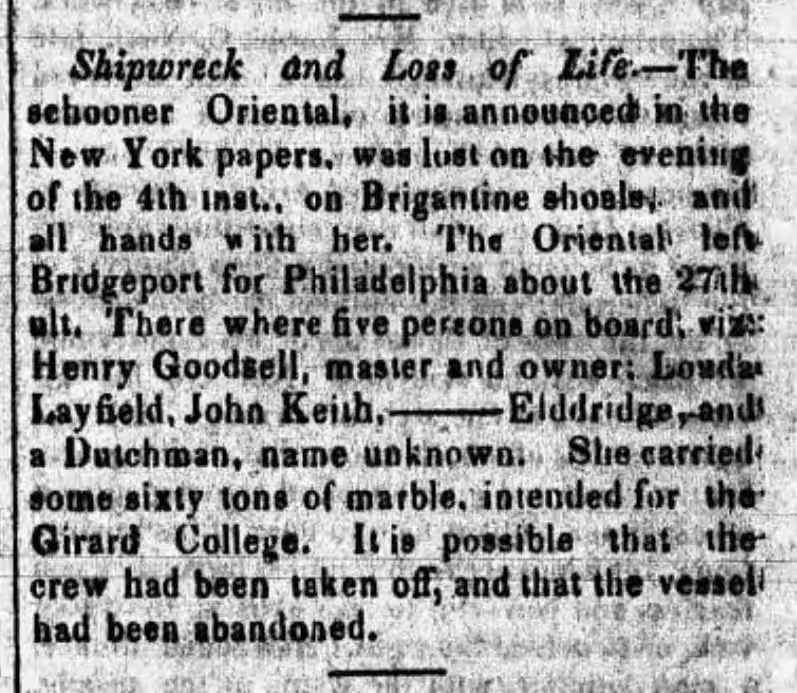
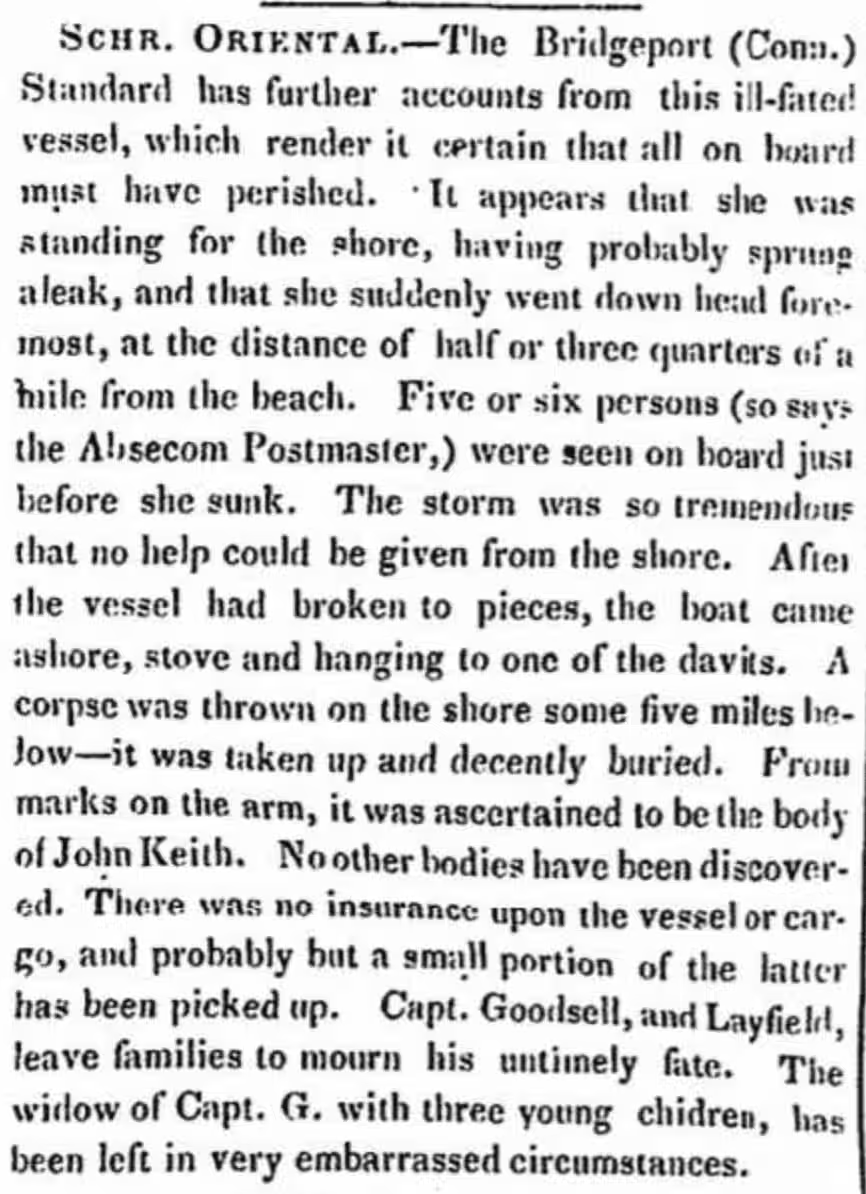
The students uncovered two newspaper articles from December 20 and December 24, 1844. Both reported the fate of the schooner Oriental. The vessel had departed Connecticut for Philadelphia, loaded with 60 tons of marble meant for construction at Girard College, a preparatory boarding school that would open in 1848.
Five crew members were aboard. The ship likely sprang a leak and went down less than a mile from the shoreline near Brigantine Shoal. All hands were lost, including the captain, Henry Goodsell, age 29. The wreck location lined up with the beaches where the bones had surfaced over three separate discoveries spanning nearly two decades.
Goodsell matched the genetics. He matched the history. The IGG Center students submitted his name to the New Jersey State Police as the candidate. On March 7, 2025, investigators collected a family reference DNA sample from a great-great-grandchild. The match was confirmed on April 8, 2025, according to The Independent’s report.
Genetic Genealogy Pushes Cold Case Limits Beyond a Century
The Goodsell case shows how far investigative genetic genealogy can reach, well past the timeframe of the criminal cases where the technique first proved its worth. “Using modern genealogy testing to identify bone fragments from the 19th century is a powerful reminder of our unwavering commitment to resolving cases no matter how old,” said Colonel Patrick J. Callahan, superintendent of the New Jersey State Police.
The Ramapo College IGG Center, which now lists Goodsell among its resolved identifications, remains the only center of its kind that combines casework, research, and hands-on learning under one roof. Nationwide, the center has been consulted on 92 cases. The sheer gap between death and identification sets the Goodsell case apart.
Cape May County Prosecutor Jeffrey Sutherland pointed out that while the work did not solve a crime, it uncovered a real piece of local history. The finding also suggests that genetic material can survive in ocean-submerged remains far longer than many investigators once thought possible, opening a path to identifications from historical shipwrecks and other long-cold contexts.
The Oriental never reached Philadelphia. Its captain vanished into the Atlantic in the winter of 1844. One hundred and eighty-one years later, his bones have a name again, and his case file can finally close.
This article has been fact checked for accuracy, with information verified against reputable sources. Learn more about us and our editorial process.
Last reviewed on .
Article history
- Latest version
Reference(s)
- “Resolved Cases - Investigative Genetic Genealogy Center (IGG) || Ramapo College of New Jersey.”, December 7, 2023 Investigative Genetic Genealogy Center (IGG) <https://www.ramapo.edu/igg/about-us/cases/resolved/>.
- “Bone Fragments Found on New Jersey Beaches Linked to 19th Century Shipwreck - College News & Media.”, May 21, 2025 College News & Media <https://www.ramapo.edu/news/press-releases/bone-fragments-found-on-new-jersey-beaches-linked-to-19th-century-shipwreck/>.
- Keller, Erin. “Remains found washed up on Jersey shore identified as missing 19th-century boat captain.”, May 30, 2025 The Independent <https://www.independent.co.uk/news/science/human-remains-boat-captain-jersey-shore-b2760927.html>.
Cite this page:
- Posted by Elizabeth Taylor