Scientists Brought Back the Face of a 3,500-Year-Old Woman Who Lived Before the Trojan War
Genetic analysis revealed she wasn’t his spouse but a warrior in her own right, interred alongside him with her own set of weapons. The discovery upended long-held beliefs about her role in history.

In a long-abandoned royal cemetery at Mycenae, the legendary stronghold of King Agamemnon, archaeologists made a groundbreaking discovery in the 1950s that would challenge their understanding of the past for decades to come. Beneath a male skeleton lay the remains of a woman, accompanied by a stunning gold-electrum mask and three swords. Initially, the assumption was straightforward: she was his wife, and the weapons belonged to him.
The grave had lain undisturbed for thousands of years, holding the secrets of someone who died around 3,500 years ago, before the epic Trojan War. For all that time, her face remained hidden, her identity reduced to a footnote beside a presumed warrior husband.
Thanks to DNA analysis and digital reconstruction, both the face and the story have undergone a profound transformation.
Unveiling a Face from the Bronze Age
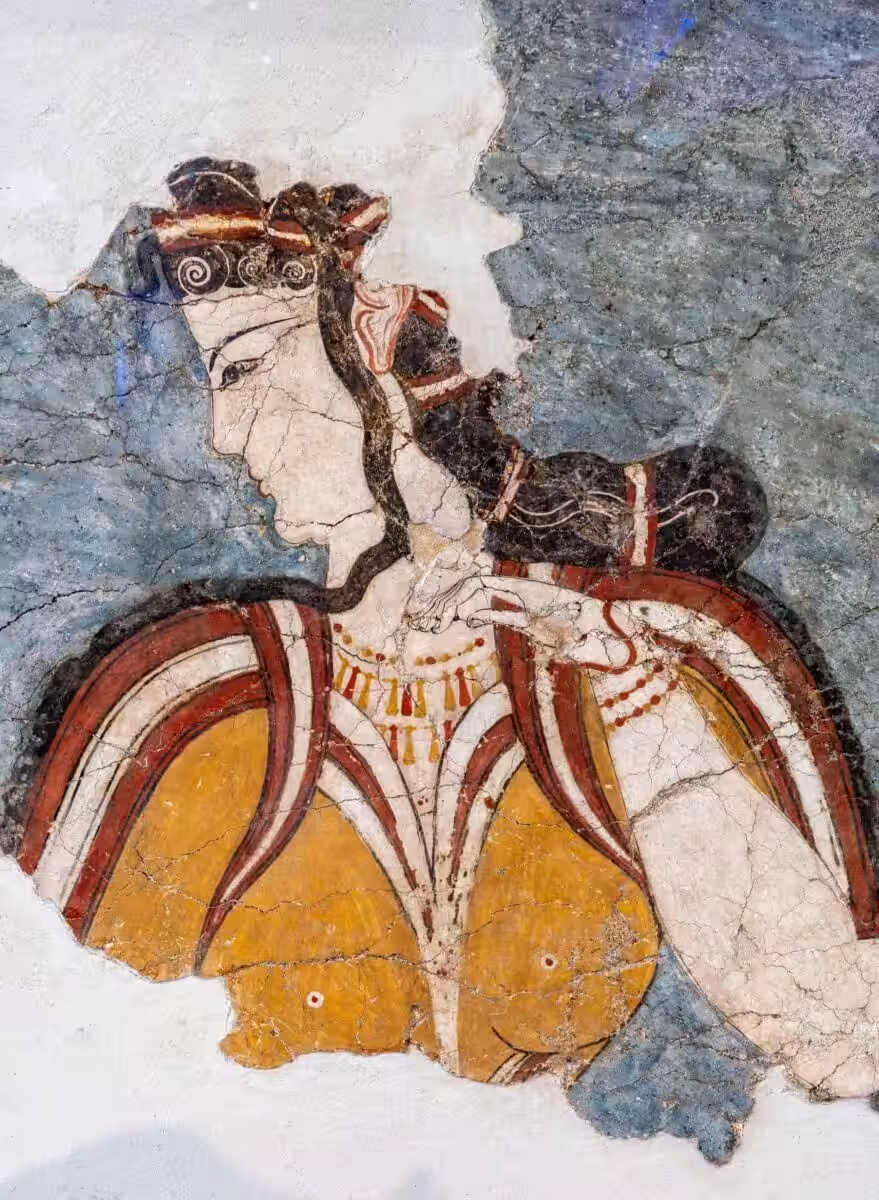
Dr. Emily Hauser, a renowned historian and author, commissioned a digital facial reconstruction based on a clay mold of the woman’s skull. The mold was created in the 1980s by researchers from the University of Manchester. Digital artist Juanjo Ortega G. then brought the ancient Mycenaean woman back to life. The result, Hauser said in an interview with The Guardian, “took my breath away. For the first time, we can see the face of a woman from a kingdom tied to figures like Helen of Troy and Clytemnestra, she could be imagined as their sister.”
The reconstruction reveals a woman in her early thirties with a gaze both haunting and surprisingly modern. She was buried in the 16th century BCE in what archaeologists now confirm was a royal tomb at Mycenae.

The face is only part of what this project uncovered. DNA testing rewrote the relationship between the two people in the grave. They were not husband and wife. They were brother and sister.
DNA Rewrites a Royal Relationship
“The traditional assumption is that when a woman is buried next to a man, she must be his wife,” Hauser said. “But DNA confirmed they were brother and sister. This woman was in that royal tomb because of who she was, not who she married.”
That shift carries significant weight. If the swords were hers, and evidence increasingly points that way, then the grave goods signal something historians are only now confronting: women in Late Bronze Age Mycenae held roles far more complex than previously believed.
Hauser noted that new data from the period shows warrior kits appearing beside women more often than men in some tombs. The three swords found with this woman fit that emerging pattern. Scholars are reassessing long-held assumptions about gender and warfare in the ancient world.
The Physical Toll Preserved in Bone
Analysis of the woman’s skeleton added another layer. Her spine and hands showed signs of arthritis consistent with years of intensive textile work. In The Iliad, Helen is famously described weaving. Here, the physical toll of that labor is written in bone. It connects myth to a lived, aching reality.
The reconstruction project, covered in detail by The Archaeologist, draws on forensic anthropology, carbon dating, 3D printing, and DNA analysis, tools that Hauser describes as transforming how researchers can reimagine the past. “For the first time, we can truly look the past in the eye,” she said.
Hauser’s new book, Mythica: A New History of Homer’s World, Through the Women Written Out of It, publishes this month. The reconstruction serves as both illustration and argument: that women in Mycenaean Greece were present, powerful, and physically marked by their labor in ways that survived for millennia.
The face looking back from the screen is no longer a generic ancient woman. She is someone who lived, worked, and was buried with honor in a royal tomb, alongside her brother, with weapons that may well have been her own.
This article has been fact checked for accuracy, with information verified against reputable sources. Learn more about us and our editorial process.
Last reviewed on .
Article history
- Latest version
Reference(s)
- Alberge, Dalya. “‘Peering into the eyes of the past’: reconstruction reveals face of woman who lived before Trojan war.”, April 5, 2025 The Guardian <https://www.theguardian.com/education/2025/apr/05/peering-into-the-eyes-of-the-past-reconstruction-reveals-face-of-woman-who-lived-before-trojan-war>.
Cite this page:
- Posted by Elizabeth Taylor