Scientists Just Uncovered A 128,000 Year Old Climate Secret Hidden In Tibetan Ice
Scientists are uncovering Earth’s ancient history trapped within deep glacier ice, revealing long-hidden secrets preserved for millennia.
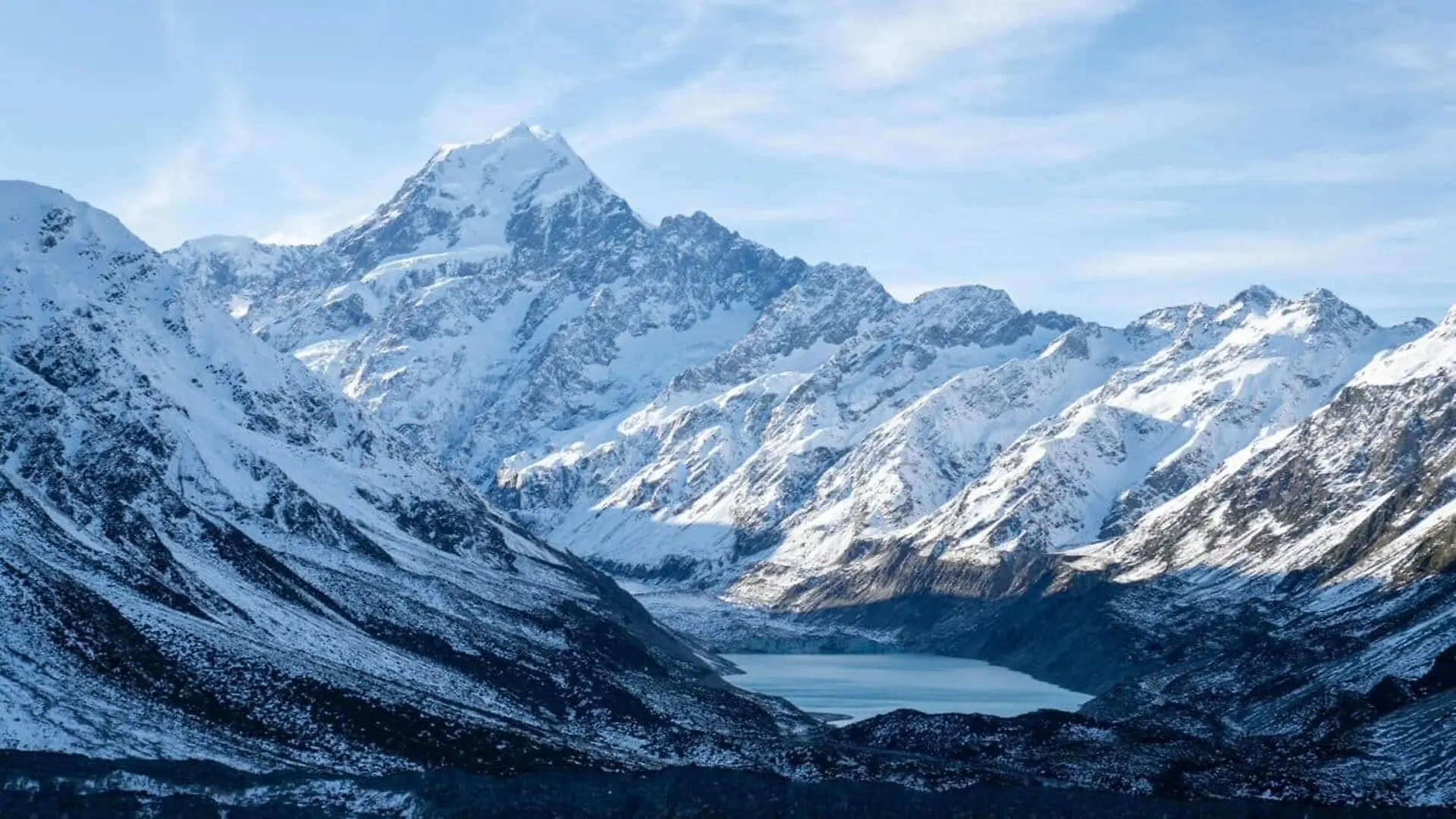
Researchers exploring the high-altitude terrain of northwestern Tibet have uncovered evidence of an ancient climate archive, revealing that the Guliya ice cap contains frozen layers dating back more than 128,000 years. This discovery pushes the known timeline for the region’s climate history back by more than a century, providing a rare window into environmental shifts that occurred long before the current Holocene epoch.
Validating Decades of Glacial Data
The findings, detailed in the journal Science Advances, rely on a unique cross-comparison of ice cores extracted from the same site during two separate scientific expeditions in 1992 and 2015. Despite the 23-year interval between drilling projects, the chemical profiles of the two core sets aligned with remarkable precision.
Lonnie Thompson, a professor of earth sciences at The Ohio State University and lead researcher at the Byrd Polar Research Center, emphasized the significance of this consistency. The ability to replicate such granular data after more than two decades provides a high degree of confidence in the integrity of the ice as a long-term environmental record.
“When did ice start forming on the planet and what did those natural processes of loss look like?” Thompson noted in a statement. “We need to know those things, and the only way you can really demonstrate it is with accurate time scales on these records.”
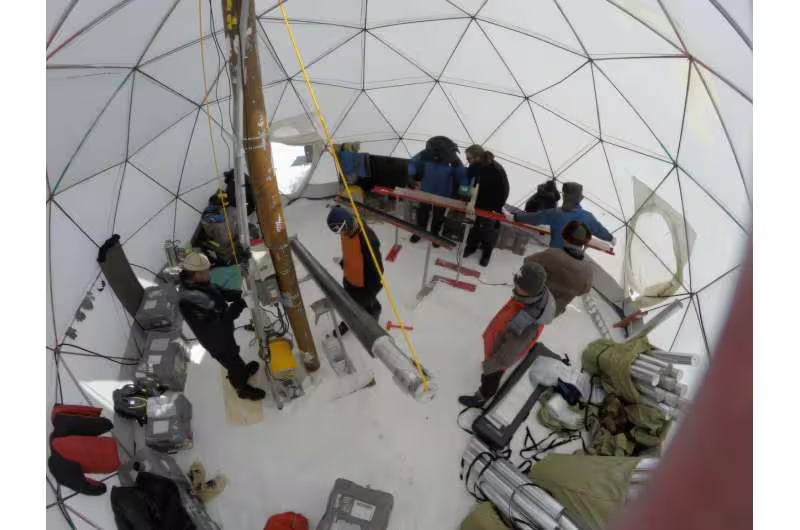
Chronological Markers in the Ice
To establish a precise age for the deepest layers of the ice cap, the team utilized radioactive isotopes of beryllium and chlorine, which decay at known rates. These measurements were cross-referenced with the Laschamp excursion, a well-documented geomagnetic event that caused a temporary weakening of Earth’s magnetic field approximately 41,000 years ago. This magnetic anomaly left a distinct chemical fingerprint that serves as a reliable anchor for the timeline.
By comparing these isotope patterns with data from local cave deposits, the researchers were able to confirm that the ice records reach back well into the last glacial cycle. This defies earlier assumptions that the Guliya ice cap only contained layers from the more recent middle Holocene period.
Understanding Glacial Resilience
The revised age of the Guliya ice offers new insight into the ability of mountain glaciers to endure severe climatic transitions. The data suggests that at least portions of the Guliya ice cap remained intact throughout the entirety of the last ice age, surviving the subsequent warming period that marked the start of the Holocene roughly 12,000 years ago.
According to Thompson, this longevity indicates that high-altitude glaciers in the Tibetan Plateau are more resilient to temperature fluctuations than previously thought. The findings challenge the notion that such ice sheets might have vanished during earlier interglacial warm spells.
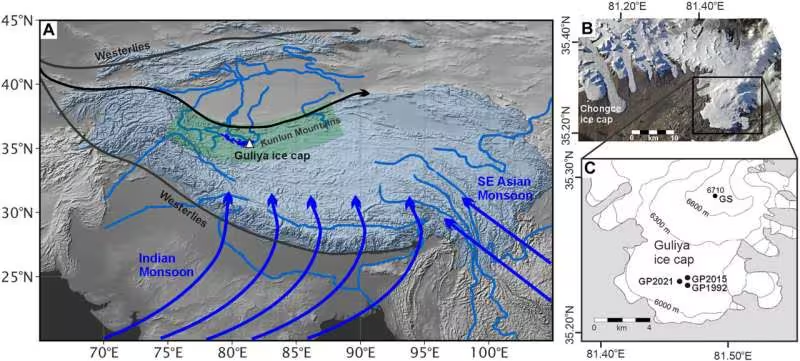
As the team continues to analyze additional indicators within the cores, they expect to refine their understanding of how these glaciers interact with broader environmental shifts. For now, the Guliya samples stand as one of the oldest and most consistent mountain ice archives outside of the Earth’s polar regions, providing a crucial baseline for future climate modeling.
“The big picture is that our results tell a very consistent story,” Thompson said. “If you get the science right, it’s consistent. It’s our understanding of what it’s trying to tell us that has to catch up.”
This article has been fact checked for accuracy, with information verified against reputable sources. Learn more about us and our editorial process.
Last reviewed on .
Article history
- Latest version
Reference(s)
- Thompson, Lonnie G.., et al. “Additional evidence supports a timescale exceeding 100,000 years for the Guliya ice cap, Tibetan Plateau.” Science Advances, vol. 12, no. 40, October 2, 2026 American Association for the Advancement of Science (AAAS), doi: 10.1126/sciadv.aeh2912. <https://www.science.org/doi/10.1126/sciadv.aeh2912>.
- <https://www.eurekalert.org/news-releases/1146140>.
- “Guliya Ice Cap | Byrd Polar and Climate Research Center.” <https://byrd.osu.edu/research/groups/ice-core-paleoclimatology/projects/china/guliya>.
Cite this page:
- Posted by Vikram Desai