Tiny Magnetic Fossils Found in Chang’e-6 Samples Could Unlock the Moon’s Ancient Secrets
Rare gamma-iron trapped in Chang’e-6 lunar glass forms stable magnetic vortices, offering new clues to unlock the Moon’s mysterious magnetic history.
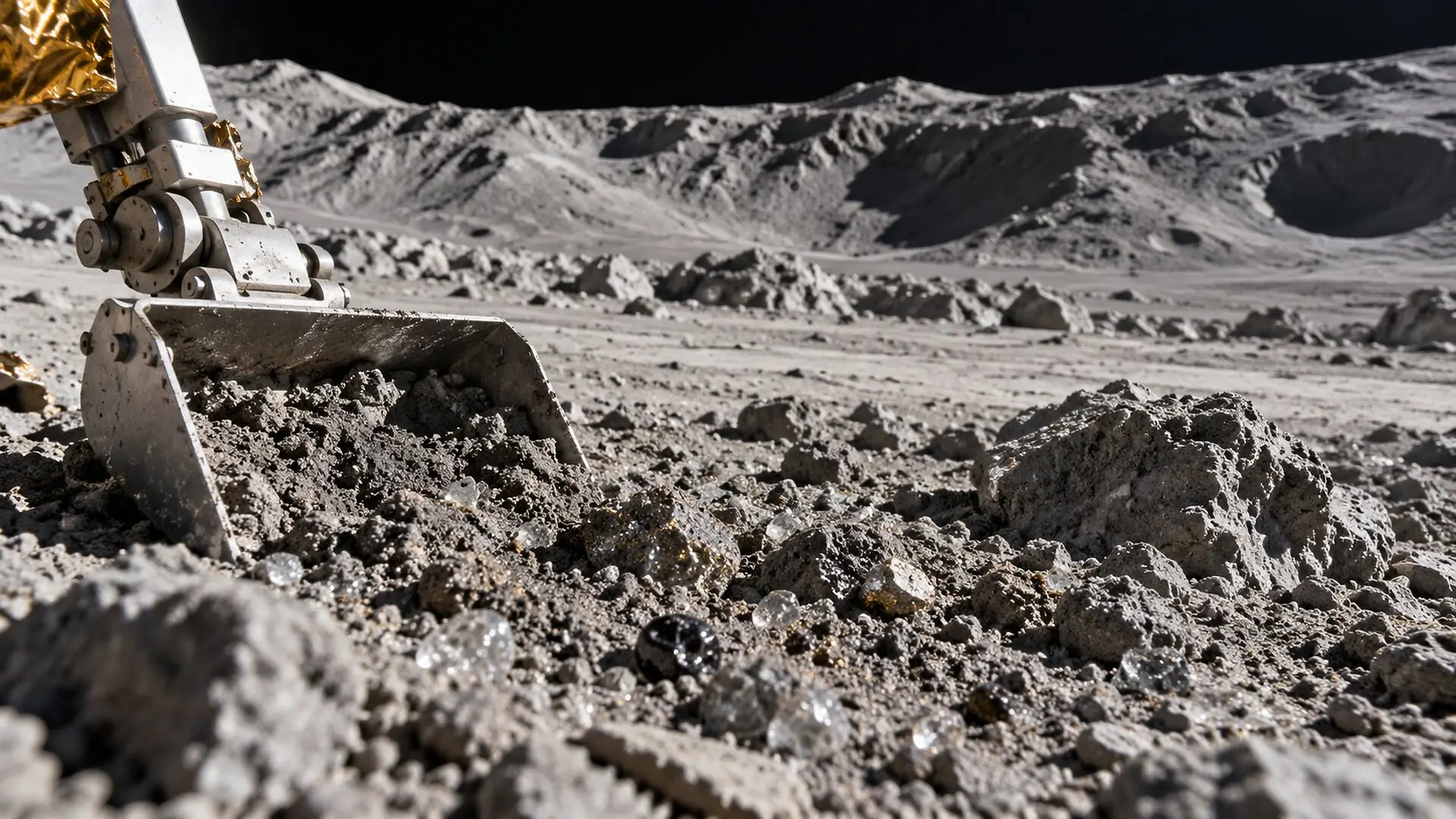
Scientists analyzing soil samples retrieved from the Moon’s far side by the Chang’e-6 mission have uncovered a rare form of iron that could rewrite our understanding of lunar history. For the first time, researchers have identified gamma-iron (γ-iron)—a face-centered cubic crystal structure—preserved within impact glass beads brought back from the South Pole-Aitken basin.
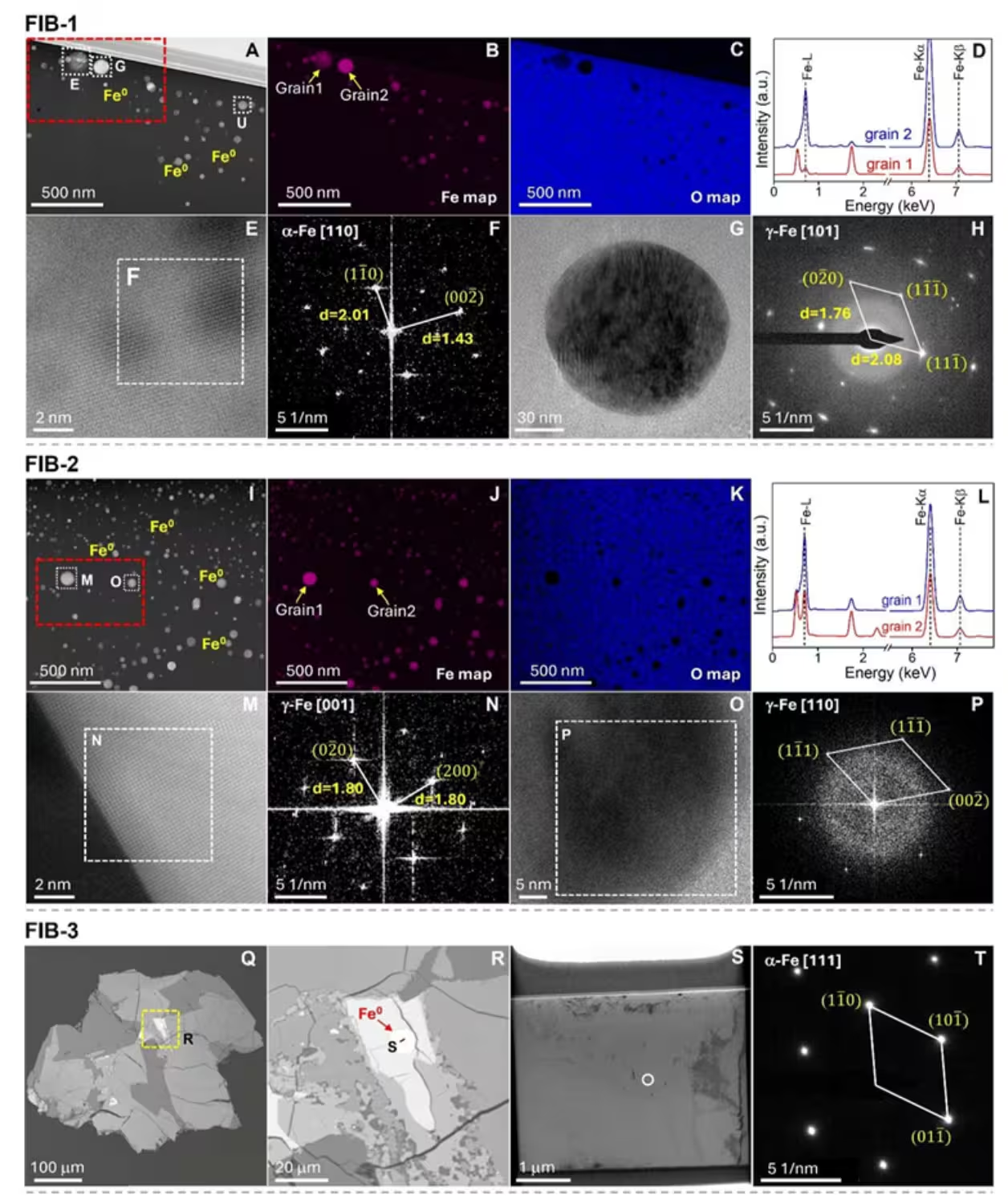
Typically, this specific atomic configuration of iron is only stable at extremely high temperatures, ranging from roughly 912 to 1,394 degrees Celsius. Under standard cooling conditions on the lunar surface, it usually shifts into the more common body-centered cubic alpha-iron phase. Its discovery in a natural lunar sample is highly unexpected, providing a unique lens through which to view the Moon’s past.
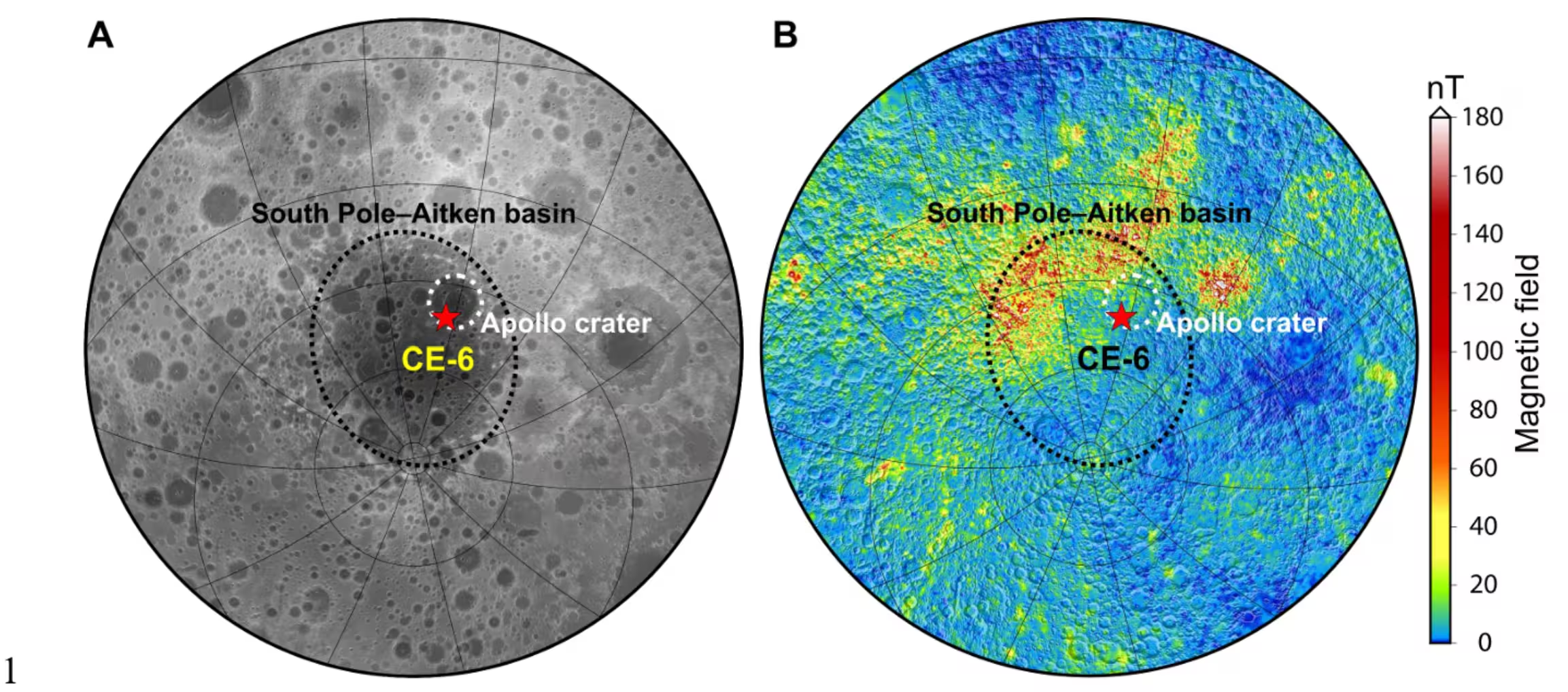
The findings, detailed in the Proceedings of the National Academy of Sciences, suggest that the extreme conditions of meteor impacts may have been the catalyst for this preservation. By rapidly quenching molten material, these high-energy events potentially locked the iron in its gamma state before it could transition to alpha-iron. Small amounts of carbon, which acts as a stabilizing agent for this structure, may have also played a crucial role.
Magnetic fossils trapped in glass
The research team, which includes experts from the Chinese Academy of Sciences, utilized transmission electron microscopy and focused ion beam techniques to isolate and examine these nanoparticles. The samples, taken from the Apollo crater region, revealed that gamma-iron was surprisingly dominant in the impact glass, appearing in over 60% of the particles analyzed.
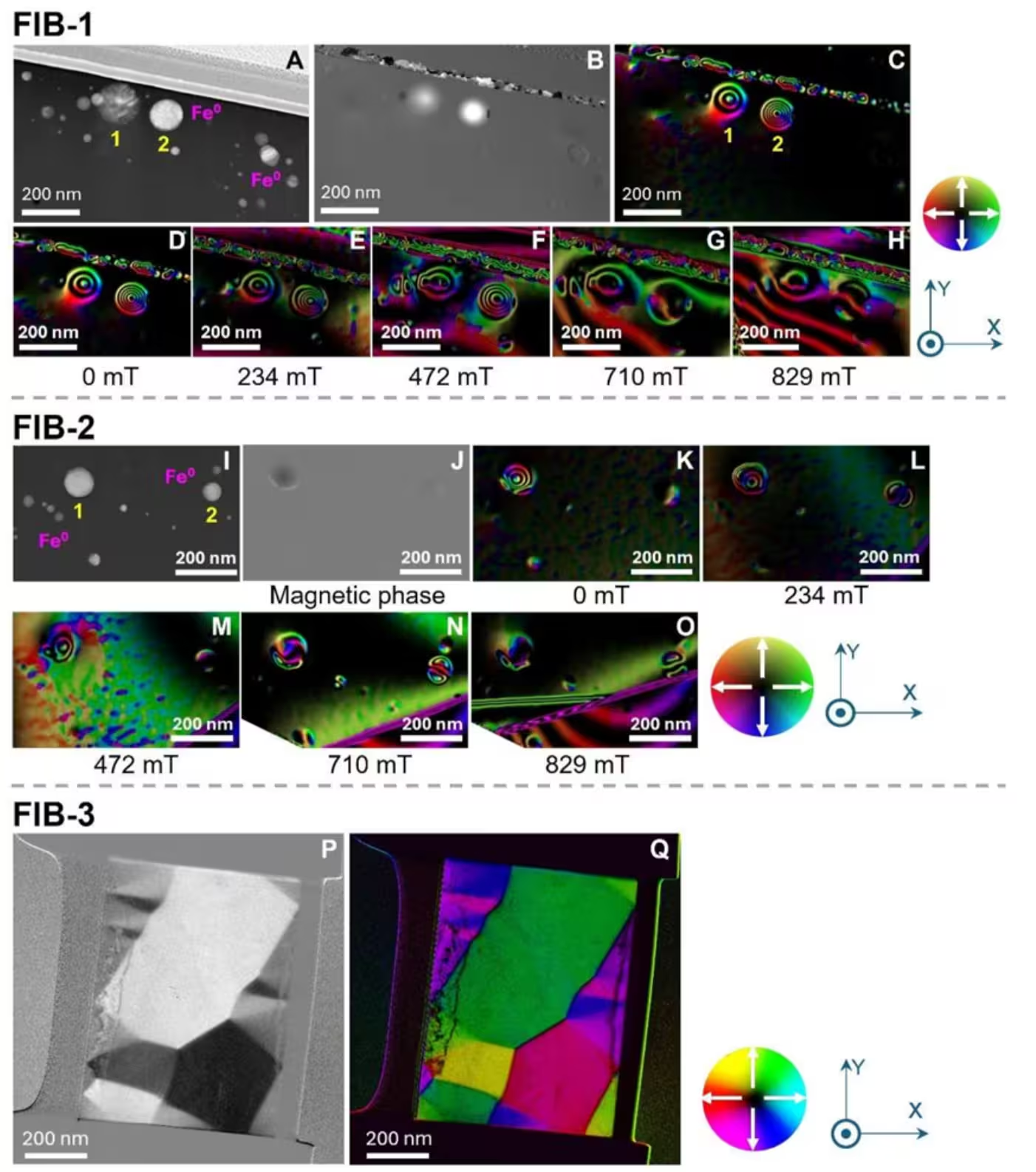
Beyond its structural curiosity, the gamma-iron exhibits fascinating magnetic properties. Using off-axis electron holography, the researchers observed that these particles form stable magnetic vortex states. In this configuration, magnetic moments curl internally rather than aligning in a single direction, which allows the grains to retain magnetic information with high stability.
Untangling the Moon’s magnetic timeline
The role of these particles in deciphering the Moon’s magnetic evolution is the subject of significant interest. Scientists have long debated how long the Moon possessed an active core dynamo, with estimates ranging from billions of years to a relatively short window following the Moon’s formation. Because impacts themselves generate temporary magnetic fields, distinguishing between a planetary dynamo and a local impact-induced signal has been notoriously difficult.
The presence of both gamma and alpha-iron phases suggests a potential new way to calibrate these records. Since these two structures reach magnetic stability under different thermodynamic conditions, they may effectively serve as distinct time-stamps for the cooling process following an impact.
While the authors caution that more micromagnetic simulations and experimental work are needed to fully validate this hypothesis, the discovery represents a significant expansion of the tools available to planetary scientists. By looking at these microscopic grains, researchers may finally be able to extract a clearer, more nuanced story from the ancient magnetic signatures embedded in the lunar surface.
Key References
- A reinforced lunar dynamo recorded by Chang’e-6 farside basalt (Nature)
- Impact-generated magnetite in Chang’e-5 soil as a potential recorder of lunar magnetism (Communications Earth & Environment)
- Magnetic signatures and origins of ferromagnetic minerals in Chang’e-6 lunar farside soils (Nature Communications)
- Impact plasma amplification of the ancient lunar dynamo (Science Advances)
- A lunar core dynamo limited to the Moon’s first ~140 million years (Communications Earth & Environment)
This article has been fact checked for accuracy, with information verified against reputable sources. Learn more about us and our editorial process.
Last reviewed on .
Article history
- Latest version
Reference(s)
- Liu, Pengfei., et al. “Magnetic vortex state of natural lunar γ-Fe.” Proceedings of the National Academy of Sciences, vol. 123, no. 38, September 16, 2026 National Academy of Sciences, doi: 10.1073/pnas.2608395123. <https://www.pnas.org/doi/10.1073/pnas.2608395123>.
- Cai, Shuhui., et al. “A reinforced lunar dynamo recorded by Chang’e-6 farside basalt.” Nature, vol. 643, no. 8071, December 19, 2024, pp. 361-365. Springer Science and Business Media LLC, doi: 10.1038/s41586-024-08526-2. <https://doi.org/10.1038/s41586-024-08526-2>.
- Li, Jinhua., et al. “Impact-generated magnetite in Chang’e-5 soil as a potential recorder of lunar magnetism.” Communications Earth & Environment, vol. 6, no. 1, November 10, 2025 Springer Science and Business Media LLC, doi: 10.1038/s43247-025-02868-z. <https://doi.org/10.1038/s43247-025-02868-z>.
- Li, Jinhua., et al. “Magnetic signatures and origins of ferromagnetic minerals in Chang’e-6 lunar farside soils.” Nature Communications, vol. 16, no. 1, July 5, 2025 Springer Science and Business Media LLC, doi: 10.1038/s41467-025-61705-1. <https://doi.org/10.1038/s41467-025-61705-1>.
- S. Narrett, Isaac., et al. “Impact plasma amplification of the ancient lunar dynamo.” Science Advances, vol. 11, no. 21, May 23, 2025 American Association for the Advancement of Science (AAAS), doi: 10.1126/sciadv.adr7401. <https://doi.org/10.1126/sciadv.adr7401>.
- Zhou, Tinghong., et al. “A lunar core dynamo limited to the Moon’s first ~140 million years.” Communications Earth & Environment, vol. 5, no. 1, September 6, 2024 Springer Science and Business Media LLC, doi: 10.1038/s43247-024-01551-z. <https://doi.org/10.1038/s43247-024-01551-z>.
Cite this page:
- Posted by Aisha Ahmed