Supermassive Black Holes Are Leaving Mysterious Glowing Trails Across The Cosmos
New observations from DESI and LOFAR reveal supermassive black holes leave glowing trails of ionized gas that extend far beyond their host galaxies.
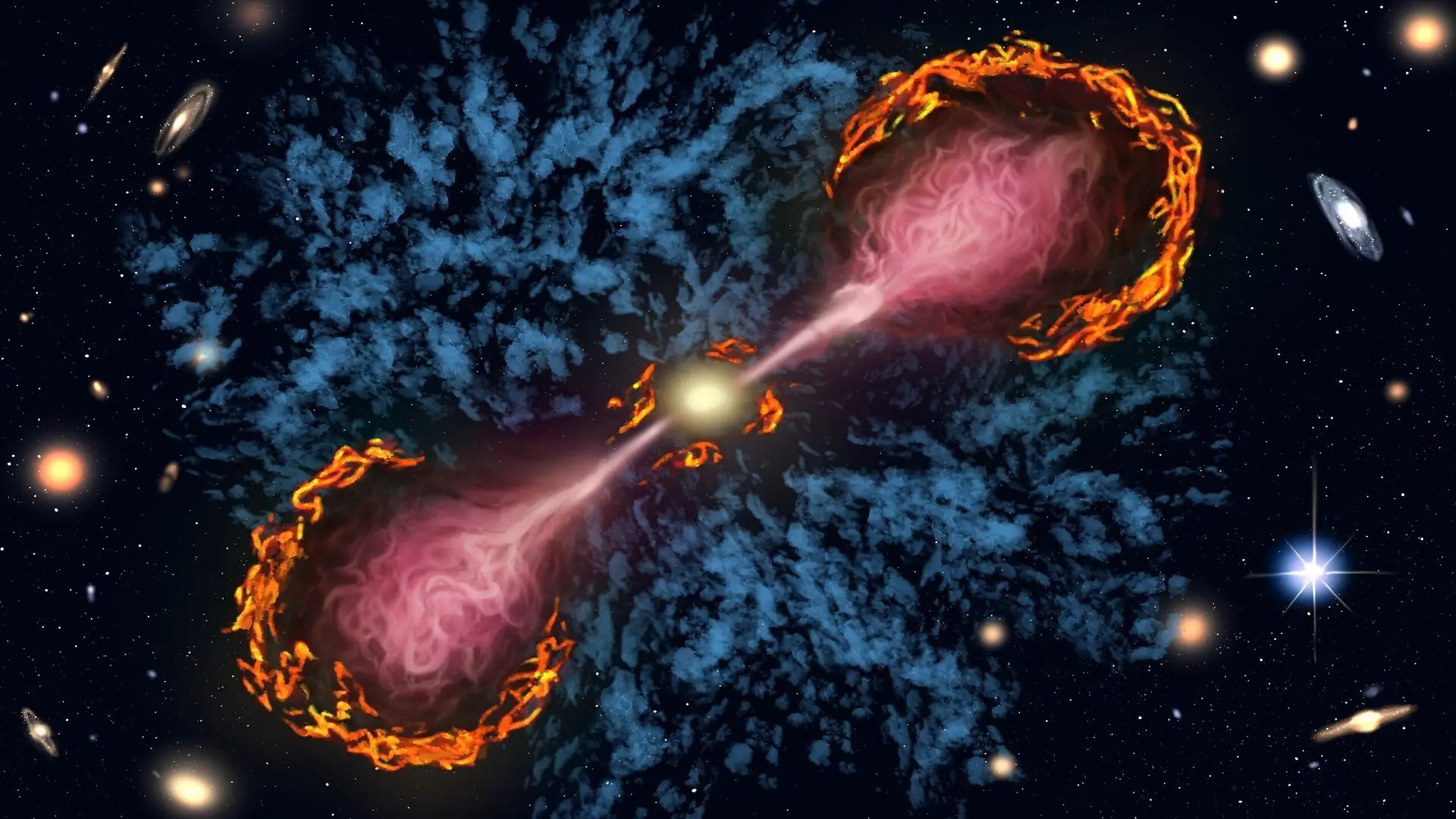
Supermassive black holes are known to exert influence far beyond the galactic centers they occupy, yet the precise mechanics of how they reshape their environments have remained elusive. Recent findings now confirm that these cosmic giants use powerful, narrow plasma jets to leave a distinct, glowing signature in the circumgalactic medium (CGM), the vast reservoir of gas that envelops every major galaxy.
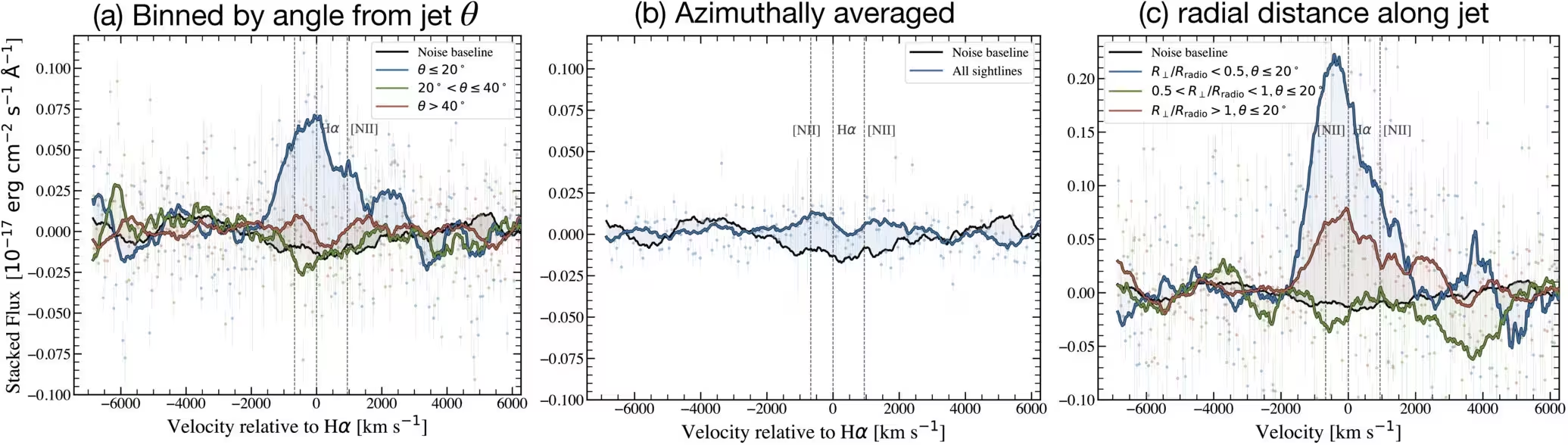
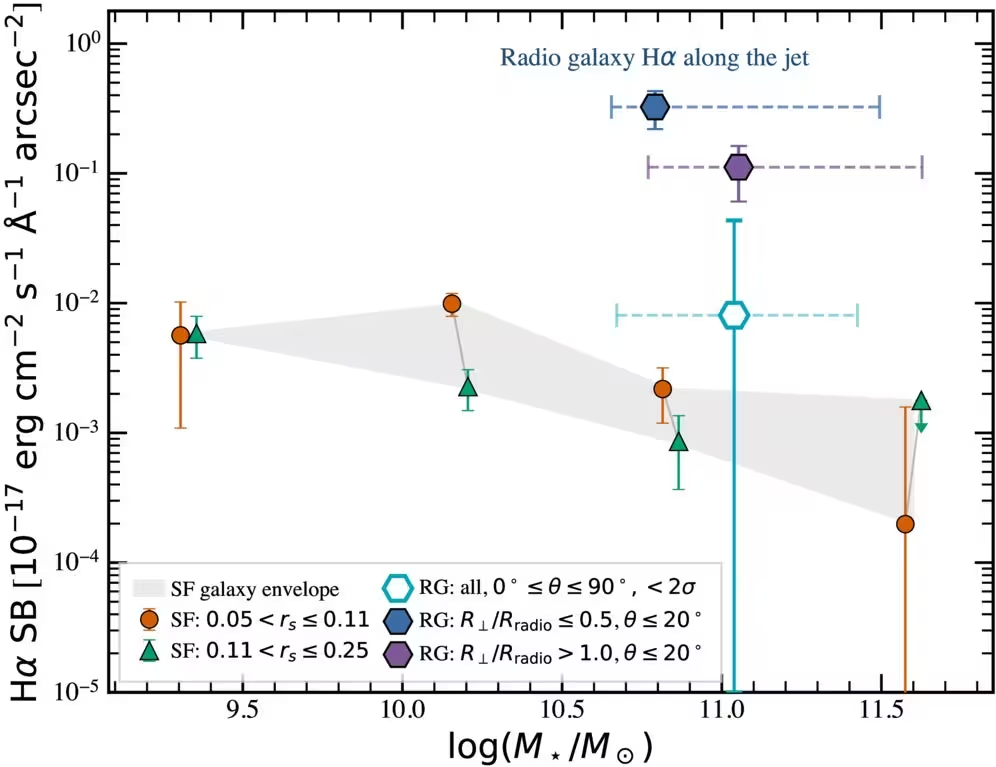
By analyzing stacked data from the Dark Energy Spectroscopic Instrument (DESI) and the LOFAR Two-meter Sky Survey, researchers have identified a striking pattern: cool ionized gas exhibits a intense H-alpha glow exclusively along the paths of these radio jets. This highly directional effect extends hundreds of thousands of light-years into the galactic halo, effectively proving that black holes act as long-range architects of their surroundings.
Unveiling the Hidden Impact of Galactic Feedback
The circumgalactic medium serves as the lifeblood of a galaxy, providing the raw material for future star formation. However, many massive galaxies cease producing stars prematurely, a phenomenon scientists have long attributed to “feedback” from active galactic nuclei. While these central engines are physically small, their energy output—channeled through relativistic jets—can theoretically prevent halo gas from cooling and collapsing into the galaxy.
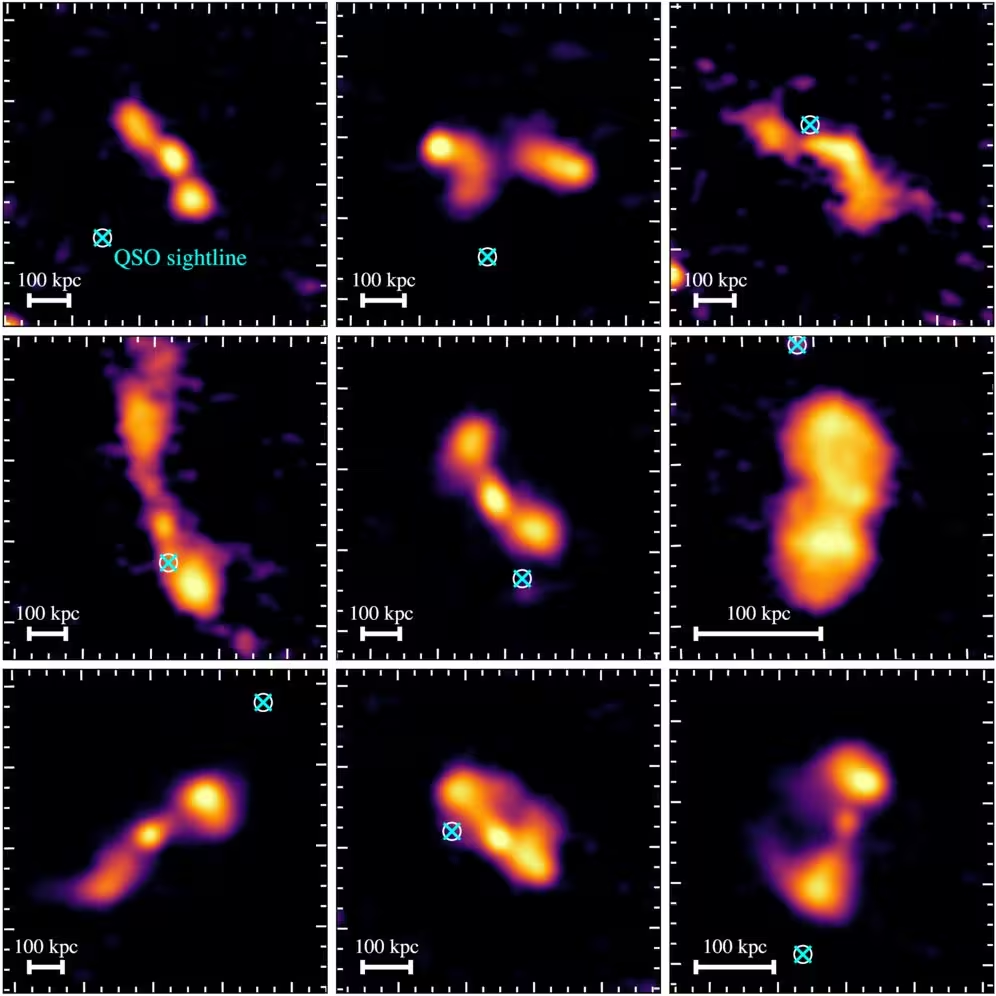
Directly imaging this effect has been difficult due to the faintness of the gas. To overcome this, the research team, led by Sanchayeeta Borthakur of Arizona State University and Namrata Roy of the Raman Research Institute, utilized a statistical approach. By stacking observations of 324 radio galaxy and background-quasar pairs, the team successfully isolated the faint H-alpha emission. The results, published in The Astrophysical Journal Letters, reveal that while the signal is negligible when averaged across all directions, it jumps to more than five standard deviations above the noise along the specific sight lines of the radio jets.
Jet-Induced Transformation of Halo Gas
The emission profile is not uniform, suggesting a complex interaction between the jets and the medium they traverse. The signal peaks near the host galaxy where the jet first hits denser gas, and again near the outer radio lobes where turbulence and shock waves dissipate energy into the surrounding environment. This two-part structure indicates that the jets are not merely creating gas, but rather interacting with a pre-existing, clumpy distribution of material.
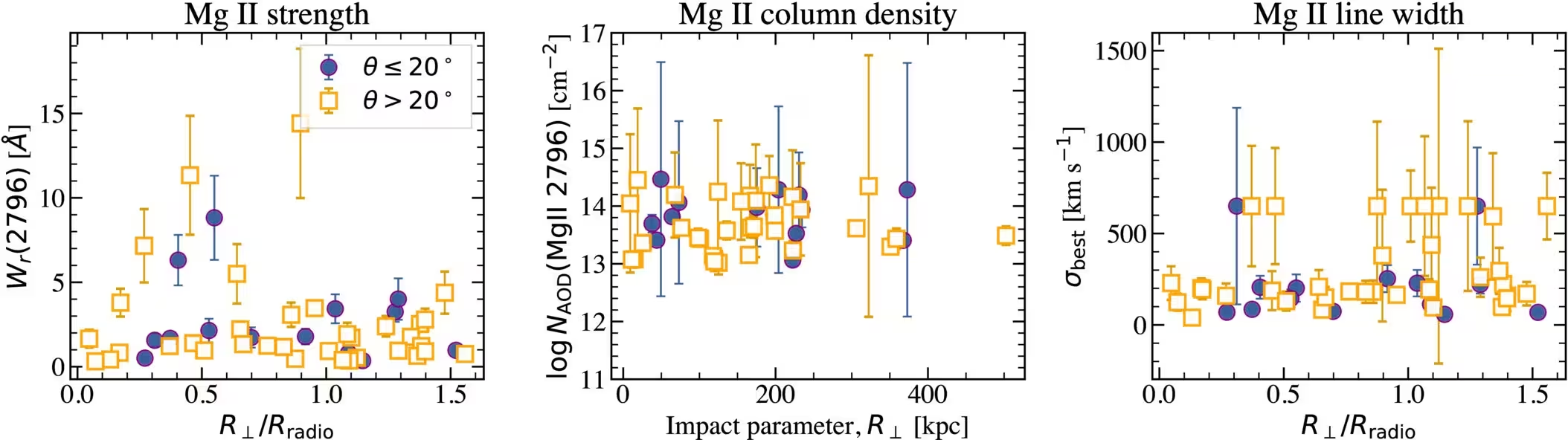
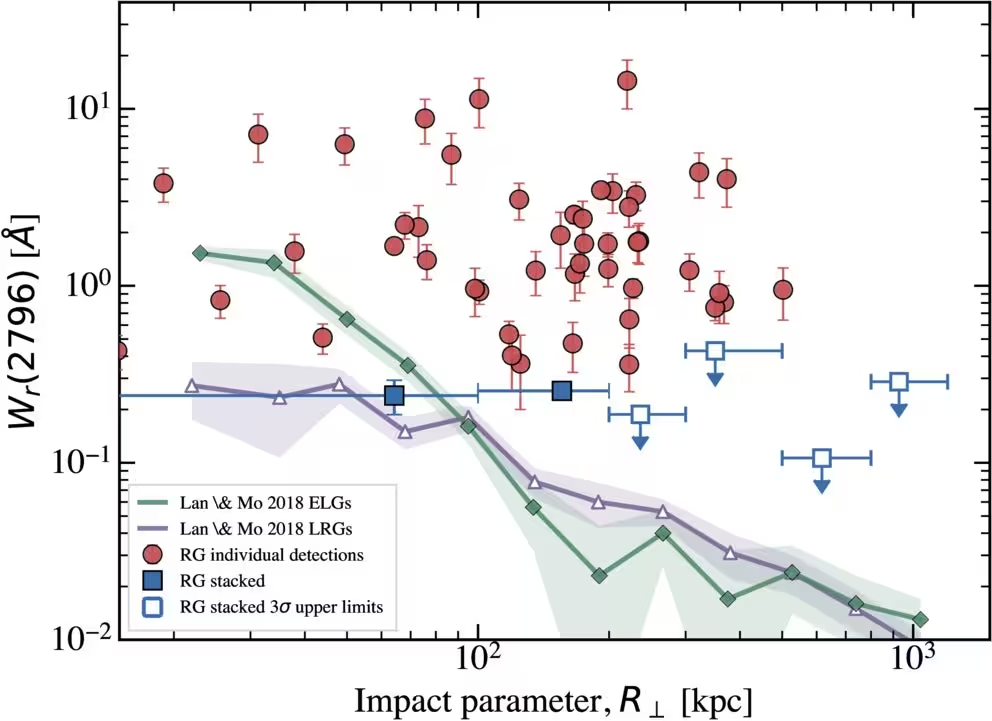
This conclusion is supported by an analysis of magnesium absorption in the same quasar spectra. Unlike the glowing hydrogen, the distribution of cool, metal-enriched gas clouds identified via magnesium shows no preference for the jet direction. This suggests that the jets do not necessarily generate this gas, but instead compress, heat, or ionize clouds already residing in the CGM. Because H-alpha brightness is highly sensitive to the ionization state of hydrogen, these physical disturbances effectively cause the jets to “light up” the clouds they strike.
Broader Implications for Galaxy Evolution
While the energy required to produce the observed H-alpha glow represents only a tiny fraction of the total power generated by these jets, the finding confirms that black holes exert a profound, directional influence on the structural evolution of their host systems. By disturbing the circumgalactic gas, these jets likely play a pivotal role in regulating the supply of fuel for new stars.
This discovery provides a crucial missing link in our understanding of galactic feedback, demonstrating that the impact of a supermassive black hole is not localized, but rather a far-reaching force that shapes the lifecycle of the entire galaxy.
This article has been fact checked for accuracy, with information verified against reputable sources. Learn more about us and our editorial process.
Last reviewed on .
Article history
- Latest version
Reference(s)
- Roy, Namrata., et al. “Lighting Up the Circumgalactic Medium: Strong, Jet-aligned H α Emission around Radio Galaxies.” The Astrophysical Journal Letters, vol. 1009, no. 2, September 24, 2026, pp. L34 American Astronomical Society, doi: 10.3847/2041-8213/ae9cbd. <https://iopscience.iop.org/article/10.3847/2041-8213/ae9cbd>.
Cite this page:
- Posted by Aisha Ahmed